

|
시장보고서
상품코드
2119113
독일의 OTT 시장 : 시장 점유율 분석, 업계 동향 및 통계, 성장 예측(2026-2031년)Germany OTT - Market Share Analysis, Industry Trends & Statistics, Growth Forecasts (2026 - 2031) |
||||||
 Mordor Intelligence
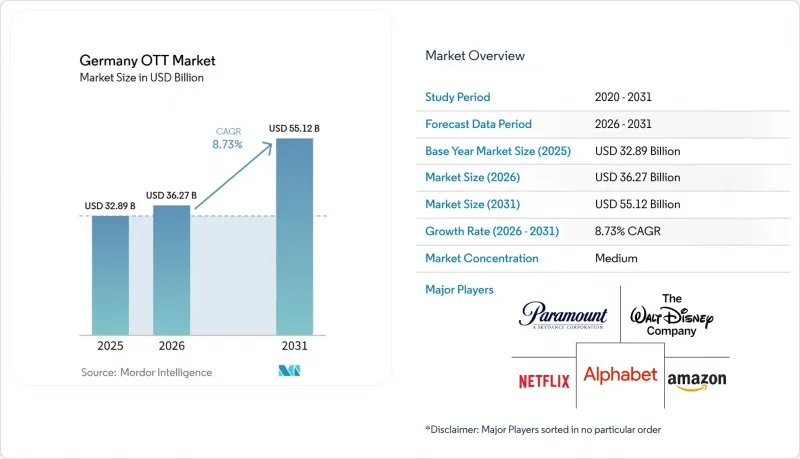
Mordor Intelligence에 의하면, 독일의 OTT 시장 규모는 2025년 328억 9,000만 달러로 평가되었고, 2026년 362억 7,000만 달러에서 2031년까지 551억 2,000만 달러로 확대될 것으로 예측되며, 2026-2031년 연평균 복합 성장률(CAGR)은 8.73%를 나타낼 전망입니다.
본 보고서는 수익 모델별(SVOD, AVOD, TVOD, 하이브리드, 구독 및 광고), 기기 유형별(스마트폰·태블릿, 스마트 TV 등), 컨텐츠 장르별(영화, TV 프로그램·에피소드형 컨텐츠, 다큐멘터리)로 분류되어 있습니다. 시장 예측은 금액(달러) 기준으로 제시되어 있습니다.
독일의 OTT 시장 동향 및 인사이트
스마트 TV 및 연결형 기기의 보급률 상승
스마트 TV의 보급으로 인해 독일 OTT 시장의 주요 접근 장벽이 완화되었습니다. 이는 시청자들이 가정 내 엔터테인먼트의 중심이 되고 있는 TV 화면을 통해 스트리밍 서비스에 직접 접속할 수 있게 되었기 때문입니다. AGF의 최신 조사에 따르면, 독일 TV 보유 가구의 압도적 다수가 인터넷 연결이 가능한 TV를 보유하고 있으며, 이는 인터넷 연결을 통한 시청이 더 이상 특정 이용 사례로만 국한되지 않음을 보여줍니다. 이 가구들의 대부분은 인터넷에 직접 연결되어 있으며, 스트리밍 스틱이나 셋톱박스도 일정 비중을 차지하고 있어, 서비스 제공업체들은 거실로 들어가는 여러 접근 경로를 확보하고 있습니다. ProSiebenSat.1사의 보고서에 따르면, 대부분의 TV가 인터넷을 지원하며 그중 압도적 다수가 실제로 연결되어 있어, 동영상 서비스에 있어 하드웨어상의 장벽은 제한적입니다. 이 회사는 또한 조사 대상 가구의 TV 대부분이 비교적 최신 모델이며, 최신 인터페이스와 앱 스토어를 폭넓게 이용할 수 있음을 밝혔습니다. 이러한 도입 기반을 통해 스트리밍 앱과 TV OS가 컨텐츠 발견의 중심적인 역할을 하게 되었으며, 뛰어난 검색 기능, 명확한 앱 배치, 그리고 신뢰할 수 있는 사용자 경험의 중요성이 더욱 커지고 있습니다.
선형 TV에서 온디맨드 시청으로의 전환 가속화
정규 방송에서 온디맨드 시청으로의 전환은 독일 OTT 시장의 대상 시청자층을 확대하고 있으며, 소비자가 TV를 수신하는 방식을 변화시키고 있습니다. Zattoo의 보고서에 따르면, 최근 보고 기간 동안 대다수의 가구가 인터넷을 통해 TV 컨텐츠를 수신하고 있으며, 전 기간의 낮은 점유율에 비해 단기간에 급격한 증가세를 보였습니다. 이 회사의 조사에서는 상당수의 가구가 스트리밍을 부가적인 서비스로 취급하는 것이 아니라, 주요 수신 수단으로서 OTT 스트리밍 서비스를 이용하고 있는 사실도 밝혀졌습니다. 기존 TV로 충분하다고 생각했던 비스트리밍 가구의 비율은 전분기 대비 감소했으며, 오랫동안 존재해 온 도입 장벽이 낮아졌습니다. 2024년 ‘Nebenkostenprivileg(공과금 특례)’의 종료로 인해, 그동안 케이블 TV를 임대료의 일부로 받아들였던 가구를 포함해 많은 임대 거주자들에게 TV 수신은 능동적인 선택이 되었습니다. AGF의 조사에 따르면, 영향을 받은 가구의 15.9%가 다른 수신 방식으로 전환하고 있으며, 서비스 내용을 명확히 설명하고 원활한 전환을 지원할 수 있는 인터넷 기반 서비스에 호재가 되고 있습니다.
구독 피로감과 높아지는 해지 위험
독일 OTT 시장에서 구독 피로감은 중요한 제약 요인으로 작용하고 있습니다. 이는 각 가구가 여러 유료 서비스, 무료 서비스 및 번들 요금제를 동시에 비교할 수 있게 되었기 때문입니다. Zattoo의 조사에 따르면, 독일 소비자들은 비용을 이유로 스트리밍 서비스 해지를 계속하고 있으며, 해지 건수는 전분기 대비 증가하고 있습니다. 각 가구는 이미 빠듯한월예산에 새로운 플랫폼을 추가하기보다는 특정 작품이나 스포츠 시즌이 끝남에 따라 서비스를 전환하는 경향을 보이고 있습니다. 이러한 행동 경향으로 인해 고객 유지 측면에서는 방대한 컨텐츠 라이브러리 그 자체보다 독점 방송 프로그램, 명확한 가치 제안, 그리고 적절한 방송 일정이 더욱 중요해지고 있습니다. 또한, 특히 소비자가 스트리밍을 완전히 중단하지 않으면서 지출을 줄이고자 할 경우, 저가 요금제나 광고 포함 요금제에 대한 관심이 높아지고 있습니다. 가끔 시청하는 데 의존하는 서비스는 특정 프로그램과 관련된 일시적인 선택지로 구독을 여기는 젊은 세대 사이에서 해지율이 높아질 가능성이 있습니다.
부문 분석
2025년에는 SVOD가 매출의 55.83%를 차지하며 최대의 수익 모델이 되었습니다. 많은 가구가 폭넓은 라이브러리, 정평이 난 시리즈, 오리지널 프로그램에 대한 끊김 없는 접근을 선호하기 때문에 이 카테고리는 여전히 중요합니다. 2026년 2분기 SVOD 시장에서 넷플릭스와 아마존 프라임 비디오는 각각 24%의 점유율을 차지하고 있으며, 이는 최대 규모의 구독 서비스의 강점을 보여줍니다. 하이브리드형(구독과 광고를 결합한) 서비스는 2031년까지 연평균 성장률(CAGR) 9.21%를 나타낼 것으로 예측됩니다. 이러한 추세는 소비자가 더 낮은 초기 비용을 원하는 반면, 플랫폼 측은 월정액 요금을 보완할 수 있는 광고 수익을 추구하고 있음을 반영합니다.
광고 지원형 동영상(AVoD)은 별도의 월정액 요금제를 구독하고 싶지 않은 시청자, 구체적으로는 유료 서비스를 번갈아 이용하거나 무료 동영상만 이용하는 가구에게 선택지가 됩니다. Joyn은 2025년에 AVoD(광고 지원 무료 동영상) 수익이 36% 증가했다고 보고했는데, 이는 무료 광고 지원형 시청이 지역 사업자에게 상업적으로 의미가 있으며, 광고주가 도달할 수 있는 시청자층을 확대할 수 있음을 보여줍니다. RTL+와 HBO Max는 첫 6개월 동안 월 9.99유로(10.89달러)에 광고 지원형 패키지를 공동으로 도입했습니다. 이는 파트너십이 가격 정책을 활용하여 체험 이용을 촉진할 수 있음을 보여줍니다. TVOD는 작품이 구독 라이브러리에서 널리 이용 가능해지기 전, 극장 개봉 기간 동안 접근성을 제공하는 역할을 유지하고 있으며, Prime Video와 LEONINE Studios 간의 ‘Pay-2’ 계약은 개봉 기간이 영화 배급에서 여전히 중요한 이유를 보여줍니다. 이러한 모델의 조합을 통해 제공업체는 각 가구의 예산에 맞추어 대응할 수 있게 되지만, 광고의 질과 양은 시청자가 저렴한 가격을 ‘합리적인 거래’로 간주할지 여부에 영향을 미칠 것으로 보입니다.
기타 혜택 :
- 엑셀 형식 시장 예측(ME) 시트
- 3개월간의 애널리스트 지원
자주 묻는 질문
목차
제1장 서론
제2장 조사 방법
제3장 주요 요약
제4장 시장 구도
제5장 시장 규모 및 성장 예측
제6장 경쟁 구도
제7장 시장 기회 및 향후 전망
AJY 26.09.03According to Mordor Intelligence, the Germany OTT market size is projected to expand from USD 32.89 billion in 2025 and USD 36.27 billion in 2026 to USD 55.12 billion by 2031, registering a CAGR of 8.73% between 2026 to 2031.
This report is Segmented by Revenue Model (SVOD, AVOD, TVOD, and Hybrid, Subscription and Ads), Device Types (Smartphones and Tablets, Smart TVs, and More), Content Genre (Movies and Films, TV Shows and Episodic Content, and Documentaries). The Market Forecasts are Provided in Terms of Value (USD).
Germany OTT Market Trends and Insights
Rising Smart TV and Connected Device Penetration
Smart TV adoption has reduced a major access barrier for the Germany OTT market because viewers can access streaming services directly through the television screen that remains central to household entertainment. AGF found that a substantial majority of German TV households had an internet-connected television in its latest study, which shows that connected viewing has moved beyond a specialist use case. Direct internet connections accounted for most of these households, while streaming sticks or boxes represented an additional share, giving services multiple routes into the living room. ProSiebenSat.1 reported that most television sets were internet-capable, and a large majority of those sets were connected, leaving a limited hardware barrier for video services. The company also found that many television sets in surveyed homes were relatively new, so current interfaces and application stores are widely available. This installed base makes streaming apps and television operating systems central to content discovery, which increases the value of good search, clear app placement, and a dependable user experience.
Faster Shift From Linear TV to On-Demand Viewing
The shift from scheduled television to on-demand viewing is expanding the addressable audience for the Germany OTT market and is changing how consumers choose television reception.Zattoo reported that a majority of households received television content over the internet in the latest reported period, compared with a lower share in the previous period, showing a substantial increase over a short period. Its research also showed that a notable share of households used OTT streaming services as their primary reception method, rather than treating streaming as an additional service. The share of non-streaming households that considered traditional television sufficient declined from the previous period, reducing a longstanding barrier to adoption. The end of the Nebenkostenprivileg in 2024 made television reception an active choice for many renters, including households that had previously accepted cable as part of housing costs. AGF found that 15.9% of affected households moved to another reception method, creating an opening for internet-based services that can explain their offer clearly and ease the transition.
Subscription Fatigue and Rising Churn Risk
Subscription fatigue has become a material constraint in the Germany OTT market because households can now compare multiple paid services, free services, and bundled offers at the same time. Zattoo found that German consumers continued to cancel streaming subscriptions because of cost, with cancellations increasing compared with the previous period. Households can switch among services when a title or sports season ends, rather than adding every new platform to an already crowded monthly budget. This behavior makes exclusive programs, clear value propositions, and timely release schedules more important for retention than a large library alone. It also places more attention on lower-priced and advertising-supported plans, especially when consumers want to reduce spending without leaving streaming altogether. Services that depend on occasional viewing may face higher churn among younger households that treat subscriptions as temporary choices linked to particular programs.
Other drivers and restraints analyzed in the detailed report include:
- Expansion of Local German Originals and Sports Rights
- Bundling With Telecom and Pay-TV Ecosystems
- Premium Content Rights Inflation
For complete list of drivers and restraints, kindly check the Table Of Contents.
Segment Analysis
SVOD accounted for 55.83% of revenue in 2025, making it the largest revenue model. The category remains important because many households prefer uninterrupted access to broad libraries, established franchises, and original programming. Netflix and Amazon Prime Video each held 24% of the supplied SVOD comparison in the second quarter of 2026, which shows the strength of the largest subscription services. Hybrid subscription and advertising services are projected to grow at a 9.21% CAGR through 2031. This direction reflects consumer interest in lower entry prices, while platforms seek advertising revenue that can complement monthly fees.
Advertising-supported video provides a route for viewers who do not want another full-price monthly plan, including households that may otherwise rotate among paid services or use only free video. Joyn reported 36% growth in AVoD revenue in 2025, which indicates that free, advertising-funded viewing has commercial relevance for local operators and can broaden the audience available to advertisers. RTL+ and HBO Max introduced a combined advertising-supported package at EUR 9.99 per month, or USD 10.89, for the first 6 months, illustrating how a partnership can use price to encourage trial. TVOD retains a role where theatrical release windows provide access before titles become widely available in subscription libraries, and Prime Video's pay-2 agreement with LEONINE Studios shows why windowing still matters to film distribution. The model mix gives providers a way to address different household budgets, while the quality and quantity of advertising will influence whether viewers consider lower prices a fair exchange.
Complete Report Scope:
- By Revenue Model
- SVOD
- AVOD
- TVOD
- Hybrid, Subscription and Ads
- By Device Type
- Smartphones and Tablets
- Smart TVs
- Laptops and Desktops
- Other Device Types
- By Content Genre
- Movies and Films
- TV Shows and Episodic Content
- Documentaries
- Other Content Genres
List of Companies Covered in this Report:
- Amazon.com, Inc.
- Netflix, Inc.
- The Walt Disney Company
- RTL Group S.A.
- ProSiebenSat.1 Media SE
- Apple Inc.
- Paramount, a Skydance Corporation
- Warner Bros. Discovery, Inc.
- Alphabet Inc.
- DAZN Group Limited
- Zweites Deutsches Fernsehen
- ARD Mediathek
- Deutsche Telekom AG
- Freenet AG
- Zattoo AG
- Rakuten Group, Inc.
- Sony Group Corporation
- Samsung Electronics Co., Ltd.
- MUBI, Inc.
- LEONINE Studios GmbH
Additional Benefits:
- The market estimate (ME) sheet in Excel format
- 3 months of analyst support
TABLE OF CONTENTS
1 INTRODUCTION
- 1.1 Study Assumptions and Market Definition
- 1.2 Scope of the Study
2 RESEARCH METHODOLOGY
3 EXECUTIVE SUMMARY
4 MARKET LANDSCAPE
- 4.1 Market Overview
- 4.2 Market Drivers
- 4.2.1 Rising Smart TV and Connected Device Penetration
- 4.2.2 Faster Shift From Linear TV to On-Demand Viewing
- 4.2.3 Expansion Of Local German Originals and Sports Rights
- 4.2.4 Bundling With Telecom And Pay-TV Ecosystems
- 4.2.5 Ad-Supported Monetization Improving Price Accessibility
- 4.2.6 AI-Assisted Personalization and Content Discovery
- 4.3 Market Restraints
- 4.3.1 Subscription Fatigue and Rising Churn Risk
- 4.3.2 Premium Content Rights Inflation
- 4.3.3 Fragmented Viewing Across Multiple Platforms
- 4.3.4 Ad Load Sensitivity in Free and Hybrid Tiers
- 4.4 Industry Value Chain Analysis
- 4.5 Impact of Macroeconomic Factors on the Market
- 4.6 Regulatory Landscape
- 4.7 Technological Outlook
- 4.8 Porter's Five Forces Analysis
- 4.8.1 Bargaining Power of Buyers
- 4.8.2 Bargaining Power of Suppliers
- 4.8.3 Threat of New Entrants
- 4.8.4 Threat of Substitutes
- 4.8.5 Intensity of Competitive Rivalry
5 MARKET SIZE AND GROWTH FORECASTS
- 5.1 By Revenue Model
- 5.1.1 SVOD
- 5.1.2 AVOD
- 5.1.3 TVOD
- 5.1.4 Hybrid, Subscription and Ads
- 5.2 By Device Type
- 5.2.1 Smartphones and Tablets
- 5.2.2 Smart TVs
- 5.2.3 Laptops and Desktops
- 5.2.4 Other Device Types
- 5.3 By Content Genre
- 5.3.1 Movies and Films
- 5.3.2 TV Shows and Episodic Content
- 5.3.3 Documentaries
- 5.3.4 Other Content Genres
6 COMPETITIVE LANDSCAPE
- 6.1 Market Concentration
- 6.2 Strategic Moves
- 6.3 Market Share Analysis
- 6.4 Company Profiles (includes Global Level Overview, Market Level Overview, Core Segments, Financials as available, Strategic Information, Market Rank/Share, Products and Services, Recent Developments)
- 6.4.1 Amazon.com, Inc.
- 6.4.2 Netflix, Inc.
- 6.4.3 The Walt Disney Company
- 6.4.4 RTL Group S.A.
- 6.4.5 ProSiebenSat.1 Media SE
- 6.4.6 Apple Inc.
- 6.4.7 Paramount, a Skydance Corporation
- 6.4.8 Warner Bros. Discovery, Inc.
- 6.4.9 Alphabet Inc.
- 6.4.10 DAZN Group Limited
- 6.4.11 Zweites Deutsches Fernsehen
- 6.4.12 ARD Mediathek
- 6.4.13 Deutsche Telekom AG
- 6.4.14 Freenet AG
- 6.4.15 Zattoo AG
- 6.4.16 Rakuten Group, Inc.
- 6.4.17 Sony Group Corporation
- 6.4.18 Samsung Electronics Co., Ltd.
- 6.4.19 MUBI, Inc.
- 6.4.20 LEONINE Studios GmbH
7 MARKET OPPORTUNITIES AND FUTURE OUTLOOK
- 7.1 White-Space and Unmet-Need Assessment


