
|
시장보고서
상품코드
2119114
중국의 OTT 시장 : 시장 점유율 분석, 업계 동향 및 통계, 성장 예측(2026-2031년)China OTT - Market Share Analysis, Industry Trends & Statistics, Growth Forecasts (2026 - 2031) |
||||||
 Mordor Intelligence
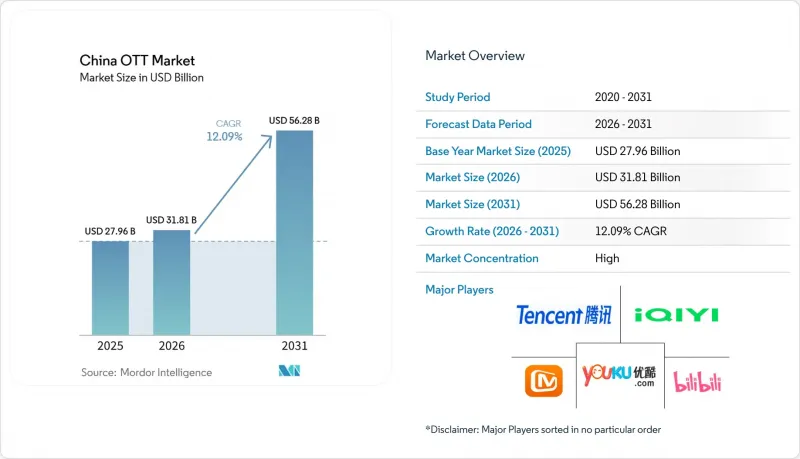
Mordor Intelligence에 의하면, 중국의 OTT 시장 규모는 2025년에 279억 6,000만 달러로 평가되었고, 2026년에 318억 1,000만 달러로 추정되고, 2031년까지 562억 8,000만 달러에 이를 것으로 예측되며, 2026-2031년 CAGR 12.09%로 성장할 전망입니다.
본 보고서는 수익 모델별(SVOD, AVOD, TVOD 및 하이브리드형(구독 및 광고)), 기기 유형별(스마트폰·태블릿, 스마트 TV, 노트북·데스크톱 PC, 기타 기기 유형), 컨텐츠 장르별(영화, TV 프로그램·에피소드형 컨텐츠, 다큐멘터리, 기타 컨텐츠 장르)로 분류되어 있습니다. 시장 예측은 금액(달러) 기준으로 제시되어 있습니다.
중국의 OTT 시장 동향 및 인사이트
고품질 현지 컨텐츠를 통한 구독 업셀 증가
중국 OTT 시장에서 고품질의 국내 컨텐츠는 시청자가 서비스에 가입하고 계약을 갱신하는 주된 이유로 자리 잡고 있습니다. 플랫폼이 독점 방영권을 확보한 경우, 신작 드라마나 예능 프로그램은 지속적인 계약 갱신을 이끌어낼 가능성이 있습니다. iQIYI는 2025년에 168억 1,000만 위안(24억 달러)의 구독 서비스 매출을 기록했으며, 전체 매출이 부진한 상황에서도 이 부문은 동사의 최대 수익원이 되고 있습니다. 이 결과는 서비스의 신작 출시 일정이 주춤할 때에도 알찬 컨텐츠 라이브러리가 있다면 유료 사용자를 유지할 수 있음을 보여줍니다. iQIYI는 2026년 ‘Nadou Pro’를 도입하고, ‘Qizhi’ 모델 및 제3자 제작 도구를 통해 전문가들의 영화·TV 프로그램 제작을 지원했습니다. 제작 비용 절감으로 인해 주요 플랫폼은 더 많은 오리지널 프로그램에 자금을 투입하면서도 고가 구독 요금제를 뒷받침하는 독점 타이틀을 보호할 수 있게 되어, 결과적으로 비용이 많이 드는 신작을 몇 편으로만 한정해야 하는 압박을 완화할 수 있을 것입니다.
하이브리드 동영상 번들을 통한 광고 수익화 가속화
중국 OTT 시장에서 구독과 광고는 점점 더 밀접하게 연결되고 있습니다. iQIYI의 광고 수익은 2025년에 9% 감소한 51억 9,000만 위안(7억 달러)을 기록했으며, 장편 동영상에서 광고 수익에만 의존하는 것의 어려움을 보여주고 있습니다. 공개된 기업 실적에 따르면, Bilibili의 2025년 광고 수익은 전년 대비 22.8% 증가한 100억 위안(14억 달러)을 넘어섰습니다. 또한 AI 관련 광고 수익이 180% 증가한 것으로 보고되어, 시청자의 관심사에 맞추어 메시지를 최적화하는 광고 도구에 대한 수요가 높아지고 있음을 엿볼 수 있습니다. 하이브리드형 서비스는 플랫폼에 구독 기반을 마련해 주는 동시에, 저렴한 가격으로 서비스를 이용하는 시청자로부터의 광고 수익도 유지할 수 있으므로, 변화하는 광고 환경에서 특정 수익원에 대한 의존도를 낮출 수 있습니다. 이러한 접근 방식은 프리미엄 컨텐츠에 대한 접근성을 희생하지 않고, 서비스 요금제 선택지를 복잡하게 만들지 않으면서도 서로 다른 지출 경향을 가진 시청자층에 대응하려는 플랫폼에 특히 유용할 것으로 보입니다.
프리미엄 오리지널 작품 및 스포츠 컨텐츠 라이선스 비용 급등
컨텐츠 비용은 중국 OTT 시장에 여전히 뿌리 깊은 제약 요인으로 남아 있습니다. iQIYI는 2025년 컨텐츠 비용이 154억 5,000만 위안(22억 달러)이었다고 보고했으나, 총 수익은 7% 감소한 272억 9,000만 위안(38억 달러)을 기록했습니다. 막대한 컨텐츠 투자와 수익 성장 둔화 사이의 격차는 특히 플랫폼이 기존 가입자 기반을 유지하기 위해 향후 공개될 작품에 대한 자금 지원을 계속해야 하는 경우, 이익률에 압박을 가하고 있습니다. 스포츠 중계권은 시청자 중 몇 명이 유료 사용자로 전환할지 확인되기 전에 라이선스 비용을 지불해야 하기 때문에 이러한 압박을 더욱 가중시킬 가능성이 있습니다. 대형 플랫폼은 이러한 비용을 회원비, 광고 및 관련 사업으로 분산시킬 수 있습니다. 반면, 소규모 서비스 사업자는 비용이 많이 드는 시즌을 감당할 여력이 부족하여, 결과적으로 대형 서비스와 독립 사업자 간의 격차가 확대되고, 신뢰할 수 있는 장편 컨텐츠를 제공하는 경쟁사의 수가 감소할 가능성이 있습니다.
부문 분석
2025년, SVOD는 중국 OTT 시장 점유율의 54.73%를 차지했습니다. 이는 시청자가 몇 주 또는 시즌 전체에 걸쳐 따라볼 수 있는 신작 드라마나 예능 프로그램의 지속 시청 가치에 힘입은 결과입니다. SVOD 부문의 중국 OTT 시장 규모는 독점 스트리밍이 회원들에게 유료 구독을 유지할 이유를 제공함으로써 혜택을 받습니다. AVOD는 2031년까지 연평균 성장률(CAGR) 13.20%를 나타낼 것으로 예측되며, 이는 성숙한 구독 모델보다 빠른 속도입니다. 광고 지원형 액세스는 정기적인 결제를 원하지 않는 시청자에게 도달할 가능성이 있습니다. 또한 브랜드 입장에서는 직접적인 구독 전환 없이도 동영상 시청자에게 접근할 수 있는 수단이 됩니다. TVOD는 일회성 결제로 프리미엄 컨텐츠의 가치를 유지할 수 있는 엄선된 영화 작품에서 계속해서 제공되고 있습니다. 하이브리드형 구독 및 광고 플랜은 정기 결제에 대한 최소 보장 금액과 추가 광고 수익을 결합한 형태입니다. 이 모델은 구독 성장세가 둔화되었을 때 플랫폼이 수익을 보호할 수 있는 또 다른 수단이 됩니다. 따라서 중국 OTT 시장에는 여러 수익 모델이 공존할 여지가 있지만, SVOD가 여전히 주요 수익원입니다. 각 서비스는 어떤 작품에 유료 시청 기간을 설정할 가치가 있고, 어떤 작품이 더 광범위한 광고 도달 범위를 뒷받침할 수 있는지 판단해야 합니다.
Mango TV는 2025년, 특히 명확한 프로그램 정체성을 바탕으로 회원 수익과 광고 수익을 연계하는 서비스에서 집중적인 이중 수익 모델의 가치를 입증했습니다. Mango Excellent Media는 회원 수익 46억 4,600만 위안(7억 달러), 광고 수익 38억 3,100만 위안(5억 달러), 유효 회원 수 7,560만 명을 보고했습니다. 예능 프로그램과 라이프스타일 컨텐츠에 중점을 둠으로써, 대형 서비스가 구매하는 모든 프리미엄 드라마에 직접 대응하지 않으면서도 회원 기반을 구축할 수 있었습니다. 2026년에 공표된 CAC 규정은 플랫폼이 크리에이터 네트워크와 제휴할 경우 모든 수익 모델에 적용됩니다. 플랫폼은 광고, 구독 또는 판매 연계형 컨텐츠를 확대함에 있어 컨텐츠 관리 프로세스와 명확한 크리에이터 계약을 정비해야 합니다. 이러한 요건들로 인해 기존 서비스는 광고주와 크리에이터에게 더 신뢰할 수 있는 파트너가 될 가능성이 있습니다. 또한, 이는 새로운 수익 모델을 대규모로 구축하는 데 드는 비용을 상승시키는 요인이 되기도 합니다. 중국의 OTT 업계에서는 동일한 운영 체제 내에서 컨텐츠, 광고, 규정 준수를 관리할 수 있는 플랫폼이 우위를 점할 가능성이 높습니다. 이러한 구조를 통해 광고 수요, 시청자의 선호도, 혹은 규제상의 의무가 변화할 때에도 보다 신속하게 대응하기 쉬워집니다.
기타 혜택 :
- 엑셀 형식 시장 예측(ME) 시트
- 3개월간의 애널리스트 지원
자주 묻는 질문
목차
제1장 서론
제2장 조사 방법
제3장 주요 요약
제4장 시장 구도
제5장 시장 규모 및 성장 예측
제6장 경쟁 구도
제7장 시장 기회 및 향후 전망
AJY 26.09.03According to Mordor Intelligence, the China OTT market size is projected to be USD 27.96 billion in 2025, USD 31.81 billion in 2026, and reach USD 56.28 billion by 2031, growing at a CAGR of 12.09% from 2026 to 2031.
This report is Segmented by Revenue Model (SVOD, AVOD, TVOD, and Hybrid Subscription and Ads), Device Type (Smartphones and Tablets, Smart TVs, Laptops and Desktops, and Other Device Types), and Content Genre (Movies and Films, TV Shows and Episodic Content, Documentaries, and Other Content Genres). The Market Forecasts are Provided in Terms of Value (USD).
China OTT Market Trends and Insights
Rising Subscription Upsell From Premium Local Content
Premium local programming remains a key reason viewers join and renew subscriptions in the China OTT market. First-run dramas and variety programs can create recurring renewal periods when platforms secure exclusive rights. iQIYI reported membership-service revenue of CNY 16.81 billion (USD 2.4 billion) in 2025, making it the company's largest revenue line despite weaker overall revenue. The result indicates that established content libraries can retain paying users when a service faces a weaker release schedule. iQIYI introduced Nadou Pro in 2026 to support professional film and television production through its Qizhi model and third-party generation tools. Lower production costs could allow major platforms to fund more original programming while protecting the exclusive titles that support higher subscription tiers, thereby reducing the pressure to choose only a few costly releases.
Accelerating Ad Monetization From Hybrid Video Bundles
Subscription and advertising are becoming increasingly intertwined across the China OTT market. iQIYI's advertising revenue declined 9% to CNY 5.19 billion (USD 0.7 billion) in 2025, which shows the difficulty of relying only on advertising revenue in long-form video. The supplied company results showed that Bilibili's advertising revenue exceeded CNY 10 billion (USD 1.4 billion) in 2025, up 22.8% from the prior year. They also reported 180% growth in AI-related advertising revenue, suggesting demand for advertising tools that match messages to audience interests. Hybrid offers can give platforms a subscription base while retaining advertising income from viewers who accept lower-priced access, thereby reducing reliance on any one source of revenue amid changing advertising conditions. This approach may be especially useful as platforms seek to serve audiences with different spending preferences without sacrificing access to premium content or creating confusing choices among service tiers.
Content Licensing Cost Inflation for Premium Originals and Sports
Content costs remain a persistent constraint for the China OTT market. iQIYI reported content costs of CNY 15.45 billion (USD 2.2 billion) for 2025, while total revenue declined 7% to CNY 27.29 billion (USD 3.8 billion). The difference between large content investments and slower revenue growth puts pressure on margins, especially when platforms must continue funding future releases to retain their existing subscriber base. Sports rights can add to this pressure because services must pay for licenses before they know how many viewers will convert to paid users. Large platforms can spread these costs across memberships, advertising, and related businesses. Smaller services have less room to absorb a costly season, which can widen the gap between leading services and independent operators and reduce the number of credible long-form competitors.
Other drivers and restraints analyzed in the detailed report include:
- Sports Rights Differentiation Across Major Platforms
- AI-Driven Personalization Improving Retention and Watch Time
- Tight Platform Oversight on Content, Recommendation, and Monetization Practices
For complete list of drivers and restraints, kindly check the Table Of Contents.
Segment Analysis
SVOD held 54.73% of the China OTT market share in 2025, supported by the renewal value of first-run dramas and variety programs that viewers can follow over several weeks or an entire season. The China OTT market size for SVOD benefits when exclusive releases give members a reason to maintain paid access. AVOD is projected to grow at a 13.20% CAGR through 2031, which is faster than the mature subscription model. Advertising-supported access can reach viewers who do not want another recurring payment. It can also give brands access to video audiences without requiring a direct subscription conversion. TVOD continues to serve selected film releases where a one-time payment can preserve the value of a premium title. Hybrid subscription and advertising plans combine a recurring payment floor with additional advertising income. This model gives platforms another way to protect revenue when subscription growth slows. The China OTT market, therefore, has room for several revenue models, although SVOD remains the main source of revenue. Services will need to decide which titles justify a paid window and which titles can support broader advertising reach.
Mango TV showed the value of a focused dual-revenue model in 2025, particularly for a service that connects a recognizable programming identity with membership and advertising income. Mango Excellent Media reported membership revenue of CNY 4.646 billion (USD 0.7 billion), advertising revenue of CNY 3.831 billion (USD 0.5 billion), and an effective membership base of 75.6 million. Its variety and lifestyle focus helped it build memberships without directly matching every premium drama acquisition by the largest services. The CAC rules issued in 2026 apply across revenue models when platforms work with creator networks. Platforms need content-management processes and clear creator agreements as they expand advertising, subscriptions, or sales-linked content. These requirements may make established services more reliable partners for advertisers and creators. They also raise the cost of building a new revenue model at scale. The China OTT industry is likely to favor platforms that can manage content, advertising, and compliance within the same operating system. This structure can make it easier to respond when advertising demand, viewer preferences, or regulatory duties change.
Complete Report Scope:
- By Revenue Model
- SVOD
- AVOD
- TVOD
- Hybrid Subscription and Ads
- By Device Type
- Smartphones and Tablets
- Smart TVs
- Laptops and Desktops
- Other Device Types
- By Content Genre
- Movies and Films
- TV Shows and Episodic Content
- Documentaries
- Other Content Genres
List of Companies Covered in this Report:
- Tencent Holdings Limited
- iQIYI, Inc.
- Alibaba Group Holding Limited
- Mango Excellent Media Co., Ltd.
- Bilibili Inc.
- ByteDance Ltd.
- Kuaishou Technology
- China Mobile Limited
- China Telecom Corporation Limited
- China Unicom (Hong Kong) Limited
- Oriental Pearl Group Co., Ltd.
- China Media Group
- Wasu Media Holding Co., Ltd.
- Guangdong South New Media Co., Ltd.
- CIBN Oriental Network (Beijing) Co., Ltd.
- Sohu.com Limited
- DouYu International Holdings Limited
- HUYA Inc.
- Migu Video
Additional Benefits:
- The market estimate (ME) sheet in Excel format
- 3 months of analyst support
TABLE OF CONTENTS
1 INTRODUCTION
- 1.1 Study Assumptions and Market Definition
- 1.2 Scope of the Study
2 RESEARCH METHODOLOGY
3 EXECUTIVE SUMMARY
4 MARKET LANDSCAPE
- 4.1 Market Overview
- 4.2 Market Drivers
- 4.2.1 Rising Subscription Upsell From Premium Local Content
- 4.2.2 Accelerating Ad Monetization From Hybrid Video Bundles
- 4.2.3 Sports Rights Differentiation Across Major Platforms
- 4.2.4 Smart TV and Connected Screen Viewing Expansion
- 4.2.5 AI-Driven Personalization Improving Retention and Watch Time
- 4.2.6 Short-Form Discovery Funnel Expanding Paid Long-Form Conversion
- 4.3 Market Restraints
- 4.3.1 Content Licensing Cost Inflation for Premium Originals and Sports
- 4.3.2 Tight Platform Oversight on Content, Recommendation, and Monetization Practices
- 4.3.3 Subscription Fatigue Among Multi-Platform Users
- 4.3.4 Margin Pressure From Heavy Bandwidth and Cloud Delivery Costs
- 4.4 Industry Value Chain Analysis
- 4.5 Impact of Macroeconomic Factors on the Market
- 4.6 Regulatory Landscape
- 4.7 Technological Outlook
- 4.8 Porter's Five Forces Analysis
- 4.8.1 Bargaining Power of Buyers
- 4.8.2 Bargaining Power of Suppliers
- 4.8.3 Threat of New Entrants
- 4.8.4 Threat of Substitutes
- 4.8.5 Intensity of Competitive Rivalry
5 MARKET SIZE AND GROWTH FORECASTS (VALUE)
- 5.1 By Revenue Model
- 5.1.1 SVOD
- 5.1.2 AVOD
- 5.1.3 TVOD
- 5.1.4 Hybrid Subscription and Ads
- 5.2 By Device Type
- 5.2.1 Smartphones and Tablets
- 5.2.2 Smart TVs
- 5.2.3 Laptops and Desktops
- 5.2.4 Other Device Types
- 5.3 By Content Genre
- 5.3.1 Movies and Films
- 5.3.2 TV Shows and Episodic Content
- 5.3.3 Documentaries
- 5.3.4 Other Content Genres
6 COMPETITIVE LANDSCAPE
- 6.1 Market Concentration
- 6.2 Strategic Moves
- 6.3 Market Share Analysis
- 6.4 Company Profiles (includes Global Level Overview, Market Level Overview, Core Segments, Financials as available, Strategic Information, Market Rank/Share, Products and Services, Recent Developments)
- 6.4.1 Tencent Holdings Limited
- 6.4.2 iQIYI, Inc.
- 6.4.3 Alibaba Group Holding Limited
- 6.4.4 Mango Excellent Media Co., Ltd.
- 6.4.5 Bilibili Inc.
- 6.4.6 ByteDance Ltd.
- 6.4.7 Kuaishou Technology
- 6.4.8 China Mobile Limited
- 6.4.9 China Telecom Corporation Limited
- 6.4.10 China Unicom (Hong Kong) Limited
- 6.4.11 Oriental Pearl Group Co., Ltd.
- 6.4.12 China Media Group
- 6.4.13 Wasu Media Holding Co., Ltd.
- 6.4.14 Guangdong South New Media Co., Ltd.
- 6.4.15 CIBN Oriental Network (Beijing) Co., Ltd.
- 6.4.16 Sohu.com Limited
- 6.4.17 DouYu International Holdings Limited
- 6.4.18 HUYA Inc.
- 6.4.19 Migu Video
7 MARKET OPPORTUNITIES AND FUTURE OUTLOOK
- 7.1 White-Space and Unmet-Need Assessment