

|
시장보고서
상품코드
2119086
북미의 OTT 시장 : 시장 점유율 분석, 업계 동향 및 통계, 성장 예측(2026-2031년)North America OTT - Market Share Analysis, Industry Trends & Statistics, Growth Forecasts (2026 - 2031) |
||||||
 Mordor Intelligence
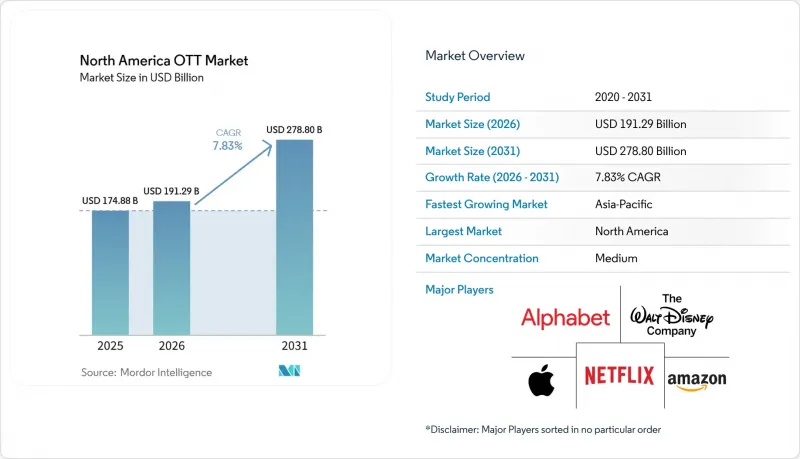
Mordor Intelligence에 의하면, 북미의 OTT 시장 규모는 2025년 1,748억 8,000만 달러로 평가되었고, 2026년 1,912억 9,000만 달러에서 2031년까지 2,788억 달러로 확대될 것으로 예측되며, 2026-2031년 CAGR 7.83%를 기록할 전망입니다.
본 보고서는 수익 모델별(정기 구독형 과금(SVOD), 일시 과금형(TVOD/PPV), 광고 지원형 과금(AVOD/FAST), 하이브리드 수익화 모델), 기기 유형별(스마트폰·태블릿, 스마트 TV 등), 컨텐츠 장르별(영화, TV 프로그램·에피소드 형식 컨텐츠, 다큐멘터리), 국가별로 분류되어 있습니다. 시장 예측은 금액(달러) 기준으로 제시되어 있습니다.
북미의 OTT 시장 동향 및 인사이트
광고 지원형 스트리밍 번들의 보급 확대
광고 지원형 요금제는 북미 OTT 시장에서 가입자 증가의 핵심 수단이 되고 있습니다. 이러한 요금제는 가격에 민감한 가구에 낮은 진입 장벽을 제공하는 동시에, 플랫폼 측에는 월정액 요금과 광고를 통해 모두 수익을 창출할 기회를 제공합니다. 이 모델을 통해 광고주는 정규 방송 TV에서 멀어진 시청자, 특히 무료 광고 포함 채널을 선호하는 시청자에게 도달할 수 있게 됩니다. 번들 요금제는 소비자가 여러 개의 별도 서비스 중에서 선택해야 하는 부담을 줄여주며, 매월 엔터테인먼트 비용 관리를 용이하게 합니다. 이로 인해 서비스 선택 기준이 변화합니다. 가치, 가격, 편의성이 단일 컨텐츠 카탈로그나 기간 한정 독점 타이틀만큼 중요해지기 때문입니다. 또한 플랫폼 입장에서는 반복되는 구독료 인상을 수용하지 않을 가능성이 있는 가구를 대응할 수 있는 수단이 되기도 합니다.
라이브 스포츠 중계권 수익화 가속화
라이브 스포츠는 시청자가 녹화 방송이 아닌, 이벤트가 진행되는 바로 그 자리에서 시청하는 경우가 많기 때문에 여전히 중요한 위치를 차지하고 있습니다. 중계권은 서비스가 신규 가입자를 확보하거나, 기존 가입자에게 계속 이용할 이유를 제공하거나, 광고주가 다수의 라이브 시청자에게 도달하는 데 도움이 됩니다. 2025-26년 NBA 중계권 계약에서는 디즈니,아마존, NBC 유니버설과의 패키지 계약이 체결되어 주요 리그에게 있어 스트리밍 서비스의 중요성이 높아졌습니다. 아마존은 2026년 7월, Fire TV의 Prime Video에 클라우드 게임 서비스 ‘Luna’를 통합하여 동영상 환경을 수동적인 시청의 틀을 넘어 확장했습니다. 스포츠 중계권은 또한 수년에 걸친 대규모 계약을 수반하며, 플랫폼의 컨텐츠 지출 계획에 영향을 미칠 가능성이 있습니다. 이는 사용자 참여도와 광고 수요를 뒷받침하는 한편, 신중한 가격 책정, 시청자 수 확대, 그리고 광고 수익 확보에 대한 필요성을 높이고 있습니다.
높은 컨텐츠 확보 및 제작 비용
시청자들은 인지도가 높은 프로그램의 안정적인 공급을 기대하고 있기 때문에 컨텐츠 제작 및 확보 비용은 북미 OTT 시장에 있어 여전히 뿌리 깊은 과제로 남아 있습니다. 각 플랫폼 업체들은 가입자의 참여도를 유지하고 광고 매출을 뒷받침하기 위해 시리즈, 영화, 스포츠 및 지역 컨텐츠가 필요합니다. 넷플릭스는 컨텐츠 지출이 계속해서 막대할 것으로 예상하는 반면, 디즈니는 엔터테인먼트 및 스포츠 분야 전반에 걸쳐 막대한 지출을 예상하고 있습니다. 스포츠 중계권은 계약이 여러 시즌에 걸쳐 있는 경우가 많고, 분기별 가입자 실적에 따라 조정되지 않기 때문에 추가적인 압박 요인이 될 수 있습니다. 가입자 수 증가세가 둔화되거나 광고 수익이 성숙하는 데 시간이 걸릴 경우, 기업들은 막대한 지출 약속을 축소하기 어려워집니다. 따라서 기업들은 프리미엄 컨텐츠 비용을 충당하기 위해 광고, 가격 전략, 번들 상품, 그리고 엄격한 편성 결정이 필요합니다.
부문 분석
2025년에는 정기 구독 요금이 수익의 57.50%를 차지했으며, 가장 큰 수익 모델이자 주요 플랫폼의 핵심 유료 서비스가 되었습니다. 구독 플랜은 예측 가능한 과금, 고객과의 직접적인 관계 구축, 그리고 폭넓은 엔터테인먼트 라이브러리에 대한 투자를 뒷받침하는 수단을 제공하기 때문에 여전히 중요한 위치를 차지하고 있습니다. 넷플릭스는 2026년 2분기 실적 보고서에서 회원 수 증가와 가격 인상에 힘입어 연간 매출이 13-15% 성장했다고 밝혔습니다. 이는 각 가구가 정기 청구액을 재검토하고 있는 상황에서도 해당 지역의 성숙한 시장에서 유료 요금제가 여전히 가치를 유지하고 있음을 보여줍니다. 동시에, 구독 성장세는 광고가 포함된 요금제나 고객에게 저렴한월이용료를 제공하는 요금제와 점점 더 밀접하게 연결되고 있습니다.
하이브리드형 수익화 모델은 2026-2031년 연평균 성장률(CAGR) 8.55%를 나타낼 것으로 예측되며, 가장 빠르게 성장하는 수익 모델이 될 전망입니다. 이러한 서비스는 구독을 통한 접근과 광고 수익을 하나의 제품 구조로 결합하여, 플랫폼이 각 가구의 지불 의향 수준에 따라 유연하게 대응할 수 있도록 합니다. 2025년에는 광고 지원형 과금이 확대되어 Tubi의 매출이 10억 달러를 돌파하는 등, 무료 시청의 상업적 중요성이 높아지고 있음을 보여줍니다. 프리미엄 영화, 주요 이벤트, 페이퍼뷰(PPV) 구매의 경우, 구독을 일시 중지한 후에도 가구가 특정 타이틀에 지출할 가능성이 있으므로 트랜잭션 기반 과금 모델은 여전히 유용합니다. 북미 OTT 업계에서는 특정 한 가지 모델을 다른 모든 모델의 대체재로 취급하기보다는 구독, 광고, 트랜잭션 각 옵션을 조합하여 활용하고 있습니다.
지역별 분석
2025년, 미국은 지역 매출의 72.50%를 차지했습니다. 미국에는 성숙한 커넥티드 TV 광고 환경과 유료 스트리밍 이용 가구의 방대한 기반이 있습니다. 미국이 차지하는 북미 OTT 시장 점유율은 광고, 구독, 컨텐츠 지출 측면에서 미국의 규모를 반영합니다. 넷플릭스는 광고 수익 성장 전망에 힘입어 2026년에는 연간 매출이 더욱 증가할 것으로 예측됩니다. 미국은 광고 포함 요금제, 번들 가격 책정, 스포츠 중계, 홈 화면 광고의 주요 실험장으로 자리 잡고 있습니다. 미국의 방대한 구독자 기반 덕분에 플랫폼은 가격 조정이 가능하지만, 컨텐츠 및 스포츠 관련 비용이 영업 레버리지를 제한할 가능성이 있습니다.
캐나다의 OTT 구독 수익은 꾸준히 성장할 것으로 전망됩니다. 또한, 캐나다에서는 OTT 구독 수익이 기존 TV 구독 수익을 처음으로 추월할 것으로 예측됩니다. ‘온라인 스트리밍법’의 시행으로 플랫폼의 사업 계획에 규제적 요소가 도입되었습니다. 캐나다 방송통신위원회(CRTC)는 캐나다 컨텐츠 기금을 지원하기 위해 국제 스트리밍 서비스에 대한 수익 분담 요건을 규정하고 있습니다. 이 요건은 컨텐츠 투자 의사 결정에 영향을 미치며, 현지 컨텐츠에 대한 자금 지원을 경쟁 환경의 일부로 만들 가능성이 있습니다.
멕시코는 2026-2031년 연평균 성장률(CAGR) 9.21%를 나타낼 것으로 예측되며, 이는 해당 지역에서 가장 높은 국가별 성장률입니다. 이러한 성장은 모바일 우선 시청 습관, 광대역 접속 확대, 그리고 스페인어 컨텐츠 확충과 관련이 있습니다. 멕시코에서는 SVOD의 보급이 계속해서 확대될 것으로 전망됩니다. 넷플릭스가 여전히 1위 플랫폼으로 자리매김할 것이며, 디즈니+와 HBO Max가 그 뒤를 이을 것으로 예측됩니다. 멕시코에서 SVOD를 이용할 수 있는 인터넷 사용자의 대다수는 저가-중가 요금제에 머물 것으로 예측됩니다. ViX FAST 채널은 멕시코에서 상당한 수익을 창출할 것으로 예측됩니다. 이러한 상황에서 북미 OTT 시장에서는 유연한 가격 책정과 광고 수익을 통한 접근이 중요해집니다. 또한, 가입자 수 증가와 마찬가지로 고객 유지 및 수익화가 중요해지고 있는 이유도 여기에 있습니다.
기타 혜택 :
- 엑셀 형식 시장 예측(ME) 시트
- 3개월간의 애널리스트 지원
자주 묻는 질문
목차
제1장 서론
제2장 조사 방법
제3장 주요 요약
제4장 시장 구도
제5장 시장 규모 및 성장 예측
제6장 경쟁 구도
제7장 시장 기회 및 향후 전망
AJY 26.09.03According to Mordor Intelligence, the North America OTT market size is projected to expand from USD 174.88 billion in 2025 and USD 191.29 billion in 2026 to USD 278.80 billion by 2031, registering a CAGR of 7.83% between 2026 to 2031.
This report is Segmented by Revenue Model (Recurring Subscription Billing (SVOD), Transactional Billing (TVOD/PPV), Advertising-Supported Billing (AVOD/FAST), and Hybrid Monetization Billing), Device Types (Smartphones and Tablets, Smart TVs, and More), Content Genre (Movies and Films, TV Shows and Episodic Content, and Documentaries), and Country. The Market Forecasts are Provided in Terms of Value (USD).
Global North America OTT Market Trends and Insights
Rising Adoption of Ad-Supported Streaming Bundles
Ad-supported plans are becoming a central route to subscriber growth in the North America OTT market. These plans give price-sensitive households a lower entry point while allowing platforms to earn from both monthly billing and advertising. The model gives advertisers access to audiences that have moved away from scheduled television, particularly viewers who prefer free ad-supported channels. Bundled offers can reduce the need for consumers to choose between several separate services, which can make monthly entertainment spending easier to manage. This changes service selection because value, price, and convenience can matter as much as a single catalog or a temporary exclusive title. It also gives platforms a way to serve households that may not accept repeated subscription price increases.
Escalating Live Sports Rights Monetization
Live sports remain important because audiences often watch events when they happen rather than at a later time. Rights can help a service attract new subscribers, give current subscribers a reason to remain, and offer advertisers access to large live audiences. The 2025-26 NBA rights structure placed packages with Disney, Amazon, and NBCUniversal, increasing the importance of streaming distribution for major leagues. Amazon integrated Luna cloud gaming into Prime Video on Fire TVs in July 2026, extending its video environment beyond passive viewing. Sports rights also create large commitments that continue for several years and can shape how platforms plan content spending. This can support engagement and advertising demand, but it increases the need for careful pricing, audience growth, and advertising returns.
High Content Acquisition and Production Costs
Content production and acquisition costs remain a persistent challenge for the North America OTT market, as viewers expect a steady supply of recognizable programming. Platforms require series, films, sports, and local content to sustain subscriber engagement and support advertising sales. Netflix expected its content spending to remain substantial, while Disney projected significant spending across entertainment and sports. Sports rights can create additional pressure, as agreements often span multiple seasons and do not adjust based on quarterly subscriber performance. Companies find it difficult to scale back large commitments if subscriber growth slows or advertising revenue takes longer to mature. Therefore, companies need advertising, pricing strategies, bundles, and disciplined programming decisions to support the cost of premium content.
Other drivers and restraints analyzed in the detailed report include:
- Connected-TV Ad Inventory Expansion
- AI-Driven Personalization and Churn Reduction
- Subscription Fatigue and Churn Intensity
For complete list of drivers and restraints, kindly check the Table Of Contents.
Segment Analysis
Recurring subscription billing held 57.50% of revenue in 2025, making it the largest revenue model and the core paid offer for major platforms. Subscription plans remain important because they provide predictable billing, direct customer relationships, and a way to support investment in broad entertainment libraries. Netflix reported 13-15% annual revenue growth in its Q2 2026 filing, supported by membership growth and price increases. This shows that paid plans still retain value in mature parts of the region, even as households review their recurring bills. At the same time, subscription growth is increasingly tied to plans that include advertising and give customers a lower monthly price.
Hybrid monetization billing is projected to grow at an 8.55% CAGR between 2026 and 2031, making it the fastest-growing revenue model. These offers combine subscription access with advertising income in one product structure and let platforms respond to different levels of household willingness to pay. Advertising-supported billing expanded during 2025, and Tubi passed USD 1 billion in revenue, showing the growing commercial importance of free viewing. Transactional billing remains useful for premium films, major events, and pay-per-view purchases because households may still spend on selected titles after pausing subscriptions. The North America OTT industry is using subscription, advertising, and transaction options together, rather than treating one model as a replacement for all others.
Complete Report Scope:
- By Revenue Model
- Recurring Subscription Billing (SVOD)
- Transactional Billing (TVOD/PPV)
- Advertising-Supported Billing (AVOD/FAST)
- Hybrid Monetization Billing
- By Device Types
- Smartphones and Tablets
- Smart TVs
- Laptops and Desktops
- Other Device Types
- By Content Genre
- Movies and Films
- TV Shows and Episodic Content
- Documentaries
- Other Content Genres
- By Country
- United States
- Canada
- Mexico
Geography Analysis
The United States held 72.50% of regional revenue in 2025. It has a mature connected TV advertising environment and a large base of paid streaming households. The North America OTT market share held by the United States reflects its scale in advertising, subscriptions, and content spending. Netflix is expected to achieve higher annual revenue in 2026, supported by expected growth in advertising revenue. The country remains the primary testing ground for advertising tiers, bundle pricing, sports distribution, and home-screen advertising. Its large subscription base allows platforms to adjust pricing, although content and sports costs may limit operating leverage.
Canada's OTT subscription revenue is projected to grow steadily. The country is also expected to see OTT subscription revenue exceed traditional television subscription revenue for the first time. The Online Streaming Act has introduced a regulatory factor into platform planning. The Canadian Radio-television and Telecommunications Commission has established a revenue contribution requirement for international streaming services to support Canadian content funds. This requirement can influence content investment decisions and make local content funding part of the competitive setting.
Mexico is projected to record a 9.21% CAGR from 2026 to 2031, the fastest national rate in the region. Its growth is linked to mobile-first viewing, broader broadband access, and Spanish-language catalog expansion. Mexico is expected to see continued SVOD adoption. Netflix is projected to remain the leading platform, followed by Disney+ and HBO Max. A significant share of Mexico's internet users with SVOD access is expected to remain in the lower-to-mid pricing tiers. ViX FAST channels are projected to generate substantial revenue in Mexico. These conditions make flexible pricing and advertising-supported access important for the North America OTT market. They also show why retention and monetization are becoming as important as subscriber additions.
List of Companies Covered in this Report:
- Netflix Inc.
- The Walt Disney Company
- Amazon.com, Inc.
- Alphabet Inc.
- Apple Inc.
- Paramount, a Skydance Corporation
- Warner Bros. Discovery, Inc.
- Comcast Corporation
- Roku, Inc.
- DAZN Group Ltd.
- Fox Corporation
- EchoStar Corporation
- TelevisaUnivision, Inc.
- Sony Group Corporation
- Starz Entertainment Corp.
- Samsung Electronics Co., Ltd.
- LG Electronics Inc.
- Cineverse Corp.
- Plex, Inc.
Additional Benefits:
- The market estimate (ME) sheet in Excel format
- 3 months of analyst support
TABLE OF CONTENTS
1 INTRODUCTION
- 1.1 Study Assumptions and Market Definition
- 1.2 Scope of the Study
2 RESEARCH METHODOLOGY
3 EXECUTIVE SUMMARY
4 MARKET LANDSCAPE
- 4.1 Market Overview
- 4.2 Market Drivers
- 4.2.1 Rising Adoption of Ad-Supported Streaming Bundles
- 4.2.2 Escalating Live Sports Rights Monetization
- 4.2.3 Connected-TV Ad Inventory Expansion
- 4.2.4 AI-Driven Personalization and Churn Reduction
- 4.2.5 Rising Password Sharing Enforcement and Household Conversion
- 4.2.6 Telecom and Pay-TV Aggregation Partnerships
- 4.3 Market Restraints
- 4.3.1 High Content Acquisition and Production Costs
- 4.3.2 Subscription Fatigue and Churn Intensity
- 4.3.3 Advertising Load Resistance in Premium Tiers
- 4.3.4 Fragmented Device and App Discovery Across Ecosystems
- 4.4 Industry Value Chain Analysis
- 4.5 Impact of Macroeconomic Factors on the Market
- 4.6 Regulatory Landscape
- 4.7 Technological Outlook
- 4.8 Porter's Five Forces Analysis
- 4.8.1 Threat of New Entrants
- 4.8.2 Bargaining Power of Buyers
- 4.8.3 Bargaining Power of Suppliers
- 4.8.4 Threat of Substitutes
- 4.8.5 Intensity of Competitive Rivalry
5 MARKET SIZE AND GROWTH FORECASTS (VALUE)
- 5.1 By Revenue Model
- 5.1.1 Recurring Subscription Billing (SVOD)
- 5.1.2 Transactional Billing (TVOD/PPV)
- 5.1.3 Advertising-Supported Billing (AVOD/FAST)
- 5.1.4 Hybrid Monetization Billing
- 5.2 By Device Types
- 5.2.1 Smartphones and Tablets
- 5.2.2 Smart TVs
- 5.2.3 Laptops and Desktops
- 5.2.4 Other Device Types
- 5.3 By Content Genre
- 5.3.1 Movies and Films
- 5.3.2 TV Shows and Episodic Content
- 5.3.3 Documentaries
- 5.3.4 Other Content Genres
- 5.4 By Country
- 5.4.1 United States
- 5.4.2 Canada
- 5.4.3 Mexico
6 COMPETITIVE LANDSCAPE
- 6.1 Market Concentration
- 6.2 Strategic Moves
- 6.3 Vendor Positioning Analysis
- 6.4 Company Profiles (includes Global Level Overview, Market Level Overview, Core Segments, Financials as available, Strategic Information, Market Rank/Share, Products and Services, Recent Developments)
- 6.4.1 Netflix Inc.
- 6.4.2 The Walt Disney Company
- 6.4.3 Amazon.com, Inc.
- 6.4.4 Alphabet Inc.
- 6.4.5 Apple Inc.
- 6.4.6 Paramount, a Skydance Corporation
- 6.4.7 Warner Bros. Discovery, Inc.
- 6.4.8 Comcast Corporation
- 6.4.9 Roku, Inc.
- 6.4.10 DAZN Group Ltd.
- 6.4.11 Fox Corporation
- 6.4.12 EchoStar Corporation
- 6.4.13 TelevisaUnivision, Inc.
- 6.4.14 Sony Group Corporation
- 6.4.15 Starz Entertainment Corp.
- 6.4.16 Samsung Electronics Co., Ltd.
- 6.4.17 LG Electronics Inc.
- 6.4.18 Cineverse Corp.
- 6.4.19 Plex, Inc.
7 MARKET OPPORTUNITIES AND FUTURE OUTLOOK
- 7.1 White-Space and Unmet-Need Assessment


