|
시장보고서
상품코드
2121710
유리 포장 : 시장 점유율 분석, 업계 동향과 통계, 성장 예측(2026-2031년)Glass Packaging - Market Share Analysis, Industry Trends & Statistics, Growth Forecasts (2026 - 2031) |
||||||
 Mordor Intelligence
Mordor Intelligence에 의하면, 유리 포장 시장 규모는 2025년에 1억 2,792만 톤으로 평가되었고, 2026년 1억 3,206만 톤에서 2031년까지 1억 5,486만 톤에 이를 것으로 예측되며, 예측 기간(2026-2031년) CAGR은 3.24%를 기록할 전망입니다.
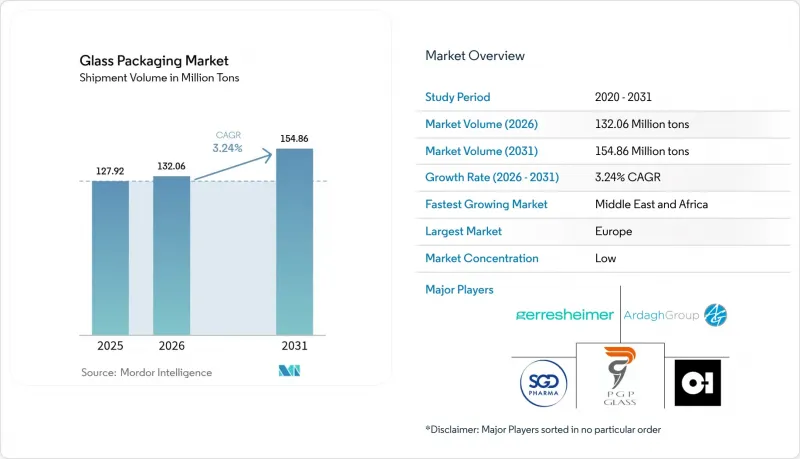
본 보고서는 제품 유형(병·항아리, 기타), 최종 이용 산업(식품, 음료, 의약품, 기타), 색상(플린트, 앰버, 기타), 용량(200mL 이하, 200-500mL, 500-1,000mL, 1,000mL 초과),지역(북미, 유럽, 아시아태평양, 중동 및 아프리카, 남미)별로 분류되어 있습니다. 시장 전망은 수량(톤) 단위로 제시되어 있습니다.
세계 유리 포장 시장 동향 및 인사이트
크래프트 맥주와 프리미엄 증류주의 급증이 유리병 수요를 견인
크래프트 맥주 양조장 및 신규 증류소 증가가 유리병 수주 증가를 뒷받침하고 있습니다. 아다그 그룹은 이러한 수요에 부응하기 위해 2024년에 프리미엄 증류주 제품 라인업을 확충했습니다. 영국 증류주 시장은 2024년에 168억 파운드에 달했으며, 50개 이상의 증류소가 새로 설립됨에 따라 프리미엄 포지셔닝이 유리병 채택을 촉진하고 있음이 드러났습니다. RTD(Ready-to-Drink) 칵테일 시장은 2030년까지 연평균 16.2%의 성장이 예상되며, 풍미를 보호하고 진정한 품질을 어필할 수 있는 유리병이 선호되고 있습니다. 주류 생산 분야의 ‘하이퍼로컬’ 트렌드 또한, 수제 전통을 부각시키는 소량 생산 유리병 제조에 호재가 되고 있습니다. 브랜드 소유주들은 슈퍼 프리미엄 음료를 선보일 때 유리의 투명성, 강성, 비활성 특성을 중시하고 있습니다.
mRNA 및 벡터형 백신의 도입이 의약품용 유리 바이알 수요를 끌어올리고
신규 바이오의약품 생산 확대에 힘입어, 유형 I 바이알에 대한 지속적인 수요가 견인되고 있습니다. SCHOTT Pharma는 GLP-1 의약품용 유리 주사기와 mRNA 의약품용 리필 가능한 폴리머 시스템을 공급하는 노스캐롤라이나주 공장에 3억 7,100만 달러를 투자했습니다. FDA는 2024년에 용기 및 밀봉 시스템 변경에 관한 최신 지침을 발표하며, 바이알 품질에 대한 규제 당국의 중점을 강조했습니다. 코닝(Corning)사의 ‘Valor’ 제형은 붕소를 제거하여 층간 박리를 방지함으로써 의약품의 안전성을 확보하는 동시에 자동 충전 라인의 구현을 가능하게 합니다. 이러한 움직임은 의약품용 유리 포장 시장 솔루션의 장기적인 성장 잠재력을 뒷받침합니다.
대체 솔루션의 등장
경량 알루미늄과 신흥 바이오 플라스틱은 특히 비용에 민감한 음료 부문에서 유리 포장 시장의 잠재적 시장 규모를 잠식하고 있습니다. 코프 워터(Cop Water)사는 알루미늄의 뛰어난 잔존 가치를 강조하고 있으며, 이는 폐쇄형 유통 채널에서 거의 100%에 달하는 회수율을 뒷받침하고 있습니다. 블루 트리톤(Blue Triton)은 재활용의 경제성을 높이기 위해 폴란드 스프링(Poland Spring) 제품에 알루미늄 병을 도입했습니다. 석유화학제품 감축을 목표로 하는 유럽의 정책은 PLA 및 PEF 분야의 혁신을 가속화하며, 유리에 대한 경쟁을 심화시키고 있습니다.
부문별 분석
병 및 용기는 식품, 음료, 미용 각 부문에 걸쳐 있기 때문에 2025년 총 출하량의 64.55%를 차지했습니다. 바이알·앰플은 불활성 포장이 필요한 새로운 세포 및 유전자 치료의 등장으로 연평균 성장률(CAGR) 6.28%를 기록하며 가장 빠른 성장세를 보였습니다. SCHOTT Pharma는 2024년에 주사기 및 바이알 솔루션 부문에서 10억 3,400만 달러의 매출을 기록했습니다. 코닝(Corning)사의 ‘Valor’ 유리는 층간 박리를 해소하고 자동 충전 라인에서의 내구성을 향상시키고 있습니다. 바이오의약품 파이프라인이 성숙해짐에 따라 바이알용 유리 포장 시장 규모는 꾸준히 확대될 것으로 예측됩니다.
실험용 용기 등 보다 광범위한 특수 제품은 틈새 시장에 머물러 있지만, 안정적인 수요를 유지하고 있습니다. 자동화가 수공 블로우 성형을 대체함에 따라 벽 두께의 균일성과 치수 정밀도가 확보되고 있습니다. 게레스하이머(Geresheimer)사가 볼미올리 파마(Bormioli Pharma)사를 인수함에 따라 ‘EZ-fill Smart’ 플랫폼이 추가되어, 충전 준비 완료 공정의 효율화가 도모되고 있습니다. 현재 경쟁사와의 차별화는 표면 코팅 및 복약 순응도를 모니터링하는 스마트 캡에 초점이 맞추어져 있습니다.
음료 부문은 맥주, 와인, 증류주에서 유리 용기에 대한 뿌리 깊은 선호도로 인해 2025년에는 54.10%의 점유율을 차지했습니다. 크래프트 브랜드는 색상과 탄산의 매력을 돋보이게 하기 위해 플린트 병을 선택하고 있습니다. 프리미엄 주스나 유제품 혼합 음료와 같은 비알코올 음료도 풍미를 해치지 않기 위해 유리 용기를 채택하고 있습니다. 프리미엄 SKU가 대중 시장 브랜드를 능가하는 성장을 이어가는 가운데, 음료 부문이 차지하는 유리 포장 시장 점유율은 앞으로도 유지될 것으로 예측됩니다.
의약품 부문은 연평균 성장률(CAGR) 7.11%로 가장 빠르게 성장하고 있는 부문입니다. mRNA 백신 및 GLP-1 주사제 생산에 힘입어, 2031년까지 의약품용 유리 포장 시장 규모는 사상 최고 수준에 도달할 것으로 전망됩니다. 화장품, 향수, 퍼스널케어 제품은 재활용성 목표를 달성하면서도 고급스러운 이미지를 어필하기 위해 유리 포장을 채택하고 있습니다. 식품 용도에서는 특히 제품의 가시성을 살릴 수 있는 소스나 고급 조미료를 중심으로 안정적인 수요가 유지되고 있습니다.
지역별 분석
유럽은 성숙한 제조거점, 엄격한 재활용 목표, 뿌리 깊은 와인 및 증류주 문화 덕분에 2025년 시장 규모의 37.75%를 차지했습니다. 베라리아(Veralia)는 코냑에서 최초의 완전 전기 용광로를 가동하여 CO₂ 배출량을 60% 감축함으로써, 해당 지역의 탈탄소화에서 리더십을 보여주었습니다. AGC 글라스 유럽(AGC Glass Europe)은 2023년에 70만 톤의 유리 파편을 재활용하여 순환 경제의 모멘텀을 더욱 강화했습니다. 엄격한 생산자 책임 지침에 따라 규제 측면에서는 특정 플라스틱보다 유리가 우대받는 경향이 있습니다. 2024년에는 맥주 판매량이 정체되면서 수요가 소폭 감소했으나, 혁신과 프리미엄화를 통해 부가가치는 안정세를 유지하고 있습니다.
북미는 수제 음료 및 생명공학 거점의 지원에 힘입어 여전히 매우 중요한 시장입니다. 이 지역 최대 생산자인 O-I Glass는 수요 변화에 맞추어 공급을 조정하기 위해 2025년 중반까지 생산 능력을 7% 감축하는 방안을 검토하고 있습니다. 보슈와 알로아 공장에 대한 전기화 투자는 해당 그룹의 배출량 감축 노력을 여실히 보여주고 있습니다. 재활용 재료 사용에 대한 규제상의 우대 조치와 첨단 제조 세액 공제는 현대화를 가속화할 가능성이 있습니다.
아시아태평양은 중국의 일시적인 재고 과잉에도 불구하고 견조한 성장세를 보이고 있습니다. BG Container Glass는 2023년에 4억 3,200만 달러의 매출을 기록했으며, 2030년까지 연평균 성장률(CAGR) 4.7%를 전망하고 있습니다. 중국의 판유리 제조업체들은 태양광 발전 및 자동차 시장으로 사업을 전환하고 있어, 수요가 회복되면 용기용 유리 생산 능력을 확보할 수 있게 될 것입니다. 급속한 도시화, 새로운 중산층 소비자층의 부상, RTD(즉석 음용) 시장의 급성장은 모두 유리 포장 시장의 장기적인 확장을 뒷받침하고 있습니다.
중동 및 아프리카는 인프라 구축과 포장 제품 수요 증가에 힘입어 2031년까지 연평균 성장률(CAGR) 7.67%라는 가장 높은 성장률을 기록할 전망입니다. Vitro는 이 지역의 성장에 대응하기 위해 이집트에서 4억 달러 규모의 유리 관련 투자를 계획하고 있습니다. HORN은 나이지리아의 Frigoglass를 위해 새로운 용광로를 가동하여 현지 생산 능력 향상을 입증했습니다. 국내 제조를 장려하는 정부의 정책에 따라 수입 의존도가 낮아지고, 공급망의 탄력성이 향상되고 있습니다.
남미에서는 주요 음료 수요가 증가하고 재활용 시스템 구축이 진행되면서 꾸준한 성장이 예상됩니다. 각 생산 기업들은 광활한 지역 내 물류 비용을 절감하기 위해 경량 병 도입을 검토하고 있습니다. 전반적으로 이러한 지역별 동향은 지속가능성 프레임워크, 에너지 가격, 소비자 기호가 지역별로 상이한 성장 궤도를 만들어내고 있음을 여실히 보여주고 있습니다.
기타 혜택
- 엑셀 형식 시장 예측(ME) 시트
- 3개월간의 애널리스트 지원
자주 묻는 질문
목차
제1장 서론
제2장 조사 방법
제3장 주요 요약
제4장 시장 구도
제5장 시장 규모와 성장 예측
제6장 경쟁 구도
제7장 시장 기회와 향후 전망
LSH 26.09.02According to Mordor Intelligence, the glass packaging market size was valued at 127.92 million tons in 2025 and estimated to grow from 132.06 million tons in 2026 to reach 154.86 million tons by 2031, at a CAGR of 3.24% during the forecast period (2026-2031).
This report is Segmented by Product Type (Bottles and Jars, and More), End-Use Industry (Food, Beverage, Pharmaceuticals, and More), Color (Flint, Amber, and More), Capacity (Less Than 200ml, 200-500ml, 500-1000ml, More Than 1000ml), and Geography (North America, Europe, Asia-Pacific, Middle East and Africa, South America). The Market Forecasts are Provided in Terms of Volume (Tons).
Global Glass Packaging Market Trends and Insights
Craft Beer and Premium Spirits Surge Fueling Glass Bottle Demand
Rising craft breweries and new distilleries are fueling incremental glass bottle orders. Ardagh Group broadened its premium spirits portfolio in 2024 to meet this appetite. The UK spirits market reached GBP 16.8 billion in 2024 with more than 50 additional distilleries, demonstrating how premium positioning drives glass uptake. Ready-to-drink cocktails are projected to grow 16.2% per year to 2030, favouring glass because it safeguards flavour and signals authenticity. The hyperlocal trend in spirits production also benefits small-batch glass bottle runs that showcase craft heritage. Brand owners value the material's clarity, rigidity, and inertness when presenting super-premium liquids.
mRNA and Vector-Vaccine Rollout Boosting Pharmaceutical Glass Vials
Scaling production of new biologics drives sustained demand for Type I vials. SCHOTT Pharma committed USD 371 million to a North Carolina plant that will supply glass syringes for GLP-1 drugs and refillable polymer systems for mRNA medicines. The FDA issued updated guidance on container-closure changes in 2024, underscoring regulatory focus on vial quality. Corning's Valor formulation removes boron to prevent delamination, addressing drug safety while enabling automated filling lines. These moves confirm the long-term growth runway for pharma glass packaging market solutions.
Availability of Alternative Solutions
Lightweight aluminum and emerging bio-based plastics are eating into the addressable volume of the glass packaging market, particularly in cost-sensitive beverage segments. Kopu Water highlights the superior residual value of aluminum, which supports near-100% capture rates in closed-loop channels. BlueTriton adopted aluminum bottles for Poland Spring to improve recycling economics. European policy that targets petrochemical reduction accelerates innovation in PLA and PEF, raising competitive intensity for glass.
Other drivers and restraints analyzed in the detailed report include:
- Increasing Demand from Cosmetics Industry for Premium Packaging
- RTD Coffee and Functional Drinks Uptake in Asia Spurring Lightweight Glass Bottles
- Shortage of Pharma-Grade Borosilicate Tubing Limits Vial Supply
For complete list of drivers and restraints, kindly check the Table Of Contents.
Segment Analysis
Bottles and jars held 64.55% of 2025 volumes as they span food, beverage, and beauty sectors. Vials and ampoules posted the fastest trajectory, growing at 6.28% CAGR on the back of new cell-and-gene therapies that require inert packaging. SCHOTT Pharma generated USD 1.034 billion revenue in 2024 from syringe and vial solutions. Corning's Valor glass eliminates delamination, improving durability in automated fill lines. The glass packaging market size for vials is projected to climb steadily as biologic pipelines mature.
Broader specialty items such as laboratory containers remain niche but stable. Automation has replaced hand-blown production, ensuring uniform wall thickness and dimensional accuracy. Gerresheimer's acquisition of Bormioli Pharma adds the EZ-fill Smart platform to streamline ready-to-fill processing. Competitive differentiation now centres on surface coatings and smart caps that monitor adherence.
Beverages commanded 54.10% share in 2025 thanks to entrenched glass preferences in beer, wine, and spirits. Craft labels choose flint bottles to showcase colour and carbonation. Non-alcoholic drinks such as premium juices and dairy blends also lean on glass for flavour integrity. The glass packaging market share held by beverages is expected to persist as premium SKUs outgrow mass brands.
Pharmaceuticals represent the fastest-growing vertical at 7.11% CAGR. Production of mRNA vaccines and GLP-1 injectables will push the glass packaging market size for pharma to new highs by 2031. Cosmetics, fragrances, and personal care lines turn to glass to communicate luxury while meeting recyclability goals. Food applications maintain baseline demand, particularly for sauces and gourmet condiments that benefit from product visibility.
Complete Report Scope:
- By Product Type
- Bottles and Jars
- Vials and Ampoules
- Others Product Types
- By Color
- Flint
- Amber
- Green
- Other Colors
- By Capacity
- Less than 200 ml
- 200-500 ml
- 500-1000 ml
- More than 1000 ml
- By End-Use Industry
- Food
- Beverage
- Alcoholic Beverage
- Beer
- Wine
- Spirits
- Other Alcoholic Beverages (Cider and Other Fermented Drinks)
- Non-Alcoholic Beverage
- Carbonated Soft Drinks
- Juices
- Dairy Product Based Drinks
- Other Non-Alcoholic Beverages
- Alcoholic Beverage
- Pharmaceuticals
- Cosmetics and Personal Care
- Other End-Use Indusry
- By Geography
- North America
- United States
- Canada
- Mexico
- Europe
- Germany
- United Kingdom
- France
- Italy
- Spain
- Russia
- Rest of Europe
- Asia-Pacific
- China
- India
- Japan
- South Korea
- Australia and New Zealand
- Rest of Asia-Pacific
- Middle East and Africa
- Middle East
- United Arab Emirates
- Saudi Arabia
- Turkey
- Rest of Middle East
- Africa
- South Africa
- Nigeria
- Egypt
- Rest of Africa
- Middle East
- South America
- Brazil
- Argentina
- Rest of South America
- North America
Geography Analysis
Europe controlled 37.75% of 2025 volume owing to a mature manufacturing base, stringent recycling targets, and entrenched wine and spirits culture. Verallia switched on the first fully electric furnace in Cognac, trimming CO2 by 60% and demonstrating the region's decarbonization leadership AGC Glass Europe recycled 700,000 tons of cullet during 2023, reinforcing circular-economy momentum. Stringent producer-responsibility directives tilt the regulatory field toward glass over certain plastics. Demand pulled back slightly in 2024 on softer beer volumes, yet innovation and premiumization keep value stable.
North America remains a pivotal market supported by craft beverages and biotech hubs. O-I Glass, the region's largest producer, is reviewing a 7% capacity cut by mid-2025 to align supply with demand shifts. Investments in electrification at Veauche and Alloa plants highlight the group's commitment to emission reductions. Regulatory incentives for recycled content and advanced manufacturing tax credits could accelerate modernization.
Asia-Pacific shows resilient growth despite temporary inventory overhangs in China. BG Container Glass posted USD 432 million revenue in 2023 and expects 4.7% CAGR through 2030. China's flat glass makers are pivoting toward photovoltaic and automotive markets, freeing capacity for container glass once demand rebounds. Rapid urbanization, new middle-class consumers, and the RTD boom all support long-term expansion of the glass packaging market.
The Middle East and Africa is set to record the strongest 7.67% CAGR through 2031, driven by infrastructure build-out and rising packaged-goods demand. Vitro plans USD 400 million of glass investments in Egypt to meet regional growth. HORN fired up a new furnace for Frigoglass in Nigeria, proving local capability gains. Government policies encouraging domestic manufacturing reduce import reliance and build supply-chain resilience.
South America delivers steady gains from beverage staples and improving recycling systems. Producers are exploring lightweight bottles to cut logistics costs across vast geographies. Altogether, geographic dynamics highlight how sustainability frameworks, energy prices, and consumer preferences create diverse regional trajectories.
- O-I Glass Inc. (Owens-Illinois)
- Ardagh Group
- Gerresheimer AG
- Wiegand-Glas GmbH
- Piramal Glass Pvt. Ltd.
- Hindustan National Glass & Industries Ltd.
- Verallia Deutschland AG
- SGD Pharma
- WestPack LLC
- Berlin Packaging LLC
- SGD Kipfenberg GmbH
- HEINZ-GLAS GmbH & Co. KGaA
- BA Glass Germany GmbH
- AGI glaspac
- Glashutte Freital GmbH
- KP Glas GmbH & Co. KG
- San Miguel Yamamura Packaging Corporation
- Hung Phu Glass Joint Stock Company (HuphuMeglass)
- Vietnam Nashley Technology Joint Stock Company
- Feemio Group Co., Ltd.
- Pavico Packaging Company Limited
- SCHOTT Pharma (SCHOTT Group)
- Pharma-Q Holdings (Pty) Ltd.
- Nurrin Pharmalab
- Stevanato Group Spa
- Corning Incorporated
- Kapoor Glass India Pvt. Ltd.
- Neelam Global Pvt. Ltd
- Khemka Glass
- Amputech Industry
- Stevanato Group
- Hindustan Glass Works
Additional Benefits:
- The market estimate (ME) sheet in Excel format
- 3 months of analyst support
TABLE OF CONTENTS
1 INTRODUCTION
- 1.1 Study Assumptions and Market Definition
- 1.2 Scope of the Study
2 RESEARCH METHODOLOGY
3 EXECUTIVE SUMMARY
4 MARKET LANDSCAPE
- 4.1 Market Overview
- 4.2 Market Drivers
- 4.2.1 Craft beer and premium spirits surge, fueling the demand for glass bottles
- 4.2.2 mRNA and vector-vaccine rollout boosting pharma glass vials globally
- 4.2.3 Increasing Demand from the Cosmetics Industry for Premium Packaging
- 4.2.4 RTD coffee and functional drinks uptake in Asia spurring lightweight glass bottles
- 4.2.5 Multifaceted Advantages of Container Glass Increasing Its Popularity
- 4.3 Market Restraints
- 4.3.1 Availability of Alternative Solutions
- 4.3.2 Shortage of pharma-grade borosilicate tubing limits vial supply
- 4.3.3 Higher Carbon Footprint Glass Manufacturing Hampers Market Growth
- 4.4 Supply-Chain Analysis
- 4.5 Industry Standards and Regulations for Glass Packaging
- 4.6 Export - Import Data (Under Relevant Hs Code)
- 4.7 Recycling Trends for Glass Packaging
- 4.8 Raw Material Analysis
- 4.9 Demand vs. Supply Analysis for Glass Packaging
- 4.10 Porter's Five Forces Analysis
- 4.10.1 Bargaining Power of Suppliers
- 4.10.2 Bargaining Power of Buyers
- 4.10.3 Threat of New Entrants
- 4.10.4 Threat of Substitute Products
- 4.10.5 Intensity of Competitive Rivalry
5 MARKET SIZE AND GROWTH FORECASTS (VOLUME)
- 5.1 By Product Type
- 5.1.1 Bottles and Jars
- 5.1.2 Vials and Ampoules
- 5.1.3 Others Product Types
- 5.2 By Color
- 5.2.1 Flint
- 5.2.2 Amber
- 5.2.3 Green
- 5.2.4 Other Colors
- 5.3 By Capacity
- 5.3.1 Less than 200 ml
- 5.3.2 200-500 ml
- 5.3.3 500-1000 ml
- 5.3.4 More than 1000 ml
- 5.4 By End-Use Industry
- 5.4.1 Food
- 5.4.2 Beverage
- 5.4.2.1 Alcoholic Beverage
- 5.4.2.1.1 Beer
- 5.4.2.1.2 Wine
- 5.4.2.1.3 Spirits
- 5.4.2.1.4 Other Alcoholic Beverages (Cider and Other Fermented Drinks)
- 5.4.2.2 Non-Alcoholic Beverage
- 5.4.2.2.1 Carbonated Soft Drinks
- 5.4.2.2.2 Juices
- 5.4.2.2.3 Dairy Product Based Drinks
- 5.4.2.2.4 Other Non-Alcoholic Beverages
- 5.4.2.1 Alcoholic Beverage
- 5.4.3 Pharmaceuticals
- 5.4.4 Cosmetics and Personal Care
- 5.4.5 Other End-Use Indusry
- 5.5 By Geography
- 5.5.1 North America
- 5.5.1.1 United States
- 5.5.1.2 Canada
- 5.5.1.3 Mexico
- 5.5.2 Europe
- 5.5.2.1 Germany
- 5.5.2.2 United Kingdom
- 5.5.2.3 France
- 5.5.2.4 Italy
- 5.5.2.5 Spain
- 5.5.2.6 Russia
- 5.5.2.7 Rest of Europe
- 5.5.3 Asia-Pacific
- 5.5.3.1 China
- 5.5.3.2 India
- 5.5.3.3 Japan
- 5.5.3.4 South Korea
- 5.5.3.5 Australia and New Zealand
- 5.5.3.6 Rest of Asia-Pacific
- 5.5.4 Middle East and Africa
- 5.5.4.1 Middle East
- 5.5.4.1.1 United Arab Emirates
- 5.5.4.1.2 Saudi Arabia
- 5.5.4.1.3 Turkey
- 5.5.4.1.4 Rest of Middle East
- 5.5.4.2 Africa
- 5.5.4.2.1 South Africa
- 5.5.4.2.2 Nigeria
- 5.5.4.2.3 Egypt
- 5.5.4.2.4 Rest of Africa
- 5.5.4.1 Middle East
- 5.5.5 South America
- 5.5.5.1 Brazil
- 5.5.5.2 Argentina
- 5.5.5.3 Rest of South America
- 5.5.1 North America
6 COMPETITIVE LANDSCAPE
- 6.1 Market Concentration
- 6.2 Strategic Moves and Developments
- 6.3 Market Share Analysis
- 6.4 Company Profiles (includes Global level Overview, Market level overview, Core Segments, Financials as available, Strategic Information, Market Rank/Share for key companies, Products and Services, and Recent Developments)
- 6.4.1 O-I Glass Inc. (Owens-Illinois)
- 6.4.2 Ardagh Group
- 6.4.3 Gerresheimer AG
- 6.4.4 Wiegand-Glas GmbH
- 6.4.5 Piramal Glass Pvt. Ltd.
- 6.4.6 Hindustan National Glass & Industries Ltd.
- 6.4.7 Verallia Deutschland AG
- 6.4.8 SGD Pharma
- 6.4.9 WestPack LLC
- 6.4.10 Berlin Packaging LLC
- 6.4.11 SGD Kipfenberg GmbH
- 6.4.12 HEINZ-GLAS GmbH & Co. KGaA
- 6.4.13 BA Glass Germany GmbH
- 6.4.14 AGI glaspac
- 6.4.15 Glashutte Freital GmbH
- 6.4.16 KP Glas GmbH & Co. KG
- 6.4.17 San Miguel Yamamura Packaging Corporation
- 6.4.18 Hung Phu Glass Joint Stock Company (HuphuMeglass)
- 6.4.19 Vietnam Nashley Technology Joint Stock Company
- 6.4.20 Feemio Group Co., Ltd.
- 6.4.21 Pavico Packaging Company Limited
- 6.4.22 SCHOTT Pharma (SCHOTT Group)
- 6.4.23 Pharma-Q Holdings (Pty) Ltd.
- 6.4.24 Nurrin Pharmalab
- 6.4.25 Stevanato Group Spa
- 6.4.26 Corning Incorporated
- 6.4.27 Kapoor Glass India Pvt. Ltd.
- 6.4.28 Neelam Global Pvt. Ltd
- 6.4.29 Khemka Glass
- 6.4.30 Amputech Industry
- 6.4.31 Stevanato Group
- 6.4.32 Hindustan Glass Works
7 MARKET OPPORTUNITIES AND FUTURE OUTLOOK
- 7.1 White-space and Unmet-need Assessment