

|
시장보고서
상품코드
2123161
인도의 용기용 유리 시장 : 점유율 분석, 산업 동향 및 통계 데이터, 성장 예측(2026-2031년)India Container Glass - Market Share Analysis, Industry Trends & Statistics, Growth Forecasts (2026 - 2031) |
||||||
 Mordor Intelligence
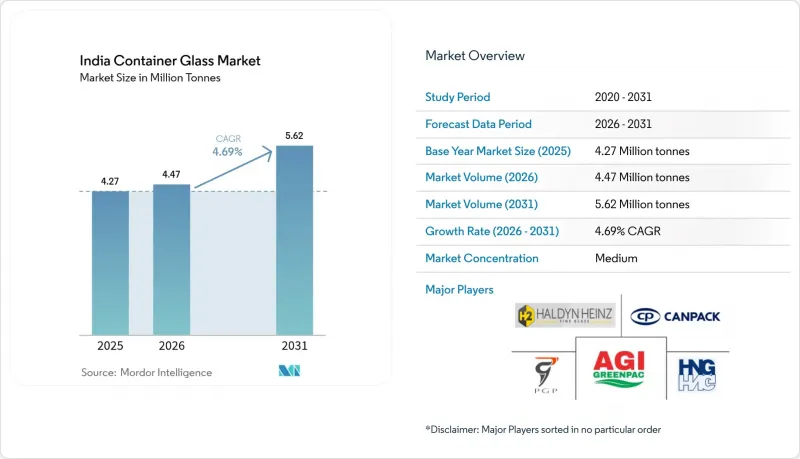
Mordor Intelligence에 의하면, 인도 용기용 유리 시장 규모는 2025년 427만 톤에서 2026년에는 447만 톤으로 확대되어 2031년까지 562만 톤에 이를 것으로 예상되고 있어 2026년부터 2031년까지 CAGR 4.69%로 성장할 전망입니다.
본 보고서는 최종 사용자별(음료(주류(맥주, 와인, 증류주, 기타 주류), 무알코올 음료(주스, 탄산음료, 유제품 베이스 음료, 기타 무알코올 음료)), 식품, 화장품 및 퍼스널케어, 의약품(바이알·앰플 제외), 기타), 색상(녹색, 호박색, 플린트, 기타)별로 분류되어 있습니다. 시장 전망은 수량(톤) 기준으로 제시되어 있습니다.
인도 용기용 유리 시장 동향 및 인사이트
포장 식품 및 음료의 붐
2025년까지 조직화된 소매 시장의 침투율은 15%대 중반에 달할 것으로 예상되며, 이에 따라 프리미엄 주스, 수제 잼, 콜드 프레스 주스 브랜드들은 높은 순도를 강조하고 화학 방부제를 사용하지 않고도 유통 기한을 연장할 수 있는 유리 용기로의 전환을 추진하고 있습니다. 200밀리리터에서 500밀리리터 용량의 플린트 유리 항아리나 병을 채택한 제품 라인은 소매 가격이 25% 가까이 비싸지만, 이를 통해 치솟는 포장 비용을 상쇄하고 있습니다. 인도 표준국(BIS)의 내열충격성 규격에 대한 지속적인 통합으로 인해 저가 수입품의 진입 장벽이 높아지고 있으며, 이는 국내 용해로 현대화를 촉진하고 있습니다. 현재는 대도시권이 도입을 주도하고 있지만, 유통업체를 대상으로 한 조사에 따르면 2027년 이후에는 2급 도시권이 판매량 증가분의 대부분을 차지할 것으로 전망됩니다. 이러한 추세는 중기적으로 인도의 용기용 유리 시장에 상당한 성장을 가져올 것으로 예측됩니다.
주류 소비 증가
인도에서는 2024년에 11억 케이스 이상의 주류가 출하되었으며, 2025년에는 프리미엄 맥주, 싱글 몰트 위스키, 수입 와인이 전반적으로 두 자릿수 성장률을 기록했습니다. 이러한 카테고리에서는 풍미 성분을 보호하기 위해 맞춤형 엠보싱 가공, 더 깊은 바닥 오목함, 호박색이나 녹색 착색을 지정하는 경향이 강해지고 있으며, 이는 플라스틱이나 캔으로는 재현하기 어려운 특징입니다. 소규모 양조장의 소비자 직접 판매를 허용하는 주(州)의 주세 개혁으로 인해 시장 출시 기간이 단축되었고, 컷렛으로 재활용되기 전까지 약 18회의 사용 주기를 견딜 수 있는 330밀리리터 리터블 병의 수주가 증가했습니다. 금형 리드타임이 4개월 미만이기 때문에 유리 공급업체는 양조업자의 신속한 SKU 출시에 대응할 수 있으며, 캔 생산 라인 가동 시작 일정을 앞지르고 있습니다. 라벨 도입 속도가 빠르다는 점이 인도 용기용 유리 시장의 단기적인 판매량 증가를 뒷받침하고 있습니다.
플라스틱 및 연포장재로의 대체
경질 플라스틱 병과 주입구가 달린 파우치는 단가가 40-50% 저렴하고, 무게도 훨씬 가벼우며, 고속 무균 충전기와의 통합도 용이하다는 특징 덕분에 주스, 식용유, 유제품 부문에서 점유율을 지속적으로 확대되고 있습니다. 2025년 규제 개정으로 재활용 PET의 식품 직접 접촉이 허용됨에 따라, 가격에 민감한 농촌 지역에서 경량 병의 도입이 더욱 가속화되었습니다. 스탠드업 파우치는 이미 케첩 및 소스 분야의 5분의 1 이상을 차지하며, 유리병의 판매량을 잠식하고 있습니다. 기존 유리병 충전 라인을 연포장 형태로 전환할 경우 투자 회수 기간은 약 3년이며, 중기적으로는 대체 압력이 지속될 것으로 예측됩니다. 또한 대도시권 이외 지역에서는 카렛(재활용 유리 조각) 회수율이 낮아 재활용 소재 사용률이 세계 기준에 미치지 못하고 있어, 유리 제조업체의 비용 절감 효과가 둔화되고 있습니다.
부문 분석
2025년에는 음료가 총 톤수의 64.83%를 차지하여, 이 부문이 인도 용기용 유리 시장의 주요 수익원으로서의 입지를 공고히 했습니다. 주류가 그 대부분을 차지하고 있으며, 맥주만으로도 유리 수요의 절반 이상을 차지하고, 그 다음으로 증류주, 와인이 뒤를 잇고 있습니다. 무알코올 음료 제조업체들은 주스 및 향이 첨가된 우유 제품에서 PET로의 전환을 추진하며 재고 관리 단위(SKU)를 지속적으로 합리화하고 있지만, 탄산 청량음료 보틀러 기업들은 비용 효율이 높은 폐쇄형 물류 체계를 실현하기 위해 여전히 반환 가능한 유리병에 의존하고 있습니다. 식품 용도(잼, 소스, 피클, 유아식)는 생산량의 5분의 1도 채 차지하지 않지만, 유기농 제품 및 무첨가 제품의 유통이 2선 도시에서 확대되고 있어 4.3%라는 견실한 연평균 성장률(CAGR)을 보이고 있습니다. 화장품 및 퍼스널케어 제품은 생산량의 10%에 불과하지만, 스킨케어 및 아유르베다 제제를 휩쓸고 있는 프리미엄화 추세를 반영하여 4.82%의 연평균 성장률(CAGR)을 기록하며 다른 모든 최종 사용자 부문을 앞질렀습니다.
소비자 취향의 변화는 가격 체계에 뚜렷하게 반영되고 있습니다. 특별 주문 제작된 엠보싱 가공이 적용되고 바닥이 두꺼운 크래프트 맥주용 병은 표준 반환용 용기에 비해 15-20%의 가격 프리미엄이 붙어 있어, 플린트 유리 및 앰버 유리 공급 계약의 이익률을 끌어올리고 있습니다. 국내 뷰티 소매업체들이 선구적으로 도입한 리필 가능한 화장품 이니셔티브는 3번째 리필 주기 이후 1회당 포장 비용을 절감하고, 고객과의 장기적인 유대감을 강화하고 있습니다. 부정 개봉 방지 기능이 있는 캡이 장착된 식품용 플린트 병은 18개월 이상의 유통 기한이 필요한, 끊임없이 늘어나는 장인 정신이 깃든 조미료 제품 라인업을 뒷받침하고 있습니다. 식품 및 음료 포장용 유리 규격에 대한 규제 강화로 기술적 기준이 지속적으로 높아지고 있으며, 이로 인해 저가 수입품이 억제되면서 인도 용기용 유리 시장 내 점유율 확대가 확고해지고 있습니다.
기타 혜택:
- Excel 형식 시장 예측(ME) 시트
- 3개월간의 애널리스트 지원
자주 묻는 질문
목차
제1장 서론
제2장 분석 방법
제3장 주요 요약
제4장 시장 구도
제5장 시장 규모와 성장 예측
제6장 경쟁 구도
제7장 시장 기회와 향후 전망
JHS 26.09.11According to Mordor Intelligence, the India container glass market size is expected to increase from 4.27 million tonnes in 2025 to 4.47 million tonnes in 2026 and reach 5.62 million tonnes by 2031, growing at a 4.69% CAGR over 2026-2031.
This report is Segmented by End-User (Beverages [Alcoholic {Beer, Wine, Spirits, Other Alcoholic Beverages}, Non-Alcoholic {Juices, Carbonated Drinks, Dairy-Product-Based Drinks, Other Non-Alcoholic Beverages}], Food, Cosmetics and Personal Care, Pharmaceuticals [excl. Vials and Ampoules, and More), and Colour (Green, Amber, Flint, and More). The Market Forecasts are Provided in Terms of Volume (Tonnes).
India Container Glass Market Trends and Insights
Packaged Food and Beverage Boom
Organized retail penetration moved into the mid-teens by 2025, prompting premium juice, artisanal preserve, and cold-pressed-juice brands to migrate toward glass containers that signal purity and help extend shelf life without chemical preservatives. Product lines adopting 200-milliliter to 500-milliliter flint jars and bottles command retail premiums approaching 25%, cushioning higher packaging costs. Ongoing harmonization of Bureau of Indian Standards specifications for thermal-shock resistance is raising the entry bar for low-cost imports, reinforcing domestic furnace upgrades. Metro markets lead adoption today, yet distributor surveys indicate Tier-2 urban clusters will generate most incremental volume from 2027 onward. This trajectory supports a meaningful uplift to the India container glass market over the medium term.
Alcohol Consumption Growth
India shipped more than 1.1 billion alcoholic-beverage cases in 2024, and premium beer, single-malt whisky, and imported wine collectively grew at double-digit rates in 2025. These categories increasingly specify bespoke embossing, heavier punt depths, and amber or green tints to protect flavor compounds, features that plastics and cans struggle to replicate. State excise reforms permitting direct-to-consumer sales by microbreweries compressed route-to-market times and lifted orders for 330-milliliter returnable bottles that withstand roughly 18 trip cycles before cullet diversion. Tooling lead times of fewer than four months enable glass suppliers to match brewers' rapid SKU launches, outpacing can-line commissioning schedules. The quick cadence of label introductions underpins short-term volume tailwinds for the India container glass market.
Plastic and Flexible-Pack Substitution
Rigid plastic bottles and spouted pouches offer 40-50% lower unit costs, weigh far less, and integrate readily with high-speed aseptic fillers, attributes that continue to win share in juice, edible-oil, and dairy categories. A 2025 regulatory amendment allowing recycled PET for direct food contact further accelerated deployment of lightweight bottles in value-conscious rural regions. Stand-up pouches already claim more than one-fifth of the ketchup and sauce segment, drawing volume away from glass. The payback period for converting existing glass-fill lines to flexible formats is roughly three years, suggesting substitution pressure will persist through the medium term. Lower cullet-collection rates outside metropolitan areas also keep recycled-content penetration below global benchmarks, blunting cost-relief for glass producers.
Other drivers and restraints analyzed in the detailed report include:
- Government Push Against Single-Use Plastics
- ESG Commitments and Premium Perception
- Energy-Intensive Melting and CO2 Cost Risks
For complete list of drivers and restraints, kindly check the Table Of Contents.
Segment Analysis
Beverages supplied 64.83% of total tonnage in 2025, cementing the segment as the principal revenue engine for the India container glass market. Alcoholic drinks accounted for the bulk, with beer alone accounting for more than half of glass demand, followed by spirits and wine. Non-alcoholic fillers continue to rationalize stock-keeping units toward PET in juice and flavored-milk lines, but carbonated-soft-drink bottlers still rely on returnable glass for cost-effective closed-loop logistics. Food applications-jams, sauces, pickles, and baby nutrition-account for just below one-fifth of output yet exhibit solid 4.3% compound growth as organic and preservative-free labels expand distribution in Tier-2 cities. Cosmetics and personal care, although accounting for only 10% of volume, outpaced all other end users with a 4.82% CAGR, reflecting the premiumization wave sweeping skincare and Ayurvedic formulations.
Shifts in consumer preferences are reflected starkly in pricing structures. Craft beer bottles with bespoke embossing and heavier base weights fetch 15-20% price premiums over standard returnable formats, strengthening margins for flint and amber supply contracts. Refillable cosmetics initiatives pioneered by domestic beauty retailers lower per-use packaging costs beyond the third refill cycle, deepening long-run customer ties. Food-grade flint jars equipped with tamper-evident closures support a growing portfolio of artisanal condiments whose shelf life must exceed 18 months. Regulatory upgrades to glass specifications for food and beverage packaging continue to raise technical thresholds, deterring low-cost imports and consolidating share gains inside the India container glass market.
Complete Report Scope:
- By End-user
- Beverages
- Alcoholic
- Beer
- Wine
- Spirits
- Other alcoholic beverages
- Non-alcoholic
- Juices
- Carbonated drinks (CSDs)
- Dairy-product-based drinks
- Other non-alcoholic beverages
- Alcoholic
- Food
- Cosmetics and personal care
- Pharmaceuticals (excl. vials & ampoules)
- Perfumery
- Beverages
- By Colour
- Green
- Amber
- Flint
- Other colours
List of Companies Covered in this Report:
- AGI Greenpac Limited
- CANPACK India Private Limited
- Hindusthan National Glass and Industries Limited
- PGP Glass Private Limited
- Haldyn Heinz Fine Glass Private Limited
- Gerresheimer AG
- Sunrise Glass Industries Private Limited
- Pragati Glass Private Limited
- Empire Industries Limited
- Borosil Limited
- Kapoor Glass India Private Limited
- Khemka Glass Private Limited
- Jagdamba Glass Works Private Limited
- Mono Industries Limited
- Verallia India Limited
- Saver Glass India Private Limited
- Vitrum Glass Private Limited
- Hitesh Glass Works Private Limited
- SBG Glass Private Limited
- Kanchan Glass Industries
Additional Benefits:
- The market estimate (ME) sheet in Excel format
- 3 months of analyst support
TABLE OF CONTENTS
1 INTRODUCTION
- 1.1 Study Assumptions and Market Definition
- 1.2 Scope of the Study
2 RESEARCH METHODOLOGY
3 EXECUTIVE SUMMARY
4 MARKET LANDSCAPE
- 4.1 Market Overview
- 4.2 Market Drivers
- 4.2.1 Packaged Food And Beverage Boom
- 4.2.2 Alcohol Consumption Growth
- 4.2.3 ESG Commitments and Premium Perception
- 4.2.4 Government Push Against Single-Use Plastics
- 4.2.5 GST Differential Favouring Glass Packaging
- 4.2.6 Expansion Of Cold-Chain Logistics
- 4.3 Market Restraints
- 4.3.1 Plastic And Flexible-Pack Substitution
- 4.3.2 Energy-Intensive Melting and Co? Cost Risks
- 4.3.3 High-Purity Silica-Sand Mining Curbs
- 4.3.4 Shift To Lightweight Aluminium Cans
- 4.4 Value Chain Analysis
- 4.5 Regulatory Landscape
- 4.6 Porter's Five Forces
- 4.6.1 Threat of New Entrants
- 4.6.2 Bargaining Power of Suppliers
- 4.6.3 Bargaining Power of Buyers
- 4.6.4 Threat of Substitutes
- 4.6.5 Competitive Rivalry
- 4.7 Pricing Analysis
- 4.8 Container Glass Furnace Capacity and Locations in India
- 4.8.1 Plant Locations and Year of Commencement
- 4.8.2 Production Capacities
- 4.8.3 Types of Furnaces
- 4.8.4 Colour of Glass Produced
- 4.9 Export-Import Data of Container Glass
- 4.9.1 Import Volume and Value, 2021-2024
- 4.9.2 Export Volume and Value, 2021-2024
- 4.10 Raw-Material Analysis
- 4.11 Recycling Trends for Glass Packaging
- 4.12 Demand vs Supply Analysis
5 MARKET SIZE AND GROWTH FORECASTS
- 5.1 By End-user
- 5.1.1 Beverages
- 5.1.1.1 Alcoholic
- 5.1.1.1.1 Beer
- 5.1.1.1.2 Wine
- 5.1.1.1.3 Spirits
- 5.1.1.1.4 Other alcoholic beverages
- 5.1.1.2 Non-alcoholic
- 5.1.1.2.1 Juices
- 5.1.1.2.2 Carbonated drinks (CSDs)
- 5.1.1.2.3 Dairy-product-based drinks
- 5.1.1.2.4 Other non-alcoholic beverages
- 5.1.1.1 Alcoholic
- 5.1.2 Food
- 5.1.3 Cosmetics and personal care
- 5.1.4 Pharmaceuticals (excl. vials & ampoules)
- 5.1.5 Perfumery
- 5.1.1 Beverages
- 5.2 By Colour
- 5.2.1 Green
- 5.2.2 Amber
- 5.2.3 Flint
- 5.2.4 Other colours
6 COMPETITIVE LANDSCAPE
- 6.1 Market Concentration
- 6.2 Strategic Moves and Developments
- 6.3 Company Market-Share Analysis
- 6.4 Company Profiles (includes Global level Overview, Market level overview, Core Segments, Financials as available, Strategic Information, Market Rank/Share for key companies, Products and Services, and Recent Developments)
- 6.4.1 AGI Greenpac Limited
- 6.4.2 CANPACK India Private Limited
- 6.4.3 Hindusthan National Glass and Industries Limited
- 6.4.4 PGP Glass Private Limited
- 6.4.5 Haldyn Heinz Fine Glass Private Limited
- 6.4.6 Gerresheimer AG
- 6.4.7 Sunrise Glass Industries Private Limited
- 6.4.8 Pragati Glass Private Limited
- 6.4.9 Empire Industries Limited
- 6.4.10 Borosil Limited
- 6.4.11 Kapoor Glass India Private Limited
- 6.4.12 Khemka Glass Private Limited
- 6.4.13 Jagdamba Glass Works Private Limited
- 6.4.14 Mono Industries Limited
- 6.4.15 Verallia India Limited
- 6.4.16 Saver Glass India Private Limited
- 6.4.17 Vitrum Glass Private Limited
- 6.4.18 Hitesh Glass Works Private Limited
- 6.4.19 SBG Glass Private Limited
- 6.4.20 Kanchan Glass Industries
7 MARKET OPPORTUNITIES AND FUTURE OUTLOOK
- 7.1 White-space and Unmet-Need Assessment


