

|
시장보고서
상품코드
2124477
아프리카의 연포장 : 시장 점유율 분석, 업계 동향 및 통계, 성장 예측(2026-2031년)Africa Flexible Packaging - Market Share Analysis, Industry Trends & Statistics, Growth Forecasts (2026 - 2031) |
||||||
 Mordor Intelligence
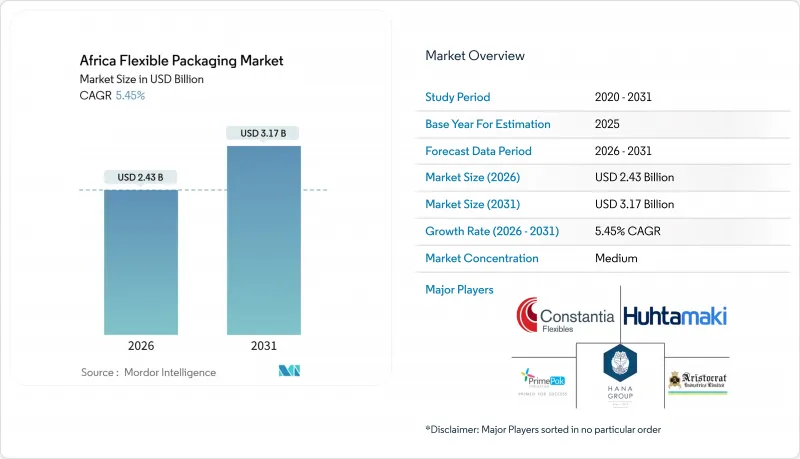
Mordor Intelligence에 의하면, 아프리카의 연포장 시장 규모는 2026년에 24억 3,000만 달러로 평가되고 2031년까지 31억 7,000만 달러에 이를 것으로 예상되며, 예측 기간 동안 CAGR 5.45%로 성장할 전망입니다.
본 보고서는 소재(플라스틱, 종이, 금속 호일, 바이오플라스틱·퇴비화 가능한 소재), 제품 유형(봉지·파우치, 필름·랩, 기타), 최종 사용자 산업(음료, 헬스케어 및 의약품, 농업, 기타),인쇄 기술(플렉소 인쇄, 그라비아 인쇄, 디지털 인쇄, 기타), 국가별로 분류되어 있습니다. 시장 예측은 금액(달러) 기준으로 제시되어 있습니다.
아프리카의 연포장 시장 동향 및 인사이트
AfCFTA 하에서 농산물·식품 가공 분야에 대한 투자 급증
상품의 90%에 대한 관세 철폐로 인해, 2023년부터 2025년에 걸쳐 120억 달러 규모의 가공 공장 건설이 촉진되었으며, 아프리카 역내 운송 중에 코코아, 캐슈넛, 카사바의 파생 제품을 보존할 수 있는 다층 배리어 필름에 대한 지속적인 수요가 발생하고 있습니다. 원산지 규정 기준에 따라 생산자는 포장재를 현지에서 조달해야 하며, 이로 인해 ISO 9001·FSSC 22000 인증을 취득한 컨버터의 거래량 가시성이 높아지고 있습니다. 나이지리아의 카사바 프로그램만 해도 2027년까지 2,000만 톤의 처리량을 목표로 하고 있으며, Sonnex Packaging과 같은 국내 공급업체가 기계 공급업체와 공동 개발한 방습 파우치가 필요합니다. 2024년부터 운영을 시작한 AfCFTA의 분쟁 해결 기구는 무역 정책상의 리스크를 줄이고, 컨버터가 관세 동맹 전역에서 물류 거점을 확대하도록 뒷받침하고 있습니다. 이러한 요소들이 결합되어 아프리카의 연포장 시장의 기초 수요를 높이는 동시에, 다국어 대응 아트워크 역량과 규제 문서 라이브러리를 통합한 공장에 이점을 제공합니다.
식품 수출에 있어 유통기한 연장 요건
아프리카에서 유럽연합(EU) 및 중동으로의 농산물 수출액은 2025년에 350억 달러에 달했으나, 콜드체인 접근성이 제한된 지역에서는 여전히 수확 후 손실이 30-40% 발생하고 있습니다. 에틸렌-비닐 알코올(EVA) 및 메탈라이즈드 폴리에스테르로 제작된 고차단 필름은 유통 기한을 2-3배 연장하여, 케냐의 원예 작물이 냉장 보관 없이 72시간 이내에 유럽 매장에 진열될 수 있도록 하고 있습니다. 모로코는 이베리아 반도의 항구와 인접해 있어, 2024년에 콘스탄티아 플렉서블스(Constantia Flexibles)가 북아프리카 전역에 선보인 ‘가스 치환 포장(MA) 파우치’를 가장 먼저 도입할 수 있는 위치에 있습니다. 이집트는 두 바다에 접해 있어, 가공업체들은 배리어 라미네이트를 중동 시장에 유통할 수 있습니다. 중동 시장에서는 습도가 높은 환경에서 대추야자나 견과류가 급속히 변질됩니다. 따라서 수출 수요가 기술 보급을 가속화하여, 현지에서 가공된 포장재와 수입 포장재 사이에 오랫동안 존재해 온 성능 격차를 줄이는 데 기여하고 있습니다.
폴리머 수지 가격의 급격한 변동
2025년, 폴리에틸렌과 폴리프로필렌 가격은 톤당 800달러에서 1,400달러 사이에서 변동했습니다. 이러한 변동은 나이지리아 나이라 등 현지 통화의 대미화 환율이 24개월 동안 42% 하락함에 따라 더욱 확대되었습니다. 원료의 70-85%를 수입에 의존하는 가공업체들은 수지 가격의 급등에 더해 정전 및 물류 병목 현상이 겹치면서 이익률 유지에 어려움을 겪고 있습니다. 이집트의 유일한 폴리프로필렌 생산업체는 국내 수요의 불과 40%만 충당하고 있어, 국내에 생산 능력이 있더라도 수입을 할 수밖에 없는 실정입니다. 신용도가 높은 다국적 기업들은 지수 연동형 할인 가격으로 수년 치 공급을 확보하고 있지만, 중견 가공업체들은 이러한 계약을 체결하기 위한 담보가 부족한 경우가 많습니다. 그 결과, 가격 변동이 신규 라인 투자에 제동을 걸고, 아프리카의 연포장 시장 전체의 지속가능성 향상을 위한 노력이 지연될 가능성이 있습니다.
부문별 분석
2025년, 플라스틱은 아프리카의 연포장 시장 점유율의 66.12%를 차지하며 비용 및 성능 면에서 확고한 우위를 보였지만, 바이오플라스틱은 2031년까지 연평균 성장률(CAGR) 6.77%를 기록하며 업계를 선도하는 성장률을 보이고 있습니다. 케이프타운의 다국적 외식 체인은 2024년 퇴비화 가능 포장 규정에 따라 폴리젖산(PLA) 소형 봉투로 전환을 추진하며, EN 13432 인증 필름에 대한 수요를 높이고 있습니다.
주류 제품 라인업은 여전히 다양한 밀도의 폴리에틸렌과 스낵용 라미네이트 소재용 이축연신 폴리프로필렌(BOPP)을 중심으로 구성되어 있습니다. 그러나 브랜드 소유주들이 향후 규제에 대비해 리스크 헤지를 도모하는 움직임에 따라, 각 변환 업체들은 기존 설비에서 화석 유래 수지와 바이오 유래 수지를 모두 공압출하거나 라미네이트하도록 촉구하고 있습니다. 이러한 이중 기능 전략은 설비 투자를 증가시키지만, 아프리카의 연포장 시장 전반에 걸쳐 정부의 일회용 플라스틱 규제가 확대되는 가운데 경쟁력을 확보하기 위한 것입니다.
2025년, 아프리카의 연포장 시장에서 봉지와 파우치는 47.63%를 차지하며, 쌀에서 분말 음료에 이르기까지 생활 필수품을 포장하고 있었습니다. 그러나 1회 거래당 가계 지출이 0.20달러를 거의 넘지 않는 나이지리아의 ‘1회분 경제’에 힘입어, 사셰 및 스틱팩 시장은 연평균 성장률(CAGR) 7.23%라는 견조한 성장을 보일 것으로 예측됩니다.
이 부문에서 성공을 거두고 있는 각 변환 업체들은 서보 구동식 성형·충진·밀봉 장비를 도입하여, 10ml 사셰부터 1kg 필로우 파우치까지 몇 시간 이내에 전환이 가능하며, 가격대별 테스트를 동시에 진행할 수 있습니다. 이러한 운영상의 민첩성에 높은 차단성을 지닌 밀봉층이 더해져, 사셰 공급업체들은 계절적 수요 감소기에도 생산 라인 가동률이 85%에 육박하며, 아프리카의 연포장 시장에서의 점유율을 강화하고 있습니다.
기타 혜택 :
- 엑셀 형식 시장 예측(ME) 시트
- 3개월간의 애널리스트 지원
자주 묻는 질문
목차
제1장 서론
제2장 조사 방법
제3장 주요 요약
제4장 시장 구도
제5장 시장 규모 및 성장 예측
제6장 경쟁 구도
제7장 시장 기회 및 향후 전망
KTH 26.09.14According to Mordor Intelligence, the Africa flexible packaging market size is valued at USD 2.43 billion in 2026 and is projected to reach USD 3.17 billion by 2031, expanding at a 5.45% CAGR over the forecast period.
This report is Segmented by Material (Plastics, Paper, Metal Foil, and Bioplastics and Compostable Materials), Product Type (Bags and Pouches, Films and Wraps, and More), End-User Industry (Beverage, Healthcare and Pharmaceutical, Agriculture, and More), Printing Technology (Flexography, Rotogravure, Digital Printing, and More), and Country. The Market Forecasts are Provided in Terms of Value (USD).
Africa Flexible Packaging Market Trends and Insights
Surge in Agri-Food Processing Investments Under AfCFTA
Tariff elimination on 90% of goods catalyzed USD 12 billion in processing plants between 2023 and 2025, generating sustained pull for multilayer barrier films able to preserve cocoa, cashew, and cassava derivatives during intra-African transit. Rules-of-origin thresholds require producers to source packaging locally, boosting visibility of volume for converters certified to ISO 9001 and FSSC 22000. Nigeria's cassava program alone targets 20 million t throughput by 2027, requiring moisture-barrier pouches that domestic suppliers such as Sonnex Packaging co-developed with machinery vendors. AfCFTA's dispute-settlement body, operational since 2024, lowers trade-policy risk, encouraging converters to expand logistics footprints across customs unions. Collectively, these elements raise the baseline demand in the African flexible packaging market while rewarding plants with multilingual artwork capabilities and harmonized regulatory text libraries.
Longer Shelf-Life Requirements for Food Exports
Agricultural shipments from Africa to the European Union and the Middle East reached USD 35 billion in 2025, yet 30-40% post-harvest losses persist in areas with limited cold-chain access. High-barrier films made from ethylene vinyl alcohol or metallized polyester extend shelf life by 2- to 3-fold, enabling Kenyan horticulture to reach European shelves within 72 hours without refrigeration. Morocco's proximity to Iberian ports positions it as an early adopter of modified-atmosphere pouches, a platform Constantia Flexibles rolled out across North Africa in 2024. Egypt's dual-sea access enables converters to distribute barrier laminates into Middle Eastern markets, where dates and nuts degrade rapidly in humid environments. Export imperatives, therefore, accelerate technology diffusion and help narrow the historic performance gap between locally converted and imported packaging.
High Volatility in Polymer Resin Prices
Polyethylene and polypropylene swung between USD 800 and USD 1,400 per t in 2025, magnified by exchange-rate depreciation of local currencies such as the Nigerian naira, which fell 42% against the U.S. dollar over 24 months. Converters that import 70-85% of their feedstock struggle to maintain margins when resin spikes coincide with power outages and logistics bottlenecks. Egypt's sole polypropylene producer covers only 40% of national demand, forcing imports even where domestic capacity exists. Creditworthy multinationals lock in multi-year supply at indexed discounts, but mid-tier converters often lack the collateral to secure such contracts. Consequently, price volatility tempers investment in new lines and may delay sustainability upgrades across the Africa flexible packaging market.
Other drivers and restraints analyzed in the detailed report include:
- Growth of Modern Retail Formats Across Urban Africa
- Rising Demand for Convenient and On-the-Go Packaging
- Rising Anti-Plastic Legislation in Key Markets
For complete list of drivers and restraints, kindly check the Table Of Contents.
Segment Analysis
Plastics command 66.12% of the Africa flexible packaging market share in 2025, highlighting entrenched cost and performance benefits, but bioplastics exhibit a sector-leading 6.77% CAGR through 2031. Multinational food-service chains in Cape Town switched to polylactic acid sachets following the 2024 compostable-packaging ordinance, elevating demand for EN 13432-certified films.
The mainstream portfolio still revolves around polyethylene in multiple densities and biaxially oriented polypropylene for snack laminates. Yet brand-owner hedges against future bans spur converters to co-extrude or laminate both fossil-based and bio-based resins on the same asset base. This dual-capability strategy deepens capital expense but secures relevance as governments expand single-use plastic restrictions across the Africa flexible packaging market.
Bags and pouches accounted for 47.63% of the Africa flexible packaging market in 2025, serving staples ranging from rice to powdered beverages. However, sachets and stick packs are forecast to grow at a brisk 7.23% CAGR backed by Nigeria's unit-dose economy, where household spending per transaction rarely exceeds USD 0.20.
Converters winning in this segment deploy servo-driven form-fill-seal equipment that shifts between 10 ml sachets and 1 kg pillow pouches within hours, enabling simultaneous price-point experimentation. The operational agility, combined with high-barrier sealant layers, explains why sachet suppliers achieve line utilization rates near 85% even during seasonal demand dips, reinforcing their share in the African flexible packaging market.
Complete Report Scope:
- By Material
- Plastics
- Polyethylene (PE)
- Biaxially Oriented Polypropylene (BOPP)
- Cast Polypropylene (CPP)
- Other Plastics
- Paper
- Metal Foil
- Bioplastics and Compostable Materials
- Plastics
- By Product Type
- Bags and Pouches
- Films and Wraps
- Sachets and Stick Packs
- Other Product Types
- By End-user Industry
- Food
- Baked Goods
- Snacks
- Meat, Poultry and Seafood
- Confectionery
- Pet Food
- Other Food Products
- Beverage
- Healthcare and Pharmaceutical
- Personal Care and Cosmetics
- Agriculture and Horticulture
- Other End-User Industries
- Food
- By Printing Technology
- Flexography
- Rotogravure
- Digital Printing
- Other Printing Technologies
- By Country
- South Africa
- Nigeria
- Egypt
- Morocco
- Kenya
- Rest of Africa
List of Companies Covered in this Report:
- Amcor Plc
- Huhtamaki Oyj
- Constantia Flexibles Group GmbH
- CTP Flexibles (Pty) Ltd
- Colpak (Pty) Ltd
- Hana Packaging Limited
- Sonnex Packaging Nigeria Ltd
- PrimePak Industries Nigeria Ltd
- Aristocrat Industries Ltd
- Propak East Africa Ltd
- LabelConverters (Pty) Ltd
- PolyPet Co. (Egypt)
- Rhysley Group
- Grand Print Ventures Ltd
- Tropic Plasti-Paks Ltd
- Afripack Kenya Ltd
- Transpaco Flexibles (Pty) Ltd
- Paper bags Ltd (Kenya)
- GZ Industries Ltd
Additional Benefits:
- The market estimate (ME) sheet in Excel format
- 3 months of analyst support
TABLE OF CONTENTS
1 INTRODUCTION
- 1.1 Study Assumptions and Market Definition
- 1.2 Scope of the Study
2 RESEARCH METHODOLOGY
3 EXECUTIVE SUMMARY
4 MARKET LANDSCAPE
- 4.1 Market Overview
- 4.2 Market Drivers
- 4.2.1 Rising Demand for Convenient and On-the-Go Packaging
- 4.2.2 Longer Shelf-Life Requirements for Food Exports
- 4.2.3 Growth of Modern Retail Formats Across Urban Africa
- 4.2.4 Mainstream Adoption of Mono-Material Films for Easier Recycling
- 4.2.5 Surge in Agri-food Processing Investments Under AfCFTA
- 4.2.6 Government Incentives for Local Flexible Converting Capacity
- 4.3 Market Restraints
- 4.3.1 Fragmented Collection and Recycling Infrastructure
- 4.3.2 High Volatility in Polymer Resin Prices
- 4.3.3 Import Tariff Barriers on High-Barrier Substrates
- 4.3.4 Rising Anti-Plastic Legislation in Key Markets
- 4.4 Industry Value Chain Analysis
- 4.5 Regulatory Landscape
- 4.6 Technological Outlook
- 4.7 Impact of Macroeconomic Factors on the Market
- 4.8 Porter's Five Forces Analysis
- 4.8.1 Bargaining Power of Suppliers
- 4.8.2 Bargaining Power of Consumers
- 4.8.3 Threat of New Entrants
- 4.8.4 Threat of Substitute Products
- 4.8.5 Intensity of Competitive Rivalry
5 MARKET SIZE AND GROWTH FORECASTS (VALUE)
- 5.1 By Material
- 5.1.1 Plastics
- 5.1.1.1 Polyethylene (PE)
- 5.1.1.2 Biaxially Oriented Polypropylene (BOPP)
- 5.1.1.3 Cast Polypropylene (CPP)
- 5.1.1.4 Other Plastics
- 5.1.2 Paper
- 5.1.3 Metal Foil
- 5.1.4 Bioplastics and Compostable Materials
- 5.1.1 Plastics
- 5.2 By Product Type
- 5.2.1 Bags and Pouches
- 5.2.2 Films and Wraps
- 5.2.3 Sachets and Stick Packs
- 5.2.4 Other Product Types
- 5.3 By End-user Industry
- 5.3.1 Food
- 5.3.1.1 Baked Goods
- 5.3.1.2 Snacks
- 5.3.1.3 Meat, Poultry and Seafood
- 5.3.1.4 Confectionery
- 5.3.1.5 Pet Food
- 5.3.1.6 Other Food Products
- 5.3.2 Beverage
- 5.3.3 Healthcare and Pharmaceutical
- 5.3.4 Personal Care and Cosmetics
- 5.3.5 Agriculture and Horticulture
- 5.3.6 Other End-User Industries
- 5.3.1 Food
- 5.4 By Printing Technology
- 5.4.1 Flexography
- 5.4.2 Rotogravure
- 5.4.3 Digital Printing
- 5.4.4 Other Printing Technologies
- 5.5 By Country
- 5.5.1 South Africa
- 5.5.2 Nigeria
- 5.5.3 Egypt
- 5.5.4 Morocco
- 5.5.5 Kenya
- 5.5.6 Rest of Africa
6 COMPETITIVE LANDSCAPE
- 6.1 Market Concentration
- 6.2 Strategic Moves
- 6.3 Market Share Analysis
- 6.4 Company Profiles (includes Global Level Overview, Market Level Overview, Core Segments, Financials as available, Strategic Information, Market Rank/Share for Key Companies, Products and Services, and Recent Developments)
- 6.4.1 Amcor Plc
- 6.4.2 Huhtamaki Oyj
- 6.4.3 Constantia Flexibles Group GmbH
- 6.4.4 CTP Flexibles (Pty) Ltd
- 6.4.5 Colpak (Pty) Ltd
- 6.4.6 Hana Packaging Limited
- 6.4.7 Sonnex Packaging Nigeria Ltd
- 6.4.8 PrimePak Industries Nigeria Ltd
- 6.4.9 Aristocrat Industries Ltd
- 6.4.10 Propak East Africa Ltd
- 6.4.11 LabelConverters (Pty) Ltd
- 6.4.12 PolyPet Co. (Egypt)
- 6.4.13 Rhysley Group
- 6.4.14 Grand Print Ventures Ltd
- 6.4.15 Tropic Plasti-Paks Ltd
- 6.4.16 Afripack Kenya Ltd
- 6.4.17 Transpaco Flexibles (Pty) Ltd
- 6.4.18 Paper bags Ltd (Kenya)
- 6.4.19 GZ Industries Ltd
7 MARKET OPPORTUNITIES AND FUTURE OUTLOOK
- 7.1 White-Space and Unmet-Need Assessment


