

|
시장보고서
상품코드
2124944
중동 및 아프리카의 연포장 : 시장 점유율 분석, 업계 동향과 통계, 성장 예측(2026-2031년)Middle East And Africa Flexible Packaging - Market Share Analysis, Industry Trends & Statistics, Growth Forecasts (2026 - 2031) |
||||||
 Mordor Intelligence
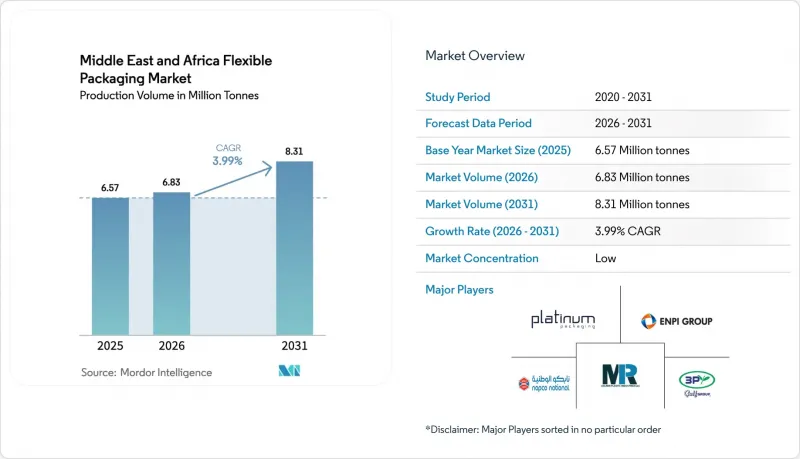
Mordor Intelligence에 의하면, 중동 및 아프리카의 연포장 시장 규모는 2025년 657만 톤에서 2026년에는 683만 톤에 이르고, 2026-2031년 CAGR 3.99%로 성장을 지속하여 2031년까지 831만 톤에 이를 것으로 예측됩니다.
본 보고서는 소재 유형(플라스틱, 종이, 알루미늄 포일, 바이오플라스틱/생분해성 소재), 제품 유형(파우치, 백, 필름 및 랩, 라벨 및 슬리브, 뚜껑재 및 라이너, 블리스터 포장), 최종 사용자 산업(식품, 음료, 의약품, 화장품 및 퍼스널케어, 기타),및 지역별로 분류되어 있습니다. 시장 예측은 수량(백만 톤) 단위로 표시되어 있습니다.
중동 및 아프리카의 연포장 시장 동향 및 인사이트
GCC 지역의 단일 투여용 의약품 포장 규제
UAE의 법령에 따라 일련번호가 부여된 이중 언어 표기가 의무화되어 있으며, 그 요건은 호일 블리스터, 스틱팩, 소포장에까지 적용됩니다. 사우디아라비아의 SASO 할랄 마크는 추가적인 검증 요건을 부과하고 있어, 가공업체들이 발색성이 높은 CI 플렉소 잉크나 근적외선 판독이 가능한 잉크를 채택하도록 유도하고 있습니다. 지역적으로 통일된 규격은 미국의 DSCSA 규정을 반영하고 있으며, 온도 안정성이 확보된 파우치로 출하되는 생물학적 제제에 대해 전 세계적인 일관성을 보장하고 있습니다. 이러한 조건들이 중동 및 아프리카의 연포장 시장에서 지속적인 물량 증가를 뒷받침하고 있습니다.
사우디아라비아와 UAE의 E-Grocery 붐이 메일용 필름 수요를 견인
2023년, UAE의 식료품 앱을 통한 매출액은 10억 7,000만 달러를 기록했습니다. 현재 풀필먼트 센터에서는 상온 상품과 냉장 상품을 혼합하여 배송하는 주문을 처리하기 위해, 보냉 젤 포켓이 달린 쿠션 처리된 우편용 파우치가 활용되고 있습니다. 리야드에서 실시된 조사에 따르면, 단열 지퍼 파우치를 사용함으로써 부패율이 7% 감소했으며, 주문당 비용 측면에서 하이브리드 매장이 다크 스토어 모델을 능가하는 것으로 확인되었습니다. 이러한 신속한 주문 처리 모델은 수요의 단기적 변동을 확대시키고 있지만, 중동 및 아프리카의 연포장 시장에서 기동성이 뛰어난 각 변환 업체들은 디지털 인쇄 및 제조 공정의 최종 단계에서의 맞춤화를 통해 이러한 수요를 포착할 수 있습니다.
식품 등급 재활용 폴리머 원료의 부족
세계 플라스틱 폐기물 중 재활용 공정에 유입되는 비율은 고작 14%에 불과합니다. EFSA 규격의 PCR 펠릿은 버진 소재에 비해 톤당 최대 400달러의 프리미엄이 붙어 있어, 컨버터의 이익률을 압박하고 있습니다. 2030년까지 70%의 재활용률을 의무화하는 EU 규제와 PCR 함유율 기준치 상향으로 인해, 다중 소재 라미네이트의 수출 경로가 점차 막히고 있습니다. 이집트에 위치한 UFlex사의 PCR-PET 생산 라인은 연간 3만 톤을 공급하고 있지만, 그럼에도 불구하고 해당 지역의 라미네이트 수요의 5% 미만을 충당하고 있을 뿐입니다. 대규모 화학적 재활용이 실현되지 않는 한, 중동 및 아프리카의 연포장 시장 성장은 둔화될 가능성이 있습니다.
부문 분석
2025년, 중동 및 아프리카의 연포장 시장에서 플라스틱은 65.35%의 점유율을 유지했습니다. 이는 PE와 PP가 쿠스쿠스, 쌀, UHT 우유 등의 주요 상품에 대해 비용 대비 효과적인 방습층을 제공하기 때문입니다. 한편, 코팅 크라프트지 및 기계 광택지는 소매업체의 단일 소재 가정용 쓰레기 수거 의무화에 힘입어 연평균 성장률(CAGR) 6.12%로 급성장하고 있습니다. 폴리에틸렌 테레프탈레이트(PET) 라미네이트는 내열성이라는 장점이 두드러지는 레토르트 수프용 파우치 시장에서 성장하고 있습니다. 중동 및 아프리카의 연포장 시장에서 단일 소재인 PE/PE 라미네이트 시장 규모는 타이층용 수지가 EVOH를 사용하지 않고도 높은 산소 차단성을 발휘할 수 있게 되면 확대될 것으로 예측됩니다.
카타르에서는 테이크아웃용 봉지에 PLA 및 PBAT 혼합 소재가 등장하고 있는 반면, 남아프리카에서는 요거트 뚜껑에 사탕수수 유래 PE를 사용한 시범 도입이 진행되고 있습니다. 그러나 비용 면에서 상대적으로 비싸다는 인식과 퇴비화 시설의 부족으로 인해 시장 점유율은 여전히 낮은 수준에 머물러 있습니다. 후무스나 고산성 주스 용기 뚜껑 소재의 경우, 다층 호일 구조가 여전히 필수적입니다. 한편, 수성 코팅을 사용한 종이 및 필름 하이브리드 소재는 수분 차단성 목표를 달성하고 있으며, 제과 제조업체가 버진 플라스틱 사용량을 25% 감축하겠다는 목표 달성을 지원하고 있습니다. 이러한 역동적인 상호작용을 통해 중동 및 아프리카의 연포장 시장은 경제성, 성능, 그리고 지속가능성의 균형을 끊임없이 유지하고 있습니다.
기타 혜택:
- 엑셀 형식 시장 예측(ME) 시트
- 3개월간의 애널리스트 지원
자주 묻는 질문
목차
제1장 서론
제2장 조사 방법
제3장 주요 요약
제4장 시장 구도
제5장 시장 규모와 성장 예측
제6장 경쟁 구도
제7장 시장 기회와 향후 전망
LSH 26.09.14According to Mordor Intelligence, the Middle East and Africa flexible packaging market size is expected to grow from 6.57 million tonnes in 2025 to 6.83 million tonnes in 2026 and is forecast to reach 8.31 million tonnes by 2031 at 3.99% CAGR over 2026-2031.
This report is Segmented by Material Type (Plastics, Paper, Aluminium Foil, Bioplastics/Compostables), Product Type (Pouches, Bags, Films and Wraps, Labels and Sleeves, Lidding and Liners, Blister Packaging), End-User Industry (Food, Beverages, Pharmaceuticals, Cosmetics and Personal Care, and More), and Geography. The Market Forecasts are Provided in Terms of Volume (Million Tonnes).
Middle East And Africa Flexible Packaging Market Trends and Insights
GCC Unit-Dose Pharma Packaging Mandates
The UAE's decree-law imposes serialized, dual-language labeling that filters down to foil blisters, stick packs, and sachets. Saudi SASO halal marks add further validation layers, steering converters toward high-colour-strength CI-flexo and near-infra-red readable inks. Regionally harmonised codes mirror U.S. DSCSA rules, ensuring global alignment for biologics shipped in temperature-stable pouches. These conditions underpin persistent volume gains in the Middle East and Africa flexible packaging market.
E-Grocery Boom Driving Mailer Films in KSA and UAE
Grocery apps recorded USD 1.07 billion sales in the UAE during 2023; fulfilment centres now rely on padded mailers with ice-gel pockets for mixed ambient-chill orders. Riyadh research confirms that hybrid stores beat dark-store models on cost per order when insulated zipper pouches cut spoilage ratios by 7%. This rapid fulfilment model magnifies short-cycle demand swings that agile converters within the Middle East and Africa flexible packaging market can capture through digital print runs and late-stage customisation.
Scarcity of Food-Grade Recycled Polymer Feedstock
Only 14% of worldwide plastic waste enters recycling streams; EFSA-grade PCR pellets fetch premiums of up to USD 400 per tonne above virgin levels, squeezing converter margins. EU rules that demand 70% recyclability by 2030 and rising PCR thresholds choke export lanes for multi-material laminates. UFlex's PCR-PET line in Egypt supplies 30,000 tonnes annually but still covers less than 5% of regional laminate demand. Without scaled chemical recycling, growth in the Middle East and Africa flexible packaging market could moderate.
Other drivers and restraints analyzed in the detailed report include:
- Halal Processed-Meat Export Expansion Needing Barrier Pouches
- Mega Food-Park Investments in Egypt and Nigeria
- Aluminium-Foil Import Tariffs in Key African States
For complete list of drivers and restraints, kindly check the Table Of Contents.
Segment Analysis
Plastics retained 65.35% dominance inside the Middle East and Africa flexible packaging market during 2025 as PE and PP deliver cost-effective moisture barriers for staples such as couscous, rice, and UHT milk. Meanwhile, coated kraft and machine-glazed paper surge at 6.12% CAGR, spurred by retailer mandates for mono-material curbside collection. Polyethylene-terephthalate laminates grow within retort soup pouches, underscoring heat-resistance advantages. The Middle East and Africa flexible packaging market size for mono-material PE/PE laminates is expected to rise once tie-layer resins unlock higher oxygen-barrier thresholds without EVOH.
PLA and PBAT blends surface in Qatar's take-away bags, while sugar-cane PE trials emerge in South African yogurt lids. Yet cost premiums and compost-site scarcity keep market shares low. Multilayer foil structures remain indispensable in lidding for hummus and high-acid juices. At the same time, paper-film hybrids that use aqueous coatings reach moisture barrier targets, helping confectionery firms meet 25% virgin-plastic-reduction goals. Through this dynamic interplay, the Middle East and Africa flexible packaging market continuously balances economics, performance, and sustainability.
Complete Report Scope:
- By Material Type
- Plastics
- Polyethylene (HDPE, LDPE, LLDPE)
- Polypropylene
- Polyethylene Terephthalate (PET)
- Polyvinyl Chloride (PVC)
- Others (EVOH, PA, etc.)
- Paper
- Aluminium Foil
- Bioplastics / Compostables (PLA, PBS, PHA, PBAT)
- Plastics
- By Product Type
- Pouches
- Stand-up Pouches
- Retort Pouches
- Spouted Pouches
- Bags
- Films and Wraps
- Thermoforming film
- Stretch Films
- Shrink Film
- Laminate film
- Cling films ( limited to B2B like restaurants, hotels , etc )]
- Labels and Sleeves
- Lidding and Liners
- Blister Packaging
- Pouches
- By End-user Industry
- Food
- Meat and Poultry
- Dairy
- Snacks and Confectionery
- Fruits and Vegetables
- Beverages
- Alcoholic
- Non-alcoholic
- Pharmaceuticals
- Cosmetics and Personal Care
- Household and Industrial Care
- Tobacco
- Pet Food
- Others (Electronics, Chemicals, Agri-products)
- Food
- By Country
- Middle East
- Saudi Arabia
- United Arab Emirates
- Qatar
- Oman
- Kuwait
- Bahrain
- Rest of Middle East
- Africa
- Egypt
- Morocco
- Algeria
- Tunisia
- South Africa
- Rest of Africa
- Middle East
List of Companies Covered in this Report:
- Huhtamaki Oyj
- Constantia Flexibles
- Napco National
- Mondi Group
- ENPI Group
- 3P Gulf Group
- Platinum Packaging Ltd
- Aalmir Plastic Industries LLC
- Amber Packaging Industries LLC
- Emirates Printing Press LLC
- Gulf East Paper & Plastic Inds. LLC
- Radiant Packaging Industry LLC
- Arabian Flexible Packaging LLC
- Integrated Plastics Packaging LLC
- SwissPac UAE
- Hotpack Packaging Industries LLC
- Falcon Pack
- Amcor plc
- Taghleef Industries
- Sealed Air Middle East
Additional Benefits:
- The market estimate (ME) sheet in Excel format
- 3 months of analyst support
TABLE OF CONTENTS
1 INTRODUCTION
- 1.1 Study Assumptions and Market Definition
- 1.2 Scope of the Study
2 RESEARCH METHODOLOGY
3 EXECUTIVE SUMMARY
4 MARKET LANDSCAPE
- 4.1 Market Overview
- 4.2 Market Drivers
- 4.2.1 GCC unit-dose pharma packaging mandates
- 4.2.2 E-grocery boom driving mailer films in KSA and UAE
- 4.2.3 Halal processed-meat export expansion needing barrier pouches
- 4.2.4 Mega food-park investments in Egypt and Nigeria
- 4.2.5 On-the-go beverage surge spurring spouted pouches
- 4.2.6 FMCG localisation bringing regional converting capacity
- 4.3 Market Restraints
- 4.3.1 Scarcity of food-grade recycled polymer feedstock
- 4.3.2 Aluminium-foil import tariffs in key African states
- 4.3.3 Skill-gap in CI-flexo high-speed printing
- 4.3.4 EU recyclability rules constraining multilayer exports
- 4.4 Supply-Chain Analysis
- 4.5 Import-Export Analysis
- 4.6 Investment Outlook
- 4.7 Regulatory and Technological Outlook
- 4.8 Porter's Five Forces Analysis
- 4.8.1 Bargaining Power of Suppliers
- 4.8.2 Bargaining Power of Buyers
- 4.8.3 Threat of New Entrants
- 4.8.4 Intensity of Competitive Rivalry
- 4.8.5 Threat of Substitutes
5 MARKET SIZE AND GROWTH FORECASTS (VOLUME)
- 5.1 By Material Type
- 5.1.1 Plastics
- 5.1.1.1 Polyethylene (HDPE, LDPE, LLDPE)
- 5.1.1.2 Polypropylene
- 5.1.1.3 Polyethylene Terephthalate (PET)
- 5.1.1.4 Polyvinyl Chloride (PVC)
- 5.1.1.5 Others (EVOH, PA, etc.)
- 5.1.2 Paper
- 5.1.3 Aluminium Foil
- 5.1.4 Bioplastics / Compostables (PLA, PBS, PHA, PBAT)
- 5.1.1 Plastics
- 5.2 By Product Type
- 5.2.1 Pouches
- 5.2.1.1 Stand-up Pouches
- 5.2.1.2 Retort Pouches
- 5.2.1.3 Spouted Pouches
- 5.2.2 Bags
- 5.2.3 Films and Wraps
- 5.2.3.1 Thermoforming film
- 5.2.3.2 Stretch Films
- 5.2.3.3 Shrink Film
- 5.2.3.4 Laminate film
- 5.2.3.5 Cling films ( limited to B2B like restaurants, hotels , etc )]
- 5.2.4 Labels and Sleeves
- 5.2.5 Lidding and Liners
- 5.2.6 Blister Packaging
- 5.2.1 Pouches
- 5.3 By End-user Industry
- 5.3.1 Food
- 5.3.1.1 Meat and Poultry
- 5.3.1.2 Dairy
- 5.3.1.3 Snacks and Confectionery
- 5.3.1.4 Fruits and Vegetables
- 5.3.2 Beverages
- 5.3.2.1 Alcoholic
- 5.3.2.2 Non-alcoholic
- 5.3.3 Pharmaceuticals
- 5.3.4 Cosmetics and Personal Care
- 5.3.5 Household and Industrial Care
- 5.3.6 Tobacco
- 5.3.7 Pet Food
- 5.3.8 Others (Electronics, Chemicals, Agri-products)
- 5.3.1 Food
- 5.4 By Country
- 5.4.1 Middle East
- 5.4.1.1 Saudi Arabia
- 5.4.1.2 United Arab Emirates
- 5.4.1.3 Qatar
- 5.4.1.4 Oman
- 5.4.1.5 Kuwait
- 5.4.1.6 Bahrain
- 5.4.1.7 Rest of Middle East
- 5.4.2 Africa
- 5.4.2.1 Egypt
- 5.4.2.2 Morocco
- 5.4.2.3 Algeria
- 5.4.2.4 Tunisia
- 5.4.2.5 South Africa
- 5.4.2.6 Rest of Africa
- 5.4.1 Middle East
6 COMPETITIVE LANDSCAPE
- 6.1 Market Concentration
- 6.2 Strategic Moves
- 6.3 Market Share Analysis
- 6.4 Company Profiles (includes Global level Overview, Market level overview, Core Segments, Financials as available, Strategic Information, Market Rank/Share for key companies, Products and Services, and Recent Developments)
- 6.4.1 Huhtamaki Oyj
- 6.4.2 Constantia Flexibles
- 6.4.3 Napco National
- 6.4.4 Mondi Group
- 6.4.5 ENPI Group
- 6.4.6 3P Gulf Group
- 6.4.7 Platinum Packaging Ltd
- 6.4.8 Aalmir Plastic Industries LLC
- 6.4.9 Amber Packaging Industries LLC
- 6.4.10 Emirates Printing Press LLC
- 6.4.11 Gulf East Paper & Plastic Inds. LLC
- 6.4.12 Radiant Packaging Industry LLC
- 6.4.13 Arabian Flexible Packaging LLC
- 6.4.14 Integrated Plastics Packaging LLC
- 6.4.15 SwissPac UAE
- 6.4.16 Hotpack Packaging Industries LLC
- 6.4.17 Falcon Pack
- 6.4.18 Amcor plc
- 6.4.19 Taghleef Industries
- 6.4.20 Sealed Air Middle East
7 MARKET OPPORTUNITIES AND FUTURE OUTLOOK
- 7.1 White-space and Unmet-Need Assessment


