|
시장보고서
상품코드
2124633
아시아 및 아프리카의 식품 캔 : 시장 점유율 분석, 업계 동향 및 통계, 성장 예측(2026-2031년)Asia And Africa Food Cans - Market Share Analysis, Industry Trends & Statistics, Growth Forecasts (2026 - 2031) |
||||||
 Mordor Intelligence
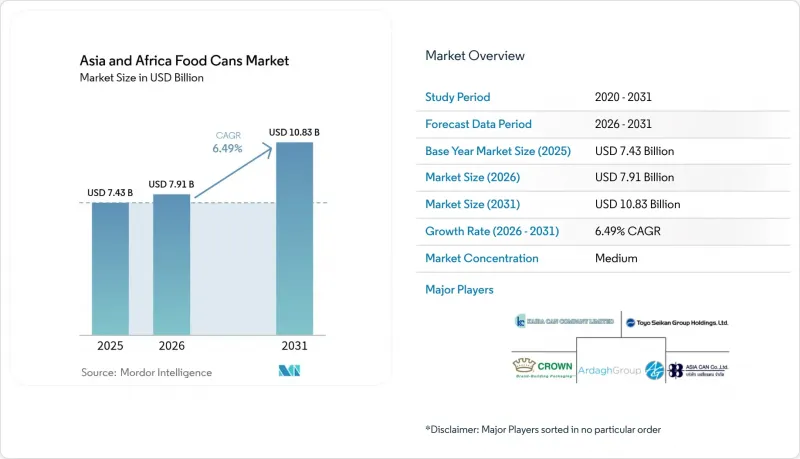
Mordor Intelligence에 의하면, 2026년 아시아 및 아프리카의 식품 캔 시장 규모는 79억 1,000만 달러로 추정되고 2025년 74억 3,000만 달러에서 확대해, 2031년에는 108억 3,000만 달러에 이를 것으로 예측됩니다.
2026년부터 2031년까지의 연평균 성장률(CAGR)은 6.49%를 나타낼 전망입니다.
본 보고서는 소재별(알루미늄 캔, 스틸 캔 및 양철 캔), 캔 유형별(2피스, 3피스), 용도별(어패류, 과일 및 채소, 가공식품, 반려동물사료 등), 개봉 방식별(이지 오픈 엔드 등), 지역별(아시아(중국, 인도, 한국, 동남아시아),아프리카(남아프리카))별로 분류되어 있습니다. 시장 예측은 금액(달러) 기준으로 제시되어 있습니다.
아시아 및 아프리카의 식품 캔 시장 동향 및 인사이트
대체 소재에 비해 높은 재활용률을 자랑하는 금속 캔
금속 캔은 성숙한 시장에서 90%가 넘는 재활용률을 달성하고 있어, 규제 감독이 강화되고 있는 플라스틱에 비해 유리한 입장에 있습니다. 2021년부터 시행되고 있는 남아프리카공화국의 ‘확대 생산자 책임(EPR)’ 프로그램에서는 톤당 요금이 차등 적용되어, 재활용률이 높은 소재에 대해 경제적 인센티브가 제공되고 있습니다. 중국의 편의점 체인 ‘비안리펑’은 제품의 진위 여부를 확인하기 위해 1,500개 매장에 QR 코드 시스템을 도입하여, 금속 포장의 디지털화 가능성을 보여주고 있습니다. 탄자니아 아루샤시에서는 지자체에 의한 고철 수거량이월314톤을 초과하고 있으며, 이를 통해 미사용 철광석의 절약과 에너지 절약으로 이어지고 있습니다. 또한, 이는 아시아 및 아프리카의 식품 캔 시장에서 순환형 가치가 현지에서 수익화될 수 있음을 정책 입안자들에게 시사하고 있습니다. ISO 14001 인증은 현재 다국적 식품 가공업체들에게 일반적인 선정 기준이 되어, 재활용 가능한 캔의 경쟁 우위를 더욱 강화하고 있습니다.
비용 및 편의성의 이점에 힘입은 통조림 식품 수요
도시 생활 방식의 변화로 식사 준비 시간이 단축되면서, 각 가정은 상온 보관이 가능한 단백질과 채소를 선택하고 있습니다. 인도네시아에는 4만 1,000개 이상의 식료품점이 있으며, 통조림 제품은 소매 시장에 널리 보급되어 있습니다. 나이지리아 소비자들은 영양과 식품 안전성을 점점 더 중요하게 여기고 있으며, 제품의 품질을 전달하는 포장이 브랜드 선호도를 좌우하고 있습니다. 도시 주변 지역에서는 냉장고 보급률이 낮기 때문에 생선이나 고기 통조림이 신뢰할 수 있는 단백질 공급원으로 선택되고 있습니다. 베트남 수산업은 2024년 11월까지 92억 달러 상당의 가공 제품을 수출했으며, 이는 통조림 가공이 부패하기 쉬운 수산물을 수출 가능한 가치로 전환하고 있음을 보여줍니다. HACCP 및 GMP 요건은 여전히 지역 슈퍼마켓 진열대에 상품을 진열하기 위한 필수 조건으로 남아 있습니다.
플라스틱은 여전히 유력한 대안
단일 품목 SKU 라인에서는 연포장재가 통조림의 입지를 위협하고 있습니다. 르완다의 플라스틱 금지 조치로 인해 특정 상품의 단가가 5배나 급등한 것은 전면 금지가 비용 중립적이지 않음을 보여줍니다. 서아프리카의 모히나니 그룹은 가나와 나이지리아에 연간 3만 톤 규모의 rPET 공장을 건설하여 가공업체에 저탄소 수지 옵션을 제공합니다. 테트라 리카르트(Tetra Ricart)사의 카톤은 반려동물사료 용기로서 양철 캔에 비해 환경 부하가 6분의 1 수준이라고 강조하고 있습니다. 하지만 캔은 여전히 121℃를 넘는 레토르트 가열 온도를 견딜 수 있으며, 이는 푸드서비스용 포맷이나 긴급 구호 식량에 있어 필수적인 특성입니다.
부문별 분석
2025년, 아시아 및 아프리카의 식품 캔 시장 점유율의 56.15%를 철제 및 양철 드럼통이 차지했습니다. 이는 광둥성과 장쑤성에 위치한 대규모 일체형 제철소의 확립된 공급망과 가격 경쟁력이 원동력이 되었습니다. 이 부문은 식품용 토마토 페이스트 및 대용량 과일 칵테일 시장에서 경쟁력 있는 가격을 유지하며, 같은 해 아시아 및 아프리카의 식품 캔 시장 규모를 41억 7,000만 달러로 끌어올렸습니다. 각 제조업체는 EU의 식품 접촉 규정을 준수하기 위해 연속 소둔 및 크롬 프리 패시베이션 처리를 채택하고 있으며, 서보 제어 시머를 통해 품질이 향상되고 있습니다.
알루미늄 캔은 음료용 캔 제조업체들이 식품용 라인으로 노하우를 전수하고 있으며, 재활용 목표가 경량 합금을 우선시하고 있는 점을 배경으로 2031년까지 연평균 성장률(CAGR) 7.85%를 나타낼 것으로 예측됩니다. 크라운 홀딩스는 2025년 1분기에 전 세계 음료용 캔 매출을 전년 동기 대비 24% 증가시켜 알루미늄 캔의 견조한 판매량 증가세를 보였습니다. 공급 제약은 역설적으로 이 부문의 희소 가치를 높이고 있습니다. 2025년 제련소 증설의 3분의 2는 인도네시아에 집중되어 있으나, 지리적 분산으로 인해 운송 비용이 상승하고 있습니다. ISO 14001에 기반한 환경 목표에 따라 다국적 식품 가공 제조업체들은 알루미늄 사용을 확대하고 있으며, 이것이 아시아 및 아프리카의 식품 캔 시장을 뒷받침하고 있습니다.
2025년에는 2피스 캔이 시장 매출의 66.94%를 차지했습니다. 이는 주로 고속 생산과 금속 사용량 감소를 실현하는 드로우 앤 아이언(Draw and Iron) 공법에 기인한 것으로, 가격에 민감한 콩류 및 단백질 식품에 있어 매우 중요합니다. 공정 자동화에는 인라인 시각 검사 및 헤드스페이스 보존 기간을 연장하기 위한 질소 주입이 포함됩니다. 크라운(Crown)사는 호치민시와 싱가포르의 생산량을 붕타우의 슈퍼 플랜트로 이전하여 지역 고객을 위한 가공 비용을 절감했습니다.
3피스 형식은 높이와 직경의 변동이 필요한 나이지리아와 가나의 현지 토마토 가공업체들에 의해 주도되어 연평균 성장률(CAGR) 7.05%를 기록할 전망입니다. 단고테(Dangote)사의 카다와(Kadawa) 복합 시설에서는 400g 토마토 페이스트에 최적화된 3피스 용접기를 사용하여 하루 1,200톤을 처리하고 있습니다. 이 기술의 유연성은 이음매 가공에 드는 높은 인건비 비율을 상쇄하고 있으며, 레이저를 이용한 측면 이음매 용접을 통해 2피스 캔과의 품질 격차가 줄어들고 있습니다. 자동 이음매용 분말 살포 장치 및 내부 래커 소성로에 대한 투자를 통해 품질을 일정 수준으로 유지하고 있습니다.
기타 혜택 :
- 엑셀 형식 시장 예측(ME) 시트
- 3개월간의 애널리스트 지원
자주 묻는 질문
목차
제1장 서론
제2장 조사 방법
제3장 주요 요약
제4장 시장 구도
제5장 시장 규모 및 성장 예측
제6장 경쟁 구도
제7장 시장 기회 및 향후 전망
KTH 26.09.14According to Mordor Intelligence, Asia and Africa food cans market size in 2026 is estimated at USD 7.91 billion, growing from 2025 value of USD 7.43 billion with 2031 projections showing USD 10.83 billion, growing at 6.49% CAGR over 2026-2031.
This report is Segmented by Material (Aluminum Cans, and Steel and Tin Cans), Can Type (2-Piece, and 3-Piece), Application (Fish and Seafood, Fruits and Vegetables, Processed Food, Pet Food, and More), Opening Type (Easy-Open End, and More), and Geography (Asia (China, India, South Korea, Southeast Asia), and Africa (South Africa)). The Market Forecasts are Provided in Terms of Value (USD).
Asia And Africa Food Cans Market Trends and Insights
High Recyclable Score of Metal Cans Over Alternatives
Metal cans achieve recyclability rates above 90% in mature markets, positioning them favorably against plastics that face escalating regulatory scrutiny. South Africa's Extended Producer Responsibility program, in effect since 2021, imposes differentiated per-ton fees that financially reward highly recyclable substrates. China's convenience-store chain Bianlifeng has rolled out QR-code systems across 1,500 outlets to verify product authenticity, showcasing the digital potential of metal packaging. In Tanzania's Arusha city, municipal scrap collection exceeds 314 tonnes per month, resulting in conserved virgin iron ore and energy savings, and signaling to policymakers that the circular value of the Asia and Africa food cans market can be monetized locally. ISO 14001 certification is now a common selection criterion for multinational food processors, reinforcing the competitive edge of recyclable cans.
Demand for Canned Foods Driven by Cost and Convenience Advantages
Urban lifestyles compress meal-preparation time, pushing households toward shelf-stable proteins and vegetables. Indonesia hosts more than 41,000 grocery outlets, giving canned products deep retail reach. Nigerian shoppers increasingly prize nutrition and food safety, and packaging that communicates integrity drives brand preference. Limited refrigerators in peri-urban districts make canned fish and meats the reliable protein of choice. Vietnam's seafood industry shipped USD 9.2 billion worth of processed products by November 2024, illustrating how canning converts perishable marine harvests into exportable value. HACCP and GMP requirements remain entry tickets to regional supermarket shelves.
Plastic Remains a Credible Alternative
Flexible packs threaten cans in single-serve SKU lines. Rwanda's plastic ban raised per-unit costs five-fold for certain goods, showing that outright prohibition is not cost-neutral. West Africa's Mohinani Group built 30,000 tpa rPET plants in Ghana and Nigeria, giving converters low-carbon resin options. Tetra Recart cartons position themselves as 6 times lighter on the environment than tin cans for pet food. Yet cans still support retort temperatures above 121 °C, essential for institutional formats and emergency-relief rations.
Other drivers and restraints analyzed in the detailed report include:
- Product Innovations Increasing Shelf Life
- Surge in Ready-to-Eat Seafood Exports From Southeast Asia
- Price Volatility of Aluminum and Steel
For complete list of drivers and restraints, kindly check the Table Of Contents.
Segment Analysis
Steel and tin drums accounted for 56.15% of the Asia and Africa food cans market share in 2025, driven by established supply chains and price advantages associated with high-volume integrated steel mills in Guangdong and Jiangsu. The segment preserves competitive pricing for institutional tomato paste and large-format fruit cocktail, anchoring the Asia and Africa food cans market size at USD 4.17 billion that year. Producers utilize continuous annealing and chrome-free passivation to comply with EU food-contact regulations, while servo-controlled seamers enhance quality.
Aluminum cans are expected to grow at a 7.85% CAGR to 2031, driven by beverage converters transferring expertise to food lines and as recycling targets favor lightweight alloys. Crown Holdings grew global beverage-can income 24% year-over-year in Q1 2025, demonstrating aluminum's robust volume trajectory. Supply constraints paradoxically boost the segment's perceived scarcity value; Indonesia hosts two-thirds of the 2025 smelter additions, but geographic dispersion raises freight costs. Environmental targets under ISO 14001 align multinational food processors with aluminum adoption, underpinning the Asia and Africa food cans market.
Two-piece bodies controlled 66.94% market revenue in 2025, primarily through draw-and-iron lines that achieve high speed and low metal usage, crucial for cost-sensitive legumes and protein meals. Process automation includes in-line vision inspection and nitrogen dosing to extend headspace life. Crown transferred volumes from Ho Chi Minh City and Singapore into its Vung Tau super-plant, lowering conversion costs for regional accounts.
Three-piece formats show a 7.05% CAGR outlook, fueled by local tomato processors in Nigeria and Ghana that require variable heights and diameters. Dangote's Kadawa complex runs 1,200 tons per day through three-piece welders optimized for 400 g tomato paste. The technology's flexibility offsets its higher seam labor share, and laser side-seam welding narrows integrity gaps with two-piece bodies. Investments in automatic seam-powder sprinklers and internal lacquer ovens keep quality on par.
Complete Report Scope:
- By Material
- Aluminum Cans
- Steel/Tin Cans
- By Can Type
- 2-Piece
- 3-Piece
- By Application
- Fish and Seafood
- Fruits and Vegetables
- Processed Food
- Pet Food
- Other Applications
- By Opening Type
- Easy-Open End
- Standard End
- By Geography
- Asia
- China
- India
- South Korea
- Southeast Asia
- Africa
- South Africa
- Asia
List of Companies Covered in this Report:
- Crown Holdings Inc.
- Silgan Holdings Inc.
- Ardagh Group S.A.
- Toyo Seikan Group Holdings Ltd.
- ORG Packaging Co. Limited
- Kian Joo Can Factory Berhad
- Kaira Can Private Limited
- Asia Can Co. Ltd.
- Dongwon Systems Corporation
- Nampak Ltd.
- Can It (Pty) Ltd.
- Royal Cans Industries Company
- CanSmart Group
- MC Packaging Pte Ltd.
- Mahkota Can Manufacturing Sdn. Bhd.
- Shanghai Baosteel Packaging Co. Ltd.
- PT United Can Company
- Fujian Fuzheng Metal Packaging Co. Ltd.
- GuangDong Huayi Metal Packaging Co. Ltd.
Additional Benefits:
- The market estimate (ME) sheet in Excel format
- 3 months of analyst support
TABLE OF CONTENTS
1 INTRODUCTION
- 1.1 Study Assumptions and Market Definition
- 1.2 Scope of the Study
2 RESEARCH METHODOLOGY
3 EXECUTIVE SUMMARY
4 MARKET LANDSCAPE
- 4.1 Market Overview
- 4.2 Market Drivers
- 4.2.1 High Recyclable Score of Metal Cans Over Alternatives
- 4.2.2 Demand for Canned Foods Driven by Cost and Convenience Advantages
- 4.2.3 Product Innovations Increasing Shelf Life
- 4.2.4 Surge in Ready-to-Eat Seafood Exports From Southeast Asia
- 4.2.5 Government Circular-Economy Mandates Pushing Metal Packaging
- 4.2.6 Rise of Smart Can Tracking for Anti-Counterfeit Assurance
- 4.3 Market Restraints
- 4.3.1 Plastic Remains a Credible Alternative
- 4.3.2 Price Volatility of Aluminum and Steel
- 4.3.3 Fragmented Cold-Chain Infrastructure in Emerging African Markets
- 4.3.4 Slow Uptake of BPA-Free Linings Increasing Regulatory Scrutiny
- 4.4 Industry Value Chain Analysis
- 4.5 Regulatory Landscape
- 4.6 Technological Outlook
- 4.7 Porter's Five Forces Analysis
- 4.7.1 Bargaining Power of Suppliers
- 4.7.2 Bargaining Power of Consumers
- 4.7.3 Threat of New Entrants
- 4.7.4 Intensity of Competitive Rivalry
- 4.7.5 Threat of Substitutes
- 4.8 Investment Analysis
5 MARKET SIZE AND GROWTH FORECASTS (VALUE)
- 5.1 By Material
- 5.1.1 Aluminum Cans
- 5.1.2 Steel/Tin Cans
- 5.2 By Can Type
- 5.2.1 2-Piece
- 5.2.2 3-Piece
- 5.3 By Application
- 5.3.1 Fish and Seafood
- 5.3.2 Fruits and Vegetables
- 5.3.3 Processed Food
- 5.3.4 Pet Food
- 5.3.5 Other Applications
- 5.4 By Opening Type
- 5.4.1 Easy-Open End
- 5.4.2 Standard End
- 5.5 By Geography
- 5.5.1 Asia
- 5.5.1.1 China
- 5.5.1.2 India
- 5.5.1.3 South Korea
- 5.5.1.4 Southeast Asia
- 5.5.2 Africa
- 5.5.2.1 South Africa
- 5.5.1 Asia
6 COMPETITIVE LANDSCAPE
- 6.1 Market Concentration
- 6.2 Strategic Moves
- 6.3 Market Share Analysis
- 6.4 Company Profiles (includes Global level Overview, Market level overview, Core Segments, Financials as available, Strategic Information, Market Rank/Share for key companies, Products and Services, and Recent Developments)
- 6.4.1 Crown Holdings Inc.
- 6.4.2 Silgan Holdings Inc.
- 6.4.3 Ardagh Group S.A.
- 6.4.4 Toyo Seikan Group Holdings Ltd.
- 6.4.5 ORG Packaging Co. Limited
- 6.4.6 Kian Joo Can Factory Berhad
- 6.4.7 Kaira Can Private Limited
- 6.4.8 Asia Can Co. Ltd.
- 6.4.9 Dongwon Systems Corporation
- 6.4.10 Nampak Ltd.
- 6.4.11 Can It (Pty) Ltd.
- 6.4.12 Royal Cans Industries Company
- 6.4.13 CanSmart Group
- 6.4.14 MC Packaging Pte Ltd.
- 6.4.15 Mahkota Can Manufacturing Sdn. Bhd.
- 6.4.16 Shanghai Baosteel Packaging Co. Ltd.
- 6.4.17 PT United Can Company
- 6.4.18 Fujian Fuzheng Metal Packaging Co. Ltd.
- 6.4.19 GuangDong Huayi Metal Packaging Co. Ltd.
7 MARKET OPPORTUNITIES AND FUTURE OUTLOOK
- 7.1 White-Space and Unmet-Need Assessment