

|
시장보고서
상품코드
2125280
유럽의 통관 중개 : 시장 점유율 분석, 업계 동향 및 통계, 성장 예측(2026-2031년)Europe Customs Brokerage - Market Share Analysis, Industry Trends & Statistics, Growth Forecasts (2026 - 2031) |
||||||
 Mordor Intelligence
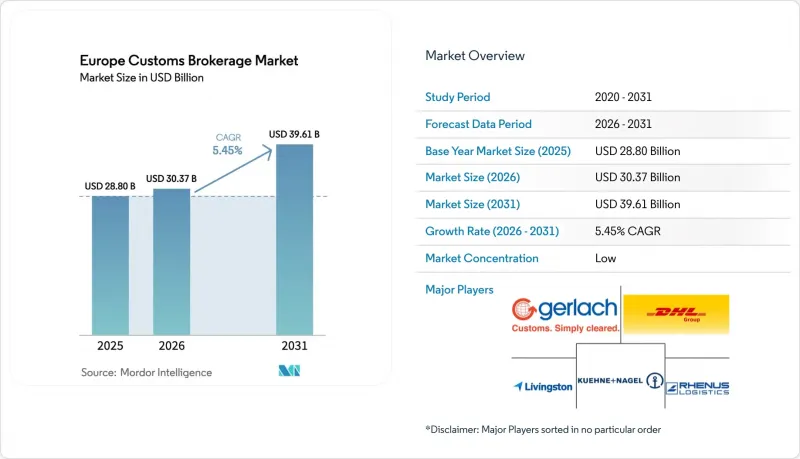
Mordor Intelligence에 의하면, 유럽의 통관 중개 시장 규모는 2025년에 288억 달러로 평가되었습니다. 2026년 303억 7,000만 달러에서 2031년까지 396억 1,000만 달러에 이를 것으로 예상되며, 예측 기간(2026-2031년) CAGR은 5.45%를 나타낼 전망입니다.
본 보고서는 운송 수단별(해상 운송/해운, 항공(특송 및 일반 화물), 국경 간 육상 운송(트럭 및 철도)), 중개업체 유형별(순수 통관 중개체, 기타), 수입업체 규모별(대기업, 기타), 디지털 도입별(기존 중개업체, 기타),최종 이용 산업별(소매·이커머스, 기타), 지역별로 분류되어 있습니다. 시장 예측은 금액(달러) 기준으로 제시되어 있습니다.
유럽의 통관 중개 시장 동향 및 인사이트
브렉시트 이후 통관 신고 건수의 급증
영국의 EU 탈퇴로 인해 신고 건수가 수 배로 급증했으며, 통관 업무에 대한 전문 지식에 대한 수요가 지속적으로 증가하고 있습니다. 새로운 원산지 규정 확인, 국경 대상 운영 모델(Border Target Operating Model)에 따른 위험 기반 관리, 북아일랜드의 윈저 프레임워크에 따른 ‘2레인제’ 도입으로 인해, 출하 1건당 서류 처리 단계가 대폭 증가했습니다. 전문 통관 업체들은 현재 컨설팅, 데이터 검증, 자동화된 감사 추적을 패키지화하여 무역업체가 관세 오분류로 인한 벌칙을 피할 수 있도록 지원하고 있습니다. 통합형 서비스 제공업체는 영국 국세관세청(HMRC)의 ‘관세 신고 서비스’와의 API 연동을 구축하여 처리 시간을 단축하는 동시에 수작업으로 인한 오류를 줄이고 있습니다. 영국과 EU 간의 무역이 정상화됨에 따라, 통관 업계의 수익을 지탱하는 것은 단순한 처리량이 아니라 복잡성이 될 것이며, 유럽의 통관 시장에서는 고위험 상품에 대해 계속해서 인간의 전문 지식이 필수적일 것으로 보입니다.
전자상거래에 힘입은 소액 수입 통관 건수 증가
22유로의 ‘데미니미스’ 기준 폐지와 IOSS(국제 온라인 판매 서비스) 제도의 의무화로 인해 부가가치세(VAT) 징수가 판매 시점에 이루어지게 되었으며, 플랫폼과 판매자는 통관 워크플로우를 통합할 수밖에 없게 되었습니다. 견고한 IT 인터페이스를 갖춘 통관 업체들은 독일과 네덜란드로 매일 수천 개의 소포를 발송하는 시장과 제휴를 추진하고 있습니다. 소포 배송 사업자는 광범위한 네트워크를 활용하고 있는 반면, 틈새 시장을 공략하는 통관 업체들은 규정에 따른 상품 분류, 동적인 VAT 계산, 자동화된 반품 서류 작성을 제공함으로써 시장 점유율을 확대되고 있습니다. 그 결과, 유럽의 통관 중개 시장에서는 경쟁이 격화되고 있으며, B2C 통관 분야에서 주요 차별화 요인으로 규모보다 기술력이 더 중요시되고 있습니다.
EU 국경 회랑에서의 지정학적 무역 혼란
분쟁을 배경으로 북부 노선에서 미들 코리도로 우회함에 따라 운송 시간이 길어지고, 튀르키예, 조지아, 카자흐스탄 국경에서는 통관 혼잡이 발생하고 있습니다. 통관 업체들은 불안정한 규제 환경, 환율 변동, 새로 도입된 제재 점검에 직면해 있으며, 이러한 요인들이 복합적으로 작용하여 처리 비용을 상승시키고 있습니다. 독일의 자동차 및 전자기기 수입업체들은 ‘적시 생산(JIT)’ 원칙과 양립할 수 없는 불확실성에 직면해 있으며, 그 결과 출하량이 감소하고 있습니다. 이러한 예측 불가능성이 유럽의 통관 중개 시장의 단기적 성장을 억제하고 있습니다.
부문별 분석
2025년, 유럽의 통관 중개 시장에서 해상 운송 서비스가 41.55%의 점유율을 차지했으며, 이는 로테르담, 함부르크, 안트베르펜을 경유한 아시아산 수입품에 대한 유럽의 높은 의존도를 반영합니다. 항만을 거점으로 하는 통관 업체들은 자동차 부품, 전자기기, 산업기계와 관련된 복잡한 서류 관리를 통해 높은 수익을 창출하고 있습니다. 국경을 넘는 육상 운송 서비스는 공급 경로를 단축하는 폴란드 및 루마니아로의 공장 이전의 혜택을 받아 연평균 성장률(CAGR) 4.62%를 나타낼 것으로 예측됩니다. 트럭에 대한 보안 검사의 강화와 도로 운송 절차의 디지털화에 따라, 통관 업체들은 e-TIR 및 NCTS 5단계 모듈의 도입을 촉진하고 있으며, 육상 운송의 중요성은 더욱 높아지고 있습니다. 예측 기간 동안 유럽의 통관 시장의 성장세는 해상 운송의 우위와 확대되는 유럽 내 트럭 운송 흐름 간의 균형을 맞추는 항구에서 내륙으로 이어지는 디지털 회랑의 연계에 달려 있을 것으로 보입니다.
화주들이 단일 공급업체의 물류 솔루션을 선호하게 됨에 따라, 포워더/3PL과 통합된 통관 중개체들은 2025년 매출의 50.40%를 차지했습니다. 이러한 기업들의 기술 예산, 광범위한 세계 네트워크, 창고 업무를 패키지화할 수 있는 능력은 진입 장벽으로서 큰 걸림돌이 되고 있습니다. 기존의 순수 통관 업체들은 의약품 수입, 군민 양용 물자, AEO 컨설팅 분야의 틈새 전문 지식을 통해 시장 점유율을 유지하고 있습니다. 통합형 통관 중개체의 유럽 시장 규모는 연평균 성장률(CAGR) 4.26%로 확대될 전망이지만, 순수 전문 업체들도 맞춤형 규정 준수 대응이 필요한 고객들을 계속해서 유치하고 있습니다. DSV의 DB 쉔커 159억 달러 규모 인수와 같은 대형 거래가 성사됨에 따라, 경쟁의 초점은 화물 운송 능력보다는 자문 서비스의 심도 쪽으로 옮겨갈 것으로 보입니다.
기타 혜택
- 엑셀 형식 시장 예측(ME) 시트
- 3개월간 애널리스트 지원
자주 묻는 질문
목차
제1장 서론
제2장 조사 방법
제3장 주요 요약
제4장 시장 구도
제5장 시장 규모 및 성장 예측
제6장 경쟁 구도
제7장 시장 기회 및 향후 전망
KTH 26.09.14According to Mordor Intelligence, the Europe customs brokerage market size was valued at USD 28.80 billion in 2025 and estimated to grow from USD 30.37 billion in 2026 to reach USD 39.61 billion by 2031, at a CAGR of 5.45% during the forecast period (2026-2031).
This report is Segmented by Mode of Transport (Ocean/Sea, Air Express and General Cargo, Cross-Border Land Truck and Rail), Broker Type (Pure Customs Broker, and More), Importer Size (Large Enterprises, and More), Digital Adoption (Traditional Brokerages, and More), End-Use Industry (Retail and E-Commerce, and More), and Geography. The Market Forecasts are Provided in Terms of Value (USD).
Europe Customs Brokerage Market Trends and Insights
Post-Brexit Surge in Customs Declarations
The United Kingdom's departure from the EU triggered a multi-fold rise in declaration volumes, driving sustained demand for brokerage expertise. New rules of origin checks, risk-based sanitary controls under the Border Target Operating Model, and Northern Ireland's Windsor Framework two-lane system have multiplied document touchpoints per shipment. Specialized brokers now package consulting, data validation, and automated audit trails to help traders avoid duty misclassification penalties. Integrated providers are embedding API links to HMRC's Customs Declaration Service, cutting processing time and reducing manual errors. As UK-EU traffic normalizes, complexity rather than sheer volume will sustain brokerage revenue, ensuring the Europe customs brokerage market continues to rely on human expertise for high-risk commodities.
E-Commerce-Driven Rise in Low-Value Import Clearances
Elimination of the EUR 22 de minimis threshold and the mandatory IOSS regime shifted VAT collection to the point-of-sale, compelling platforms and sellers to integrate customs workflows. Brokers with robust IT interfaces are onboarding marketplaces that ship thousands of daily parcels into Germany and the Netherlands. Parcel operators leverage network reach, yet niche brokers gain share by offering rule-based product classification, dynamic VAT calculation, and automated returns documentation. The Europe customs brokerage market is therefore witnessing intensified competition, with technology literacy overtaking scale as the main differentiator in B2C clearances.
Geopolitical Trade Disruptions in EU Border Corridors
Conflict-driven rerouting from the Northern route to the Middle Corridor has increased transit times and customs congestion at Turkish, Georgian, and Kazakh borders. Brokers face volatile regulatory environments, currency swings, and emerging sanctions checks, which collectively raise processing costs. Automotive and electronics importers in Germany confront uncertainty incompatible with just-in-time norms, thereby dampening shipment volumes. The resulting unpredictability restrains the Europe customs brokerage market's short-term growth.
Other drivers and restraints analyzed in the detailed report include:
- EU Customs Reform 2028 Data-Hub Roll-Out
- AI-Based HS-Code Classification Adoption
- EU Customs-Talent Shortages and Ageing Workforce
For complete list of drivers and restraints, kindly check the Table Of Contents.
Segment Analysis
Ocean/sea services owned 41.55% of the Europe customs brokerage market in 2025, mirroring Europe's heavy reliance on Asian imports through Rotterdam, Hamburg, and Antwerp. Port-centric brokers generate premium revenue by managing intricate documentation for automotive components, electronics, and industrial machinery. Cross-border land services are forecast to grow at a 4.62% CAGR, benefiting from factory relocations into Poland and Romania that shorten supply routes. Tightened truck security checks and the digitalization of road transit procedures encourage brokers to integrate e-TIR and NCTS-Phase 5 modules, reinforcing land-mode relevance. Over the forecast horizon, Europe customs brokerage market momentum will hinge on synchronized port-to-inland digital corridors that balance sea dominance with growing intra-European trucking flows.
Freight forwarder/3PL-integrated brokers captured 50.40% of 2025 revenue as shippers gravitated toward single-provider logistics solutions. Their technology budgets, global network reach, and ability to bundle warehousing create formidable entry barriers. Traditional pure brokers defend share through niche expertise in pharmaceutical imports, dual-use goods, and AEO consultancy. The Europe customs brokerage market size for integrated brokers is set to compound at 4.26% CAGR, but pure specialists still attract clients needing tailored compliance. As mega-deals such as DSV's USD 15.9 billion acquisition of DB Schenker close, competitive intensity will pivot on advisory depth rather than freight capacity.
Complete Report Scope:
- By Mode of Transport
- Ocean / Sea
- Air (Express and General Cargo)
- Cross-Border Land (Truck and Rail)
- By Broker Type
- Pure Customs Broker
- Freight Forwarder / 3PL-Integrated Brokers
- By Importer Size
- Large Enterprisess
- Mid-Market
- SMEs / Micro-shippers
- By Digital Adoption
- Traditional Brokerages
- Digital-first / API-based Brokerages
- By End-Use Industry
- Retail and E-commerce
- Automotive and EV
- Electronics and Semiconductors
- Pharmaceuticals and Life Sciences
- Aerospace and Defense
- Chemicals and Industrial Goods
- Others
- By Country
- Germany
- United Kingdom
- France
- Netherlands
- Italy
- Spain
- Poland
- Rest of Europe
List of Companies Covered in this Report:
- Livingston International
- DHL Group
- Kuehne + Nagel
- Rhenus Logistics
- Gerlach Customs
- APL Logistics
- DSV
- Gaston Schul Logistics
- C.H. Robinson
- Expeditors International
- Customs Support Group
- Dimerco Express
- UPS
- FedEx
- Geodis
- TIBA Group
- RHA Customs Brokerage
- Partida Logistics
- EFL Global
- ITG Air and Sea
Additional Benefits:
- The market estimate (ME) sheet in Excel format
- 3 months of analyst support
TABLE OF CONTENTS
1 Introduction
- 1.1 Study Assumptions and Market Definition
- 1.2 Scope of the Study
2 Research Methodology
3 Executive Summary
4 Market Landscape
- 4.1 Market Overview
- 4.2 Market Drivers
- 4.2.1 Post-Brexit surge in customs declarations
- 4.2.2 E-commerce-driven rise in low-value import clearances
- 4.2.3 EU Customs Reform 2028 data-hub roll-out
- 4.2.4 AI-based HS-code classification adoption
- 4.2.5 Near-shoring to Eastern Europe boosting cross-border volumes
- 4.2.6 Tightening dual-use export-control compliance
- 4.3 Market Restraints
- 4.3.1 Geopolitical trade disruptions in EU border corridors
- 4.3.2 EU customs-talent shortages and ageing workforce
- 4.3.3 Rising IT and automation fee burden on small brokers
- 4.3.4 Parcel operators cannibalising low-value clearances
- 4.4 Value / Supply-Chain Analysis
- 4.5 Regulatory Landscape
- 4.6 Technological Outlook
- 4.7 Impact of COVID-19 and Geo-Political
- 4.8 Porter's Five Forces
- 4.8.1 Bargaining Power of Suppliers
- 4.8.2 Bargaining Power of Consumers
- 4.8.3 Threat of New Entrants
- 4.8.4 Threat of Substitutes
- 4.8.5 Intensity of Competitive Rivalry
5 Market Size and Growth Forecasts (Value)
- 5.1 By Mode of Transport
- 5.1.1 Ocean / Sea
- 5.1.2 Air (Express and General Cargo)
- 5.1.3 Cross-Border Land (Truck and Rail)
- 5.2 By Broker Type
- 5.2.1 Pure Customs Broker
- 5.2.2 Freight Forwarder / 3PL-Integrated Brokers
- 5.3 By Importer Size
- 5.3.1 Large Enterprisess
- 5.3.2 Mid-Market
- 5.3.3 SMEs / Micro-shippers
- 5.4 By Digital Adoption
- 5.4.1 Traditional Brokerages
- 5.4.2 Digital-first / API-based Brokerages
- 5.5 By End-Use Industry
- 5.5.1 Retail and E-commerce
- 5.5.2 Automotive and EV
- 5.5.3 Electronics and Semiconductors
- 5.5.4 Pharmaceuticals and Life Sciences
- 5.5.5 Aerospace and Defense
- 5.5.6 Chemicals and Industrial Goods
- 5.5.7 Others
- 5.6 By Country
- 5.6.1 Germany
- 5.6.2 United Kingdom
- 5.6.3 France
- 5.6.4 Netherlands
- 5.6.5 Italy
- 5.6.6 Spain
- 5.6.7 Poland
- 5.6.8 Rest of Europe
6 Competitive Landscape
- 6.1 Market Concentration
- 6.2 Strategic Moves
- 6.3 Market Share Analysis
- 6.4 Company Profiles (includes Global level Overview, Market level overview, Core Segments, Financials as available, Strategic Information, Market Rank/Share, Products and Services, Recent Developments)
- 6.4.1 Livingston International
- 6.4.2 DHL Group
- 6.4.3 Kuehne + Nagel
- 6.4.4 Rhenus Logistics
- 6.4.5 Gerlach Customs
- 6.4.6 APL Logistics
- 6.4.7 DSV
- 6.4.8 Gaston Schul Logistics
- 6.4.9 C.H. Robinson
- 6.4.10 Expeditors International
- 6.4.11 Customs Support Group
- 6.4.12 Dimerco Express
- 6.4.13 UPS
- 6.4.14 FedEx
- 6.4.15 Geodis
- 6.4.16 TIBA Group
- 6.4.17 RHA Customs Brokerage
- 6.4.18 Partida Logistics
- 6.4.19 EFL Global
- 6.4.20 ITG Air and Sea
7 Market Opportunities and Future Outlook
- 7.1 White-space and Unmet-Need Assessment


