|
시장보고서
상품코드
2064855
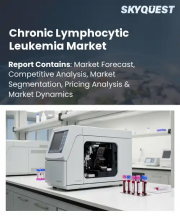
만성 림프구성 백혈병(CLL) 시장 규모, 점유율 및 성장 분석 : 치료 분류별, 진단 기술별, 투여 경로별, 치료 단계별, 유통 채널별, 지역별 - 업계 예측(2026-2033년)Chronic Lymphocytic Leukemia Market Size, Share, and Growth Analysis, By Therapy Class, By Diagnostics Technology, By Route of Administration, By Line of Therapy, By Distribution Channel, By Region - Industry Forecast 2026-2033 |
||||||

세계의 만성 림프구성 백혈병(CLL) 시장 규모는 2024년에 91억 2,000만 달러로 평가되었고, 2025년 96억 8,000만 달러에서 2033년까지 156억 1,000만 달러로 확대되어 예측 기간(2026-2033년)에 CAGR 6.15%를 기록할 것으로 예측됩니다.
세계 만성 림프구성 백혈병(CLL) 시장은 치료 방식을 완전히 바꾸는 획기적인 치료법의 혁신에 힘입어 강력한 성장을 이루고 있습니다. 유병률 증가와 질병 경과의 장기화에 더해, 환자 1인당 평생 치료비가 높은 점이 맞물리면서, 특히 고령층에서 이러한 추세가 두드러지고 있습니다. 기존의 화학요법에서 BTK 억제제나 BCL2 억제제 등의 표적 지향적 저분자 약물로 전환됨에 따라 환자의 예후가 개선되었으며, 작용기전에 기반한 경구 요법으로의 전환이 진행되고 있습니다. 이러한 발전과 더불어, 유전체 마커에 초점을 맞춘 진단 기술의 정교화로 인해 맞춤형 치료가 촉진되고 있습니다. 또한, 신약 개발에 AI를 도입함으로써 선도 화합물의 발굴이 효율화되고, 후보 화합물의 선별이 강화되고 있습니다. 이러한 혁신적인 치료법과 기술적 진전의 융합으로 인해 CLL 시장은 지속적인 진화와 성장 궤도에 올라섰습니다.
세계 만성 림프구성 백혈병(CLL) 시장은 치료법 분류, 진단 기술, 투여 경로, 치료 단계, 유통 채널 및 지역별로 세분화되어 있습니다. 치료법 분류에 따르면, 시장은 ‘표적 치료’, ‘면역 치료 및 세포 치료’, ‘화학 요법’, ‘병용 요법’으로 구분됩니다. 진단 기술에 따르면, 시장은 ‘유세포분석법’, ‘분자유전학적 검사’, ‘FISH 및 세포유전학’, ‘면역조직화학’으로 구분됩니다. 투여 경로에 따라 시장은 경구 제제, 정맥 주입, 피하/근육 주사로 분류됩니다. 치료 단계에 따라 시장은 1차 치료, 2차 치료, 재발/난치성 치료로 분류됩니다. 유통 채널에 따라 시장은 병원 약국, 전문 약국·소매 약국, 그리고 온라인 약국으로 분류됩니다. 지역별로는 북미, 유럽, 아시아태평양, 라틴아메리카, 중동 및 아프리카로 구분됩니다.
세계 만성 림프구성 백혈병(CLL) 시장의 성장 요인
세계 만성 림프구성 백혈병(CLL) 시장은 임상적 예후와 내약성을 개선한 표적 치료법의 발전에 힘입어 크게 성장하고 있습니다. 임상의들이 새로운 치료법을 점점 더 선호하여 처방함에 따라, 선택성이 향상되면서 부작용이 감소하고 있으며, 허약한 환자나 동반 질환이 있는 환자를 포함한 더 폭넓은 환자층에 적합해지고 있습니다. 이러한 임상적 평가의 상승세가 해당 치료법에 대한 수요 증가를 뒷받침하고 있으며, 이는 결국 투자를 유치하여 치료 효과를 한층 더 높이는 병용 요법의 개발을 촉진하고 있습니다. 그 결과, 이러한 요인들이 복합적으로 작용하여 제약 기업과 의료 서비스 제공업체 모두에게 더욱 역동적인 상업 환경이 조성되고 있습니다.
세계 만성 림프구성 백혈병(CLL) 시장의 제약 요인
세계 만성 림프구성 백혈병(CLL) 시장은 치료비 급등과 지속적인 접근성 문제로 인해 큰 제약에 직면해 있습니다. 많은 의료 기관이 이러한 치료법을 제공하는 데 어려움을 겪고 있으며, 그 결과 보험사 및 의료 기관에 재정적 부담이 발생하고 있습니다. 비용 관련 문제가 발생하면 보험 적용 의약품 목록에 대한 제한이 강화되는 경향이 있으며, 사전 승인 절차가 일반적인 장벽이 되어 치료 시작이 지연되거나 의료진이 처방을 주저하는 경우가 종종 있습니다. 자원이 제한된 환경에서는 경제적 부담에 대한 우려가 환자의 수용도를 낮추고, 치료의 보급을 저해하고 있습니다. 결국 이러한 장벽들은 치료법의 광범위한 보급을 방해하고, 제약 기업의 상업화 노력을 저해하며, 전략적인 가격 책정 및 접근성 개선 노력이 필요할 수 있어, 장기적인 시장 성장과 계획을 복잡하게 만들고 있습니다.
세계 만성 림프구성 백혈병(CLL) 시장 동향
세계 만성 림프구성 백혈병(CLL) 시장에서는 유전체 프로파일링과 바이오마커에 기반한 프레임워크의 통합을 원동력으로 삼아, 정밀 의학으로의 뚜렷한 전환 추세가 나타나고 있습니다. 이러한 변화로 인해 치료법 선택 및 개발 방향이 변화하고 있으며, 임상의와 제약 개발자들은 CLL 환자의 이질성에 맞춘 표적 치료 및 맞춤형 투여 전략을 점점 더 중요하게 여기고 있습니다. 진단 기업과 치료제 개발 기업 간의 협력 강화로 인해 임상시험에서 보다 정교한 평가 지표를 규명하는 작업이 진행되는 한편, 가치 중심의 의료를 추구하는 보험사들의 관심도 높아지고 있습니다. 각 제약사는 하위 그룹별 구분에 중점을 둔 연구 개발을 우선시하고 있으며, 이는 궁극적으로 치료의 적절성과 환자 관리 성과 향상으로 이어지고 있습니다.
자주 묻는 질문
목차
서론
조사 방법
주요 요약
시장 역학과 전망
주요 시장 인사이트
세계의 만성 림프구성 백혈병(CLL) 시장 규모 : 치료 분류별
세계의 만성 림프구성 백혈병(CLL) 시장 규모 : 진단 기술별
세계의 만성 림프구성 백혈병(CLL) 시장 규모 : 투여 경로별
세계의 만성 림프구성 백혈병(CLL) 시장 규모 : 치료 단계별
세계의 만성 림프구성 백혈병(CLL) 시장 규모 : 유통 채널별
세계의 만성 림프구성 백혈병(CLL) 시장 규모 : 지역별
경쟁 정보
주요 기업 개요
결론과 제안
LSH 26.06.29Global Chronic Lymphocytic Leukemia Market size was valued at USD 9.12 Billion in 2024 and is poised to grow from USD 9.68 Billion in 2025 to USD 15.61 Billion by 2033, growing at a CAGR of 6.15% during the forecast period (2026-2033).
The global chronic lymphocytic leukemia (CLL) market is experiencing robust growth driven by significant therapeutic innovations that are reshaping treatment approaches. An increase in prevalence and longer disease courses, combined with high per-patient lifetime costs, accentuates this trend, particularly among the elderly demographic. The transition from traditional chemotherapies to targeted small molecules, such as BTK and BCL2 inhibitors, has led to improved patient outcomes and prompted a shift towards oral, mechanism-driven therapies. Alongside these advancements, the refinement of diagnostics focusing on genomic markers has facilitated personalized treatment. Additionally, AI's integration into drug discovery is streamlining lead generation and enhancing candidate selection. This convergence of innovative therapies and technological advancements positions the CLL market for continued evolution and sustained growth.
Top-down and bottom-up approaches were used to estimate and validate the size of the Global Chronic Lymphocytic Leukemia market and to estimate the size of various other dependent submarkets. The research methodology used to estimate the market size includes the following details: The key players in the market were identified through secondary research, and their market shares in the respective regions were determined through primary and secondary research. This entire procedure includes the study of the annual and financial reports of the top market players and extensive interviews for key insights from industry leaders such as CEOs, VPs, directors, and marketing executives. All percentage shares split, and breakdowns were determined using secondary sources and verified through Primary sources. All possible parameters that affect the markets covered in this research study have been accounted for, viewed in extensive detail, verified through primary research, and analyzed to get the final quantitative and qualitative data.
Global Chronic Lymphocytic Leukemia Market Segments Analysis
The global chronic lymphocytic leukemia market is segmented by therapy class, diagnostics technology, route of administration, line of therapy, distribution channel and region. Based on therapy class, the market is segmented into Targeted Therapy, Immunotherapy & Cell Therapy, Chemotherapy and Combination Regimens. Based on diagnostics technology, the market is segmented into Flow Cytometry, Molecular Genetic Tests, FISH & Cytogenetics and Immunohistochemistry. Based on route of administration, the market is segmented into Oral Formulations, Intravenous Infusions and Subcutaneous / Intramuscular Injections. Based on line of therapy, the market is segmented into First-Line Treatment, Second-Line Treatment and Relapsed / Refractory Treatment. Based on distribution channel, the market is segmented into Hospital Pharmacies, Specialty & Retail Pharmacies and Online Pharmacies. Based on region, the market is segmented into North America, Europe, Asia Pacific, Latin America and Middle East & Africa.
Driver of the Global Chronic Lymphocytic Leukemia Market
The Global Chronic Lymphocytic Leukemia market is significantly driven by advancements in targeted therapies, which have enhanced clinical outcomes and tolerability. As clinicians increasingly prefer and prescribe newer treatment options, their improved selectivity leads to fewer adverse effects, making them suitable for a broader range of patients, including those who are frail or have comorbidities. This enhanced clinical perception fosters a rising demand for these therapies, which in turn attracts investment and encourages the development of combination regimens that further increase therapeutic efficacy. Consequently, these factors collectively contribute to a more dynamic commercial landscape for both manufacturers and healthcare providers.
Restraints in the Global Chronic Lymphocytic Leukemia Market
The Global Chronic Lymphocytic Leukemia market faces significant restraints due to high treatment costs and persistent access challenges. Many healthcare facilities encounter difficulties in providing these therapies, resulting in financial strain for payers and institutions. As cost-related issues arise, formulary restrictions tend to tighten, and prior authorization processes become common hurdles, often delaying treatment initiation and discouraging healthcare providers from prescribing. In resource-limited environments, concerns over affordability diminish patient acceptance and restrict outreach. Ultimately, these barriers impede widespread adoption, hinder manufacturers' commercialization efforts, and may necessitate strategic pricing or access initiatives, complicating long-term market growth and planning.
Market Trends of the Global Chronic Lymphocytic Leukemia Market
The Global Chronic Lymphocytic Leukemia (CLL) market is experiencing a significant trend towards precision medicine, driven by the integration of genomic profiling and biomarker-guided frameworks. This shift is transforming treatment selection and development pathways, as clinicians and pharmaceutical developers increasingly favor targeted therapies and adaptive dosing strategies tailored to the heterogeneity of CLL patients. Enhanced collaboration between diagnostic firms and therapeutic developers is fostering the identification of more precise endpoints in clinical trials, while also capturing the interest of payers seeking value-aligned care. Manufacturers are prioritizing research and development efforts that focus on subpopulation differentiation, ultimately improving therapeutic relevance and patient management outcomes.
Table of Contents
Introduction
- Objectives of the Study
- Market Definition & Scope
Research Methodology
- Research Process
- Secondary & Primary Data Methods
- Market Size Estimation Methods
Executive Summary
- Global Market Outlook
- Key Market Highlights
- Segmental Overview
- Competition Overview
Market Dynamics & Outlook
- Macro-Economic Indicators
- Drivers & Opportunities
- Restraints & Challenges
- Supply Side Trends
- Demand Side Trends
- Porters Analysis & Impact
- Competitive Rivalry
- Threat of Substitute
- Bargaining Power of Buyers
- Threat of New Entrants
- Bargaining Power of Suppliers
Key Market Insights
- Key Success Factors
- Market Impacting Factors
- Top Investment Pockets
- Ecosystem Mapping
- Market Attractiveness Index 2025
- PESTEL Analysis
- Regulatory Landscape
Global Chronic Lymphocytic Leukemia Market Size by Therapy Class & CAGR (2026-2033)
- Market Overview
- Targeted Therapy
- BTK Inhibitors
- BCL-2 Inhibitors
- PI3K Inhibitors
- Immunotherapy & Cell Therapy
- Monoclonal Antibodies
- CAR-T Cell Therapies
- Bispecific Antibodies
- Chemotherapy
- Combination Regimens
Global Chronic Lymphocytic Leukemia Market Size by Diagnostics Technology & CAGR (2026-2033)
- Market Overview
- Flow Cytometry
- Molecular Genetic Tests
- FISH & Cytogenetics
- Immunohistochemistry
Global Chronic Lymphocytic Leukemia Market Size by Route of Administration & CAGR (2026-2033)
- Market Overview
- Oral Formulations
- Intravenous Infusions
- Subcutaneous / Intramuscular Injections
Global Chronic Lymphocytic Leukemia Market Size by Line of Therapy & CAGR (2026-2033)
- Market Overview
- First-Line Treatment
- Second-Line Treatment
- Relapsed / Refractory Treatment
Global Chronic Lymphocytic Leukemia Market Size by Distribution Channel & CAGR (2026-2033)
- Market Overview
- Hospital Pharmacies
- Specialty & Retail Pharmacies
- Online Pharmacies
Global Chronic Lymphocytic Leukemia Market Size & CAGR (2026-2033)
- North America (Therapy Class, Diagnostics Technology, Route of Administration, Line of Therapy, Distribution Channel)
- US
- Canada
- Europe (Therapy Class, Diagnostics Technology, Route of Administration, Line of Therapy, Distribution Channel)
- Germany
- Spain
- France
- UK
- Italy
- Rest of Europe
- Asia Pacific (Therapy Class, Diagnostics Technology, Route of Administration, Line of Therapy, Distribution Channel)
- China
- India
- Japan
- South Korea
- Rest of Asia-Pacific
- Latin America (Therapy Class, Diagnostics Technology, Route of Administration, Line of Therapy, Distribution Channel)
- Mexico
- Brazil
- Rest of Latin America
- Middle East & Africa (Therapy Class, Diagnostics Technology, Route of Administration, Line of Therapy, Distribution Channel)
- GCC Countries
- South Africa
- Rest of Middle East & Africa
Competitive Intelligence
- Top 5 Player Comparison
- Market Positioning of Key Players, 2025
- Strategies Adopted by Key Market Players
- Recent Developments in the Market
- Company Market Share Analysis, 2025
- Company Profiles of All Key Players
- Company Details
- Product Portfolio Analysis
- Company's Segmental Share Analysis
- Revenue Y-O-Y Comparison (2023-2025)
Key Company Profiles
- AbbVie
- Company Overview
- Business Segment Overview
- Financial Updates
- Key Developments
- AstraZeneca
- Company Overview
- Business Segment Overview
- Financial Updates
- Key Developments
- Johnson & Johnson
- Company Overview
- Business Segment Overview
- Financial Updates
- Key Developments
- F. Hoffmann-La Roche
- Company Overview
- Business Segment Overview
- Financial Updates
- Key Developments
- Bristol-Myers Squibb
- Company Overview
- Business Segment Overview
- Financial Updates
- Key Developments
- Pfizer
- Company Overview
- Business Segment Overview
- Financial Updates
- Key Developments
- Novartis
- Company Overview
- Business Segment Overview
- Financial Updates
- Key Developments
- Sanofi
- Company Overview
- Business Segment Overview
- Financial Updates
- Key Developments
- Merck & Co
- Company Overview
- Business Segment Overview
- Financial Updates
- Key Developments
- GlaxoSmithKline
- Company Overview
- Business Segment Overview
- Financial Updates
- Key Developments
- Takeda Pharmaceutical
- Company Overview
- Business Segment Overview
- Financial Updates
- Key Developments
- Amgen
- Company Overview
- Business Segment Overview
- Financial Updates
- Key Developments
- Gilead Sciences
- Company Overview
- Business Segment Overview
- Financial Updates
- Key Developments
- Celgene Corporation
- Company Overview
- Business Segment Overview
- Financial Updates
- Key Developments
- Beigene
- Company Overview
- Business Segment Overview
- Financial Updates
- Key Developments
- Incyte Corporation
- Company Overview
- Business Segment Overview
- Financial Updates
- Key Developments
- Loxo Oncology
- Company Overview
- Business Segment Overview
- Financial Updates
- Key Developments
- Eli Lilly and Company
- Company Overview
- Business Segment Overview
- Financial Updates
- Key Developments
- Teva Pharmaceutical Industries
- Company Overview
- Business Segment Overview
- Financial Updates
- Key Developments
- Viatris
- Company Overview
- Business Segment Overview
- Financial Updates
- Key Developments