|
시장보고서
상품코드
2091405
농업기계 시장 규모, 점유율, 성장 분석 : 기종별, 자동화 레벨별, 동력원별, 농장 규모별, 용도별, 최종사용자별, 유통 채널별, 지역별 - 업계 예측(2026-2033년)Agricultural Machinery Market Size, Share, and Growth Analysis, By Equipment Type, By Automation Level, By Power Source, By Farm Size, By Application, By End User, By Distribution Channel, By Region - Industry Forecast 2026-2033 |
||||||

세계의 농업기계 시장 규모는 2024년에 2,562억 달러로 평가되었으며, 2025년 2,695억 2,000만 달러에서 2033년까지 4,043억 2,000만 달러로 확대되어 예측 기간(2026-2033년) 동안 CAGR 5.2%로 성장할 것으로 전망됩니다.
세계 농업기계 시장에는 트랙터, 콤바인, 정밀 파종기, 자율주행 로봇 등 농장의 생산성 향상을 목적으로 하는 다양한 기기가 포함되어 있습니다. 이 분야는 노동력 수요를 최소화하면서도 계속 증가하는 세계 인구의 식량 안보를 확보하는 데 있어 지극히 중요한 역할을 하고 있습니다. 이 시장은 선진국에서 시작된 기계화 추세에 힘입어 신흥 경제국으로 확대되는 과정에서 현저하게 발전해 왔습니다. 신흥 경제국에서는 재정 지원을 통해 소규모 농가도 첨단 농기계를 이용할 수 있게 되었습니다. 엔진 효율, GPS 기술, 데이터 분석 분야의 혁신이 시장 성장의 다음 단계를 이끌고 있습니다. 데이터 활용과 기계 기술의 발전이 시너지를 발휘함에 따라 디지털 플랫폼에 대한 투자가 촉진되고, 제조업체와 농업 기술(애그리테크) 분야 스타트업 간의 협력이 강화되면서, 혁신과 수요가 서로를 견인하는 역동적인 선순환이 형성되고 있습니다.
세계 농업기계 시장의 성장요인
세계 농업기계 시장은 정밀 기술 솔루션의 통합에 힘입어 큰 변화를 겪고 있습니다. 이러한 발전 덕분에 농가들은 실시간 데이터를 확보할 수 있게 되었으며, 파종, 비료 시비, 수확에 관한 정보를 바탕으로 한 의사결정 능력이 향상되고 있습니다. 그 결과, 농가들은 자원 낭비 감소, 작물 수확량 증가, 운영 비용 절감 등의 이점을 체감하고 있으며, 이는 첨단 농업기계에 대한 추가 투자를 촉진하고 있습니다. 디지털 도구에 대한 신뢰가 계속해서 높아지는 가운데, 기기 제조사들은 GPS, 센서 기술, 자율주행 기능의 탑재에 주력하고 있습니다. 이를 통해 시장 성장을 촉진하고, 현대 농업 관행과 조화를 이루며, 생산자와 제조업체 간의 관계를 강화하는 생산적인 선순환이 만들어지고 있습니다.
세계 농업기계 시장의 제약요인
세계 농업기계 시장은 농가 예산을 압박하고 신규 기계 투자를 저해하는 투입 비용의 급등으로 인해 큰 과제에 직면해 있습니다. 종자, 비료, 농약과 같은 필수 농업 투입재의 가격이 상승함에 따라, 생산자는 수익의 더 큰 비중을 이러한 필수 구매에 할애하게 되며, 그 결과 기계의 업그레이드나 교체에 사용할 수 있는 자금이 제한되게 됩니다. 이러한 재정적 부담으로 인해 사업자들은 현재 사용 중인 기계의 사용 기간을 연장하거나, 더 저렴한 대안을 선택하거나, 수익성이 안정될 때까지 설비 투자를 미룰 수밖에 없는 상황에 내몰리는 경우가 종종 있습니다. 그 결과, 시장 성장세가 둔화되면서, 고성능의 혁신적인 기계에 대한 수요는 가격 변동이나 경제적 제약의 영향을 점점 더 받기 쉬워지고 있습니다.
세계 농업기계 시장의 동향
세계 농업기계 시장에서는 센서 구동형 장비와 자율주행 트랙터의 보급이 두드러지는 등, 정밀 자동화로 향하는 뚜렷한 추세가 나타나고 있습니다. 농가들은 밭에 설치된 IoT 기기에서 얻어지는 실시간 데이터를 점점 더 많이 활용하여, 파종, 시비, 수확에 관한 의사결정을 강화하고 있습니다. 이를 통해 수확량을 극대화하는 동시에 폐기물 및 노동력에 대한 의존도를 최소화하고 있습니다. 이러한 전환을 통해 다양한 지형에 적응할 수 있는 확장성이 뛰어난 농업 운영이 가능해지는 한편, 농업기계 제조업체들은 견고한 연결성과 원격 진단 기능을 제공하기 위해 소프트웨어 생태계를 강화하고 있습니다. 자율 기술에 대한 신뢰가 높아짐에 따라, 혁신적인 정밀 기기에 대한 투자가 경쟁 구도를 일신하며 농업 분야에서 기술 중심의 솔루션으로의 전환을 촉진하고 있습니다.
자주 묻는 질문
목차
소개
조사 방법
주요 요약
시장 역학과 전망
주요 시장 인사이트
세계의 농업기계 시장 규모 : 기기 유형별
세계의 농업기계 시장 규모 : 자동화 레벨별
세계의 농업기계 시장 규모 : 동력원별
세계의 농업기계 시장 규모 : 농장 규모별
세계의 농업기계 시장 규모 : 용도별
세계의 농업기계 시장 규모 : 최종사용자별
세계의 농업기계 시장 규모 : 유통 채널별
세계의 농업기계 시장 규모 : 지역별
경쟁 정보
주요 기업 개요
결론과 제안
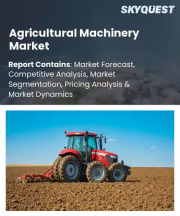
KSM 26.07.23Global Agricultural Machinery Market size was valued at USD 256.2 Billion in 2024 and is poised to grow from USD 269.52 Billion in 2025 to USD 404.32 Billion by 2033, growing at a CAGR of 5.2% during the forecast period (2026-2033).
The global agricultural machinery market includes a diverse array of equipment, such as tractors, combine harvesters, precision-planting tools, and autonomous robots, all aimed at enhancing farm productivity. This sector plays a critical role in ensuring food security for an escalating global population while minimizing labor demands. The market has evolved significantly, driven by mechanization trends that began in developed regions and expanded to emerging economies, where financial support has made advanced machinery accessible to smallholders. Innovations in engine efficiency, GPS technology, and data analytics are propelling the next phase of market growth. This synergy between data utilization and machinery advances attracts investments in digital platforms, fostering collaborations between manufacturers and agritech startups, and creating a dynamic cycle of innovation and demand.
Top-down and bottom-up approaches were used to estimate and validate the size of the Global Agricultural Machinery market and to estimate the size of various other dependent submarkets. The research methodology used to estimate the market size includes the following details: The key players in the market were identified through secondary research, and their market shares in the respective regions were determined through primary and secondary research. This entire procedure includes the study of the annual and financial reports of the top market players and extensive interviews for key insights from industry leaders such as CEOs, VPs, directors, and marketing executives. All percentage shares split, and breakdowns were determined using secondary sources and verified through Primary sources. All possible parameters that affect the markets covered in this research study have been accounted for, viewed in extensive detail, verified through primary research, and analyzed to get the final quantitative and qualitative data.
Global Agricultural Machinery Market Segments Analysis
Global agricultural machinery market is segmented by equipment type, automation level, power source, farm size, application, end user, distribution channel and region. Based on equipment type, the market is segmented into Tractors, Harvesting Machinery, Planting & Seeding Machinery, Soil Cultivation Machinery, Crop Protection & Spraying Machinery, Hay & Forage Machinery, Irrigation Machinery, Agricultural Trailers & Transport Machinery, Precision Agriculture Equipment and Others. Based on automation level, the market is segmented into Manual & Conventional Machinery, Semi-Automated Machinery and Fully Automated & Autonomous Machinery. Based on power source, the market is segmented into Internal Combustion Engine (ICE) Machinery, Electric Machinery and Hybrid Machinery. Based on farm size, the market is segmented into Small Farms, Medium Farms and Large Farms. Based on application, the market is segmented into Land Development & Seedbed Preparation, Planting & Seeding, Crop Protection & Fertilizer Application, Irrigation, Harvesting & Threshing and Post-Harvest Processing & Material Handling. Based on end user, the market is segmented into Individual Farmers, Agricultural Contractors, Commercial Farming Enterprises and Government & Agricultural Institutions. Based on distribution channel, the market is segmented into Direct Sales, Dealers & Distributors and Online Sales. Based on region, the market is segmented into North America, Europe, Asia Pacific, Latin America and Middle East & Africa.
Driver of the Global Agricultural Machinery Market
The Global Agricultural Machinery market is experiencing significant transformation driven by the integration of precision technology solutions. These advancements provide farmers with real-time data that enhance their ability to make informed decisions regarding planting, fertilizing, and harvesting. Consequently, farmers are realizing benefits such as reduced resource waste, increased crop yields, and decreased operational costs, which foster greater investment in advanced machinery. As confidence in digital tools continues to rise, equipment manufacturers focus on incorporating GPS, sensor technologies, and autonomous features. This creates a productive feedback loop that encourages market growth, aligns with modern farming practices, and strengthens relationships between producers and manufacturers.
Restraints in the Global Agricultural Machinery Market
The global agricultural machinery market faces significant challenges due to escalating input costs that strain farm budgets and hinder investments in new equipment. As the prices of essential agricultural inputs like seeds, fertilizers, and pesticides rise, producers find themselves reallocating a greater portion of their revenue to these necessary purchases, which in turn limits the funds available for upgrading or replacing machinery. This financial strain often compels operators to prolong the use of their current equipment, choose less expensive options, or delay any capital investments until their profitability stabilizes. As a result, market growth diminishes, and demand for high-end, innovative machinery becomes increasingly sensitive to price fluctuations and economic constraints.
Market Trends of the Global Agricultural Machinery Market
The Global Agricultural Machinery market is witnessing a significant trend towards precision automation, characterized by the widespread adoption of sensor-driven equipment and autonomous tractors. Farmers are increasingly leveraging real-time data from field IoT devices to enhance decision-making in planting, fertilization, and harvesting, which maximizes yields while minimizing waste and labor reliance. This transition enables scalable operations adaptable to various terrains, while machinery vendors are enhancing their software ecosystems to offer robust connectivity and remote diagnostics. As confidence in autonomous technologies builds, investment in innovative precision tools is reshaping the competitive landscape, driving a move towards technology-centric solutions in agriculture.
Table of Contents
Introduction
- Objectives of the Study
- Market Definition & Scope
Research Methodology
- Research Process
- Secondary & Primary Data Methods
- Market Size Estimation Methods
Executive Summary
- Global Market Outlook
- Key Market Highlights
- Segmental Overview
- Competition Overview
Market Dynamics & Outlook
- Macro-Economic Indicators
- Drivers & Opportunities
- Restraints & Challenges
- Supply Side Trends
- Demand Side Trends
- Porters Analysis & Impact
- Competitive Rivalry
- Threat of Substitute
- Bargaining Power of Buyers
- Threat of New Entrants
- Bargaining Power of Suppliers
Key Market Insights
- Key Success Factors
- Market Impacting Factors
- Top Investment Pockets
- Ecosystem Mapping
- Market Attractiveness Index 2025
- PESTEL Analysis
- Regulatory Landscape
Global Agricultural Machinery Market Size by Equipment Type & CAGR (2026-2033)
- Market Overview
- Tractors
- Harvesting Machinery
- Planting & Seeding Machinery
- Soil Cultivation Machinery
- Crop Protection & Spraying Machinery
- Hay & Forage Machinery
- Irrigation Machinery
- Agricultural Trailers & Transport Machinery
- Precision Agriculture Equipment
- Others
Global Agricultural Machinery Market Size by Automation Level & CAGR (2026-2033)
- Market Overview
- Manual & Conventional Machinery
- Semi-Automated Machinery
- Fully Automated & Autonomous Machinery
Global Agricultural Machinery Market Size by Power Source & CAGR (2026-2033)
- Market Overview
- Internal Combustion Engine (ICE) Machinery
- Electric Machinery
- Hybrid Machinery
Global Agricultural Machinery Market Size by Farm Size & CAGR (2026-2033)
- Market Overview
- Small Farms
- Medium Farms
- Large Farms
Global Agricultural Machinery Market Size by Application & CAGR (2026-2033)
- Market Overview
- Land Development & Seedbed Preparation
- Planting & Seeding
- Crop Protection & Fertilizer Application
- Irrigation
- Harvesting & Threshing
- Post-Harvest Processing & Material Handling
Global Agricultural Machinery Market Size by End User & CAGR (2026-2033)
- Market Overview
- Individual Farmers
- Agricultural Contractors
- Commercial Farming Enterprises
- Government & Agricultural Institutions
Global Agricultural Machinery Market Size by Distribution Channel & CAGR (2026-2033)
- Market Overview
- Direct Sales
- Dealers & Distributors
- Online Sales
Global Agricultural Machinery Market Size & CAGR (2026-2033)
- North America (Equipment Type, Automation Level, Power Source, Farm Size, Application, End User, Distribution Channel)
- US
- Canada
- Europe (Equipment Type, Automation Level, Power Source, Farm Size, Application, End User, Distribution Channel)
- Germany
- Spain
- France
- UK
- Italy
- Rest of Europe
- Asia Pacific (Equipment Type, Automation Level, Power Source, Farm Size, Application, End User, Distribution Channel)
- China
- India
- Japan
- South Korea
- Rest of Asia-Pacific
- Latin America (Equipment Type, Automation Level, Power Source, Farm Size, Application, End User, Distribution Channel)
- Mexico
- Brazil
- Rest of Latin America
- Middle East & Africa (Equipment Type, Automation Level, Power Source, Farm Size, Application, End User, Distribution Channel)
- GCC Countries
- South Africa
- Rest of Middle East & Africa
Competitive Intelligence
- Top 5 Player Comparison
- Market Positioning of Key Players, 2025
- Strategies Adopted by Key Market Players
- Recent Developments in the Market
- Company Market Share Analysis, 2025
- Company Profiles of All Key Players
- Company Details
- Product Portfolio Analysis
- Company's Segmental Share Analysis
- Revenue Y-O-Y Comparison (2023-2025)
Key Company Profiles
- AGCO Corporation
- Company Overview
- Business Segment Overview
- Financial Updates
- Key Developments
- CNH Industrial N.V.
- Company Overview
- Business Segment Overview
- Financial Updates
- Key Developments
- Deere & Company
- Company Overview
- Business Segment Overview
- Financial Updates
- Key Developments
- Kubota Corporation
- Company Overview
- Business Segment Overview
- Financial Updates
- Key Developments
- CLAAS KGaA mbH
- Company Overview
- Business Segment Overview
- Financial Updates
- Key Developments
- Mahindra & Mahindra Limited
- Company Overview
- Business Segment Overview
- Financial Updates
- Key Developments
- Escorts Kubota Limited
- Company Overview
- Business Segment Overview
- Financial Updates
- Key Developments
- SDF S.p.A.
- Company Overview
- Business Segment Overview
- Financial Updates
- Key Developments
- Yanmar Holdings Co., Ltd.
- Company Overview
- Business Segment Overview
- Financial Updates
- Key Developments
- ISEKI & Co., Ltd.
- Company Overview
- Business Segment Overview
- Financial Updates
- Key Developments
- J C Bamford Excavators Ltd.
- Company Overview
- Business Segment Overview
- Financial Updates
- Key Developments
- Kverneland Group
- Company Overview
- Business Segment Overview
- Financial Updates
- Key Developments
- KUHN S.A.
- Company Overview
- Business Segment Overview
- Financial Updates
- Key Developments
- Amazone H. Dreyer SE & Co. KG
- Company Overview
- Business Segment Overview
- Financial Updates
- Key Developments
- Bucher Industries AG
- Company Overview
- Business Segment Overview
- Financial Updates
- Key Developments
- Alamo Group Inc.
- Company Overview
- Business Segment Overview
- Financial Updates
- Key Developments
- Doosan Bobcat Inc.
- Company Overview
- Business Segment Overview
- Financial Updates
- Key Developments
- Lovol Heavy Industry Group Co., Ltd.
- Company Overview
- Business Segment Overview
- Financial Updates
- Key Developments
- Weichai Lovol Intelligent Agricultural Technology Co., Ltd.
- Company Overview
- Business Segment Overview
- Financial Updates
- Key Developments
- Shandong Wuzheng Group Co., Ltd.
- Company Overview
- Business Segment Overview
- Financial Updates
- Key Developments