

|
시장보고서
상품코드
2044240
중동 및 아프리카의 시설 관리 시장 : 점유율 분석, 산업 동향 및 통계, 성장 예측(2026-2031년)Middle East And Africa Facility Management - Market Share Analysis, Industry Trends & Statistics, Growth Forecasts (2026 - 2031) |
||||||
 Mordor Intelligence
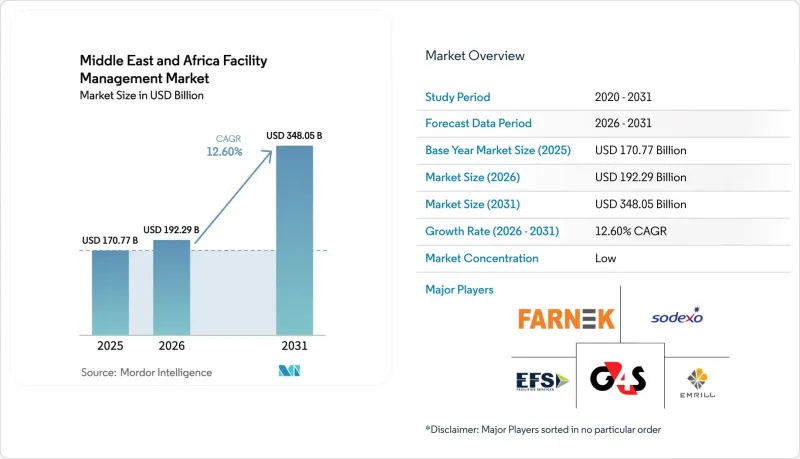
중동 및 아프리카의 시설 관리 시장 규모는 2025년에 1,707억 7,000만 달러로 평가되었고 2026년 1,922억 9,000만 달러에서 2031년까지 3,480억 5,000만 달러에 이를 것으로 예측되며, 예측 기간(2026-2031년) CAGR은 12.60%를 나타낼 전망입니다.
사우디아라비아, 아랍에미리트, 이집트, 남아프리카공화국의 인프라 투자 확대로 인해 대규모 자산 파이프라인이 형성되었고, 이에 따라 번들형 및 통합형 시설 서비스에 대한 수요가 증가했습니다. 기업 및 공공 부문 소유주들이 가동률, 에너지 사용량, 입주자 경험 지표에 서비스 요금을 연동하는 성과연동형 계약으로 전환하는 경향이 강화되는 가운데, 아웃소싱 계약이 신규 지출의 대부분을 차지했습니다. 중동 및 아프리카 시설관리 시장은 디지털화가 가속화되면서 예지보전, IoT 지원 빌딩 관리 시스템, 디지털 트윈 플랫폼의 도입으로 에너지 소비를 최적화하고 주요 설비군의 예기치 못한 다운타임을 줄일 수 있게 되었습니다. 따라서 경쟁적 차별화는 데이터 분석 기술과 ESG 보고를 일상 업무에 통합하는 능력에 달려 있으며, 특히 NEOM이나 킹 압둘라 금융지구(KAFD)와 같은 메가 프로젝트에서 두드러지게 나타났습니다. 동시에 세계 대기업들이 지역 전문 기업들과 제휴하고, 지리적 범위를 확장하고, 해당 부문의 노하우를 심화시키면서 산업 재편이 가속화되었습니다.
중동 및 아프리카 시설 관리 시장 동향과 인사이트
인프라 개발 확대
사우디아라비아만 해도 2024년 '비전 2030'에 따라 대규모 건설 계약이 발주되고 있으며, NEOM의 5,000억 달러 규모의 마스터플랜은 산업 전반의 임금을 크게 상승시켰습니다. 이는 대규모 프로젝트가 중동 및 아프리카 시설관리 시장 전체에서 서비스 수요를 견인한 것을 여실히 보여줍니다. 아프리카에서는 2024년 3월 아프리카 파이낸스 코퍼레이션(Africa Finance Corporation)이 조성한 신디케이트 대출이 자금 공백을 메우기 위한 새로운 자본 유입의 조짐을 보여 라이프사이클 지원을 필요로 하는 자산 기반이 확대되었습니다. 마찬가지로 아랍에미리트의 부동산 붐도 고급 오피스, 주택, 소매업에 대한 기술 자산 관리에 대한 수요를 증가시켰습니다. 이러한 누적된 결과로 시설 관리 책임자들은 신속한 사업 확장이 가능하고, 프로세스를 표준화하고, 다단계 개발 프로젝트에 걸쳐 복잡한 이해관계자 그룹을 관리할 수 있는 공급업체를 찾고 있었습니다.
빌딩 관리의 아웃소싱 확대
아웃소싱은 킹 압둘라 금융지구(KAFD)와 같은 획기적인 도입 사례를 계기로 더욱 탄력을 받았습니다. 이 지역에서는 IBM Maximo를 기반으로 한 통합 계약을 통해 고객 만족도가 95% 향상되는 동시에 교정 유지보수 비용이 절감되어 소유주에게 정량화할 수 있는 가치 창출이 입증되었습니다. 규제 당국도 이를 따랐습니다. 예를 들어, 중동시설관리협회와 Rera Ajman은 2024년 6월에 협약을 체결하여 모범 사례와 교육 경로를 공식화하고, 주거용 타워와 복합용도지구의 아웃소싱 모델을 제도화했습니다. 의료 사업자들은 일찌감치 이러한 움직임을 받아들여 감염 관리 프로토콜에 정통한 외부 팀에 중요 환경의 컴플라이언스 준수를 위탁했습니다. 성과연동형 계약은 정산을 가동률이나 에너지 관련 KPI에 연동하여 인센티브를 일치시키고, 평균 계약기간을 연장하였습니다.
숙련공 부족
아프리카는 2030년까지 매년 프로젝트 관리 전문가를 대폭 추가적으로 필요로 하는 상황에 직면했습니다. 그러나 인재 양성 파이프라인은 이러한 수요를 충족시키기 위해 고군분투하고 있으며, 중요한 감독직이 채워지지 않아 중동 및 아프리카 시설 관리 시장의 성장을 저해하고 있습니다. 걸프 지역의 기계, 전기, 배관(MEP) 기업들은 중간 관리자의 지식 부족으로 인해 디지털 시스템 도입이 늦어지고 생산성이 저하되고 있다고 보고했습니다. 2024년, 건설 부문은 기술 향상에 대한 요구가 증가하고 있지만, 높은 인력 이직률로 인해 고용주들은 교육에 대한 투자를 주저하고 있습니다. 그린빌딩에 대한 전문 지식을 갖춘 인력의 부족은 스마트 자산 최적화 프로젝트가 직면한 과제를 더욱 심각하게 만들고 있습니다.
부문 분석
2025년 중동 및 아프리카 시설 관리 시장에서 하드 서비스가 56.25%를 차지했습니다. 이는 혹독한 기후와 높은 가동률의 자산을 위해 설계된 HVAC(공조, 환기, 급배수), 화재 안전, 자산 건전성 관련 필수 프로그램에 의해 뒷받침됩니다. 그 중, A등급 건물에서 에너지 최적화를 위한 개보수가 의무화됨에 따라 MEP 서비스가 지출의 대부분을 차지했습니다. 소프트 서비스는 CAGR 12.78%의 견조한 성장세를 보였으며, 입주자 웰빙 지표와 ESG 보고의 질을 향상시키는 통합 계약에 포함되는 사례가 증가했습니다.
소프트 서비스의 성장은 지속 가능한 청소용 화학물질, 웰니스 인증, 테넌트 참여도 분석 등 그 범위가 확대된 것을 반영합니다. 절대적인 규모는 작지만, 소프트 서비스는 공급자가 고객 조직에 깊숙이 관여하고 수익성 높은 자문 업무를 교차 판매할 수 있는 전략적 경로가 되었습니다. 이러한 추세는 예측 기간 동안 중동 및 아프리카의 시설 관리 시장 규모에서 소프트웨어 서비스의 점유율이 점진적으로 증가할 것임을 시사합니다.
기타 혜택
- 엑셀 형태 시장 예측(ME) 시트
- 3개월간 애널리스트 지원
자주 묻는 질문
목차
제1장 서론
제2장 조사 방법
제3장 주요 요약
제4장 시장 구도
제5장 시장 규모와 성장 예측
제6장 경쟁 구도
제7장 시장 기회와 향후 전망
JHS 26.06.02The Middle East and Africa facility management market size was valued at USD 170.77 billion in 2025 and estimated to grow from USD 192.29 billion in 2026 to reach USD 348.05 billion by 2031, at a CAGR of 12.60% during the forecast period (2026-2031).
Mounting infrastructure outlays across Saudi Arabia, the United Arab Emirates, Egypt and South Africa shaped a sizeable pipeline of assets that, in turn, lifted demand for bundled and integrated facility services. Outsourced contracts attracted the bulk of new spending as corporate and public-sector owners increasingly shifted to outcome-based agreements that tied service fees to uptime, energy use and occupant-experience metrics. Digitalisation accelerated across the Middle East and Africa facility management market, with predictive maintenance, IoT-enabled building management systems, and digital-twin platforms optimizing energy consumption and reducing unplanned downtime in critical equipment fleets. Competitive differentiation therefore hinged on data analytics skills and the ability to embed ESG reporting into day-to-day operations, especially on mega projects such as NEOM and the King Abdullah Financial District. At the same time, consolidation quickened as global majors partnered with regional specialists to expand geographic reach and deepen sector know-how.
Middle East And Africa Facility Management Market Trends and Insights
Increasing Infrastructure Development
Saudi Arabia alone had awarded significant construction contracts in 2024 under Vision 2030, and NEOM's USD 500 billion masterplan stimulated significant spike in sector-wide wages, underscoring how large-scale projects fuelled service volumes across the Middle East and Africa facility management market. In Africa, the syndicated facility raised by Africa Finance Corporation in March 2024 signaled renewed capital inflows aimed at closing the funding gap and thereby broadening the asset base requiring lifecycle support. The UAE real estate boom similarly lifted demand for technical asset care in premium office, residential, and retail stock. As a cumulative result, facility executives sought providers able to scale quickly, standardize processes, and manage complex stakeholder groups across multi-phase developments.
Rising Outsourcing in Building Management
Outsourcing gained momentum after landmark deployments such as the King Abdullah Financial District, where an integrated contract underpinned by IBM Maximo boosted customer-satisfaction scores by 95% while lowering corrective maintenance outlays, demonstrating quantifiable value creation for owners. Regulatory bodies followed suit; for example, the Middle East Facility Management Association and Rera Ajman signed a June 2024 accord to formalise best practice and training pathways, institutionalising outsourced models in residential towers and mixed-use precincts. Healthcare operators were early adopters, entrusting critical-environment compliance to external teams steeped in infection-control protocols. Outcome-based contracts tied payments to uptime and energy KPIs, aligning incentives and lengthening average contract tenures.
Skilled Labour Shortages
Africa faced a significant demand for additional project-management professionals annually through 2030. However, training pipelines struggled to meet this demand, leaving critical supervisory positions unfilled and hindering the growth of the Middle East and Africa facility management market. In the Gulf, mechanical-electrical-plumbing firms reported mid-management knowledge gaps that delayed the implementation of digital systems and reduced productivity. In 2024, there is a significant need for upskilling in the construction sector, leading employers to hesitate in investing in training due to high personnel turnover. The scarcity of green-building specialisms further compounded the challenges faced in smart-asset optimisation projects.
Other drivers and restraints analyzed in the detailed report include:
- Technological Advancements in Facility Management
- ESG-Driven Facility Operations Demand
- Volatile Economic Conditions and Oil Price Swings
For complete list of drivers and restraints, kindly check the Table Of Contents.
Segment Analysis
Hard services controlled 56.25% of the Middle East and Africa facility management market in 2025, underpinned by mandatory HVAC, fire-safety and asset-integrity programs designed for harsh climates and high-occupancy assets. Within that basket, MEP services captured most spend, as energy-optimisation retrofits became obligatory for Grade-A stock. Soft services displayed brisk 12.78% CAGR and were increasingly bundled into integrated contracts that elevated occupant-wellbeing metrics and ESG reporting quality.
Soft-service growth reflected expanded scope spanning sustainable cleaning chemicals, wellness certifications and tenant-engagement analytics. Although smaller in absolute value, soft services represented a strategic pathway for providers to embed themselves in client organisations and cross-sell higher-margin advisory work. The dynamic signalled further incremental share gain for soft services within the Middle East and Africa facility management market size during the forecast horizon.
The Middle East and Africa Facility Management Market Report is Segmented by Service Type (Hard Services, and Soft Services), Offering Type (In-House, and Outsourced), End-User Industry (Commercial, Hospitality, and More), and Geography (Saudi Arabia, United Arab Emirates, Qatar, Kuwait, South Africa, Egypt, Nigeria, and More). The Market Forecasts are Provided in Terms of Value (USD).
List of Companies Covered in this Report:
- Engie Cofely Energy Services LLC (Engie SA)
- EFS Facilities Services Group
- Ejadah Asset Management Group
- Emrill Services LLC
- Farnek Services LLC
- Bidvest Facilities Management
- Kharafi National for Infrastructure Projects Developments Construction & Services SAE
- Initial Saudi Group
- Sodexo
- Ecolab
- Imdaad
- G4S
- CBRE Group Inc.
- ISS A/S
- Jones Lang LaSalle Incorporated
- Khidmah LLC
- Transguard Group
- Al Shirawi Facilities Management LLC
- Serco Group Middle East
- Aramark Corporation
Additional Benefits:
- The market estimate (ME) sheet in Excel format
- 3 months of analyst support
TABLE OF CONTENTS
1 INTRODUCTION
- 1.1 Study Assumptions and Market Definition
- 1.2 Scope of the Study
2 RESEARCH METHODOLOGY
3 EXECUTIVE SUMMARY
4 MARKET LANDSCAPE
- 4.1 Market Overview
- 4.2 Market Drivers
- 4.2.1 Increasing Infrastructure Development
- 4.2.2 Rising Outsourcing in Building Management
- 4.2.3 Heightened Safety and Security Needs
- 4.2.4 Technological Advancements in Facility Management
- 4.2.5 ESG-Driven Facility Operations Demand
- 4.2.6 FM Demand from Giga Mixed-Use Projects
- 4.3 Market Restraint
- 4.3.1 Skilled Labour Shortages
- 4.3.2 Regulatory Challenges
- 4.3.3 Volatile Economic Conditions and Oil Price Swings
- 4.3.4 Fragmented FM Standards Across MEA Countries
- 4.4 Industry Value Chain Analysis
- 4.5 PESTEL Analysis
- 4.6 Regulatory and Legislative Framework for Market Entrants
- 4.7 Impact of Macroeconomic Indicators on FM Demand
- 4.8 Porter's Five Forces Analysis
- 4.8.1 Bargaining Power of Suppliers
- 4.8.2 Bargaining Power of Buyers
- 4.8.3 Threat of New Entrants
- 4.8.4 Threat of Substitute Services
- 4.8.5 Intensity of Competitive Rivalry
- 4.9 Investment and Funding Analysis
5 MARKET SIZE AND GROWTH FORECASTS (VALUE)
- 5.1 By Service Type
- 5.1.1 Hard Services
- 5.1.1.1 Asset Management
- 5.1.1.2 MEP and HVAC Services
- 5.1.1.3 Fire Systems and Safety
- 5.1.1.4 Other Hard Services
- 5.1.2 Soft Services
- 5.1.2.1 Office Support and Security
- 5.1.2.2 Cleaning Services
- 5.1.2.3 Catering Services
- 5.1.2.4 Other Soft Services
- 5.1.1 Hard Services
- 5.2 By Offering Type
- 5.2.1 In-house
- 5.2.2 Outsourced
- 5.2.2.1 Single FM
- 5.2.2.2 Bundled FM
- 5.2.2.3 Integrated FM
- 5.3 By End-user Industry
- 5.3.1 Commercial (IT and Telecom, Retail and Warehouses)
- 5.3.2 Hospitality (Hotels, Eateries, Large-scale Restaurants)
- 5.3.3 Institutional and Public Infrastructure (Govt, Education, Transportation)
- 5.3.4 Healthcare (Public and Private Facilities)
- 5.3.5 Industrial and Process (Manufacturing, Energy, Mining)
- 5.3.6 Other End-user Industry
- 5.4 By Country
- 5.4.1 Saudi Arabia
- 5.4.2 United Arab Emirates
- 5.4.3 Qatar
- 5.4.4 Kuwait
- 5.4.5 South Africa
- 5.4.6 Egypt
- 5.4.7 Nigeria
- 5.4.8 Rest of Middle East and Africa
6 COMPETITIVE LANDSCAPE
- 6.1 Market Concentration
- 6.2 Strategic Moves and Partnerships
- 6.3 Market Share Analysis
- 6.4 Company Profiles (includes Global level Overview, Market level overview, Core Segments, Financials as available, Strategic Information, Market Rank/Share for key companies, Products and Services, and Recent Developments)
- 6.4.1 Engie Cofely Energy Services LLC (Engie SA)
- 6.4.2 EFS Facilities Services Group
- 6.4.3 Ejadah Asset Management Group
- 6.4.4 Emrill Services LLC
- 6.4.5 Farnek Services LLC
- 6.4.6 Bidvest Facilities Management
- 6.4.7 Kharafi National for Infrastructure Projects Developments Construction & Services SAE
- 6.4.8 Initial Saudi Group
- 6.4.9 Sodexo
- 6.4.10 Ecolab
- 6.4.11 Imdaad
- 6.4.12 G4S
- 6.4.13 CBRE Group Inc.
- 6.4.14 ISS A/S
- 6.4.15 Jones Lang LaSalle Incorporated
- 6.4.16 Khidmah LLC
- 6.4.17 Transguard Group
- 6.4.18 Al Shirawi Facilities Management LLC
- 6.4.19 Serco Group Middle East
- 6.4.20 Aramark Corporation
7 MARKET OPPORTUNITIES AND FUTURE OUTLOOK
- 7.1 White-space and Unmet-Need Assessment
- 7.2 Technology-led Integrated FM (IoT, BMS, AI-based Predictive Maintenance)
- 7.3 ESG-Compliant FM Solutions Demand
- 7.4 Future Service-Model Shifts (Outcome-Based Contracts)


