

|
시장보고서
상품코드
2113735
스페인의 상처 관리 기기 : 시장 점유율 분석, 업계 동향 및 통계, 성장 예측(2026-2031년)Spain Wound Care Management Devices - Market Share Analysis, Industry Trends & Statistics, Growth Forecasts (2026 - 2031) |
||||||
 Mordor Intelligence
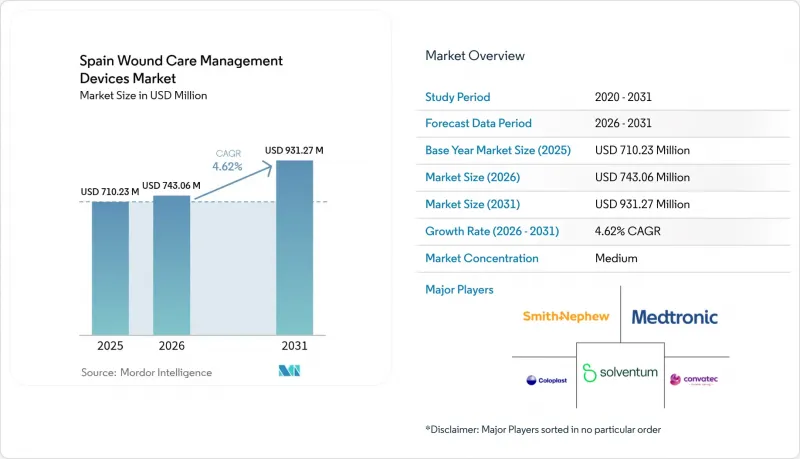
Mordor Intelligence에 의하면, 스페인의 상처 관리 기기 시장 규모는 2025년 7억 1,023만 달러로 평가되었습니다. 2026년에는 7억 4,306만 달러로 확대되어 2026년부터 2031년에 걸쳐 CAGR 4.62%로 성장을 지속하여, 2031년에는 9억 3,127만 달러에 이를 것으로 예측됩니다.
본 보고서는 제품별(상처 관리(드레싱, 상처 관리 기기 등) 및 상처 봉합(봉합사, 외과용 스테이플러 등)), 상처 유형별(만성 상처 및 급성 상처), 최종 사용자별(병원·전문 상처 클리닉 등),구매 형태별(기관 조달 및 소매/OTC 채널)로 구분되어 있습니다. 시장 규모 및 전망은 금액(미화) 기준으로 제시되어 있습니다.
스페인의 상처 관리 기기 시장 동향 및 인사이트
당뇨병성 족부 병변 및 욕창 유병률 증가
현재 스페인 전문 상처 치료 부문의 90.5%에서 당뇨병성 족부 궤양이 주요 진단으로 나타나고 있으며, 입원이 필요한 경우 감염 사례 1건당 206만 3,000유로의 비용이 발생하고 있습니다. 이 비용의 88%는 입원비가 차지하며, 치유까지 걸리는 기간은 외래 치료의 136일에 비해 194일로 길어지고 있습니다. 첨단 열화상 AI는 말초 신경 장애의 진단 정확도 95%를 실현하여 조기 개입을 촉진함으로써 궤양 발생률을 낮추고 있습니다. 보건 당국은 첨단 드레싱 및 음압상처치료(NPWT)에 대한 투자를 절단 수술 및 재입원을 억제하는 비용 절감 전략으로 간주하고 있습니다.
선택적 수술 및 외상 수술 건수 증가
2024년부터 2025년에 걸쳐 예정 수술이 회복되면서, 수술 후 상처 봉합 및 감염 예방용 기기에 대한 수요가 지속되었습니다. 나바라 대학병원에서는 41건의 복잡한 사례에서 음압 봉합 요법(VAC)을 통해 치유 기간과 입원 일수가 단축되었습니다. 폴리우레탄 폼 다층 드레싱을 통해 드레싱 교체 횟수가 47.1% 감소했고, 주당 비용이 58.7% 절감되었습니다. 외과의사들은 조기 퇴원을 가능하게 하고 지역 내 경과 관찰을 지원하는 일회용 NPWT 시스템 처방을 늘리고 있습니다.
첨단 드레싱에 대한 국가 보험 적용은 제한적
첨단 의료기기의 경우 스페인 의약품 및 의료기기청(AEMPS)의 CE 마크 획득이 필요하지만, 재정 지원에 관한 결정은 각 자치단체에 위임되어 있어 보험 적용 범위에 차이가 발생하고 있습니다. 제조업체는 여러 처방약 목록과 협상을 해야만 하며, 의료 기술 평가를 통해 비용 대비 효과가 입증된 경우에도 시장 출시까지 시간이 지연되고 있습니다.
부문 분석
2025년, 스페인의 상처 관리 기기 시장에서 첨단 상처 치료 솔루션이 65.02%의 점유율을 차지했습니다. 그중에서도 주당 치료비를 58.6% 절감한 항균 폼 드레싱이 선두를 달렸습니다. 스페인의 상처 관리 기기 시장의 상처 봉합 제품 시장 규모는 감염 위험을 줄이고 외래 환자 회전율을 높이는 조직 접착제에 대한 수요에 힘입어 연평균 성장률(CAGR) 5.05%로 확대되고 있습니다. 스미스 앤 네퓨(Smith & Nephew)는 레드닷 어워드(Red Dot Award)를 수상한 RENASYS EDGE NPWT 플랫폼을 출시한 후, 현지 첨단 상처 관리 부문에서 12.2%의 매출 성장을 기록하며 브랜드의 성장세를 더욱 공고히 했습니다.
상처 봉합 장치에서는 봉합사가 여전히 주류를 이루고 있지만, 성장 인자가 함유된 스마트 실란트가 수술실에 도입되고 있습니다. 바이오엔지니어링을 활용한 외용제는 항균 제어라는 틈새 수요를 지속적으로 확보하고 있는 반면, 효소를 이용한 데브리드먼트 젤은 당뇨병 관리 분야에서 주목을 받고 있습니다. 새롭게 등장한 IoT 대응 드레싱은 온도 및 삼출액 데이터를 전송하여, 임상의가 감염 발병을 예측하고 불필요한 드레싱 교체를 하지 않으면서도 치료를 조정할 수 있도록 해줍니다.
고령화 사회에서 당뇨병성 족부 궤양, 정맥성 하지 궤양, 욕창이 주류를 이루고 있는 만큼, 2025년 스페인의 상처 관리 기기 시장에서 만성 상처가 시장 점유율의 60.05%를 차지했습니다. 급성 상처용 스페인의 상처 관리 기기 시장 규모는 수술 후 회복 및 외상 발생률 증가를 반영하여 2031년까지 연평균 성장률(CAGR) 5.14%로 확대될 것으로 예측됩니다.
당뇨병성 족부 궤양은 당뇨병 유병률 14.7%와 상관관계를 보이며, 만성 상처 부문에서 가장 큰 비중을 차지하고 있습니다. 욕창은 막대한 자원적 부담을 초래하지만, 전문 간호사가 주도하는 체계적인 예방 프로그램을 통해 유병률이 50% 감소하는 것으로 나타났습니다. 급성 외과 상처의 경우, 예방적 음압상처치료(NPWT)나 상처 치유 기간을 단축시키는 항균성 하이드로파이버 드레싱이 효과적입니다.
기타 혜택 :
- 엑셀 형식 시장 예측(ME) 시트
- 3개월간 애널리스트 지원
자주 묻는 질문
목차
제1장 서론
제2장 조사 방법
제3장 주요 요약
제4장 시장 구도
제5장 시장 규모 및 성장 예측
제6장 경쟁 구도
제7장 시장 기회 및 향후 전망
KTH 26.08.26According to Mordor Intelligence, the spain wound care management devices market size is expected to grow from USD 710.23 million in 2025 to USD 743.06 million in 2026 and is forecast to reach USD 931.27 million by 2031 at 4.62% CAGR over 2026-2031.
This report is Segmented by Product (Wound Care [Dressings, Wound-Care Devices, and More] and Wound Closure [Sutures, Surgical Staplers, and More]), Wound Type (Chronic Wounds and Acute Wounds), End User (Hospitals & Specialty Wound Clinics and More), and Mode of Purchase (Institutional Procurement and Retail / OTC Channel). The Market and Forecasts are Provided in Terms of Value (USD).
Spain Wound Care Management Devices Market Trends and Insights
Growing Prevalence of Diabetic Foot & Pressure Ulcers
Diabetic foot ulcers are now the primary diagnosis in 90.5% of Spain's specialized wound units, generating EUR 2.063 million per infected case when hospitalization is required . Hospital stays account for 88% of that expense and lengthen healing to 194 days versus 136 days for outpatient care. Advanced thermographic AI yields 95% diagnostic accuracy for peripheral neuropathy, prompting earlier interventions that lower ulcer incidence . Health authorities view investment in advanced dressings and NPWT as a cost-saving strategy that curbs amputations and readmissions.
Rising Volume of Elective & Trauma Surgeries
Elective procedures rebounded in 2024-2025, sustaining demand for post-operative closure and infection-prevention devices. Vacuum-assisted closure therapy reduced healing time and length of stay in 41 complex cases at the University Clinic of Navarra. Polyurethane foam multilayer dressings cut dressing changes by 47.1% and weekly costs by 58.7%. Surgeons increasingly prescribe single-use NPWT systems that enable earlier discharge and support community-based follow-ups.
Limited National Reimbursement for Advanced Dressings
Advanced devices need CE marking through the Spanish Agency of Medicines and Medical Devices (AEMPS), yet decisions on funding rest with each region, creating a patchwork of coverage. Manufacturers negotiate multiple formularies, slowing time-to-market even when cost-effectiveness is proven via health technology assessments.
Other drivers and restraints analyzed in the detailed report include:
- Ageing Population Boosting Chronic-Wound Incidence
- Hospital-to-Home Shift & Home-Based NPWT Adoption
- High Per-Patient Cost of NPWT & Bio-Engineered Grafts
For complete list of drivers and restraints, kindly check the Table Of Contents.
Segment Analysis
Advanced wound care solutions held 65.02% of the Spain wound care management devices market in 2025, led by antimicrobial foam dressings that trimmed weekly treatment expenses by 58.6%. The Spain wound care management devices market size for wound closure products is growing at a 5.05% CAGR, driven by demand for tissue adhesives that lower infection risk and enable faster outpatient turnover. Smith+Nephew marked 12.2% sales growth within its local advanced wound unit following the release of the Red Dot-winning RENASYS EDGE NPWT platform, reinforcing brand momentum.
Sutures remain dominant in closure devices, yet smart sealants containing growth factors are entering operating rooms. Bio-engineered topical agents continue to capture niche demand for antimicrobial control, while enzymatic debridement gels receive attention in diabetic care pathways. Emerging Internet-of-Things-enabled dressings transmit temperature and exudate data, allowing clinicians to predict infection onset and adjust therapy without unnecessary dressing removal.
Chronic wounds accounted for 60.05% of the Spain wound care management devices market share in 2025 as diabetic foot, venous leg, and pressure ulcers prevail in an aging society. The Spain wound care management devices market size for acute wounds is projected to grow at 5.14% CAGR to 2031, reflecting surgical rebounds and trauma incidence.
Diabetic foot ulcers represent the largest chronic segment, correlating with 14.7% diabetes prevalence. Pressure ulcers pose significant resource burdens, yet structured prevention programs demonstrate a 50% reduction in prevalence when spearheaded by advanced practice nurses. Acute surgical wounds benefit from prophylactic NPWT and antimicrobial hydrofiber dressings that shorten closure times.
Complete Report Scope:
- By Product
- Wound Care
- Dressings
- Traditional Gauze & Tape Dressings
- Advanced Dressings
- Wound-Care Devices
- Negative Pressure Wound Therapy (NPWT)
- Oxygen & Hyperbaric Systems
- Electrical Stimulation Devices
- Other Wound Care Devices
- Other Wound Care Products
- Dressings
- Wound Closure
- Sutures
- Surgical Staplers
- Tissue Adhesives, Strips, Sealants & Glues
- Wound Care
- By Wound Type
- Chronic Wounds
- Diabetic Foot Ulcer
- Pressure Ulcer
- Venous Leg Ulcer
- Other Chronic Wounds
- Acute Wounds
- Surgical/Traumatic Wounds
- Burns
- Other Acute Wounds
- Chronic Wounds
- By End User
- Hospitals & Specialty Wound Clinics
- Long-term Care Facilities
- Home-Healthcare Settings
- By Mode of Purchase
- Institutional Procurement
- Retail / OTC Channel
List of Companies Covered in this Report:
- Solventum
- Smiths Group
- Molnlycke Health Care
- Coloplast
- ConvaTec Group plc
- Medtronic
- Cardinal Health
- B. Braun
- Laboratories Hartmann SA
- Integra LifeSciences
- Urgo Medical
- Baxter
- Johnson & Johnson
- Lohmann & Rauscher GmbH
- Advanced Medical Solutions Group
- Medela
- Kerecis ehf (Coloplast)
- Histocell S.L.
- Genia BioPharma S.L.
- Grena
- MiMedx Group
Additional Benefits:
- The market estimate (ME) sheet in Excel format
- 3 months of analyst support
TABLE OF CONTENTS
1 Introduction
- 1.1 Study Assumptions & Market Definition
- 1.2 Scope of the Study
2 Research Methodology
3 Executive Summary
4 Market Landscape
- 4.1 Market Overview
- 4.2 Market Drivers
- 4.2.1 Growing prevalence of diabetic foot & pressure ulcers
- 4.2.2 Rising volume of elective & trauma surgeries
- 4.2.3 Ageing population boosting chronic-wound incidence
- 4.2.4 Hospital-to-home shift & home-based NPWT adoption
- 4.2.5 Regional clinical-nurse-led wound units cutting recurrence
- 4.2.6 E-health tele-monitoring platforms reducing follow-up visits
- 4.3 Market Restraints
- 4.3.1 Limited national reimbursement for advanced dressings
- 4.3.2 High per-patient cost of NPWT & bio-engineered grafts
- 4.3.3 Fragmented procurement across 17 Autonomous Communities
- 4.3.4 Shortage of certified wound-care specialists in primary care
- 4.4 Regulatory Landscape
- 4.5 Technological Outlook
- 4.6 Porters Five Forces Analysis
- 4.6.1 Threat of New Entrants
- 4.6.2 Bargaining Power of Buyers/Consumers
- 4.6.3 Bargaining Power of Suppliers
- 4.6.4 Threat of Substitute Products
- 4.6.5 Intensity of Competitive Rivalry
5 Market Size & Growth Forecasts (Value, USD)
- 5.1 By Product
- 5.1.1 Wound Care
- 5.1.1.1 Dressings
- 5.1.1.1.1 Traditional Gauze & Tape Dressings
- 5.1.1.1.2 Advanced Dressings
- 5.1.1.2 Wound-Care Devices
- 5.1.1.2.1 Negative Pressure Wound Therapy (NPWT)
- 5.1.1.2.2 Oxygen & Hyperbaric Systems
- 5.1.1.2.3 Electrical Stimulation Devices
- 5.1.1.2.4 Other Wound Care Devices
- 5.1.1.3 Other Wound Care Products
- 5.1.1.1 Dressings
- 5.1.2 Wound Closure
- 5.1.2.1 Sutures
- 5.1.2.2 Surgical Staplers
- 5.1.2.3 Tissue Adhesives, Strips, Sealants & Glues
- 5.1.1 Wound Care
- 5.2 By Wound Type
- 5.2.1 Chronic Wounds
- 5.2.1.1 Diabetic Foot Ulcer
- 5.2.1.2 Pressure Ulcer
- 5.2.1.3 Venous Leg Ulcer
- 5.2.1.4 Other Chronic Wounds
- 5.2.2 Acute Wounds
- 5.2.2.1 Surgical/Traumatic Wounds
- 5.2.2.2 Burns
- 5.2.2.3 Other Acute Wounds
- 5.2.1 Chronic Wounds
- 5.3 By End User
- 5.3.1 Hospitals & Specialty Wound Clinics
- 5.3.2 Long-term Care Facilities
- 5.3.3 Home-Healthcare Settings
- 5.4 By Mode of Purchase
- 5.4.1 Institutional Procurement
- 5.4.2 Retail / OTC Channel
6 Competitive Landscape
- 6.1 Market Concentration
- 6.2 Market Share Analysis
- 6.3 Company Profiles (includes Global level Overview, Market level overview, Core Segments, Financials as available, Strategic Information, Market Rank/Share for key companies, Products & Services, and Recent Developments)
- 6.3.1 Solventum
- 6.3.2 Smith & Nephew plc
- 6.3.3 Molnlycke Health Care AB
- 6.3.4 Coloplast A/S
- 6.3.5 ConvaTec Group plc
- 6.3.6 Medtronic plc
- 6.3.7 Cardinal Health Inc.
- 6.3.8 B. Braun SE
- 6.3.9 Laboratories Hartmann SA
- 6.3.10 Integra LifeSciences
- 6.3.11 Urgo Medical
- 6.3.12 Baxter International Inc.
- 6.3.13 Johnson & Johnson (Ethicon)
- 6.3.14 Lohmann & Rauscher GmbH
- 6.3.15 Advanced Medical Solutions Group plc
- 6.3.16 Medela AG
- 6.3.17 Kerecis ehf (Coloplast)
- 6.3.18 Histocell S.L.
- 6.3.19 Genia BioPharma S.L.
- 6.3.20 Grena Ltd
- 6.3.21 MiMedx Group
7 Market Opportunities & Future Outlook
- 7.1 White-space & Unmet-Need Assessment


