

|
시장보고서
상품코드
2113826
미국의 농업용 관개 기계 : 시장 점유율 분석, 업계 동향 및 통계, 성장 예측(2026-2031년)United States Agricultural Irrigation Machinery - Market Share Analysis, Industry Trends & Statistics, Growth Forecasts (2026 - 2031) |
||||||
 Mordor Intelligence
Mordor Intelligence에 의하면, 미국의 농업용 관개 기계 시장 규모는 2025년 21억 달러로 평가되었습니다. 2026년에는 22억 2,000만 달러로 확대되어 2026년부터 2031년에 걸쳐 CAGR 5.54%로 성장을 지속하여, 2031년에는 29억 달러에 이를 것으로 예측됩니다.
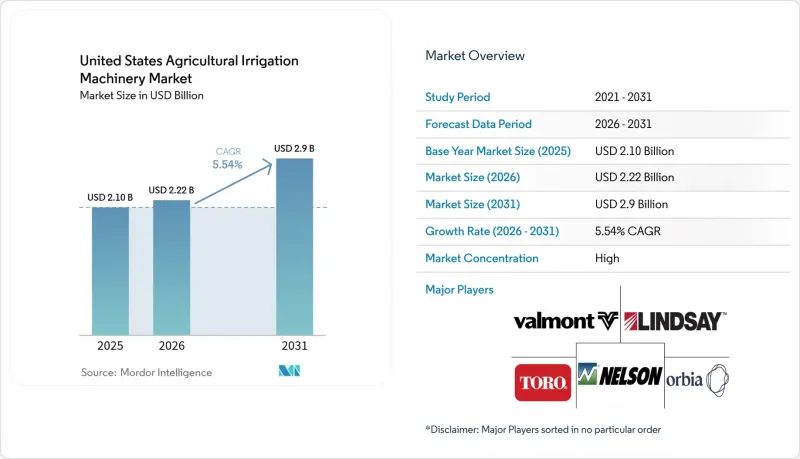
본 보고서는 관개 방식(스프링클러 관개, 점적 관개, 피벗 관개 및 기타 관개 방식)과 용도(식용 작물 및 비식용 작물)별로 분류되어 있습니다. 시장 예측은 금액(달러) 기준으로 제시되어 있습니다.
미국의 농업용 관개 기계 시장 동향 및 인사이트
연방 정부의 비용 분담 프로그램이 피벗 시스템의 교체를 가속화
2024 회계연도, 환경 품질 인센티브 프로그램(EQIP)은 범람식 관개 시스템을 교체하거나 구형 피벗 시스템을 개조하는 생산자의 설비 투자를 지원하기 위해 막대한 자금을 지급함으로써, 일반적인 투자 회수 기간을 8년에서 4년 미만으로 단축했습니다. 네브래스카주, 캔자스주, 콜로라도주의 주 차원 무이자 대출은 연방 정부의 지원을 보완하는 역할을 했으며, 지난 1년 동안 하이플레인스 지역에서 설치 건수가 증가하는 데 재정적 뒷받침을 제공했습니다. 이러한 인센티브의 조합 덕분에, 이전에는 12만 달러 규모의 피벗 시스템을 자체 자금으로 마련할 재정적 여유가 없었던 500-1,000에이커 규모의 농장에서도 도입이 확대되고 있습니다. 판매점의 수주 기록에 따르면 가변 토출량 노즐 패키지 주문이 증가하고 있으며, 이는 생산자들이 프로그램의 적용 요건을 최대한 활용하면서 동시에 절수 효과도 추구하려 하고 있음을 보여줍니다. 그러나 이 노력은 여전히 매년 예산 배분에 좌우되고 있으며, 2026년 이후 농업 법안에 따른 예산 삭감이 있을 경우, 특히 상업용 신용 한도가 없는 소규모 생산자들에게는 설비 갱신이 중단될 가능성이 있습니다. 따라서 공급업체들은 자금 조달의 불확실성에 대비해 출하 일정을 앞당기고 있는 반면, 로비 활동을 펼치는 연합체는 2030년까지 비용 분담 상한선을 유지할 것을 요구하고 있습니다. 이러한 인센티브의 주된 목적은 미국의 농업용 관개 시스템 시장이 전체 농업 기계 지출을 계속해서 상회하고 있는 이유를 여실히 보여줍니다.
물 부족 문제를 겪고 있는 주에서의 물 이용 효율 향상 의무 강화
캘리포니아주의 ‘지속 가능한 지하수 관리법’은 심각한 과다 취수 상태에 있는 유역에 대해 2040년까지 지속가능성을 달성할 것을 의무화하고 있으며, 샌호아킨 밸리 전역에서 농업용수 취수량을 사실상 20%-30% 감축하도록 강제하고 있습니다. 애리조나주, 네브래스카주, 캔자스주에서는 비효율적인 범람식 관개를 처벌 대상으로 하는 계량 제도나 취수량 상한선을 도입하여, 농가들이 증발량을 대폭 줄여주는 점적 관개나 마이크로 스프링클러로 전환하도록 장려하고 있습니다. 농업연구서비스(ARS)가 실시한 포장 시험에 따르면, 아몬드와 피스타치오 재배에서 점적 관개는 상부식 스프링클러에 비해 물 손실을 최대 25%까지 줄일 수 있는 것으로 나타났습니다. 규정 준수 기한은 2030년까지로 설정되어 있어, 효율 향상을 입증할 수 있는 지하 관개 장치나 가변 유량식 피벗 관개 시스템에 대한 지속적인 개조 수요의 기반이 되고 있습니다. 그러나 시행 상황의 편차와 가뭄 연도에 대한 적용 제외로 인해 불확실성이 발생하고 있으며, 일부 사업자는 지역의 단계별 목표에 맞추어 설비 구매 시기를 조정하고 있습니다. 이에 대응하여 각 기술 공급업체들은 센서 데이터를 규정 준수 보고서로 변환하는 모니터링 대시보드를 제공함으로써, 규제상의 보고 요건을 충족시키는 동시에 미국 농업 관개 시스템 시장에서 자사의 구독 플랫폼에 대한 채택률을 높이고 있습니다.
광역용 센터 피벗의 고액 초기 설비 투자(CAPEX)
최신 쿼터 마일 규모의 가변 급수 피벗은 9만-20만 달러의 비용이 들며, 1,000에이커 규모의 옥수수·대두 농장의 연간 총수익의 15%-25%를 차지합니다. 농산물 가격이 침체되면 투자 회수 기간이 10년 이상으로 길어질 수도 있어, 물 절약 가능성이 있음에도 불구하고 구매를 주저하게 만드는 요인이 되고 있습니다. 연방 정부의 비용 분담 프로그램이 도입 장벽을 완화하고 있지만, 수요가 높은 지역에서는 신청 대기 기간이 18-24개월에 달하기 때문에 생산자들은 상업 금리로 자체 자금을 조달하거나 도입을 연기할 수밖에 없는 상황에 처해 있습니다. 발몬트(Valmont)사와 린지(Lindsay)사가 제공하는 리스 옵션은 초기 자금 부담을 줄여주지만, 7년 기간 동안 6%-8%의 이자가 부과됩니다. 판매업체에 따르면, 중고 장비 부족으로 인해 정가가 상승하고 있어 자본 측면의 진입 장벽이 더욱 높아지고 있다고 합니다. 이러한 지연은 미국의 농업용 관개 시스템 시장 전체로 파급되어, 기술이 진보하고 있음에도 불구하고 교체 주기를 늦추고 판매량 증가세를 둔화시키고 있습니다.
부문별 분석
2025년, 피벗식 관개는 미국의 농업용 관개 기계 시장 점유율의 43.35%를 차지했으며, 그 뒤를 스프링클러 설비가 따랐습니다. 한편, 점적 관개는 총 경작 면적에서 차지하는 비율은 작지만 급속히 확대되고 있습니다. 점적 관개의 확대는 특산 작물의 성장, 물 사용 규제 강화, 그리고 기복이 있는 지형에서도 균일한 유량을 유지하는 기술의 발전과 궤를 같이 하고 있습니다. 리브리스(Livris)사와 더 트로 컴퍼니(The Toro Company)는 수명을 연장하고 막힘을 억제하는 압력 보상형 에미터와 인라인 여과 장치를 시장에 출시하고 있습니다. 피벗식 관개는 광활하고 평탄한 농지에서 여전히 비용 대비 효율이 높으며, 특히 GPS 조향 시스템이나 가변 살수 노즐을 장착함으로써 점적 관개와의 효율 격차를 줄이는 데 기여하고 있습니다. 대형 스프링클러 제조업체들은 꾸준히 시장 점유율을 잃고 있으며, 범람 관개나 도랑 관개 방식은 연방 정부의 보조금 대상에서 제외되어 계속해서 감소 추세를 보이고 있습니다.
점적 관개는 2031년까지 11.02%라는 가장 높은 연평균 성장률(CAGR)을 보일 것으로 예상되며, 미국의 농업용 관개 시스템 시장 규모에서 매출 증가의 주요 원동력이 될 전망입니다. 피벗식 시스템은 지하수 사용량 상한 규제를 준수하기 위해, 농가가 센서 제어식 모듈을 도입함에 따라 앞으로도 확대될 것으로 보입니다. 한편, 스프링클러 설비는 성장세가 주춤할 것이며, 범람 관개 이용은 더욱 감소할 전망입니다. 이러한 상대적인 추세는 절수 정책과 작물 구성의 변화가 관개 방식별 설비 투자를 어떻게 유도하고, 주요 공급업체 간경쟁 구도를 어떻게 재편하고 있는지를 여실히 보여주고 있습니다.
기타 혜택 :
- 엑셀 형식 시장 예측(ME) 시트
- 3개월간의 애널리스트 지원
자주 묻는 질문
목차
제1장 서론
제2장 조사 방법
제3장 주요 요약
제4장 시장 구도
제5장 시장 규모 및 성장 예측
제6장 경쟁 구도
제7장 시장 기회 및 향후 전망
KTH 26.08.26According to Mordor Intelligence, the United States agricultural irrigation machinery market size is expected to grow from USD 2.10 billion in 2025 to USD 2.22 billion in 2026 and is forecast to reach USD 2.90 billion by 2031 at 5.54% CAGR over 2026-2031.
This report is Segmented by Irrigation Type (Sprinkler Irrigation, Drip Irrigation, Pivot Irrigation, and Other Irrigation Types) and by Application (Food Crop and Non-Food Crop). The Market Forecasts are Provided in Terms of Value (USD).
United States Agricultural Irrigation Machinery Market Trends and Insights
Federal Cost-Share Programs Accelerating Pivot System Upgrades
In fiscal 2024, the Environmental Quality Incentives Program disbursed a significant amount to support hardware expenditures for growers that replaced flood systems or retrofitted older pivots, compressing typical payback periods from eight years to fewer than four. State-level zero-interest loans in Nebraska, Kansas, and Colorado complement the federal benefit and financed a rise in High Plains installations over the past year. The incentive mix has broadened adoption among 500- to 1,000-acre operations that previously lacked the balance-sheet strength to self-fund USD 120,000 pivots. Dealer order logs show an uptick in variable-rate nozzle packages, reflecting producers' intent to maximize program eligibility and water savings simultaneously. However, the initiative remains subject to annual appropriations, and any Farm Bill cuts after 2026 could pause upgrades, particularly for smaller growers lacking commercial credit lines. Suppliers are therefore accelerating shipments ahead of possible funding uncertainty, while lobbying coalitions seek to maintain cost-share ceilings through 2030. The thrust of these incentives underscores why the United States agricultural irrigation systems market continues to outpace broader farm machinery spending.
Rising Water-Use Efficiency Mandates in Water-Stressed States
California's Sustainable Groundwater Management Act compels critically overdrafted basins to achieve sustainability by 2040, effectively forcing a 20%-30% cut in agricultural withdrawals across the San Joaquin Valley . Arizona, Nebraska, and Kansas have introduced metering and volumetric caps that penalize inefficient flood practices, nudging growers toward drip and micro-sprinkler layouts that slash evaporation. Field trials conducted by the Agricultural Research Service show drip reducing losses by up to 25% compared with overhead sprinklers in almonds and pistachios . Compliance deadlines extend through 2030, anchoring a durable pipeline of retrofit demand for both subsurface emitters and variable-rate pivots able to document efficiency gains. Nevertheless, uneven enforcement and drought-year exemptions create uncertainty, prompting some operators to stage equipment purchases to align with local milestones. Technology vendors are responding with monitoring dashboards that convert sensor data into compliance reports, simultaneously meeting regulatory reporting needs and driving stickiness for their subscription platforms within the United States agricultural irrigation systems market.
High Upfront CAPEX for Large-Area Center Pivots
A modern quarter-mile variable-rate pivot costs USD 90,000-USD 200,000, absorbing 15%-25% of a 1,000-acre corn-soybean farm's yearly gross . When commodity prices sag, payback horizons can stretch beyond 10 years, discouraging purchases despite potential water savings. Federal cost-share programs ease barriers, but application queues run 18-24 months in high-demand districts, compelling growers either to self-finance at commercial rates or to delay. Leasing options provided by Valmont and Lindsay reduce upfront cash requirements but involve an interest rate of 6%-8% over a seven-year term. Dealers note that used equipment shortages raise sticker prices, further inflating capital hurdles. Delays ripple through the broader United States agricultural irrigation systems market, slowing replacement cycles and dampening volume growth even as technology advances.
Other drivers and restraints analyzed in the detailed report include:
- Rapid Adoption of Sensor-Based Variable-Rate Irrigation (VRI) Controls
- Increasing Acreage of Specialty Fruit and Nut Crops Requiring Drip Systems
- Chronic Rural Broadband Gaps Limiting Precision-Irrigation ROI
For complete list of drivers and restraints, kindly check the Table Of Contents.
Segment Analysis
Pivot irrigation commanded a 43.35% of the United States agricultural irrigation machinery market share in 2025, followed by sprinkler setups, while drip captured a smaller but fast-rising fraction of total acreage. Drip's expansion aligns with specialty-crop growth, rising water-use mandates, and technology that maintains uniform flow on undulating terrain. Rivulis, and The Toro Company have rolled out pressure-compensating emitters and inline filtration that extend service life and curb clogging. Pivots remain cost-effective on large, flat tracts, especially when outfitted with GPS steering and variable-rate nozzles that help narrow the efficiency gap with drip. Sprinkler big-guns are steadily displaced, and flood or furrow options continue to decline as they are ineligible for federal subsidies.
Drip is projected to log the fastest 11.02% CAGR through 2031, making it the prime engine of incremental revenue within the United States agricultural irrigation systems market size. Pivot systems will still advance, as row-crop producers adopt sensor-guided modules to comply with groundwater caps, while sprinkler rigs will stagnate and flood usage will retreat further. The relative pace underscores how conservation policy and crop-mix shifts steer capital spending across irrigation modalities, reshaping competitive focus among leading suppliers.
Complete Report Scope:
- Irrigation Type
- Sprinkler Irrigation
- Drip Irrigation
- Pivot Irrigation
- Other Irrigation Types
- Application
- Food Crops
- Row Crops
- Specialty Fruit and Nut Crops
- Non-food Crops
- Food Crops
List of Companies Covered in this Report:
- Valmont Industries, Inc.
- Lindsay Corporation
- The Toro Company
- Nelson Irrigation
- Orbia (Netafim USA)
- Rivulis Irrigation Ltd.
- Rain Bird Corporation
- Deere & Company
- T-L Irrigation Co.
- Reinke Manufacturing Co., Inc.
- Hunter Industries Inc.
- Komet Irrigation Corp.
- Agri-Inject, Inc.
- Cadman Power Equipment Ltd.
- Cropx Inc.
Additional Benefits:
- The market estimate (ME) sheet in Excel format
- 3 months of analyst support
TABLE OF CONTENTS
1 Introduction
- 1.1 Study Assumptions and Market Definition
- 1.2 Scope of the Study
2 Research Methodology
3 Executive Summary
4 Market Landscape
- 4.1 Market Overview
- 4.2 Market Drivers
- 4.2.1 Federal cost-share programs accelerating pivot system upgrades
- 4.2.2 Rising water-use efficiency mandates in water-stressed states
- 4.2.3 Rapid adoption of sensor-based variable-rate irrigation (VRI) controls
- 4.2.4 Increasing acreage of specialty fruit and nut crops requiring drip systems
- 4.2.5 On-farm solar-powered pump incentives lowering operating costs
- 4.2.6 Emergence of autonomous irrigation robots for labor-constrained farms
- 4.3 Market Restraints
- 4.3.1 High upfront CAPEX for large-area center pivots
- 4.3.2 Chronic rural broadband gaps limiting precision-irrigation ROI
- 4.3.3 Volatility in agricultural commodity prices squeezing farm capital budgets
- 4.3.4 Increasing scrutiny of groundwater withdrawals in Ogallala Aquifer states
- 4.4 Regulatory Landscape
- 4.5 Technological Outlook
- 4.6 Porter's Five Forces Analysis
- 4.6.1 Bargaining Power of Suppliers
- 4.6.2 Bargaining Power of Buyers
- 4.6.3 Threat of New Entrants
- 4.6.4 Threat of Substitutes
- 4.6.5 Intensity of Competitive Rivalry
5 Market Size and Growth Forecasts (Value)
- 5.1 Irrigation Type
- 5.1.1 Sprinkler Irrigation
- 5.1.2 Drip Irrigation
- 5.1.3 Pivot Irrigation
- 5.1.4 Other Irrigation Types
- 5.2 Application
- 5.2.1 Food Crops
- 5.2.1.1 Row Crops
- 5.2.1.2 Specialty Fruit and Nut Crops
- 5.2.2 Non-food Crops
- 5.2.1 Food Crops
6 Competitive Landscape
- 6.1 Market Concentration
- 6.2 Strategic Moves
- 6.3 Market Share Analysis
- 6.4 Company Profiles (Includes Global Level Overview, Market Level Overview, Core Segments, Financials as Available, Strategic Information, Market Rank/Share for Key Companies, Products and Services, and Recent Developments)
- 6.4.1 Valmont Industries, Inc.
- 6.4.2 Lindsay Corporation
- 6.4.3 The Toro Company
- 6.4.4 Nelson Irrigation
- 6.4.5 Orbia (Netafim USA)
- 6.4.6 Rivulis Irrigation Ltd.
- 6.4.7 Rain Bird Corporation
- 6.4.8 Deere & Company
- 6.4.9 T-L Irrigation Co.
- 6.4.10 Reinke Manufacturing Co., Inc.
- 6.4.11 Hunter Industries Inc.
- 6.4.12 Komet Irrigation Corp.
- 6.4.13 Agri-Inject, Inc.
- 6.4.14 Cadman Power Equipment Ltd.
- 6.4.15 Cropx Inc.


