
|
시장보고서
상품코드
2116119
프랑스의 콜드체인 물류 : 시장 점유율 분석, 업계 동향 및 통계, 성장 예측(2026-2031년)France Cold Chain Logistics - Market Share Analysis, Industry Trends & Statistics, Growth Forecasts (2026 - 2031) |
||||||
 Mordor Intelligence
Mordor Intelligence에 의하면, 프랑스의 콜드체인 물류 시장 규모는 2026년에 99억 4,000만 달러로 추정되고 예측 기간(2026-2031년) CAGR 3.92%로 성장을 지속하여, 2031년에는 120억 5,000만 달러에 이를 전망입니다.
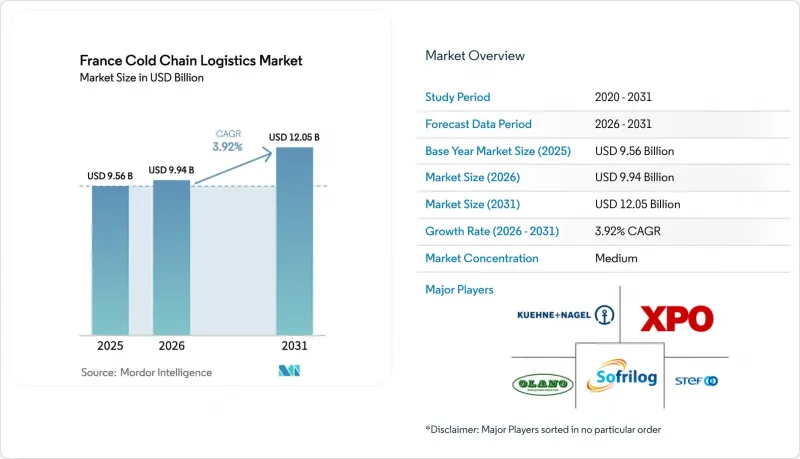
본 보고서는 서비스 유형별(냉장 보관, 냉장 운송(도로·철도 등), 부가가치 서비스), 온도 유형별(냉장, 냉동, 상온, 초저온), 용도별(과일 및 채소, 육류·가금류, 기타)로 분류되어 있습니다. 시장 전망은 금액(미 달러) 기준으로 제시되어 있습니다.
프랑스의 콜드체인 물류 시장 동향 및 인사이트
코로나19 이후 온라인 식료품 붐에 따른 라스트 마일 냉장 수요 증가
프랑스는 신선식품 및 냉동식품의 택배 수요 증가를 배경으로 유럽 내 온라인 식료품 시장의 성장을 주도하고 있습니다. 식음료 전자상거래 부문은 2030년까지 두 자릿수 성장률을 유지할 것으로 예상되며, 이는 도시 지역의 배송 경로에 적합한 소형 냉장 밴 수요를 끌어올리고 있습니다. 그러나 주문 밀도가 낮고 연료비가 급등하면서 수익성이 압박받고 있습니다. 소매업체들은 효율성 향상을 위해 허브 앤 스포크 방식을 시험적으로 도입하고 있으나, 이로 인해 온도 관리 위험이 높아지고 있습니다. 한편, 식료품 체인과 의약품 체인은 기준의 차이로 인해 차량을 별도로 운영하고 있어 자본 비용이 증가하고 있습니다. 이로 인해 프랑스의 콜드체인 산업에서는 라스트 마일 배송용 식료품 전용 차량을 확충하는 한편, GDP 인증 차량은 이익률이 높은 의약품 운송에 집중하는 등 전문화가 진행되고 있습니다.
생물학적 제제·mRNA 백신의 파이프라인 확장에 따른 GDP 준수 물류 확대
2025년, EU는 더욱 엄격한 GDP 규정을 시행하여 2-8℃, -20℃, -70℃에서의 실시간 온도 모니터링, 전자 격리, 그리고 10년간의 데이터 보관을 의무화했습니다. 현재 규정 준수를 위해서는 GPS 추적 기능이 탑재된 트레일러, 위변조 방지 씰, 자격을 갖춘 인력의 감독, 연례 직원 교육이 필수적입니다. 프랑스에서는 리옹과 파리의 허브가 온도 관리가 필요한 의약품 취급에 있어 중요한 역할을 하고 있으며, 규정 위반 시 부과되는 벌금은 58만 6,000달러에 달할 전망입니다. DHL, UPS, Kuehne+Nagel과 같은 인증을 받은 대기업들이 입지를 공고히 하고 있는 반면, 중소규모 기업들은 비용이 많이 드는 검증 및 블록체인 기반 추적에 어려움을 겪고 있습니다. mRNA 치료제를 주동력으로 하는 초저온 수요 증가는 이중화된 전원 공급 장치와 LNG 백업 시스템을 갖춘 고사양 창고의 개발을 촉진하고 있으며, 프랑스의 콜드체인 물류 시장의 진입 장벽을 높이고 있습니다.
에너지 소비가 많은 냉장 창고의 송전망 용량 병목 현상
프랑스의 콜드체인 산업, 특히 파리와 리옹 교외 지역은 RTE가 새로운 산업용 송전망 구축보다 재생에너지를 우선시하고 있어 심각한 송전망 제약에 직면해 있습니다. 이로 인해 연간 1제곱미터당 50-100kWh를 소비하는 에너지 집약형 냉장 창고에 대한 인허가 발급이 제한되고 있습니다. 초저온 의약품 시설에는 고가의 이중 전원 공급 장치가 필요하며, 초기 비용으로 21만 6,000-32만 4,000달러가 추가로 발생하기 때문에 사업자들은 10년 단위의 회수 기간이 소요되는 태양광 발전과 축전지를 결합한 마이크로그리드 도입을 피할 수 없습니다. 피크 시간대의 전기 요금은 비피크 시간대의 3-4배에 달하기 때문에 지속적인 냉장 운전을 위한 유연성이 거의 없습니다. 일부 시설에서는 온도 변동 위험을 감수하고 야간에 미리 냉각을 실시하고 있는 반면, 전력망공급 부족으로 인해 수요가 왕성함에도 불구하고 허가 취득이 지연되어 새로운 냉장 창고 프로젝트가 정체되고 있습니다.
부문별 분석
2025년, 냉장 보관은 프랑스의 콜드체인 물류 시장 점유율의 52.63%를 차지했으며, 범유럽 유통을 뒷받침하는 지역 집약 허브의 기반으로서 계속해서 역할을 수행하고 있습니다. 이러한 압도적인 점유율은 단일 거점에서 식품 소매 및 의약품 산업에 서비스를 제공하는 프랑스의 고밀도 창고 네트워크를 반영한 것입니다. 허브 앤 스포크(hub-and-spoke) 모델에서 도로 운송은 여전히 필수적이며 국경을 넘는 운송량의 대부분을 담당하고 있지만, 프랑스의 콜드체인 물류 시장에서는 키팅,라벨 재부착, 규정 준수 감사와 같은 부가가치 서비스가 2031년까지 연평균 성장률(CAGR) 7.14%라는 가장 빠른 성장률을 기록하고 있습니다. 화주들은 종단 간 온도 검증, 일련번호 부여 지원, 디지털 서류 작성에 대해 추가 요금을 지불하고 있으며, 이는 단순 보관만 하는 시설에서는 확보할 수 없는 이익률입니다.
FresH2 프로젝트에 따른 수소 활용 시범 사업을 통해 2028년 이후에는 트럭의 디젤 연료 의존도가 낮아져 운영 비용 절감과 ESG 점수 향상이 기대됩니다. 철도는 냉장 화물차 공급이 부족하여 여전히 두 번째 선택지에 머물러 있지만, 항공 운송은 리드타임이 촉박한 틈새 의약품 운송 수요를 확보하고 있습니다. 해상 운송은 르아브르 항구의 새로운 연결 시설의 혜택을 받고 있지만, 내륙 지역의 교통 체증으로 인해 항만 효율화에서 얻는 이점이 줄어들고 있습니다. 따라서 이 부문의 전망으로 볼 때, 프랑스의 콜드체인 물류 시장에서 다양한 운송 수단의 역량을 겸비한 통합형 사업자가 유리할 것으로 보입니다.
기타 혜택
- 엑셀 형식 시장 예측(ME) 시트
- 3개월간의 애널리스트 지원
자주 묻는 질문
목차
제1장 서론
제2장 조사 방법
제3장 개요
제4장 시장 구도
제5장 시장 규모 및 성장 예측(금액, 2026-2031년)
제6장 경쟁 구도
제7장 시장 기회 및 향후 전망
KTH 26.08.31According to Mordor Intelligence, the France cold chain logistics market size is estimated at USD 9.94 billion in 2026, and is expected to reach USD 12.05 billion by 2031, at a CAGR of 3.92% during the forecast period (2026-2031).
This report is Segmented by Service Type (Refrigerated Storage, Refrigerated Transportation [Road, Rail, and More], Value-Added Services), by Temperature Type (Chilled, Frozen, Ambient, Deep-Frozen/Ultra-Low ), and by Application (Fruits & Vegetables, Meat & Poultry, and More). The Market Forecasts are Provided in Terms of Value (USD).
France Cold Chain Logistics Market Trends and Insights
Post-COVID E-grocery Boom Elevates Last-mile Refrigerated Demand
France leads Europe in online grocery growth, driven by rising demand for home delivery of fresh and frozen goods. The food and beverage e-commerce sector is expected to grow at double-digit rates through 2030, boosting demand for compact refrigerated vans suited to urban routes. Yet, low order density and high fuel costs are straining profitability. Retailers are testing hub-and-spoke models to improve efficiency, but these raise temperature control risks. Meanwhile, grocery and pharmaceutical chains maintain separate vehicle fleets due to differing standards, increasing capital costs. This is pushing France's cold chain sector toward specialization grocery fleets expand for last-mile delivery, while GDP-certified vehicles focus on higher-margin pharmaceutical transport.
Biologics and mRNA Vaccine Pipeline Scaling GDP-compliant Logistics
In 2025, the EU enforced stricter GDP rules requiring real-time temperature monitoring at 2-8°C, -20°C, and -70°C, electronic quarantines, and 10-year data storage. Compliance now depends on GPS-tracked trailers, tamper seals, Qualified Person oversight, and annual staff training. In France, hubs in Lyon and Paris are key for handling temperature-sensitive medicines, with noncompliance fines reaching USD 586,000. Certified leaders like DHL, UPS, and Kuehne + Nagel are gaining ground, while smaller firms struggle with costly validation and blockchain tracking. Rising demand for ultra-low temperatures, driven by mRNA therapies, is fueling high-spec warehouse development with redundant power and LNG backup systems, raising entry barriers in France's cold chain logistics market.
Grid-capacity Bottlenecks for Energy-hungry Cold Warehouses
France's cold chain sector, especially around suburban Paris and Lyon, faces severe grid constraints as RTE prioritizes renewables over new industrial links. This limits approvals for energy-intensive cold stores consuming 50-100 kWh per m2 annually. Ultra-low temperature pharma sites require costly redundant power feeds, adding USD 216,000-324,000 upfront, pushing operators toward solar-plus-battery microgrids with decade-long paybacks. Peak tariffs run 3-4 times higher than off-peak rates, leaving little flexibility for continuous refrigeration. Some facilities pre-cool overnight, risking temperature swings, while grid scarcity delays permits and stalls new cold storage projects despite strong demand.
Other drivers and restraints analyzed in the detailed report include:
- EU and France-wide Food-waste Reduction Mandates Creating Cold-chain Gaps
- Port of Le Havre Reefer-plug Expansion Spurring Import Volumes
- Phase-down of HFC Refrigerants Inflating Retrofit Capex
For complete list of drivers and restraints, kindly check the Table Of Contents.
Segment Analysis
Refrigerated Storage controlled 52.63% of the France cold chain logistics market share in 2025 and continues to anchor regional consolidation hubs that feed pan-European distribution. This dominant share reflects France's dense warehouse network that services food retail and pharmaceuticals from single locations. Road transport remains essential in hub-and-spoke models and absorbs the bulk of cross-border volume, yet France cold chain logistics market size value-added services such as kitting, relabeling, and compliance audits are winning the fastest growth at a 7.14% CAGR through 2031. Shippers pay premiums for end-to-end temperature validation, serialization support, and digital paperwork, margins that storage-only facilities cannot secure.
Hydrogen pilots under the FresH2 project could cut diesel exposure for truck fleets after 2028, lowering operating costs and improving ESG scores. Rail remains a second-tier option because reefer-wagon supply is thin, while air transport captures niche pharma shipments under tight lead times. Sea freight benefits from new plugs at Le Havre, but hinterland congestion dilutes port efficiency gains. The segment outlook therefore favors integrated players with diversified modal capacity inside the France cold chain logistics market.
Complete Report Scope:
- By Service Type
- Refrigerated Storage
- Refrigerated Transportation
- Road
- Rail
- Sea
- Air
- Value-Added Services
- By Temperature Type
- Chilled (0-5 °C)
- Frozen (-18 °C)
- Ambient
- Deep-Frozen / Ultra-Low (less than -20 °C)
- By Application
- Fruits & Vegetables
- Meat & Poultry
- Fish & Seafood
- Dairy & Frozen Desserts
- Bakery & Confectionery
- Ready-to-Eat Meals
- Pharmaceuticals & Biologics
- Vaccines & Clinical Trial Materials
- Chemicals & Specialty Materials
- Other Perishables
List of Companies Covered in this Report:
- STEF
- Kuehne + Nagel
- Sofrilog
- Olano Group
- XPO
- DSV (Incl. DB Schenker)
- DHL Supply Chain
- Geodis
- CMA CGM Logistics (Incl. Bollore Logistics & CEVA Logistics)
- Seafrigo
- Mutual Logistics
- Chronofresh
- TSE Express Medical
- IRIS Logistics
- Socopal
- FM Logistic
- Lineage (Incl. Kloosterboer)
- Delanchy
- GEFCO
- UPS
Additional Benefits:
- The market estimate (ME) sheet in Excel format
- 3 months of analyst support
TABLE OF CONTENTS
1 Introduction
- 1.1 Study Assumptions & Market Definition
- 1.2 Scope of the Study
2 Research Methodology
3 Executive Summary
4 Market Landscape
- 4.1 Market Overview
- 4.2 Market Drivers
- 4.2.1 Post-COVID E-grocery Boom Elevates Last-mile Refrigerated Demand
- 4.2.2 Biologics & mRNA Vaccine Pipeline Scaling GDP-compliant Logistics
- 4.2.3 EU and France-wide Food-waste Reduction Mandates Creating Cold-chain Gaps
- 4.2.4 Port of Le Havre Reefer-plug Expansion Spurring Import Volumes
- 4.2.5 AI-driven Predictive Maintenance Cutting Refrigeration OPEX
- 4.2.6 Hydrogen-powered Forklifts & Reefers Gaining Policy Incentives
- 4.3 Market Restraints
- 4.3.1 Grid-capacity Bottlenecks for Energy-hungry Cold Warehouses
- 4.3.2 Phase-down of HFC Refrigerants Inflating Retrofit Capex
- 4.3.3 Empty-run Share less than 20 % on International Legs Raising Cost Base
- 4.3.4 Acute Shortage of GDP-trained Drivers & Technicians
- 4.4 Value / Supply-Chain Analysis
- 4.5 Regulatory Landscape
- 4.6 Technology Innovations Outlook
- 4.7 Porter's Five Forces
- 4.7.1 Threat of New Entrants
- 4.7.2 Bargaining Power of Suppliers
- 4.7.3 Bargaining Power of Buyers
- 4.7.4 Threat of Substitutes
- 4.7.5 Rivalry Among Competitors
5 Market Size & Growth Forecasts (Value, 2026-2031)
- 5.1 By Service Type
- 5.1.1 Refrigerated Storage
- 5.1.2 Refrigerated Transportation
- 5.1.2.1 Road
- 5.1.2.2 Rail
- 5.1.2.3 Sea
- 5.1.2.4 Air
- 5.1.3 Value-Added Services
- 5.2 By Temperature Type
- 5.2.1 Chilled (0-5 °C)
- 5.2.2 Frozen (-18 °C)
- 5.2.3 Ambient
- 5.2.4 Deep-Frozen / Ultra-Low (less than -20 °C)
- 5.3 By Application
- 5.3.1 Fruits & Vegetables
- 5.3.2 Meat & Poultry
- 5.3.3 Fish & Seafood
- 5.3.4 Dairy & Frozen Desserts
- 5.3.5 Bakery & Confectionery
- 5.3.6 Ready-to-Eat Meals
- 5.3.7 Pharmaceuticals & Biologics
- 5.3.8 Vaccines & Clinical Trial Materials
- 5.3.9 Chemicals & Specialty Materials
- 5.3.10 Other Perishables
6 Competitive Landscape
- 6.1 Market Concentration
- 6.2 Key Strategic Moves
- 6.3 Market Share Analysis
- 6.4 Company Profiles (includes Global level Overview, Market level overview, Core Segments, Financials as available, Strategic Information, Market Rank/Share for key companies, Products & Services, and Recent Developments)
- 6.4.1 STEF
- 6.4.2 Kuehne + Nagel
- 6.4.3 Sofrilog
- 6.4.4 Olano Group
- 6.4.5 XPO
- 6.4.6 DSV (Incl. DB Schenker)
- 6.4.7 DHL Supply Chain
- 6.4.8 Geodis
- 6.4.9 CMA CGM Logistics (Incl. Bollore Logistics & CEVA Logistics)
- 6.4.10 Seafrigo
- 6.4.11 Mutual Logistics
- 6.4.12 Chronofresh
- 6.4.13 TSE Express Medical
- 6.4.14 IRIS Logistics
- 6.4.15 Socopal
- 6.4.16 FM Logistic
- 6.4.17 Lineage (Incl. Kloosterboer)
- 6.4.18 Delanchy
- 6.4.19 GEFCO
- 6.4.20 UPS
7 Market Opportunities & Future Outlook
- 7.1 White-space & Unmet-Need Assessment