
|
시장보고서
상품코드
2116329
미국의 소매 3PL : 시장 점유율 분석, 업계 동향 및 통계, 성장 예측(2026-2031년)US Retail 3PL - Market Share Analysis, Industry Trends & Statistics, Growth Forecasts (2026 - 2031) |
||||||
 Mordor Intelligence
Mordor Intelligence에 의하면, 2026년 미국의 소매 3PL 시장 규모는 571억 7,000만 달러로 추정되고 2025년 555억 9,000만 달러에서 확대해, 2031년에는 657억 9,000만 달러에 이를 것으로 예측됩니다.
2026년부터 2031년까지 연평균 성장률(CAGR) 2.84%로 성장할 것으로 전망됩니다.
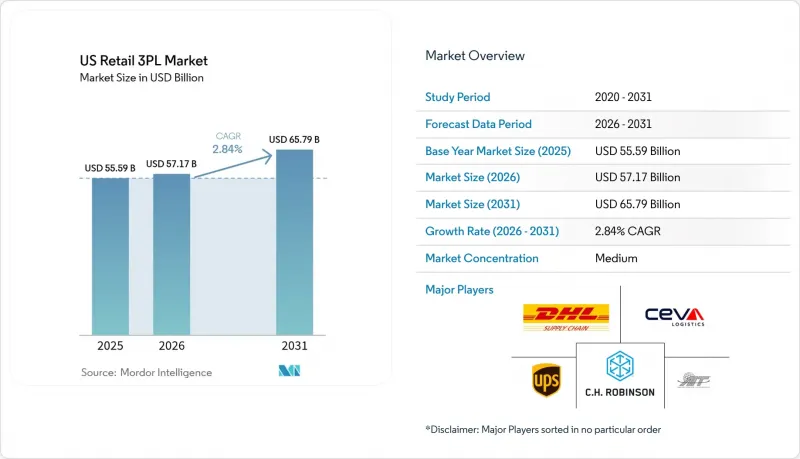
본 보고서는 서비스별(국내 운송 관리 등), 제품별(식품 및 음료, 퍼스널케어·가정용품 등), 유통 채널별(슈퍼마켓 및 하이퍼마켓/편의점, 백화점 등), 물류 모델별(애셋 라이트, 애셋 헤비 등), 지역별(북동부, 중서부 등)로 분류되어 있습니다. 시장 예측은 금액(달러) 기준으로 제시되어 있습니다.
미국의 소매 3PL 시장 동향 및 인사이트
초지역 밀착형 당일 배송이 도시 물류의 양상을 일신
소매업체들이 당일 배송 약속을 지키기 위해 필요한 여유 공간 확보에 박차를 가한 결과, 2024년에는 미국 주요 대도시권의 창고 공실률이 수년 만에 최저 수준으로 떨어졌습니다. 3PL이 체결한 대규모 부동산 임대 계약은 산업용 부동산 거래 전체의 35%를 차지하며, 주문에서 배송까지의 시간을 단축하기 위한 도심 거점으로의 전략적 전환을 반영하고 있습니다. 인구 밀도가 높은 도시 지역의 라스트 마일 배송 평균 비용은 패키지당 10.10달러에 달하고, 전년 대비 12% 증가했습니다. 이에 따라 주행 거리와 운전자의 근무 시간을 단축하는 AI 기반 경로 최적화 도구에 대한 대규모 투자가 진행되고 있습니다. 독자적인 마이크로 풀필먼트 설계를 갖춘 공급업체는 장거리 운송 횟수를 줄이고, 분할 배송을 최소화함으로써 당일 배송을 보장해 달라고 요구하는 옴니채널 소매업체로부터 프리미엄 가격을 확보할 수 있습니다.
신선 식품 및 밀키트의 온라인 구매가 콜드체인 확장을 주도
2024년, 미국 소비자들은 온라인 식료품 구매를 가속화하면서 냉동, 냉장, 상온 구역 간에 유연하게 전환 가능한 온도 관리형 보관 공간에 대한 수요가 높아졌습니다. Lineage Logistics 및 Americold와 같은 대형 통합 사업자들은 M&A를 통해 네트워크를 확장하고, 온도 정확도를 높이며, 에너지 비용 곡선을 낮추는 고밀도 자동화에 대한 투자 자금을 확보했습니다. 노선 단위의 텔레매틱스와 실시간 화물 모니터링을 결합한 3PL 기업들은 대도시권 중심부에서 2시간 이내 배송을 필요로 하는 밀키트 공급업체로부터 다년간의 계약을 수주하고 있습니다.
팬데믹 이후 전자상거래의 정상화
2025년 1분기, 국내 화물 운송량이 다시 감소하고 출하 지수가 전년 동기 대비 13.8% 하락함에 따라 일부 3PL 네트워크에서는 과잉 운송 능력이 발생하고 있습니다. 각 사업자는 수요가 회복될 때까지 수익성을 유지하기 위해 마이크로 풀필먼트 거점 통합, 미사용 크로스독의 재임대, 그리고 서비스 제공 비용 분석에 대한 노력을 강화하고 있습니다.
부문별 분석
2025년 소매 제3자 물류 시장에서 국내 운송 관리가 매출의 46.35%를 차지하며 가장 큰 비중을 차지한 반면, 부가가치형 창고 및 유통 분야는 3.65%라는 가장 높은 연평균 성장률(CAGR) 전망을 보였습니다. 소매업체의 재고 이월, 키팅(kitting), 그리고 소비자 직접 배송(DTC)을 위한 피킹 및 포장 워크플로우에 대한 수요가 증가함에 따라, 다온도 관리형 및 고속 회전형 창고 자산의 중요성이 커지고 있습니다. 옴니채널 재고 전략이 확산됨에 따라 소매 제3자 물류 시장 중 VAWD에 할당되는 점유율은 확대될 것으로 예측됩니다. 로보틱스, 자동 창고 시스템(AS/RS), 실시간 창고 운영 소프트웨어를 결합한 공급업체는 사이클 타임을 단축하여 고객에게 측정 가능한 매출 증가로 이어지고 있습니다. 소매업체의 창고 업무 아웃소싱 비율은 43%에서 65%로 상승하고 있으며, 차세대 주문 이행 조율에 투자하는 3PL에 유리한 전략적 업무 이관이 진행되고 있음을 여실히 보여주고 있습니다. 대조적으로, 운송 관리는 장거리 보충에서 여전히 매우 중요하지만, 계약 입찰 경쟁이 치열해지고 화주들이 운임 지수의 침체에 대응하기 위해 운송 수단 최적화를 추구함에 따라 이익률 압박에 직면해 있습니다. 그럼에도 불구하고, 조달 플랫폼이나 API 기반의 입찰 가시화 기능을 추가한 화물 중개업체는 소규모 화주로부터 추가적인 시장 점유율을 확보할 수 있습니다. 예측 기간 동안 소매 제3자 물류 시장에서의 자본 배분 방식은 순수한 자산 관리가 아닌 서비스 차별화를 통해 재편될 것으로 예측됩니다.
국내 운송 관리 전문 기업들은 창고 관리 시스템 및 반품 네트워크와 연동되는 종단간(end-to-end) 컨트롤 타워 가시성을 제공할 수 있도록 사업 체제를 재편하고 있습니다. 2024년 표준 트럭 화물 중개업의 이익률은 평균 한 자릿수 초반에 그쳤으며, 이에 따라 공급업체들은 크로스독 집하, 풀 배송, 발송 소포 분류와 같은 부가가치가 높은 분야로의 진출을 가속화하고 있습니다. 계약 운임이 안정화되는 가운데, 디지털 화물 매칭 및 예측 가격 책정 알고리즘을 접목한 자산 경량형 중개업체는 시장 점유율을 지킬 수 있습니다. 한편, ‘상품에서 사람으로(GTP)’ 로봇 기술을 도입하는 VAWD(부가가치형 창고) 혁신 기업들은 수작업 구역에 비해 피킹 작업자의 생산성을 3-4배 높일 수 있어, 인력을 비례적으로 늘리지 않고도 더 높은 처리 능력을 실현합니다. 또한, 냉장 시설의 공과금이 창고 총 경비의 12%를 차지하게 되었기 때문에 에너지 효율이 높은 냉장 설비에 대한 투자도 매우 중요합니다. 재생에너지 공급 계약과 축전지를 통합함으로써 총 운영 비용을 200-300 베이시스 포인트 절감할 수 있으며, 신선 식품 계약에서 경쟁력 있는 입찰이 가능해집니다.
2025년에는 식품 및 음료 부문이 매출의 27.60%를 차지했으며, 이 카테고리는 연중 높은 회전율을 보이며, 온도 관리가 요구되는 취급 수요를 반영하고 있습니다. 한편, ‘패션·라이프스타일’ 부문은 전자상거래 보급률의 급증, 계절별 SKU 교체, 재고 회수 속도의 중요성으로 인해 각 제품 카테고리 중 가장 높은 5.28%의 연평균 성장률(CAGR)을 보일 것으로 전망됩니다. 의류의 반품률이 50% 가까이 유지되고 있는 만큼, 역물류는 비용 센터에서 프리미엄 서비스로 전환되고 있으며, 48시간 이내에 의류의 선별, 스팀 처리, 재포장을 수행할 수 있는 파트너 기업에게는 이익률 확대로 이어지고 있습니다. 행거 운송, RFID 팔레트 추적, 그리고 개인화 및 자수 등의 부가가치 서비스를 통해 의류 워크플로우에 맞추어 시설 레이아웃을 최적화할 수 있는 전문가에 대한 수요가 증가하고 있습니다.
식품 및 음료 업계는 특히 인구 밀도가 높은 연안 대도시권에서 접근 가능한 콜드체인 거점에서 계속해서 고정 자산 배치의 핵심 축으로 자리매김할 것입니다. 구역별 유연한 랙 시스템을 갖춘 멀티테넌트형 시설을 통해, 공급업체는 상품 구성의 변화에 따라 온도대를 조정할 수 있게 됩니다. 퍼스널케어 및 가정용 케어 제품에는 엄격한 배치·로트 추적 가능성이 요구되어, 현행 우수 제조 기준(GMP) 인증을 받은 3PL에 대한 수요를 견인하고 있습니다. 가구 물류 센터에서는 특대형 SKU와 가정 내 조립 교육을 받은 ‘화이트 글러브’ 방식의 라스트 마일 배송 팀이 이를 담당하고 있습니다. 한편, 전자기기·가전 분야에서는 3PL 사업자에게 보안 케이지, 보세 구역, 리튬 배터리 규정 준수 프로토콜의 통합이 요구되고 있습니다. 각 하위 부문에는 카테고리에 대한 전문 지식과 전국적인 확장력을 겸비한 틈새 시장 신규 진출기업을 위한 개척 가능한 미개척 시장이 존재합니다.
기타 혜택 :
- 엑셀 형식 시장 예측(ME) 시트
- 3개월간의 애널리스트 지원
자주 묻는 질문
목차
제1장 서론
제2장 조사 방법
제3장 개요
제4장 시장 구도
제5장 시장 규모 및 성장 예측(금액, 10억 달러)
제6장 경쟁 구도
제7장 시장 기회 및 향후 전망
제8장 부록
KTH 26.08.31According to Mordor Intelligence, the US retail 3PL market size in 2026 is estimated at USD 57.17 billion, growing from 2025 value of USD 55.59 billion with 2031 projections showing USD 65.79 billion, growing at 2.84% CAGR over 2026-2031.
This report is Segmented by Service (Domestic Transportation Management and More), by Product (Food and Beverages, Personal and Household Care and More), by Distribution Channel (Super/Hyper/Convenience and Department Stores and More), by Logistics Model (Asset-Light, Asses-Heavy and More), by Geography (Northeast, Midwest and More). The Market Forecasts are Provided in Terms of Value (USD).
US Retail 3PL Market Trends and Insights
Hyper-local Same-day Delivery Reshapes Urban Logistics
Warehouse vacancy in primary U.S. metros fell to multi-year lows in 2024 as retailers raced to secure infill space required to meet same-day promises. Large-format leases signed by 3PLs accounted for 35% of total industrial activity, reflecting a strategic shift toward urban nodes that compress order-to-door times. The average last-mile delivery cost in dense urban zones reached USD 10.10 per package, up 12% year-over-year, prompting heavy investment in AI-driven routing tools that compress mileage and driver hours. Providers with proprietary micro-fulfillment designs can cut line-haul splits, reduce split-shipments, and capture premium pricing from omnichannel retailers searching for guaranteed same-day coverage.
Online Fresh-Food and Meal-Kit Purchases Drive Cold-Chain Expansion
U.S. consumers accelerated adoption of online grocery baskets in 2024, increasing demand for temperature-controlled square footage that can flex between frozen, chilled, and ambient zones. Major consolidators such as Lineage Logistics and Americold scaled networks through M&A, unlocking capital for high-density automation that sharpens temperature precision and trims energy cost curves. 3PLs bundling route-level telematics and real-time load monitoring are securing multi-year contracts from meal-kit providers that require two-hour delivery windows in metro cores.
Post-pandemic E-commerce Normalization
Domestic freight volumes contracted again in Q1 2025, with shipment indices down 13.8% year-over-year, leaving some 3PL networks over-capacitated. Operators are consolidating micro-fulfillment footprints, sub-leasing unused cross-docks, and doubling down on cost-to-serve analytics to defend margins until demand rebounds.
Other drivers and restraints analyzed in the detailed report include:
- Fashion Returns Accelerate Specialized Reverse Logistics
- Store-based Fulfillment Alters Replenishment Flow
- Consumer Inflation Fatigue
For complete list of drivers and restraints, kindly check the Table Of Contents.
Segment Analysis
Value-Added Warehousing and Distribution generated the fastest 3.65% CAGR outlook, even though Domestic Transportation Management accounted for the single-largest 46.35% revenue slice within the Retail third-party logistics market in 2025. Rising retailer appetite for inventory postponement, kitting, and direct-to-consumer pick-and-pack workflows elevates multi-temperature and high-velocity warehousing assets. The Retail third-party logistics market size allocated to VAWD is projected to widen its share as omni-inventory strategies gain traction. Providers combining robotics, automated storage and retrieval systems, and real-time warehouse execution software deliver cycle-time reductions that translate into measurable sell-through gains for clients. Retailers increased their outsourced warehousing penetration from 43% to 65%, underscoring a strategic handoff that favors 3PLs investing in next-generation fulfillment orchestration. In contrast, Transportation Management remains pivotal for long-haul replenishment yet faces margin compression as contract bid cycles intensify and shippers pursue mode optimization to counter softer freight indices. Still, freight brokerages that add procurement platforms and API-based tender visibility can capture incremental wallet share from smaller shippers. Over the forecast horizon, service differentiation rather than pure asset control is expected to reshape how the Retail third-party logistics market allocates capital.
Domestic Transportation Management specialists are re-positioning to provide end-to-end control tower visibility that syncs with warehouse management systems and returns networks. Standard truckload brokerage margins averaged in the low single digits during 2024, spurring providers to bolt on value-add segments such as cross-dock consolidation, pool distribution, and outbound parcel sortation. As contract rates stabilize, asset-light brokers that embed digital freight matching and predictive pricing algorithms can defend their share. Meanwhile, VAWD innovators that deploy goods-to-person robotics can lift picker productivity by 3-4 x relative to manual zones, enabling higher throughput without proportional headcount increases. Energy-efficient refrigeration investments are also critical because utility costs now account for 12% of total warehouse expense for chilled facilities. Integrating renewable power agreements and battery storage can carve 200-300 basis points off total operating costs, enhancing competitive bids for fresh-food contracts.
Foods and Beverages commanded 27.60% revenue in 2025, reflecting the category's year-round velocity and temperature-sensitive handling needs. Yet Fashion and Lifestyle is slated for a 5.28% CAGR, the steepest among product silos, underpinned by surging e-commerce penetration, seasonal SKU turnover, and return-to-stock speed imperatives. Apparel returns hovering near 50% convert reverse logistics from cost center to premium service, widening margin pools for partners that can grade, steam, and re-package apparel within 48 hours. Garment-on-hanger transport, RFID pallet tracking, and value-added services such as personalization or embroidery amplify the need for specialists capable of tailoring facility layouts to apparel workflows.
Foods and Beverages will continue to anchor fixed-asset deployment, particularly in cold-chain nodes accessible to high-density coastal metros. Multi-tenant facilities equipped with zone-flexing racking systems allow providers to adjust temperature bands as product mix shifts. Personal and Household Care products require strict batch-lot traceability, driving demand for 3PLs certified under current good manufacturing practices. Furniture logistics centers handle outsized SKUs and white-glove final-mile crews trained in in-home assembly, while Electronics and Appliances push 3PLs to integrate secure cages, bonded zones, and lithium battery compliance protocols. Each sub-sector presents addressable white-space for niche entrants that pair category expertise with national reach.
Complete Report Scope:
- By Service
- Domestic Transportation Management
- Roadways
- Railways
- Airways
- Waterways
- International Transportation Management
- Roadways
- Railways
- Airways
- Waterways
- Value-Added Warehousing and Distribution (VAWD)
- Domestic Transportation Management
- By Product
- Foods and Beverages
- Personal and Household Care
- Fashion and Lifestyle (accessories, apparel, footwear)
- Furniture
- Electronics and Household Appliances
- Other Products
- By Distribution Channel
- Super/Hyper/Convenience and Department Stores
- Specialty Stores
- Online
- Other Channels
- By Logistics Model
- Asset-Light (Management-Based)
- Asset-Heavy (Own Fleet and Warehouses)
- Hybrid
- By Geography
- Northeast
- Midwest
- Southwest
- Southeast
- West
List of Companies Covered in this Report:
- DHL Supply Chain
- CEVA Logistics
- AIT Worldwide Logistics
- United Parcel Service, Inc.
- C.H. Robinson Worldwide, Inc.
- Kuehne + Nagel International AG
- FedEx Logistics, Inc.
- GXO Logistics, Inc.
- Expeditors International of Washington, Inc.
- CJ Logistics America, LLC
- Hub Group, Inc.
- ShipMonk LLC
- XPO Logistics, Inc.
- Ryder System, Inc.
- Geodis Americas, LLC
- NFI Industries
- Radial, Inc.
- Saddle Creek Logistics Services
- Ingram Micro Commerce and Lifecycle Services
- Americold Logistics, LLC
- Lineage Logistics Holdings, LLC
- Stord, Inc.
Additional Benefits:
- The market estimate (ME) sheet in Excel format
- 3 months of analyst support
TABLE OF CONTENTS
1 Introduction
- 1.1 Study Assumptions and Market Definition
- 1.2 Scope of the Study
2 Research Methodology
3 Executive Summary
4 Market Landscape
- 4.1 Market Overview
- 4.2 Market Drivers
- 4.2.1 Hyper-local same-day delivery expectation in major metros
- 4.2.2 Rapid penetration of online fresh-food and meal-kit purchases
- 4.2.3 Soaring fashion return rates driving specialized reverse logistics
- 4.2.4 Store-based fulfillment (BOPIS / ship-from-store) reshaping replenishment flows
- 4.2.5 Peak-season "flash event" surges demanding elastic overflow capacity
- 4.3 Market Restraints
- 4.3.1 Post-pandemic normalization of e-commerce growth rates in discretionary retail
- 4.3.2 Consumer inflation fatigue curbing high-ticket online purchases and warehousing demand
- 4.3.3 "Green-miles" skepticism-buyers avoiding retailers with long-haul fulfillment footprints
- 4.4 Value / Supply-Chain Analysis
- 4.5 Industry Policies and Regulations
- 4.6 Technological Developments in Logistics industry
- 4.7 Porter's Five Forces
- 4.7.1 Bargaining Power of Suppliers
- 4.7.2 Bargaining Power of Buyers
- 4.7.3 Threat of New Entrants
- 4.7.4 Threat of Substitutes
- 4.7.5 Competitive Rivalry
- 4.8 Impact of Geopolitical Events on the Market
5 Market Size and Growth Forecasts (Value, USD Bn)
- 5.1 By Service
- 5.1.1 Domestic Transportation Management
- 5.1.1.1 Roadways
- 5.1.1.2 Railways
- 5.1.1.3 Airways
- 5.1.1.4 Waterways
- 5.1.2 International Transportation Management
- 5.1.2.1 Roadways
- 5.1.2.2 Railways
- 5.1.2.3 Airways
- 5.1.2.4 Waterways
- 5.1.3 Value-Added Warehousing and Distribution (VAWD)
- 5.1.1 Domestic Transportation Management
- 5.2 By Product
- 5.2.1 Foods and Beverages
- 5.2.2 Personal and Household Care
- 5.2.3 Fashion and Lifestyle (accessories, apparel, footwear)
- 5.2.4 Furniture
- 5.2.5 Electronics and Household Appliances
- 5.2.6 Other Products
- 5.3 By Distribution Channel
- 5.3.1 Super/Hyper/Convenience and Department Stores
- 5.3.2 Specialty Stores
- 5.3.3 Online
- 5.3.4 Other Channels
- 5.4 By Logistics Model
- 5.4.1 Asset-Light (Management-Based)
- 5.4.2 Asset-Heavy (Own Fleet and Warehouses)
- 5.4.3 Hybrid
- 5.5 By Geography
- 5.5.1 Northeast
- 5.5.2 Midwest
- 5.5.3 Southwest
- 5.5.4 Southeast
- 5.5.5 West
6 Competitive Landscape
- 6.1 Market Concentration
- 6.2 Strategic Moves
- 6.3 Market Share Analysis
- 6.4 Company Profiles (includes Global overview, Market overview, Core Segments, Financials, Strategy, Rank/Share, Products and Services, Recent Developments)
- 6.4.1 DHL Supply Chain
- 6.4.2 CEVA Logistics
- 6.4.3 AIT Worldwide Logistics
- 6.4.4 United Parcel Service, Inc.
- 6.4.5 C.H. Robinson Worldwide, Inc.
- 6.4.6 Kuehne + Nagel International AG
- 6.4.7 FedEx Logistics, Inc.
- 6.4.8 GXO Logistics, Inc.
- 6.4.9 Expeditors International of Washington, Inc.
- 6.4.10 CJ Logistics America, LLC
- 6.4.11 Hub Group, Inc.
- 6.4.12 ShipMonk LLC
- 6.4.13 XPO Logistics, Inc.
- 6.4.14 Ryder System, Inc.
- 6.4.15 Geodis Americas, LLC
- 6.4.16 NFI Industries
- 6.4.17 Radial, Inc.
- 6.4.18 Saddle Creek Logistics Services
- 6.4.19 Ingram Micro Commerce and Lifecycle Services
- 6.4.20 Americold Logistics, LLC
- 6.4.21 Lineage Logistics Holdings, LLC
- 6.4.22 Stord, Inc.
7 Market Opportunities and Future Outlook
8 Appendix
- 8.1 Macroeconomic Indicators
- 8.2 External Trade Statistics
- 8.3 Key Export Destinations and Import Origins