

|
시장보고서
상품코드
2116385
태국의 자동차 윤활유 시장 : 점유율 분석, 업계 동향과 통계, 성장 예측(2026-2031년)Thailand Automotive Lubricants - Market Share Analysis, Industry Trends & Statistics, Growth Forecasts (2026 - 2031) |
||||||
 Mordor Intelligence
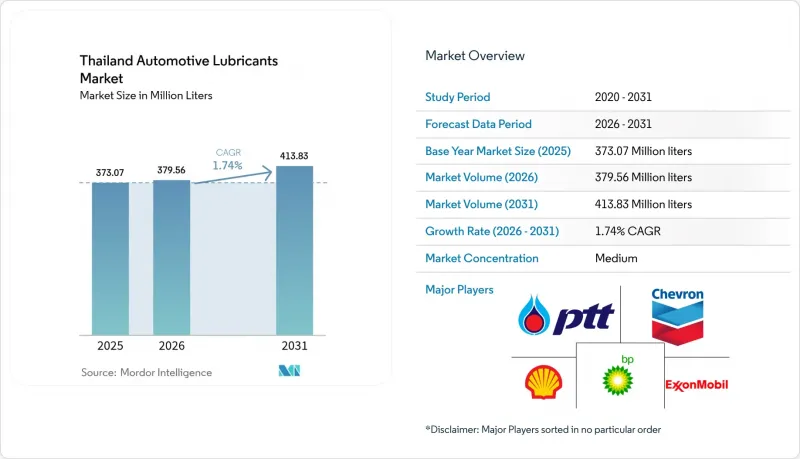
Mordor Intelligence에 의하면, 태국 자동차 윤활유 시장 규모는 2025년 3억 7,307만 리터에서 2026년에는 3억 7,956만 리터로 확대되어 2026년부터 2031년까지 CAGR 1.74%로 성장을 지속하여, 2031년에는 4억 1,383만 리터에 이를 것으로 예측됩니다.
본 보고서는 제품 유형(자동차 엔진오일, 수동 변속기 오일(MTF), 자동 변속기 오일(ATF), 브레이크 오일,자동차 그리스, 기타 제품 유형(파워 스티어링 오일 등)) 및 차종(승용차, 상용차, 이륜차)별로 분류되어 있습니다. 시장 전망은 판매량(리터) 기준으로 제시되어 있습니다.
태국 자동차 윤활유 시장 동향 및 인사이트
상용차 차량 대수 확대 및 인프라 투자 증가
동부 경제 회랑(EEC) 내 철도·도로 프로젝트 및 창고 건설이 진행됨에 따라 상업용 화물 운송량은 지속적으로 증가하고 있습니다. 차량 운영 사업자들은 가동 중단 시간을 줄이기 위해 수명이 길고 연비 효율이 뛰어난 윤활유를 찾고 있으며, 그 결과 다양한 트럭 브랜드에 걸쳐 제품 사양을 통일한 대량 발주 계약이 체결되고 있습니다. 디지털 오일 분석을 제공하는 공급업체는 예측 정비를 통해 정비소 입고 횟수가 줄어들기 때문에 경쟁 우위를 확보하고 있습니다. 이는 가동률이 높은 노선 트럭에 분명한 이점이 됩니다. PTT Lubricants사는 전자상거래 네트워크와 관련된 운송업체들의 조달 수요에 힘입어 2025년에 2억 6,000만 리터를 넘는 생산 능력 가동률을 기록했습니다. 해외의 대형 기업들은 태국의 자유무역 접근성을 활용하여 아세안 본토 전역에서 포장 제품의 역방향 운송을 진행하고 있으며, 이로 인해 수출량이 점차 증가하는 동시에 국내 공장의 처리 능력도 안정적으로 유지되고 있습니다. 이러한 추세로 인해 승용차용 오일 판매량이 정점에 달하더라도 윤활유 수요의 견고한 기반은 유지될 것으로 예측됩니다.
합성·저점도 엔진오일로 전환이 진행 중
유로 5에 상응하는 배기가스 규제의 강화와 휘발유 가격의 급등으로 인해, 소비자들은 현저한 연비 향상 효과를 가져오는 SAE 0W-20 및 5W-30 멀티그레이드 합성 엔진오일로 전환하고 있습니다. 엑슨모빌은 태국에서 ‘모빌 1’의 연간 매출을 10% 증가시키는 것을 목표로 하고 있으며, 15,000km의 오일 교환 주기와 엔진 청정성 향상에 따른 이점을 강조하고 있습니다. 쉘의 태양광 발전을 활용한 그리스 공장은 지속가능성을 중심으로 한 브랜드 재포지셔닝의 좋은 사례이며, 환경에 대한 배려를 내세움으로써 프리미엄 가격대를 강화하고 있습니다. 정식 딜러는 순정 오일을 선불식 정비 패키지에 포함시킴으로써 OEM 보증 준수를 확보하는 동시에 애프터마켓에서의 이익을 확보하고 있습니다. 합성유는 매장 판매 가격이 다소 비싸지만, 정비 횟수가 줄어들어 초기 비용이 상쇄되므로 총 소유 비용의 관점에서 볼 때 합성유로 전환하는 것이 유리합니다. 이러한 추세로 인해 광물유 판매량 점유율은 서서히 감소하는 반면, 리터당 매출액은 상승하고 있어 태국 자동차 윤활유 시장의 가치 성장을 뒷받침하고 있습니다.
기유 가격의 변동성과 환율 리스크
2025년 초, 업스트림 정유시설의 가동 중단으로 인해 수입된 그룹 III 기유의 현물 프리미엄이 확대되어, 장기 계약을 체결하지 않은 소규모 블렌딩 업체들의 매출 총이익률을 압박했습니다. 바트화 강세는 수입 비용을 낮추지만, 급격한 환율 변동은 판매 가격 재설정을 복잡하게 만들고 있으며, 특히 빈번한 정가 변경에 저항을 보이는 세분화된 소매 채널에서는 그 영향이 두드러집니다. 통합형 정유사는 사내 화물 스왑을 통해 가격 변동에 대응하는 한편, 비정유사는 선물 거래나 플릿 계약의 패스스루 조항을 통해 헤지를 하고 있습니다. 변동이 장기화되면 공급 협상이나 재고 손실 흡수에서 규모가 필수적이 되므로 합병이 가속화되고, 그 결과 경쟁 우위가 대기업 쪽으로 기울게 됩니다.
부문 분석
자동차 엔진오일은 2025년 판매량의 57.45%를 차지하며, 태국 자동차 윤활유 시장에서 주요 정비 주기에 있어 기초적인 역할을 강조하고 있습니다. 통근용 오토바이, 승용차 및 소형 픽업 트럭에는 열대 지역의 주행 온도에 대응하는 멀티그레이드 광물유 및 반합성 블렌드가 사용되고 있습니다. 태국의 자동차 윤활유 시장에서 엔진오일의 점유율은 다른 윤활유의 성장에 밀려 소폭 하락할 것으로 예상되지만, 평균 차량 연식이 11년 가까이 유지되고 구형 차량의 오일 교환 주기도 짧기 때문에 절대적인 판매량은 여전히 상당한 규모를 유지하고 있습니다. 각 공급업체들은 SP 등급 배합, 캠 마모 방지용 아연·인계 첨가제, 그리고 태국 디젤 시장에서 보급되고 있는 바이오디젤 혼합 연료용으로 설계된 세정제 패키지 등을 도입하여 제품 라인업을 쇄신하고 있습니다.
자동변속기 오일(ATF)은 도시 교통에서 소비자들이 자동변속기를 선호하는 경향이 있어, 2031년까지의 연평균 성장률(CAGR)이 2.05%로 가장 높을 것으로 전망됩니다. 자동 스쿠터 붐과 CVT가 탑재된 오토바이 증가로 인해 ATF 수요는 승용차 이외의 분야로도 확대되고 있습니다. 전 세계 OEM 업체들은 진동과 열 열화를 줄이기 위해 독자적인 마찰 조절제를 공동 개발하고 있으며, 이에 따라 태국의 조립 제조업체들은 정비 주기에 맞추어 보충해야 하는 공장 충전용 시리즈를 지정하고 있습니다. 현지 블렌더 업체들은 딜러 진열대에 제품을 계속 공급하기 위해, OEM 코드를 기반으로 첨가제의 화학 성분을 재현하는 라이선스 계약 체결을 추진하고 있습니다. 수동 변속기용 및 브레이크 오일은 안정적인 추이를 보이고 있는 반면, 특수 스티어링 오일은 전동 유압식 파워 스티어링을 탑재한 프리미엄 모델에 힘입어 틈새 시장을 점유하고 있습니다.
기타 혜택:
- 엑셀 형식 시장 예측(ME) 시트
- 3개월간의 애널리스트 지원
자주 묻는 질문
목차
제1장 서론
제2장 조사 방법
제3장 주요 요약
제4장 시장 구도
제5장 시장 규모와 성장 예측
제6장 경쟁 구도
제7장 시장 기회와 향후 전망
제8장 CEO가 직면하는 중요 전략적 과제
JHS 26.08.28According to Mordor Intelligence, the Thailand automotive lubricants market size is expected to grow from 373.07 million liters in 2025 to 379.56 million liters in 2026 and is forecast to reach 413.83 million liters by 2031 at 1.74% CAGR over 2026-2031.
This report is Segmented by Product Type (Automotive Engine Oil, Manual Transmission Fluids (MTF), Automatic Transmission Fluids (ATF), Brake Fluids, Automotive Greases, and Other Product Types (Power Steering Fluid and More)), Vehicle Type (Passenger Vehicles, Commercial Vehicles, and Two-Wheelers). The Market Forecasts are Provided in Terms of Volume (Liters).
Thailand Automotive Lubricants Market Trends and Insights
Expanding Commercial-Vehicle Fleet and Infrastructure Spend
Commercial freight tonnage continues to rise as rail-road projects and warehouse construction progress inside the Eastern Economic Corridor. Fleet operators demand longer-life, fuel-saving lubricants to reduce downtime, leading to bulk-order contracts that lock in product specifications across mixed truck brands. Suppliers offering digital oil analytics garner a competitive advantage because predictive maintenance shortens workshop visits, a clear benefit for high-utilization route trucks. PTT Lubricants recorded a capacity utilization of over 260 million liters in 2025, driven by procurement from hauling companies linked to e-commerce networks. Foreign majors leverage Thailand's free-trade access to backhaul packaged products across mainland ASEAN, creating incremental export volume while stabilizing domestic plant throughput. The trend is projected to preserve a positive lubricant demand baseline even as passenger-vehicle oil volumes plateau.
Rising Shift Toward Synthetic, Low-Viscosity Engine Oils
Tighter Euro 5 equivalent standards and rising pump prices are driving a consumer shift toward SAE 0W-20 and 5W-30 multigrade synthetics, which deliver measurable fuel savings. ExxonMobil targets a 10% annual sales growth in Thailand for Mobil 1, highlighting 15,000 km drain intervals and the benefits of improved engine cleanliness. Shell's solar-powered grease plant exemplifies brand repositioning around sustainability credentials, reinforcing premium price points through environmental messaging. Authorized dealers bundle genuine oil into prepaid maintenance packages to capture aftermarket margins while assuring OEM warranty compliance. Although synthetics command higher shelf prices, the total cost of ownership favors the switch because fewer services offset the upfront expense. This dynamic gradually dilutes the mineral-oil volume share yet raises revenue per liter, supporting value growth within the Thai automotive lubricants market.
Base-Oil Price Volatility and Foreign-Exchange Risk
Imported Group III base oils saw spot premiums widen in early 2025 after upstream refinery outages, squeezing gross margins for small blenders that lack term contracts. A stronger baht lowers import costs, yet currency whiplash complicates selling-price resets, especially in fragmented retail channels that resist frequent list-price changes. Integrated refiners counter swings by swapping cargos internally, whereas non-refining players hedge through futures or pass-through clauses in fleet contracts. Persistent volatility accelerates mergers as scale becomes vital for negotiating supply and absorbing inventory losses, thereby tilting competitive leverage toward major companies.
Other drivers and restraints analyzed in the detailed report include:
- Growing Motorcycle Population and Ride-Hailing Mileage
- OEM Extended-Drain Service Packages
- EV-Subsidy Programs Reducing Long-Term ICE-Oil Demand
For complete list of drivers and restraints, kindly check the Table Of Contents.
Segment Analysis
Automotive Engine Oil contributed 57.45% of 2025 volume, underscoring its foundational role inside the Thailand automotive lubricants market size for core maintenance cycles. Motorcycle commuter fleets, passenger cars, and light pickups use multigrade mineral and semi-synthetic blends that accommodate tropical driving temperatures. The Thailand automotive lubricants market share for engine oil is expected to decline slightly as other fluids grow faster, yet absolute volumes remain substantial because the average vehicle age hovers near 11 years, and older models retain short drain intervals. Suppliers refresh portfolios with SP-grade formulations, zinc-phosphorus additives for cam-wear defense, and detergent packages designed for biodiesel blends prevalent in the Thai diesel pool.
Automatic Transmission Fluids posted a leading 2.05% CAGR outlook to 2031 as consumers embrace automatic gearboxes in city traffic. The automatic-scooter boom and rising CVT bikes extend ATF demand beyond passenger cars. Global OEMs jointly engineer proprietary friction modifiers to mitigate shudder and thermal breakdown, prompting Thai assemblers to specify factory-fill series that must be matched at service intervals. Local blenders pursue licensing deals to replicate additive chemistry under OEM code to retain dealership shelf access. Manual Transmission and Brake Fluids keep steady, while specialty steering fluids occupy a niche driven by premium models adding electric-hydraulic assist.
Complete Report Scope:
- By Product Type
- Automotive Engine Oil
- 0W-XX
- 5W-XX
- 10W-XX
- 15W-XX
- Monogrades
- Other Grades
- Manual Transmission Fluids (MTF)
- Automatic Transmission Fluids (ATF)
- Brake Fluids
- Automotive Greases
- Other Product Types (Power Steering Fluid etc.)
- Automotive Engine Oil
- By Vehicle Type
- Passenger Vehicles
- Commercial Vehicles
- Two-Wheelers
List of Companies Covered in this Report:
- Bangchak Corporation
- BP P.l.c
- Chevron Corporation
- Exxon Mobil Corporation
- FUCHS
- Idemitsu Kosan Co. Ltd
- LIQUI MOLY
- Motul
- PETRONAS Lubricants International
- PTT Lubricants
- Saudi Arabian Oil Co.
- Shell plc
- Siam Pan Group Public Co.Ltd
- SK Enmove Ltd
- Thai Oil PLC
- TotalEnergies
Additional Benefits:
- The market estimate (ME) sheet in Excel format
- 3 months of analyst support
TABLE OF CONTENTS
1 Introduction
- 1.1 Study Assumptions and Market Definition
- 1.2 Scope of the Study
2 Research Methodology
3 Executive Summary
4 Market Landscape
- 4.1 Market Overview
- 4.2 Market Drivers
- 4.2.1 Expanding commercial-vehicle fleet and infrastructure spend
- 4.2.2 Rising shift toward synthetic, low-viscosity engine oils
- 4.2.3 Growing motorcycle population and ride-hailing mileage
- 4.2.4 OEM extended-drain service packages boosting high-margin oil uptake
- 4.2.5 Thailand's export-hub strategy for blending and re-export of lubes
- 4.3 Market Restraints
- 4.3.1 Base-oil price volatility and Foreign Exchange risk
- 4.3.2 Counterfeit / low-quality domestic brands eroding margins
- 4.3.3 EV-subsidy programmes reducing long-term ICE-oil demand
- 4.4 Value Chain and Distribution Channel Analysis
- 4.5 Porter's Five Forces
- 4.5.1 Threat of New Entrants
- 4.5.2 Bargaining Power of Suppliers
- 4.5.3 Bargaining Power of Buyers
- 4.5.4 Threat of Substitutes
- 4.5.5 Industry Rivalry
- 4.6 Regulatory Framework
- 4.7 Automotive Industry Trends
5 Market Size and Growth Forecasts (Volume)
- 5.1 By Product Type
- 5.1.1 Automotive Engine Oil
- 5.1.1.1 0W-XX
- 5.1.1.2 5W-XX
- 5.1.1.3 10W-XX
- 5.1.1.4 15W-XX
- 5.1.1.5 Monogrades
- 5.1.1.6 Other Grades
- 5.1.2 Manual Transmission Fluids (MTF)
- 5.1.3 Automatic Transmission Fluids (ATF)
- 5.1.4 Brake Fluids
- 5.1.5 Automotive Greases
- 5.1.6 Other Product Types (Power Steering Fluid etc.)
- 5.1.1 Automotive Engine Oil
- 5.2 By Vehicle Type
- 5.2.1 Passenger Vehicles
- 5.2.2 Commercial Vehicles
- 5.2.3 Two-Wheelers
6 Competitive Landscape
- 6.1 Market Concentration
- 6.2 Strategic Moves
- 6.3 Market Share (%)**/Ranking Analysis
- 6.4 Company Profiles (includes Global level Overview, Market level overview, Core Segments, Financials as available, Production Capacity, Strategic Information, Market Rank/Share for key companies, Products and Services, and Recent Developments)
- 6.4.1 Bangchak Corporation
- 6.4.2 BP P.l.c
- 6.4.3 Chevron Corporation
- 6.4.4 Exxon Mobil Corporation
- 6.4.5 FUCHS
- 6.4.6 Idemitsu Kosan Co. Ltd
- 6.4.7 LIQUI MOLY
- 6.4.8 Motul
- 6.4.9 PETRONAS Lubricants International
- 6.4.10 PTT Lubricants
- 6.4.11 Saudi Arabian Oil Co.
- 6.4.12 Shell plc
- 6.4.13 Siam Pan Group Public Co.Ltd
- 6.4.14 SK Enmove Ltd
- 6.4.15 Thai Oil PLC
- 6.4.16 TotalEnergies
7 Market Opportunities and Future Outlook
- 7.1 White-space and Unmet-need Assessment


