
|
시장보고서
상품코드
2118951
남미의 OTT 시장 : 시장 점유율 분석, 업계 동향 및 통계, 성장 예측(2026-2031년)South America OTT - Market Share Analysis, Industry Trends & Statistics, Growth Forecasts (2026 - 2031) |
||||||
 Mordor Intelligence
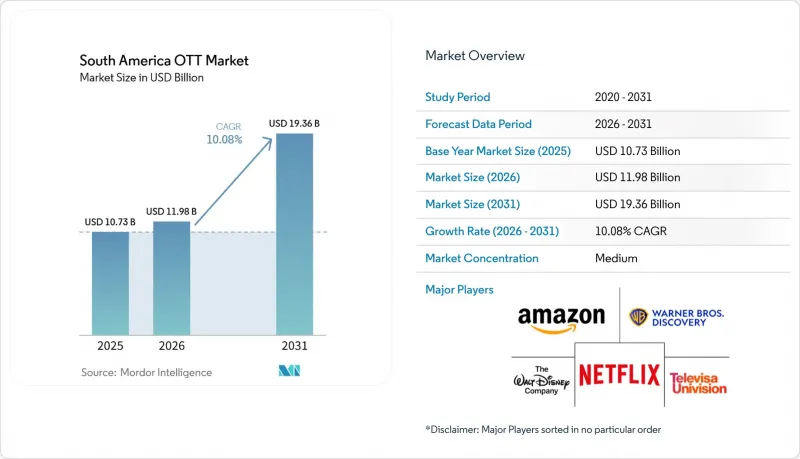
남미의 OTT 시장 규모는 2025년에 107억 3,000만 달러로 평가되었고, 2026년 119억 8,000만 달러에서 2031년까지 193억 6,000만 달러에 이를 것으로 추정되며, 예측 기간(2026-2031년) CAGR은 10.08%를 나타낼 전망입니다.
본 보고서는 수익 모델별(SVOD, AVOD, TVOD, 하이브리드, 구독 및 광고), 기기 유형별(스마트폰·태블릿, 스마트 TV, 노트북·데스크톱 PC 등), 컨텐츠 장르별(영화, TV 프로그램·에피소드형 컨텐츠, 다큐멘터리 등), 국가별(브라질, 아르헨티나, 콜롬비아, 칠레, 페루 및 기타 남미)로 분류되어 있습니다. 시장 예측은 금액(달러) 기준으로 제시되어 있습니다.
남미의 OTT 시장 동향 및 인사이트
스마트 TV 및 커넥티드 기기의 보급률 향상
커넥티드 스크린은 남미 가정의 OTT 시장 활용 방식을 변화시키고 있습니다. 2026년, 남미 커넥티드 가구의 스마트 TV 보급률은 65-70%에 달했습니다. 설치 대수는 1억 9,300만 대에 달할 것으로 예상되며, 이 중 83.5%가 활발하게 연결될 것으로 전망됩니다. 커넥티드 TV의 광고 수익은 2026년에 4억 5,000만 달러에 달할 것으로 예측됩니다. 2026년에는 TCL, 하이센스, TPV 등 3개사가 합쳐서 스마트 TV 시장의 21%를 차지하며, 기기 교체 시 가격 하락을 뒷받침하고 있습니다. 광섬유, 셋톱박스, 커넥티드 기기를 결합한 통신사의 번들 서비스를 통해 중산층 가구에서도 대형 화면으로 스트리밍을 더 쉽게 즐길 수 있게 될 것입니다.
브라질 및 콜롬비아의 광대역 보급 가속화
광대역 보급은 남미 OTT 시장의 동영상 스트리밍 이용에 대한 실질적인 장벽을 낮추고 있습니다. 2025년에는 가구의 95%가 인터넷에 접속할 수 있게 될 것이며, 농촌 지역의 접속 격차는 2016년 41.5퍼센트 포인트에서 7.8퍼센트 포인트로 축소되었습니다. 콜롬비아에서는 2024년 4분기에 450만 건의 광섬유 연결이 기록되어 전 분기 대비 19.5% 증가했습니다. 당시 콜롬비아의 유선 인터넷 연결 중 광섬유가 49.5%를 차지했습니다. 칠레, 콜롬비아, 코스타리카의 광섬유 가입자 수는 2020년부터 2024년 사이에 258% 증가했으며, 2025년에는 남미의 광섬유 인프라에 50억 달러 이상이 투자되었습니다. 주요 도시 이외 지역의 접속 환경 개선으로 플랫폼은 더 많은 잠재 시청자를 확보할 수 있지만, 인터넷에 연결된 가구가 유료 사용자가 될지 여부는 여전히 서비스의 가격 경쟁력이 결정적인 요인이 됩니다.
다중 플랫폼 가구에서의 ‘구독 피로’
스트리밍에 대한 수요는 여전히 광범위하지만, 구독 피로가 지출을 억제하고 있습니다. 2025년 말 기준으로 스트리밍 가입자의 14%가 지난 6개월 동안 적어도 한 가지 서비스를 해지했습니다. 이러한 경향은 스트리밍에서 영구적으로 이탈하기보다는 신작 출시 일정에 맞추어 서비스를 전환하는 것을 반영합니다. 브라질에서는 가격 상승과 컨텐츠의 분산화로 인해 2025년에 소비자의 39%가 적어도 하나의 구독 서비스를 해지할 의사를 밝혔습니다. 따라서 남미 OTT 시장은 주요 신작 공개 사이에도 사용자의 관심을 유지해야 한다는 압박에 직면해 있습니다. 번들 요금제는 가계 지출을 간소화할 수 있지만, 한편으로는 고객의 주도권을 소매업체, 통신사 또는 기타 통합 서비스 제공업체로 이전시킬 가능성도 있습니다. 이로 인해 고객 유지는 단순한 플랫폼의 컨텐츠 카탈로그뿐만 아니라, 보다 광범위한 서비스 관계에 의존하게 될 것입니다.
부문 분석
2025년, SVOD는 남미 OTT 시장 점유율의 50.48%를 차지하며 가장 큰 수익 모델이 되었습니다. 이 부문은 세계 및 지역 서비스들이 브라질과 아르헨티나에서 컨텐츠 라이브러리를 확장함에 따라 형성된 구독 습관을 반영하고 있습니다. 2025년, 브라질의 구독형 동영상 시장은 매출 기준으로 세계 5위를 기록하며, 브라질 내에서 유료 시청이 정착되었음을 알 수 있습니다. TVOD는 소비자가 가치 높은 신작 컨텐츠에 대한 접근 권한을 얻기 위해 요금을 지불하는 상황에서 계속해서 이용되고 있습니다. 하이브리드형 구독 및 광고 지원 서비스는 개별적으로 전액을 지불하지 않고도 여러 서비스를 이용하고자 하는 가구를 대상으로 합니다. 이러한 모델은 월간 엔터테인먼트 비용을 번들 전체에 분산시킬 수 있다는 점에서 중요합니다.
AVOD는 2026-2031년 연평균 성장률(CAGR) 11.42%로 확대될 것으로 예측되며, 남미 OTT 시장에서 가장 빠르게 성장하는 수익 모델이 될 전망입니다. 2026년 초, 브라질은 FAST 이용률이 각각 40%와 53%로, 이용률이 가장 높은 국가 중 하나였습니다. 2025년, 브라질의 AVOD 및 FAST 서비스는 해당 국가의 스트리밍 수익의 37%를 차지했습니다. 2025년에는 남미 가입자의 40%가 이전에는 무료로 이용하던 서비스에 대해 요금을 지불했습니다. 이것이 바로 제공업체들이 무료 및 저가형 접근 방식을 유지하는 이유입니다. 이 모델은 신규 시청자를 유치할 수 있지만, 수익성 측면에서는 광고 수요와 적절한 현지 프로그램 제공이 여전히 중요합니다.
기타 혜택 :
- 엑셀 형식 시장 예측(ME) 시트
- 3개월간 애널리스트 지원
자주 묻는 질문
목차
제1장 서론
제2장 조사 방법
제3장 주요 요약
제4장 시장 구도
제5장 시장 규모 및 성장 예측
제6장 경쟁 구도
제7장 시장 기회 및 향후 전망
AJY 26.09.03According to Mordor Intelligence, the South America OTT market size was valued at USD 10.73 billion in 2025 and estimated to grow from USD 11.98 billion in 2026 to reach USD 19.36 billion by 2031, at a CAGR of 10.08% during the forecast period (2026-2031).
This report is Segmented by Revenue Model (SVOD, AVOD, TVOD, and Hybrid, Subscription and Ads), Device Type (Smartphones and Tablets, Smart TVs, Laptops and Desktops, and More), Content Genre (Movies and Films, TV Shows and Episodic Content, Documentaries, and More), and Country (Brazil, Argentina, Colombia, Chile, Peru, and Rest of South America). The Market Forecasts are Provided in Terms of Value (USD).
South America OTT Market Trends and Insights
Rising Smart TV and Connected Device Penetration
Connected screens are changing how households use the South America OTT market. Smart TV penetration in connected South American households reached 65-70% in 2026. The installed base is expected to reach 193 million units, with 83.5% of those units actively connected. Connected TV advertising revenue is projected to reach USD 450 million in 2026. TCL, Hisense, and TPV together held 21% of the smart TV market in 2026, supporting lower price points for replacement purchases. Telecom bundles that combine fiber, set-top boxes, and connected devices can make larger-screen streaming easier for middle-income households.
Accelerating Broadband Expansion in Brazil, and Colombia
Broadband expansion lowers a practical barrier to video streaming in the South America OTT market. In 2025, 95% of households had internet access, and the rural connectivity gap narrowed to 7.8 percentage points from 41.5 percentage points in 2016. Colombia recorded 4.5 million fiber connections in the fourth quarter of 2024, up 19.5% from the previous quarter. Fiber accounted for 49.5% of the country's fixed internet connections at that time. Fiber subscriptions across Chile, Colombia, and Costa Rica grew 258% between 2020 and 2024, while more than USD 5 billion was invested in South American fiber infrastructure during 2025. Better access outside major cities gives platforms a larger potential audience, though affordability of services still determines whether connected homes become paying users.
Subscription Fatigue Among Multi-Platform Households
Subscription fatigue limits spending even as demand for streaming remains broad. By the end of 2025, 14% of streaming subscribers had canceled at least 1 service in the prior 6 months. That pattern reflects rotation around release schedules instead of a permanent exit from streaming. In Brazil, 39% of consumers intended to cancel at least 1 subscription in 2025 after price increases and content fragmentation. The South America OTT market, therefore, faces pressure to keep users engaged between major releases. Bundles can simplify household spending, but they can also shift customer ownership toward retailers, telecom operators, or other aggregators. This makes retention depend on a broader service relationship rather than just a platform's catalog.
Other drivers and restraints analyzed in the detailed report include:
- Shift to Ad-Supported Streaming and Hybrid Monetization
- Demand for Live Sports and Event-Driven Streaming
- Fragmented Rights and Content Licensing Costs
For complete list of drivers and restraints, kindly check the Table Of Contents.
Segment Analysis
SVOD held 50.48% of South America OTT market share in 2025, making it the largest revenue model. The segment reflects subscription habits built as global and regional services expanded their libraries across Brazil, and Argentina. Brazil's subscription video market ranked fifth globally by revenue in 2025, showing the depth of established paid viewing in the country. TVOD continues to serve occasions where consumers pay for access to high-value releases. Hybrid subscription and advertising offerings serve households that want several services without paying separate full prices. These models are important because they can spread the monthly entertainment cost across a bundle.
AVOD is projected to expand at an 11.42% CAGR between 2026 and 2031, making it the fastest-growing revenue model in the South America OTT market. Brazil was among the heaviest FAST users in early 2026, with usage rates of 40% and 53%, respectively. Brazil's AVOD and FAST services generated 37% of the country's streaming revenue in 2025. 40% of South American subscribers paid for services they had previously accessed for free in 2025. This creates a reason for providers to maintain free and lower-cost access points. The model can attract new viewers, although advertising demand and the availability of suitable local programming remain important to its economics.
Complete Report Scope:
- By Revenue Model
- SVOD
- AVOD
- TVOD
- Hybrid, Subscription and Ads
- By Device Type
- Smartphones and Tablets
- Smart TVs
- Laptops and Desktops
- Other Device Types
- By Content Genre
- Movies and Films
- TV Shows and Episodic Content
- Documentaries
- Other Content Genres
- By Country
- Brazil
- Argentina
- Colombia
- Chile
- Peru
- Rest of South America
List of Companies Covered in this Report:
- Netflix, Inc.
- Amazon.com, Inc.
- The Walt Disney Company
- Warner Bros. Discovery, Inc.
- TelevisaUnivision, Inc.
- Globo Comunicacao e Participacoes S.A.
- America Movil, S.A.B. de C.V.
- Paramount, a Skydance Corporation
- Apple Inc.
- Alphabet Inc.
- Roku, Inc.
- Samsung Electronics Co., Ltd.
- DAZN Group Limited
- Vrio Corp.
- MercadoLibre, Inc.
- Telecom Argentina S.A.
- Millicom International Cellular S.A.
- Telefonica, S.A.
- MUBI, Inc.
Additional Benefits:
- The market estimate (ME) sheet in Excel format
- 3 months of analyst support
TABLE OF CONTENTS
1 INTRODUCTION
- 1.1 Study Assumptions and Market Definition
- 1.2 Scope of the Study
2 RESEARCH METHODOLOGY
3 EXECUTIVE SUMMARY
4 MARKET LANDSCAPE
- 4.1 Market Overview
- 4.2 Impact of Macroeconomic Factors on the Market
- 4.3 Market Drivers
- 4.3.1 Rising Smart TV and Connected Device Penetration
- 4.3.2 Accelerating Broadband Expansion in Brazil, and Colombia
- 4.3.3 Rapid Shift to Ad-Supported Streaming and Hybrid Monetization
- 4.3.4 Strong Demand for Live Sports and Event-Driven Streaming
- 4.3.5 Growth of Local Language Original Content and Regional Bundling
- 4.3.6 Rising FAST Adoption Across Price-Sensitive Households
- 4.4 Market Restraints
- 4.4.1 Subscription Fatigue Among Multi-Platform Households
- 4.4.2 Fragmented Rights and Content Licensing Costs
- 4.4.3 Piracy and Unauthorized Content Consumption
- 4.4.4 Uneven Monetization Outside Major Urban Centers
- 4.5 Industry Value Chain Analysis
- 4.6 Regulatory Landscape
- 4.7 Technological Outlook
- 4.8 Porter's Five Forces Analysis
- 4.8.1 Threat of New Entrants
- 4.8.2 Bargaining Power of Suppliers
- 4.8.3 Bargaining Power of Buyers
- 4.8.4 Threat of Substitutes
- 4.8.5 Competitive Rivalry
5 MARKET SIZE AND GROWTH FORECASTS (VALUE)
- 5.1 By Revenue Model
- 5.1.1 SVOD
- 5.1.2 AVOD
- 5.1.3 TVOD
- 5.1.4 Hybrid, Subscription and Ads
- 5.2 By Device Type
- 5.2.1 Smartphones and Tablets
- 5.2.2 Smart TVs
- 5.2.3 Laptops and Desktops
- 5.2.4 Other Device Types
- 5.3 By Content Genre
- 5.3.1 Movies and Films
- 5.3.2 TV Shows and Episodic Content
- 5.3.3 Documentaries
- 5.3.4 Other Content Genres
- 5.4 By Country
- 5.4.1 Brazil
- 5.4.2 Argentina
- 5.4.3 Colombia
- 5.4.4 Chile
- 5.4.5 Peru
- 5.4.6 Rest of South America
6 COMPETITIVE LANDSCAPE
- 6.1 Market Concentration
- 6.2 Strategic Moves
- 6.3 Market Share Analysis
- 6.4 Company Profiles (includes Global Level Overview, Market Level Overview, Core Segments, Financials as available, Strategic Information, Market Rank/Share, Products and Services, Recent Developments)
- 6.4.1 Netflix, Inc.
- 6.4.2 Amazon.com, Inc.
- 6.4.3 The Walt Disney Company
- 6.4.4 Warner Bros. Discovery, Inc.
- 6.4.5 TelevisaUnivision, Inc.
- 6.4.6 Globo Comunicacao e Participacoes S.A.
- 6.4.7 America Movil, S.A.B. de C.V.
- 6.4.8 Paramount, a Skydance Corporation
- 6.4.9 Apple Inc.
- 6.4.10 Alphabet Inc.
- 6.4.11 Roku, Inc.
- 6.4.12 Samsung Electronics Co., Ltd.
- 6.4.13 DAZN Group Limited
- 6.4.14 Vrio Corp.
- 6.4.15 MercadoLibre, Inc.
- 6.4.16 Telecom Argentina S.A.
- 6.4.17 Millicom International Cellular S.A.
- 6.4.18 Telefonica, S.A.
- 6.4.19 MUBI, Inc.
7 MARKET OPPORTUNITIES AND FUTURE OUTLOOK
- 7.1 White-space and Unmet-Need Assessment