
|
시장보고서
상품코드
2119016
북미의 저연무 무할로겐 케이블 : 시장 점유율 분석, 산업 동향 및 통계 데이터, 성장 예측(2026-2031년)North America Low Smoke Zero Halogen (LSZH) Cables - Market Share Analysis, Industry Trends & Statistics, Growth Forecasts (2026 - 2031) |
||||||
 Mordor Intelligence
Mordor Intelligence에 의하면, 북미의 저연무 무할로겐 케이블 시장 규모는 2025년에 21억 달러로 평가되었습니다. 2026년 22억 6,000만 달러에서 2031년까지 32억 9,000만 달러에 이를 것으로 예상되며, 예측 기간(2026-2031년) CAGR은 7.80%를 나타낼 전망입니다.
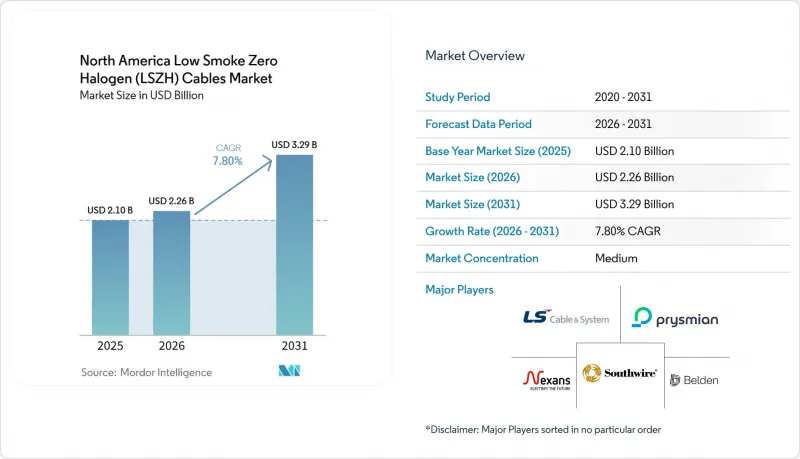
본 보고서는 케이블 유형(전원 케이블, 제어·계측 케이블 등), 정격 전압(1 kV 미만, 1-35 kV, 36-65 kV, 65 kV 이상),절연재(PVC(폴리염화비닐) 등), 최종 사용자 산업(상업용 건축물, 산업 및 제조업 등), 국가별로 분류되어 있습니다. 시장 예측은 금액(달러) 기준으로 제시되어 있습니다.
북미의 저연무 무할로겐 케이블 시장 동향 및 인사이트
하이퍼스케일 및 AI 데이터센터 건설 확대
세계 AI 데이터센터의 설비 투자액은 2026년에 4,500억 달러에 달할 것으로 예측되며, 북미의 프로젝트는 버지니아주 북부, 텍사스주, 애리조나주, 조지아주에 집중되어 있습니다. 이러한 프로젝트에서는 기존 서버 시설에 비해 밀폐된 기술 공간 내의 전력 및 데이터 케이블 수요가 증가하고 있습니다. NFPA 75 제6장에서는 IT 장비 설치 공간 내 케이블에 대해 연기 및 유독 가스의 위험성을 억제할 것을 요구하고 있으며, ANSI/BICSI 002에서는 데이터센터 내 건물 전력 및 데이터 배선에 LSZH(저연·무할로겐) 제품의 사용을 권장하고 있습니다. 따라서 북미의 저연무 무할로겐 케이블 시장은 신규 시설의 기본 설계에 방화 성능이 포함되는 사양 덕분에 혜택을 보고 있습니다. 이러한 수요는 인증된 제품, 확실한 납품, 대규모 프로젝트를 위한 문서를 제공할 수 있는 제조업체에 유리하게 작용합니다. 또한, 캠퍼스 운영자는 배전 설비, 장비실, 백본 네트워크, 수평 연결 및 유지보수 팀이 작업하는 밀폐된 공간에서 호환 가능한 케이블을 필요로 하기 때문에 케이블 공급업체는 개별 제품이 아닌 전원, 광섬유 및 구조화된 케이블 시스템을 통합한 솔루션을 판매할 수 있게 됩니다. 이러한 통합적인 접근 방식은 복잡한 시설에서의 기술 심사 및 조달 절차도 간소화합니다.
밀폐형 인프라의 화재 방지 및 생명 안전 요건 강화
2026년판 『전미 전기 규정(NEC)』에서는 통신 회로가 제8장에서 제7장으로 이관되어, 제1장에서 제4장에 기재된 일반적인 배선 요건과 가까운 위치에 배치되었습니다. 이 변경으로 인해 저전압 통신 공사와 보다 광범위한 전기 규격 준수의 관련성이 강화되었습니다. NFPA 130에서는 여객 철도 차량, 역 및 터널에서 저발연·무할로겐 재료의 사용이 의무화되어 있는 반면, NFPA 502에서는 도로 터널 및 교량의 생명 안전 시스템에 대해 유사한 요건이 적용됩니다. 또한, NEC 제770조 및 NFPA 262도 특히 대규모 상업시설이나 데이터센터 프로젝트에서 플레넘 공간 및 수직 배선 경로의 케이블 선정에 영향을 미치고 있습니다. 북미의 저연무 무할로겐 케이블 시장은 비록 단일 표준에서 명시적으로 요구되지 않더라도, 발주자가 조달 문서에 LSZH 요건을 포함시킴으로써 혜택을 받고 있습니다. 반면, 인증 기록을 유지해야 할 필요성은 특히 제조업체가 난연성, 발연성, 할로겐 함량, 전기적 요구 사항 및 설치 요구 사항 모두에서 일관된 성능을 입증해야 하는 경우, 개선된 배합 도입을 지연시키는 요인이 됩니다. 그 결과 발생하는 심사 절차는 건설 및 검사 관행이 변화하는 시기에 제품의 가용성에도 영향을 미칩니다.
PVC 계열 케이블과의 가격 차이
저연무 무할로겐 케이블은 동등한 PVC 계열 제품에 비해 20-30%의 가격 프리미엄이 책정되어 있습니다. 이는 특수한 무할로겐 폴리올레핀 컴파운드가 표준 PVC 컴파운드보다 비용이 높기 때문입니다. 이러한 가격 차이는 구매자가 초기 자재비를 중시하는 주택 건설이나 소규모 상업시설의 개보수 공사에서 특히 두드러집니다. 자체적으로 컴파운드 제조 부서를 보유한 케이블 제조업체는 구매하는 컴파운드의 가격 변동에 따른 위험을 줄이고, 보다 효과적으로 경쟁할 수 있습니다. 프로젝트가 처음부터 더 엄격한 건축 기준 환경에 대응하도록 설계된 경우, 비용 계산은 달라집니다. 건설 중에 규격 적합 제품을 설치하는 것이 시설 완공 후 케이블을 교체하는 것보다 공사에 미치는 지장이 적습니다. 따라서 건축용 전선 구매자가 LSZH 제품을 표준 THHN이나 THWN-2의 대체품과 직접 비교할 때, 특히 설계상 케이블 사용량이 비교적 적고 화재 위험 평가가 제한적이며, 프로젝트 예산 범위 내에서 초기 자재 비용 차액을 회수할 여지가 거의 없는 경우에는 이러한 제약이 가장 크게 작용합니다.
부문별 분석
2025년, 북미의 저연무 무할로겐 케이블 시장에서 전력 케이블은 31.40%의 점유율을 차지했습니다. 이는 상업용 건축물, 유틸리티 설비 교체, 그리고 재생에너지 집전 시스템에 힘입은 결과입니다. 대규모 건축물이나 변전소 프로젝트에서는 대량의 케이블이 사용되며, 더욱 엄격해진 연기 규제 요건으로 인해 설계 시 LSZH 사양의 채택이 촉진되고 있습니다. 제어 및 계장 제품은 자동화된 산업 시스템을 뒷받침하고 있으며, 데이터 및 통신 케이블은 기업의 IT 업그레이드와 5G 백홀 공사의 혜택을 받고 있습니다. 건축용 전선은 계속해서 상업용 건축 활동과 밀접한 관련이 있으며, 특수 방화 회로용 제품 및 교통 기관용 제품은 표준 LSZH 등급을 뛰어넘는 성능이 요구되는 용도에 대응하고 있습니다. 이러한 수요 원천 덕분에 케이블 유형의 구성은 건설, 유틸리티, 교통, 디지털 인프라 등 광범위한 분야에서 뒷받침되고 있습니다.
광섬유 케이블은 2031년까지 연평균 성장률(CAGR) 9.60%를 나타낼 것으로 예측되며, 가장 빠르게 성장하는 케이블 유형이 될 전망입니다. 하이퍼스케일 시설 증가에 따라, 고밀도이며 내화성이 뛰어난 데이터 인프라와 완전한 기술 문서가 갖춰진 제품에 대한 수요가 높아지고 있습니다. 국내에서 LSZH 규격을 준수하는 광섬유 생산 능력을 갖춘 공급업체는 프로젝트 일정이나 인증 요건에 신속하게 대응할 수 있습니다. 또한, 사전 종단 처리 및 구조화된 광섬유 시스템은 설치 업체가 대규모 시설에서 고밀도 연결을 관리하는 데에도 도움이 됩니다. 따라서 사업자가 디지털 인프라를 확장함에 따라 광섬유는 지역 수요에서 더욱 중요한 요소가 되고 있습니다.
2025년, 북미의 LSZH(저연무 무할로겐) 케이블 시장에서 1 kV 미만의 저전압 제품이 68.40%를 차지했습니다. 이 판매량의 대부분은 상업용 건물 배선, IT용 전력 분배 및 구조화된 케이블 배선에서 비롯된 것입니다. NEC, NFPA 및 BICSI의 요구 사항에 따라 저연 구조의 제품이 점점 더 많이 선택되고 있습니다. 65 kV를 초과하는 제품은 밀폐형 송전 프로젝트에 사용되는 반면, 36-65 kV 범위의 제품은 대규모 데이터센터 캠퍼스를 지원하는 변전소에서 그 중요성이 커지고 있습니다. 이 두 고전압 범주는 케이블 통로가 제한된 공간이나 밀폐형 개폐실 등, 화재 발생 시 성능이 특히 중요한 환경에서 사용되고 있습니다.
1-35 kV의 중전압 부문은 2031년까지 연평균 성장률(CAGR) 8.70%를 나타낼 것으로 예측됩니다. 재생에너지 발전, 축전지 및 대규모 데이터센터로의 전력 공급이 중전압 제품에 대한 수요 증가를 주도하고 있습니다. 대전류 운용 시 우수한 열 성능이 요구되는 상황에서는 XLPE 절연 LSZH 설계가 선호됩니다. 프리즘(Prismian)은 2025년 6월, 텍사스주 매키니에 위치한 엔코어 와이어 캠퍼스 내에 65만 평방피트 규모의 중전압 생산 시설에 5억 달러를 투자하기 시작했으며, 이 시설은 2027년에 가동을 시작할 전망입니다. UL 인증을 받은 XLPE 및 LSZH 구조는 주요 유틸리티 기업 및 데이터센터 프로젝트에서 계약상의 기준으로 자리 잡고 있습니다.
기타 혜택 :
- 엑셀 형식 시장 예측(ME) 시트
- 3개월간의 애널리스트 지원
자주 묻는 질문
목차
제1장 서론
제2장 분석 방법
제3장 주요 요약
제4장 시장 구도
제5장 시장 규모 및 성장률 예측
제6장 경쟁 구도
제7장 시장 기회 및 향후 전망
KTH 26.09.04According to Mordor Intelligence, the North America low smoke zero halogen (LSZH) cables market size was valued at USD 2.10 billion in 2025 and is estimated to grow from USD 2.26 billion in 2026 to reach USD 3.29 billion by 2031, at a CAGR of 7.80% during the forecast period (2026-2031).
This report is Segmented by Cable Type (Power Cables, Control and Instrumentation Cables, and More), Voltage Rating (Less Than 1 KV, 1-35 KV, 36-65 KV, and Above 65 KV), Insulation Material (PVC (Polyvinyl Chloride), and More), End-User Industry (Commercial Buildings, Industrial Manufacturing, and More), and Country. The Market Forecasts are Provided in Terms of Value (USD).
North America Low Smoke Zero Halogen (LSZH) Cables Market Trends and Insights
Hyperscale and AI Data Center Buildouts
Global AI data center capital expenditure is projected at USD 450 billion in 2026, with North American projects concentrated in Northern Virginia, Texas, Arizona, and Georgia. These projects require more power and data cabling in enclosed technical spaces than conventional server facilities. NFPA 75 Chapter 6 requires cables in IT equipment spaces to limit smoke and toxic gas hazards, while ANSI/BICSI 002 recommends LSZH products for intra-building power and data cabling in data centers. The North America LSZH cables market, therefore, gains from specifications that make fire performance part of the base design for new facilities. This demand favors manufacturers that can provide certified products, reliable deliveries, and documentation for large projects. It also allows cable suppliers to sell coordinated power, fiber, and structured cabling systems rather than isolated products, because campus operators need compatible cables across electrical distribution, equipment rooms, backbone networks, horizontal connections, and enclosed spaces where maintenance teams work. This coordinated approach also simplifies technical review and procurement for complex facilities.
Tightening Fire and Life-Safety Requirements in Enclosed Infrastructure
The 2026 National Electrical Code moved communications circuits from Chapter 8 into Chapter 7, placing them closer to the general wiring requirements in Chapters 1 through 4. This change strengthens the relationship between low-voltage communications work and broader electrical compliance. NFPA 130 requires low-smoke, halogen-free materials in passenger rail coaches, stations, and tunnels, while NFPA 502 applies similar requirements to life-safety systems in road tunnels and bridges. NEC Article 770 and NFPA 262 also influence cable selection in plenum spaces and vertical runs, particularly in large commercial and data center projects. The North America LSZH cables market benefits as owners include LSZH requirements in procurement documents, even when a single code does not explicitly require them. At the same time, the need to maintain qualification records can slow the introduction of revised compound formulations, particularly when a manufacturer must demonstrate consistent performance across flame, smoke, halogen, electrical, and installation requirements. The resulting review process also affects product availability during periods of changing construction and inspection practices.
Premium Pricing Versus PVC-Based Cables
LSZH cables carry a 20-30% price premium over comparable PVC-based products because specialty halogen-free polyolefin compounds cost more than standard PVC compounds. This difference is most significant in residential construction and light commercial retrofit work, where buyers focus on initial material cost. Cable makers with captive compounding operations can reduce their exposure to purchased compound prices and compete more effectively. The cost calculation changes when a project is designed for a stricter code environment from the beginning. Installing compliant products during construction is less disruptive than replacing cables after a facility is complete. The restraint is therefore strongest where building-wire buyers compare LSZH products directly with standard THHN and THWN-2 alternatives, particularly when designs involve modest cable volumes, limited fire-risk assessment, and little scope to recover the initial material premium through a wider project budget.
Other drivers and restraints analyzed in the detailed report include:
- Renewable Power and Battery Storage Expansion
- Industrial Automation and Reshoring of Advanced Manufacturing
- Complex Qualification, Testing, and Certification Requirements
For complete list of drivers and restraints, kindly check the Table Of Contents.
Segment Analysis
Power cables accounted for 31.40% of the North America low-smoke zero-halogen (LSZH) cables market share in 2025, supported by commercial construction, utility upgrades, and renewable power collection systems. Larger building and substation projects use substantial amounts of cable, and tighter smoke-control requirements are encouraging LSZH specifications in their designs. Control and instrumentation products support automated industrial systems, while data and communication cables benefit from enterprise IT upgrades and 5G backhaul work. Building wire remains linked to commercial construction activity, and specialty fire-circuit and transit products serve uses that require performance beyond standard LSZH grades. These demand sources provide the cable-type mix with a broad base across construction, utilities, transport, and digital infrastructure.
Fiber-optic cables are projected to grow at a 9.60% CAGR through 2031, making them the fastest-growing cable type. Hyperscale facilities are increasing the need for dense, fire-safe data infrastructure and for products supported by complete technical documentation. Suppliers with domestic LSZH-rated fiber capacity can respond more quickly to project schedules and qualification requirements. Pre-terminated and structured fiber systems also help installers manage dense connections in large facilities. Fiber, therefore, becomes a more important part of regional demand as operators expand digital infrastructure.
Less-than-1-kV low-voltage products accounted for 68.40% of the North America low-smoke zero-halogen (LSZH) cables market in 2025. Commercial building wiring, IT power distribution, and structured cabling account for much of this volume. NEC, NFPA, and BICSI requirements increasingly shape selection toward low-smoke constructions. Above-65-kV products serve enclosed transmission projects, while the 36-65 kV range is gaining relevance at substations supporting large data center campuses. Both higher-voltage categories serve settings where confined cable corridors and enclosed switch rooms make fire performance especially important.
The 1-35 kV medium-voltage segment is projected to grow at an 8.70% CAGR through 2031. Renewable generation, battery storage, and large data center utility feeds are driving increased demand for medium-voltage products. XLPE-insulated LSZH designs are preferred where high-current operation requires sound thermal performance. Prysmian began a USD 500 million investment in a 650,000-square-foot medium-voltage production facility at its Encore Wire campus in McKinney, Texas, in June 2025, and the facility is expected to come online in 2027. UL-listed XLPE and LSZH constructions are becoming a contractual baseline for major utility and data center projects.
Complete Report Scope:
- By Cable Type
- LSZH Power Cables
- LSZH Control and Instrumentation Cables
- LSZH Data and Communication Cables
- LSZH Fiber Optic Cables
- LSZH Building Wires
- Specialty LSZH Cables
- By Voltage Rating
- Less Than 1 kV
- 1-35 kV
- 36-65 kV
- Above 65 kV
- By Insulation Material
- PVC (Polyvinyl Chloride)
- XLPE (Cross-linked Polyethylene)
- PE (Polyethylene)
- Other Specialty Insulation Materials
- By End-User Industry
- Commercial Buildings
- Industrial Manufacturing
- Data Centers
- Energy and Utilities
- Transportation Infrastructure
- Telecommunications
- Renewable Energy
- Other End-User Industries
- By Country
- United States
- Canada
- Mexico
List of Companies Covered in this Report:
- Prysmian Group
- Nexans S.A.
- Southwire Company, LLC
- Belden Inc.
- CommScope Holding Company, Inc. (Amphenol Corporation)
- TE Connectivity Ltd.
- Corning Incorporated
- LS Cable & System U.S.A., Inc.
- Furukawa Electric Co., Ltd.
- Leoni Cable Inc.
- Encore Wire Corporation
- Superior Essex Inc.
- AFL Telecommunications LLC
- Alpha Wire Company
- HELUKABEL USA, Inc.
- SAB Associated Wire Products, LLC
- RSCC Wire & Cable LLC
- Sumitomo Electric USA Inc.
Additional Benefits:
- The market estimate (ME) sheet in Excel format
- 3 months of analyst support
TABLE OF CONTENTS
1 INTRODUCTION
- 1.1 Study Assumptions and Market Definition
- 1.2 Scope of the Study
2 RESEARCH METHODOLOGY
3 EXECUTIVE SUMMARY
4 MARKET LANDSCAPE
- 4.1 Market Overview
- 4.2 Market Drivers
- 4.2.1 Hyperscale and AI Data Center Buildouts
- 4.2.2 Tightening Fire and Life-Safety Requirements in Enclosed Infrastructure
- 4.2.3 Renewable Power and Battery Storage Expansion
- 4.2.4 Industrial Automation and Reshoring of Advanced Manufacturing
- 4.2.5 Higher Compute Heat Density Driving High-Performance LSZH Compound Adoption
- 4.2.6 Traceable Low-Carbon and Domestic-Content Procurement Preferences
- 4.3 Market Restraints
- 4.3.1 Premium Pricing Versus PVC-Based Cables
- 4.3.2 Complex Qualification, Testing, and Certification Requirements
- 4.3.3 Volatility in Halogen-Free Compound and Additive Supply
- 4.3.4 Retrofit Disruption and Compatibility Constraints in Legacy Infrastructure
- 4.4 Industry Value Chain Analysis
- 4.5 Porter's Five Forces Analysis
- 4.5.1 Threat of New Entrants
- 4.5.2 Bargaining Power of Suppliers
- 4.5.3 Bargaining Power of Buyers
- 4.5.4 Threat of Substitutes
- 4.5.5 Rivalry Among Existing Competitors
5 MARKET SIZE AND GROWTH FORECASTS (VALUE)
- 5.1 By Cable Type
- 5.1.1 LSZH Power Cables
- 5.1.2 LSZH Control and Instrumentation Cables
- 5.1.3 LSZH Data and Communication Cables
- 5.1.4 LSZH Fiber Optic Cables
- 5.1.5 LSZH Building Wires
- 5.1.6 Specialty LSZH Cables
- 5.2 By Voltage Rating
- 5.2.1 Less Than 1 kV
- 5.2.2 1-35 kV
- 5.2.3 36-65 kV
- 5.2.4 Above 65 kV
- 5.3 By Insulation Material
- 5.3.1 PVC (Polyvinyl Chloride)
- 5.3.2 XLPE (Cross-linked Polyethylene)
- 5.3.3 PE (Polyethylene)
- 5.3.4 Other Specialty Insulation Materials
- 5.4 By End-User Industry
- 5.4.1 Commercial Buildings
- 5.4.2 Industrial Manufacturing
- 5.4.3 Data Centers
- 5.4.4 Energy and Utilities
- 5.4.5 Transportation Infrastructure
- 5.4.6 Telecommunications
- 5.4.7 Renewable Energy
- 5.4.8 Other End-User Industries
- 5.5 By Country
- 5.5.1 United States
- 5.5.2 Canada
- 5.5.3 Mexico
6 COMPETITIVE LANDSCAPE
- 6.1 Market Concentration
- 6.2 Strategic Moves
- 6.3 Market Share Analysis
- 6.4 Company Profiles (includes Global Level Overview, Market Level Overview, Core Segments, Financials as available, Strategic Information, Market Rank/Share, Products and Services, Recent Developments)
- 6.4.1 Prysmian Group
- 6.4.2 Nexans S.A.
- 6.4.3 Southwire Company, LLC
- 6.4.4 Belden Inc.
- 6.4.5 CommScope Holding Company, Inc. (Amphenol Corporation)
- 6.4.6 TE Connectivity Ltd.
- 6.4.7 Corning Incorporated
- 6.4.8 LS Cable & System U.S.A., Inc.
- 6.4.9 Furukawa Electric Co., Ltd.
- 6.4.10 Leoni Cable Inc.
- 6.4.11 Encore Wire Corporation
- 6.4.12 Superior Essex Inc.
- 6.4.13 AFL Telecommunications LLC
- 6.4.14 Alpha Wire Company
- 6.4.15 HELUKABEL USA, Inc.
- 6.4.16 SAB Associated Wire Products, LLC
- 6.4.17 RSCC Wire & Cable LLC
- 6.4.18 Sumitomo Electric USA Inc.
7 MARKET OPPORTUNITIES AND FUTURE OUTLOOK
- 7.1 White-Space and Unmet-Need Assessment