
|
시장보고서
상품코드
2119560
말레이시아의 경구 항당뇨병제 : 시장 점유율 분석, 업계 동향 및 통계, 성장 예측(2026-2031년)Malaysia Oral Anti-Diabetic Drug - Market Share Analysis, Industry Trends & Statistics, Growth Forecasts (2026 - 2031) |
||||||
 Mordor Intelligence
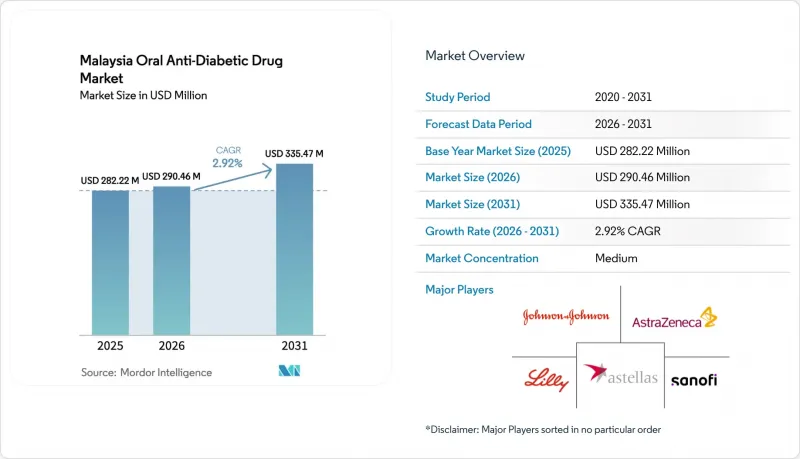
Mordor Intelligence에 의하면, 말레이시아의 경구 항당뇨병제 시장 규모는 2025년 2억 8,222만 달러로 평가되었습니다. 2026년에는 2억 9,046만 달러로 확대되어 2026년부터 2031년에 걸쳐 CAGR 2.92%로 성장을 지속하여, 2031년에는 3억 3,547만 달러에 이를 것으로 예측됩니다.
본 보고서는 약물 분류별(비구아나이드계, 설포닐우레아계, 메글리티니드계, 티아졸리딘디온계, α-글루코시다제 억제제 등), 연령대별(성인, 소아, 노인),당뇨병 유형(1형 당뇨병, 2형 당뇨병), 유통 채널(병원 약국, 소매 약국, 온라인 약국)별로 분류되어 있습니다. 시장 전망은 금액(달러) 기준으로 제시되어 있습니다.
말레이시아의 경구 항당뇨병제 시장 동향 및 인사이트
말레이시아 도시 지역의 2형 당뇨병 유병률 급증
현재 도시 지역의 당뇨병 유병률은 인구 10만 명당 19.6명으로, 이 질환은 말레이시아의 주요 사망 원인 중 하나입니다. 지난 10년간의 등록 데이터에 따르면, 진단을 받은 환자 수는 28만 8,913명에 달하지만, 지질 및 혈압 목표치를 달성한 환자는 그 3분의 1에 불과하여 치료에 큰 격차가 존재함이 드러났습니다. 앉아 있는 생활 습관과 식생활의 변화가 유전적 소인을 더욱 악화시키고 있기 때문에 예방 프로그램이 확대되고 있기는 하지만 약물 요법은 여전히 필수적입니다. 이에 대응하여 공립 병원에서는 메트포르민 비축을 진행하는 한편, 1차 진료 현장에서 고정 용량 복합제의 시범 도입을 진행하고 있습니다. 이러한 미충족 수요가 말레이시아의 경구 항당뇨병제 시장의 기초적인 성장을 뒷받침하고 있습니다.
민간 의료보험 가입자 확대
2025년에는 의료비 지출이 GDP의 4.38%에 달했으며, 중산층 가구의 민간 보험 가입률이 상승하고 있습니다. 보험 적용 범위 확대로 인해 SGLT-2 억제제나 DPP-4 억제제와 같은 고가 약물의 본인 부담금이 경감되고 있습니다. 쿠알라룸푸르, 셀랑고르, 페낭에서는 이전에는 가계 부담이 되었던 복합제 비용을 현재 고용주의 보험 제도가 보상해 주고 있습니다. 외국인 근로자를 위한 새로운 보험 정책으로 인해 리스크 풀이 확대되고 판매량이 증가하고 있습니다. 이에 따라 보험사는 제약사와 단계적 가격 책정에 대해 협상을 진행하며, 말레이시아의 경구 항당뇨병제 시장에서 가치 기반 지불 모델을 강화하고 있습니다.
주요 특허 만료에 따른 제네릭 의약품 경쟁 심화
2025년 3월 엠파글리플로진의 특허 만료 및 2029년으로 예정된 시타글립틴/메트포르민의 특허 만료에 따라, 국가 정책에 따라 50% 저렴한 가격으로 책정된 제네릭 의약품 시장 진입이 예상됩니다. 인도 기업들은 특허 만료 후 출시를 공개적으로 목표로 하고 있으며, 현지 제조업체들은 개정된 NPRA 지침에 따라 신속 승인을 요청하고 있습니다. 기존 브랜드 제약사들은 환자 지원 프로그램 및 고정 용량 제제를 통한 제품 수명 주기 연장으로 대응하고 있습니다. 판매량은 증가할 가능성이 있으나, 매출 감소가 말레이시아의 경구 항당뇨병제 시장 전체의 성장률을 억제하는 요인으로 작용하고 있습니다.
부문 분석
2025년, 메트포르민이 1차 선택 약물로 확고한 입지를 다진 가운데, 비구아나이드 계열 약물은 말레이시아의 경구 항당뇨병제 시장에서 37.72%의 점유율을 유지했습니다. SGLT-2 억제제는 기본 매출 규모는 작지만, 심혈관 및 신장 관련 결과 데이터에 힘입어 연평균 성장률(CAGR) 3.45%로 성장하고 있습니다. 설포닐우레아계 약물의 매출은 저혈당 우려로 인해 감소 추세를 보이는 반면, DPP-4 억제제는 고령층에서 2차 선택 약제로 안정적인 입지를 유지하고 있습니다. α-글루코시다제 억제제 및 티아졸리딘디온 계열 약물은 위장 장애나 안전성 문제로 인해 틈새 시장에 머물러 있습니다.
메트포르민과 SGLT-2 또는 DPP-4 계열 약물을 조합한 고정 용량 복합제는 복약 순응도를 향상시켜 프리미엄 가격을 실현하고 있습니다. 향후 출시될 예정인 메트포르민 제네릭 의약품은 말레이시아의 경구 항당뇨병제 시장의 가격 하락을 완화할 것입니다. 한편, 새로운 약물 군에 대한 독점 판매권을 통해 혁신 기업은 연구개발비용을 회수할 수 있게 됩니다. 각 제약사는 SGLT-2 요법과 관련된 드문 신장 장애 부작용에 대해 처방 의사의 우려를 해소하기 위해 시판 후 조사를 중시하고 있습니다.
2025년에는 20-65세 성인이 매출의 66.58%를 차지했으며, 이는 말레이시아의 주요 생산연령층을 반영합니다. 그러나 평균 수명의 연장 및 정기 검진의 보편화에 따라 고령층은 2031년까지 연평균 성장률(CAGR) 3.78%로 성장할 전망입니다. 소아 환자는 여전히 소수이지만, 도시 지역의 소아 비만 증가에 따라 증가 추세를 보이고 있습니다.
고령층에 대한 처방 경향은 저혈당 위험이 낮기 때문에 DPP-4 억제제에 치우쳐 있지만, 성인에게는 SGLT-2 정제를 포함한 보다 폭넓은 치료법이 채택되고 있습니다. 사라왁주에서는 현재 농촌 지역을 대상으로 한 아웃리치 프로그램을 통해 고령자를 대상으로 분기별로 복약 현황을 확인하고 있으며, 이로 인해 복약 순응도가 향상되고 있습니다. 동반 질환이 증가함에 따라 심혈관계에 대한 효과가 입증된 약물에 대한 수요가 높아지고 있으며, 말레이시아의 경구 항당뇨병제 시장 전체의 수익 안정성이 더욱 강화되고 있습니다.
기타 혜택 :
- 엑셀 형식 시장 예측(ME) 시트
- 3개월간의 애널리스트 지원
자주 묻는 질문
목차
제1장 서론
제2장 조사 방법
제3장 주요 요약
제4장 시장 구도
제5장 시장 규모 및 성장 예측
제6장 경쟁 구도
제7장 시장 기회 및 향후 전망
KTH 26.09.10According to Mordor Intelligence, the Malaysia oral anti-diabetic drug market size is expected to grow from USD 282.22 million in 2025 to USD 290.46 million in 2026 and is forecast to reach USD 335.47 million by 2031 at 2.92% CAGR over 2026-2031.
This report is Segmented by Drug Class (Biguanides, Sulfonylureas, Meglitinides, Thiazolidinediones, Alpha-Glucosidase Inhibitors, and More), Age Group (Adults, Pediatric, Geriatric), Diabetes Type (Type 1 Diabetes, Type 2 Diabetes), and Distribution Channel (Hospital Pharmacies, Retail Pharmacies, Online Pharmacies). The Market Forecasts are Provided in Terms of Value (USD).
Malaysia Oral Anti-Diabetic Drug Market Trends and Insights
Escalating Prevalence of Type-2 Diabetes in Urban Malaysia
Urban centres now post diabetes prevalence of 19.6 deaths per 100,000 population, placing the disease among Malaysia's top mortality drivers. Registry data spanning a decade lists 288,913 diagnosed patients, and only one-third meet lipid and blood-pressure targets, indicating wide therapeutic gaps . Sedentary lifestyles and nutrition shifts compound genetic predisposition, so pharmacotherapy remains essential even as prevention programs expand. Public hospitals respond by stockpiling metformin and by trialling fixed-dose combinations in primary care. This unmet need anchors baseline growth for the Malaysia oral anti-diabetic drug market.
Expansion of the Private Health-Insurance Pool
Healthcare spending reached 4.38% of GDP in 2025, with private insurance uptake rising among middle-income households. Broader coverage lowers out-of-pocket costs for premium agents such as SGLT-2 and DPP-4 inhibitors. Employer schemes in Kuala Lumpur, Selangor, and Penang now reimburse combination tablets that previously strained household budgets. New policies for foreign workers widen the risk pool and lift unit volumes. Insurers, in turn, negotiate tiered pricing with manufacturers, reinforcing value-based payment models in the Malaysia oral anti-diabetic drug market.
Intensifying Generic Competition After Key Patent Expiries
Empagliflozin's patent expiry in March 2025 and scheduled sitagliptin/metformin expiries in 2029 invite generic entries priced 50% lower in line with national policy. Indian firms have publicly targeted off-patent launches, and local manufacturers seek fast-track approvals under the updated NPRA guidebook. Branded incumbents respond with patient-support programs and fixed-dose lifecycle extensions. Volume may rise, yet value erosion weighs on headline growth for the Malaysia oral anti-diabetic drug market.
Other drivers and restraints analyzed in the detailed report include:
- Rapid Uptake of SGLT-2 & DPP-4 Inhibitors Post-NEML 2024 Update
- Government-Led "Mysihat" Medication-Adherence Programmes
- High Out-of-Pocket Cost for Latest Agents Despite Reimbursement
For complete list of drivers and restraints, kindly check the Table Of Contents.
Segment Analysis
Biguanides retained 37.72% of the Malaysia oral anti-diabetic drug market share in 2025 owing to metformin's entrenched role as first-line therapy. SGLT-2 inhibitors contribute small base revenues but grow at 3.45% CAGR, lifted by cardiovascular and renal outcome data. Sulfonylurea sales trend downward because of hypoglycaemia concerns, while DPP-4 inhibitors stabilise as second-line options in elderly cohorts. Alpha-glucosidase inhibitors and thiazolidinediones stay niche after gastrointestinal and safety drawbacks.
Fixed-dose combinations pairing metformin with SGLT-2 or DPP-4 molecules broaden adherence and command premium pricing. Upcoming generic metformin entries cushion price declines within the Malaysia oral anti-diabetic drug market. Meanwhile, exclusivity on newer classes allows innovators to recoup R&D spend. Manufacturers emphasise post-marketing surveillance to reassure prescribers on rare renal adverse events linked to SGLT-2 therapy.
Adults aged 20-65 years generated 66.58% of revenue in 2025, reflecting Malaysia's primary working-age population base. The geriatric cohort, however, is set to expand at a 3.78% CAGR through 2031 as longevity improves and screening intensity rises. Paediatric cases remain minor but escalate with urban childhood obesity.
Geriatric prescribing patterns tilt to DPP-4 inhibitors for low hypoglycaemia risk, while adults receive broader regimens including SGLT-2 tablets. Rural outreach programs in Sarawak now offer quarterly medication reviews for seniors, lifting adherence. As comorbid conditions accumulate, demand shifts toward agents with proven cardiovascular benefit, reinforcing revenue resilience across the Malaysia oral anti-diabetic drug market.
Complete Report Scope:
- By Drug Class
- Biguanides
- Sulfonylureas
- Meglitinides
- Thiazolidinediones
- Alpha-Glucosidase Inhibitors
- DPP-4 Inhibitors
- SGLT-2 Inhibitors
- Others
- By Age Group
- Adults
- Pediatric
- Geriatric
- By Diabetes Type
- Type 1 Diabetes
- Type 2 Diabetes
- By Distribution Channel
- Hospital Pharmacies
- Retail Pharmacies
- Online Pharmacies
List of Companies Covered in this Report:
- Merck
- Novo Nordisk
- AstraZeneca
- Boehringer Ingelheim
- Takeda Pharmaceuticals
- Eli Lilly and Company
- Pfizer
- Johnson & Johnson
- Bristol-Myers Squibb
- Novartis
- Sanofi
- Astellas Pharma
- Duopharma Biotech Berhad
- Sunward Pharmaceutical Sdn Bhd
- Hovid Berhad
- Glenmark Pharmaceuticals
- Mylan NV (Viatris)
- Lupin
- Cipla
- Bayer
Additional Benefits:
- The market estimate (ME) sheet in Excel format
- 3 months of analyst support
TABLE OF CONTENTS
1 Introduction
- 1.1 Study Assumptions & Market Definition
- 1.2 Scope of the Study
2 Research Methodology
3 Executive Summary
4 Market Landscape
- 4.1 Market Overview
- 4.2 Market Drivers
- 4.2.1 Escalating Prevalence Of Type-2 Diabetes In Urban Malaysia
- 4.2.2 Expansion Of The Private Health-Insurance Pool
- 4.2.3 Rapid Uptake Of SGLT-2 & DPP-4 Inhibitors Post-NEML 2024 Update
- 4.2.4 Government-Led Mysihat Medication-Adherence Programmes
- 4.2.5 Centralised Pharmaniaga Tenders Squeezing Retail Prices
- 4.2.6 Growth Of E-Pharmacy Platforms Enhancing Last-Mile Reach
- 4.3 Market Restraints
- 4.3.1 Intensifying Generic Competition After Key Patent Expiries
- 4.3.2 High Out-Of-Pocket Cost For Latest Agents Despite Reimbursement
- 4.3.3 Halal Certification Gaps Limiting Acceptance Of Some Branded Generics
- 4.3.4 Logistics Hurdles To East Malaysia Causing Stock-Out Risk
- 4.4 Regulatory Landscape
- 4.5 Porters Five Forces Analysis
- 4.5.1 Bargaining Power of Suppliers
- 4.5.2 Bargaining Power of Consumers
- 4.5.3 Threat of New Entrants
- 4.5.4 Threat of Substitute Products and Services
- 4.5.5 Intensity of Competitive Rivalry
5 Market Size & Growth Forecasts (Value, USD)
- 5.1 By Drug Class
- 5.1.1 Biguanides
- 5.1.2 Sulfonylureas
- 5.1.3 Meglitinides
- 5.1.4 Thiazolidinediones
- 5.1.5 Alpha-Glucosidase Inhibitors
- 5.1.6 DPP-4 Inhibitors
- 5.1.7 SGLT-2 Inhibitors
- 5.1.8 Others
- 5.2 By Age Group
- 5.2.1 Adults
- 5.2.2 Pediatric
- 5.2.3 Geriatric
- 5.3 By Diabetes Type
- 5.3.1 Type 1 Diabetes
- 5.3.2 Type 2 Diabetes
- 5.4 By Distribution Channel
- 5.4.1 Hospital Pharmacies
- 5.4.2 Retail Pharmacies
- 5.4.3 Online Pharmacies
6 Competitive Landscape
- 6.1 Market Concentration
- 6.2 Market Share Analysis
- 6.3 Company Profiles (includes Global level Overview, Market level overview, Core Segments, Financials as available, Strategic Information, Market Rank/Share for key companies, Products & Services, and Recent Developments)
- 6.3.1 Merck & Co.
- 6.3.2 Novo Nordisk A/S
- 6.3.3 AstraZeneca plc
- 6.3.4 Boehringer Ingelheim
- 6.3.5 Takeda Pharmaceutical
- 6.3.6 Eli Lilly and Company
- 6.3.7 Pfizer Inc.
- 6.3.8 Johnson and Johnson
- 6.3.9 Bristol Myers Squibb
- 6.3.10 Novartis AG
- 6.3.11 Sanofi S.A.
- 6.3.12 Astellas Pharma
- 6.3.13 Duopharma Biotech Berhad
- 6.3.14 Sunward Pharmaceutical Sdn Bhd
- 6.3.15 Hovid Berhad
- 6.3.16 Glenmark Pharmaceuticals
- 6.3.17 Mylan NV (Viatris)
- 6.3.18 Lupin Limited
- 6.3.19 Cipla Limited
- 6.3.20 Bayer AG
7 Market Opportunities & Future Outlook
- 7.1 White-space & Unmet-Need Assessment