

|
시장보고서
상품코드
2124495
인도의 금속 포장 : 시장 점유율 분석, 업계 동향 및 통계, 성장 예측(2026-2031년)India Metal Packaging - Market Share Analysis, Industry Trends & Statistics, Growth Forecasts (2026 - 2031) |
||||||
 Mordor Intelligence
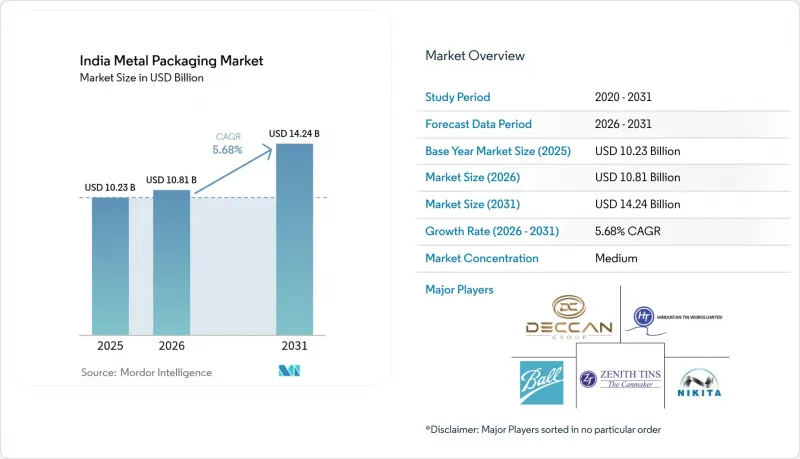
인도의 금속 포장 시장 규모는 2025년 102억 3,000만 달러로 평가되었습니다. 2026년에는 108억 1,000만 달러로 확대되어 2026년부터 2031년에 걸쳐 CAGR 5.68%로 성장을 지속하여, 2031년에는 142억 4,000만 달러에 이를 것으로 예측됩니다.
본 보고서는 소재별(알루미늄, 강철,주석), 제품 유형별(캔, 벌크 컨테이너, 드럼통·배럴 등), 최종 사용자 산업별(식품, 음료, 페인트 및 코팅, 화학제품 등), 코팅 유형별(에폭시-페놀계, 아크릴계, 폴리에스터계, BPA 프리 대체품 등)로 분류되어 있습니다. 시장 전망은 금액(달러) 기준으로 제시되어 있습니다.
인도의 금속 포장 시장 동향 및 인사이트
금속 포장의 높은 재활용률
금속의 무한한 재활용 주기는 회수 및 추적성에 관한 규제를 강화하고 있는 EPR(확대 생산자 책임) 정책의 목표와 부합합니다. 알루미늄 캔을 재활용하면 1차 제련에 소비되는 에너지의 95%를 절약할 수 있으며, 또한 강철의 자기적 특성 덕분에 지자체 시설에서 효율적인 회수가 가능합니다. BIS 규격 IS 15410 : 2024에서는 재활용 소재의 최소 함유율을 의무화하고 있으며, 이를 통해 2차 금속의 안정적인 최종 시장이 형성되고 있습니다. 한편, ‘기후 변화에 관한 국가 행동 계획’에서는 2030년까지 배출 강도를 40% 감축하는 것을 목표로 하고 있습니다. 중앙공해관리위원회가 주도하는 소비자 인식 제고 캠페인에서는 금속의 수명 주기 전반에 걸쳐 환경 부하가 낮다는 점이 강조되고 있으며, 주요 음료 브랜드들은 SKU 구성을 재활용 가능한 캔으로 전환하고 있습니다. 이러한 요인들이 복합적으로 작용하여 인도의 금속 포장 시장에 장기적인 성장 동력을 제공합니다.
RTD 음료 브랜드 수요 증가
2024년에 여러 주에서 알코올이 함유된 RTD(즉석 음료)가 합법화되고, 에너지 음료 판매가 23% 급증함에 따라 인도의 더운 기후대에서 풍미와 탄산을 유지하는 2피스 구조의 알루미늄 캔 사용이 확대되었습니다. 코카콜라의 사난드 공장에 신형 경량 캔 라인을 도입하고, 레드불이 유통 확대에 주력하는 것은 유리나 플라스틱보다 금속을 선호하는 프리미엄화 추세를 여실히 보여줍니다. 인도 식품안전기준청(FSSAI)은 탄산음료에 대한 차단 성능 요건을 강화함으로써, 간접적으로 포장재 선택을 금속으로 유도하고 있습니다. 가공업체(컨버터)에게 RTD 붐은 판매량의 확실성을 제공하며, 고속 캔 생산 라인에 대한 설비 투자를 뒷받침하고, 인도의 금속 포장 시장의 성장을 더욱 촉진하고 있습니다.
대안이 되는 유연성 및 경질 플라스틱 솔루션의 존재
가격을 중시하는 식품 카테고리에서 스탠드업 파우치와 경질 PET 용기는 소재 비용 면에서 금속보다 30-40% 저렴합니다. 현대식 다층 필름은 과거 금속에서만 볼 수 있었던 산소 및 수증기 차단 성능에 필적할 수 있게 되어, 범용 부문에서 금속의 기술적 우위를 서서히 잠식하고 있습니다. 소매업체들은 진열 공간 효율화의 관점에서 파우치를 선호하고 있으며, 브랜드 소유주들은 캔에 비해 15-20%의 운송 비용 절감이라는 이점을 누리고 있습니다. ‘플라스틱 폐기물 관리 규정’에서는 재활용 가능한 단일 소재 라미네이트를 허용하고 있어, 플라스틱이 지속가능성 측면에서 주목을 받고 있습니다. 그 결과, 연포장이 저가형 식품 및 가정용 케어 제품의 SKU에서 판매량을 빼앗고 있어, 인도의 금속 포장 시장의 매출 성장을 억제하고 있습니다.
부문별 분석
2025년, 알루미늄은 인도의 금속 포장 시장 점유율의 62.24%를 차지했으며, 하류 가공에 대한 투자로 공급 병목 현상이 해소됨에 따라 계속해서 주도적인 위치를 유지할 것으로 예측됩니다. 힌달코(Hindalco)의 100억 달러 규모 프로그램을 통해 코일 코팅 및 캔 본체용 소재 생산 라인이 추가됨에 따라, 각 컨버터 기업들은 수입에 의존하지 않고도 증가하는 음료 수요를 포착할 수 있게 될 것입니다. 강철은 산업 용도료 및 윤활유 수요가 증가함에 따라 더 견고한 벌크 용기에 대한 수요가 높아짐에 따라, 2031년까지 연평균 성장률(CAGR) 7.32%로 성장을 가속화하고 있습니다. 따라서 인도의 금속 포장 시장에서 강철 제품 시장 규모는 각 소재 중 가장 빠른 속도로 확대될 전망입니다. 양철은 틈새 시장에 머물러 있지만, 고급 과자나 미식 식품 분야에서는 수익성이 높으며, 소비자들은 양철판의 그래픽 디자인을 ‘선물하기에 적합한 품질’로 인식하고 있습니다.
점점 더 많은 수탁 캔 제조업체들이 적층 강도를 유지하면서 판 두께를 최대 12% 줄이는 경량 2피스 바디 설계를 채택하고 있습니다. 알루미늄의 경우, 이는 운송비 절감과 제품 1리터당 EPR(생산자 책임 회수) 수수료 인하로 이어져 전반적인 비용 경쟁력을 유지하는 데 기여합니다. 강철의 부활은 도료 제조업체들이 전 세계 위험물 규정을 준수하는 UN 인증 페일 통으로 전환할지 여부에 달려 있으며, 이 규정에서는 플라스틱보다 고강도 합금이 우선시됩니다. 알루미늄의 무한한 재활용 가능성은 브랜드의 지속가능성 노력을 보완하며, 제련소 차원의 탈탄소화 노력은 인도의 금속 포장 시장에서 알루미늄의 우위를 더욱 공고히 할 가능성이 있습니다.
2025년 매출액 중 캔이 41.02%를 차지했으며, 이는 청량음료, 맥주, 가공식품에 의해 뒷받침되고 있습니다. 인도의 금속 포장 시장에서 캔의 규모는 계속 확대될 전망이지만, 통이나 드럼통과 같은 벌크 용기는 산업 생산의 성장을 원동력으로 2031년까지 연평균 성장률(CAGR) 7.65%로 확대될 것으로 예측됩니다. 화학 제제 제조업체와 도료 제조업체는 UN 인증 및 내천자성을 이유로 금속 드럼을 선호하고 있으며, 수출용 일회용 배럴로의 전환에 따라 수요량이 확대될 것으로 예측됩니다. 캡과 마개는 음료 및 제약 공장의 충전 라인 업그레이드에 힘입어 수요가 증가하고 있는 반면, 장식용 캔은 고급 선물 시장을 점유하고 있습니다.
정부의 PLI 제도 하에서 석유화학 및 특수 화학 분야로의 자본 배분이 증가하고 있어, 200리터 강철 드럼에 대한 새로운 수요를 창출하고 있습니다. 대조적으로, 에어로졸 캔은 퍼스널케어 브랜드들이 데오도란트나 소독 스프레이를 출시함에 따라 소비자 중심 수요 증가를 이끌고 있습니다. 새로운 캔 생산 라인에는 카메라를 이용한 이음매 검사 기능이 통합되어 있어 불량률을 0.5% 미만으로 억제할 수 있습니다. 이는 품질 관리 기준이 엄격해지고 있는 인도의 금속 포장 시장에서 필수적인 기능입니다. 대용량 컨테이너 제조업체들은 생산 능력을 향상시키기 위해 로봇 용접을 도입하고 있으며, 자동화의 이점이 모든 제품 유형으로 확대되고 있습니다.
기타 혜택 :
- 엑셀 형식 시장 예측(ME) 시트
- 3개월간의 애널리스트 지원
자주 묻는 질문
목차
제1장 서론
제2장 조사 방법
제3장 주요 요약
제4장 시장 구도
제5장 시장 규모 및 성장 예측
제6장 경쟁 구도
제7장 시장 기회 및 향후 전망
KTH 26.09.14According to Mordor Intelligence, the India metal packaging market size is expected to grow from USD 10.23 billion in 2025 to USD 10.81 billion in 2026 and is forecast to reach USD 14.24 billion by 2031 at 5.68% CAGR over 2026-2031.

This report is Segmented by Material Type (Aluminum, Steel, Tin), Product Type (Cans, Bulk Containers, Drums and Barrels, and More), End-User Industry (Food, Beverage, Paints, Coatings, and Chemicals, and More), Coating Type (Epoxy Phenolic, Acrylic, Polyester, BPA-Free Alternatives, and More). The Market Forecasts are Provided in Terms of Value (USD).
India Metal Packaging Market Trends and Insights
High Recyclability Rates of Metal Packaging
Metal's infinite recycling loop aligns with EPR policy targets that are tightening collection and traceability rules. Aluminium can recycling saves 95% of the energy used in primary smelting, and steel's magnetic properties allow efficient recovery in municipal facilities. BIS specification IS 15410:2024 now mandates minimum recycled content, creating a stable end-market for secondary metal, while the National Action Plan on Climate Change seeks a 40% cut in emission intensity by 2030. Consumer education campaigns led by the Central Pollution Control Board emphasize metal's lower life-cycle footprint, prompting large beverage brands to shift SKU mixes toward recyclable cans. Together, these factors add long-run momentum to the India metal packaging market.
Rising Demand from Ready-to-Drink Beverage Brands
Legalization of alcoholic RTDs in multiple states during 2024 and a 23% surge in energy-drink sales have expanded use of two-piece aluminium cans that protect flavor and carbonation across India's hot climate zones. Coca-Cola's new lightweight can line in Sanand and Red Bull's distribution push illustrate the premiumization trend that favors metal over glass or plastic. The Food Safety and Standards Authority of India has tightened barrier-performance requirements for carbonated drinks, indirectly steering packaging decisions toward metal. For converters, the RTD boom supplies volume certainty that underwrites capital spending on high-speed can lines, reinforcing growth in the India metal packaging market.
Presence of Alternate Flexible and Rigid Plastic Solutions
Stand-up pouches and rigid PET jars undercut metal on material cost by 30-40% in value-focused food categories . Modern multilayer films now match oxygen and moisture barrier levels once exclusive to metal, eroding the latter's technical edge in commodity segments. Retailers favor pouches for shelf-space efficiency, and brand owners benefit from a 15-20% freight-cost reduction relative to cans or tins. The Plastic Waste Management Rules permit recyclable mono-material laminates, letting plastics occupy the sustainability narrative. As a result, flexible packaging is siphoning volumes from entry-price foods and home-care SKUs, restraining top-line expansion of the India metal packaging market.
Other drivers and restraints analyzed in the detailed report include:
- Government Push for Extended Producer Responsibility
- Rapid Growth of India's Craft Beer and Energy-Drink Segments
- Volatility in Aluminium and Steel Prices
For complete list of drivers and restraints, kindly check the Table Of Contents.
Segment Analysis
Aluminium held 62.24% of the India metal packaging market share in 2025 and is forecast to sustain leadership as downstream processing investments remove supply bottlenecks. Hindalco's USD 10 billion program will add coil-coating and can-body stock lines, enabling converters to capture rising beverage volumes without imports. Steel is accelerating at a 7.32% CAGR through 2031 as industrial paints and lubricants demand stronger bulk containers. The India metal packaging market size for steel-based formats is therefore poised to climb at the fastest pace among materials. Tin remains niche but lucrative in premium confectionery and gourmet foods, where consumers associate tin-plate graphics with giftable quality.
Growing numbers of contract canners are adopting lightweight two-piece body designs that trim gauge thickness by up to 12% while preserving stacking strength. For aluminium this translates to freight savings and lower EPR fees per liter of product, supporting overall cost leadership. Steel's resurgence hinges on paint manufacturers upgrading to UN-rated pails that meet global hazardous-goods rules, which favor high-strength alloys over plastics. Aluminium's infinite recycling potential complements brand sustainability pledges, and smelter-level decarbonization efforts could further cement its advantage in the India metal packaging market.
Cans controlled 41.02% of 2025 revenue, underpinned by soft drinks, beer, and processed foods. The India metal packaging market size for cans will keep expanding, yet bulk containers such as barrels and drums are projected to climb at an 7.65% CAGR to 2031, fueled by industrial output growth. Chemical formulators and paint makers favor metal drums for UN certification and puncture resistance, and the shift to one-way export barrels widens volume potential. Caps and closures piggyback on fill-line upgrades in beverage and pharmaceutical plants, while decorative cans occupy a premium gift segment.
Higher capital allocations in petrochemicals and specialty chemicals under the government's PLI scheme are triggering fresh demand for 200-liter steel drums. In contrast, aerosol cans add consumer-oriented upside as personal-care brands roll out deodorants and disinfectant sprays. New can lines integrate camera-based seam inspection that cuts rejection rates below 0.5%, a capability essential for the India metal packaging market where QC norms are tightening. Bulk container manufacturers are adopting robotic welding to boost throughput, spreading automation benefits across the product-type mix.
Complete Report Scope:
- By Material Type
- Aluminium
- Steel
- Tin
- By Product Type
- Cans
- Food Cans
- Beverage Cans
- Aerosol Cans
- Decorative Cans
- Bulk Containers
- Drums and Barrels
- Caps and Closures
- Other Product Types
- Cans
- By End-User Industry
- Food
- Beverage
- Paints, Coatings and Chemicals
- Pharmaceuticals and Healthcare
- Industrial
- Other End-user Industries
- By Coating Type
- Epoxy Phenolic
- Acrylic
- Polyester
- BPA-Free Alternatives
- Other Coating Types
List of Companies Covered in this Report:
- Hindustan Tin Works Ltd
- Kaira Can Company Limited
- Ball Corporation
- Oricon Enterprises Ltd
- Crown Holdings Inc
- Can-Pack India Pvt Ltd
- Ardagh Group S.A.
- The Tinplate Company of India Limited
- Manaksia Ltd
- Ess Dee Aluminium Ltd
- Bharat Tin Works Pvt Ltd
- Casablanca Industries Pvt Ltd
- Deccan Cans and Printers Pvt Ltd
- Petrox Packaging India Pvt Ltd
- Hi-Can Industries Pvt Ltd
- AJ Packaging Limited
- Nikita Containers Pvt Ltd
- Zenith Tins Pvt Ltd
- S C Packagings Pvt Ltd
Additional Benefits:
- The market estimate (ME) sheet in Excel format
- 3 months of analyst support
TABLE OF CONTENTS
1 INTRODUCTION
- 1.1 Study Assumptions and Market Definition
- 1.2 Scope of the Study
2 RESEARCH METHODOLOGY
3 EXECUTIVE SUMMARY
4 MARKET LANDSCAPE
- 4.1 Market Overview
- 4.2 Market Drivers
- 4.2.1 High Recyclability Rates of Metal Packaging
- 4.2.2 Rising Demand from Ready-to-Drink Beverage Brands
- 4.2.3 Government Push for Extended Producer Responsibility (EPR)
- 4.2.4 Rapid Growth of India's Craft Beer and Energy-Drink Segments
- 4.2.5 Expansion of Cold-Chain Logistics for Processed Foods
- 4.2.6 Investments in Lightweight Two-Piece Aluminium Can Lines
- 4.3 Market Restraints
- 4.3.1 Presence of Alternate Flexible and Rigid Plastic Solutions
- 4.3.2 Volatility in Aluminium and Steel Prices
- 4.3.3 Health Concerns Around BPA-Based Can Liners
- 4.3.4 Logistics Bottlenecks in Regional Supply of Tinplate
- 4.4 Industry Value Chain Analysis
- 4.5 Regulatory Landscape
- 4.6 Technological Outlook
- 4.7 Porter's Five Forces Analysis
- 4.7.1 Bargaining Power of Suppliers
- 4.7.2 Bargaining Power of Consumers
- 4.7.3 Threat of New Entrants
- 4.7.4 Threat of Substitute Products
- 4.7.5 Intensity of Competitive Rivalry
- 4.8 Impact of Macroeconomic Factors on the Market
5 MARKET SIZE AND GROWTH FORECASTS (VALUE)
- 5.1 By Material Type
- 5.1.1 Aluminium
- 5.1.2 Steel
- 5.1.3 Tin
- 5.2 By Product Type
- 5.2.1 Cans
- 5.2.1.1 Food Cans
- 5.2.1.2 Beverage Cans
- 5.2.1.3 Aerosol Cans
- 5.2.1.4 Decorative Cans
- 5.2.2 Bulk Containers
- 5.2.3 Drums and Barrels
- 5.2.4 Caps and Closures
- 5.2.5 Other Product Types
- 5.2.1 Cans
- 5.3 By End-User Industry
- 5.3.1 Food
- 5.3.2 Beverage
- 5.3.3 Paints, Coatings and Chemicals
- 5.3.4 Pharmaceuticals and Healthcare
- 5.3.5 Industrial
- 5.3.6 Other End-user Industries
- 5.4 By Coating Type
- 5.4.1 Epoxy Phenolic
- 5.4.2 Acrylic
- 5.4.3 Polyester
- 5.4.4 BPA-Free Alternatives
- 5.4.5 Other Coating Types
6 COMPETITIVE LANDSCAPE
- 6.1 Market Concentration
- 6.2 Strategic Moves
- 6.3 Market Share Analysis
- 6.4 Company Profiles (includes Global level Overview, Market level overview, Core Segments, Financials as available, Strategic Information, Market Rank/Share for key companies, Products and Services, and Recent Developments)
- 6.4.1 Hindustan Tin Works Ltd
- 6.4.2 Kaira Can Company Limited
- 6.4.3 Ball Corporation
- 6.4.4 Oricon Enterprises Ltd
- 6.4.5 Crown Holdings Inc
- 6.4.6 Can-Pack India Pvt Ltd
- 6.4.7 Ardagh Group S.A.
- 6.4.8 The Tinplate Company of India Limited
- 6.4.9 Manaksia Ltd
- 6.4.10 Ess Dee Aluminium Ltd
- 6.4.11 Bharat Tin Works Pvt Ltd
- 6.4.12 Casablanca Industries Pvt Ltd
- 6.4.13 Deccan Cans and Printers Pvt Ltd
- 6.4.14 Petrox Packaging India Pvt Ltd
- 6.4.15 Hi-Can Industries Pvt Ltd
- 6.4.16 AJ Packaging Limited
- 6.4.17 Nikita Containers Pvt Ltd
- 6.4.18 Zenith Tins Pvt Ltd
- 6.4.19 S C Packagings Pvt Ltd
7 MARKET OPPORTUNITIES AND FUTURE OUTLOOK
- 7.1 White-space and Unmet-Need Assessment


