

|
시장보고서
상품코드
2124624
ASEAN의 E-Commerce 물류 : 시장 점유율 분석, 업계 동향 및 통계, 성장 예측(2026-2031년)ASEAN E-commerce Logistics - Market Share Analysis, Industry Trends & Statistics, Growth Forecasts (2026 - 2031) |
||||||
 Mordor Intelligence
Mordor Intelligence에 의하면, ASEAN의 E-Commerce 물류 시장 규모는 2025년에 102억 5,000만 달러로 평가되었습니다. 2026년 114억 9,000만 달러에서 2031년까지 203억 7,000만 달러에 이를 것으로 예상되며, 예측 기간(2026-2031년) CAGR은 12.12%를 나타낼 전망입니다.
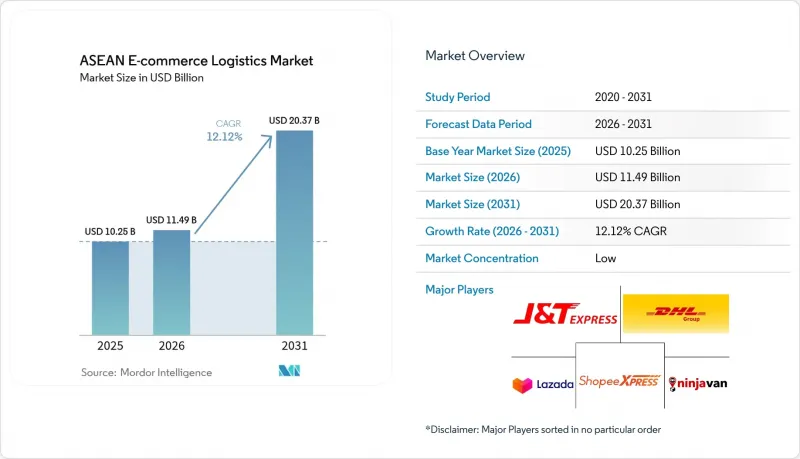
본 보고서는 서비스별(운송, 창고·풀필먼트, 기타), 비즈니스 모델별(B2C, B2B, C2C),배송지별(국내, 국경 간), 배송 속도별(당일 배송, 기타), 제품 카테고리별(식품 및 음료, 기타), 지역별(인도네시아, 태국, 베트남, 필리핀, 말레이시아, 싱가포르, 기타 아세안 국가)로 분류되어 있습니다. 시장 예측은 금액(달러)으로 표시되어 있습니다.
ASEAN의 E-Commerce 물류 시장 동향 및 인사이트
아세안(ASEAN)을 거점으로 한 전자상거래 마켓플레이스의 성장 가속화
Shopee가 차지하는 소셜 커머스 점유율 28.4%와 TikTok Shop의 바이럴 판매 모델로 인해 트래픽은 통합된 결제 및 물류 경로로 집중되고 있으며, 소포 흐름은 분할 결제 및 실시간 추적에 대응 가능한 플랫폼으로 이동하고 있습니다. IDC는 2028년까지 지역 GMV가 3,250억 달러에 달하고 디지털 결제 비율이 94%에 이르러 현금 취급으로 인한 지연이 해소될 것으로 예측했습니다. J&T;Express 및 Shopee 인도네시아와 같은 독점 계약이 종료됨에 따라, 운송업체들은 사업 다각화를 피할 수 없게 되었으며, 여러 스토어프론트에서 주문을 접수할 수 있는 중립적인 API에 대한 투자를 진행하고 있습니다. 2028년까지 146억 달러 규모에 달할 것으로 예상되는 크로스보더 마켓플레이스의 통합은 다중 통화 결제 및 통합된 통관 워크플로우에 대한 수요를 견인하고 있습니다. ‘승자 독식’ 양상이 심화되는 가운데, 여러 거대 플랫폼에 동시에 연결할 수 있는 물류 제공업체들이 타사를 압도할 정도의 처리량을 확보하고 있습니다.
BNPL과 디지털 지갑의 급속한 확장이 결제 전환율을 끌어올리고 있다.
디지털 지갑은 이미 물류 부문 청구액의 34%를 결제하고 있으며, 결제 시 마찰을 줄임으로써 주문 빈도를 높이고 있습니다. BNPL(후불)은 소비자의 신용 이용 기회를 확대하고 있으며, 10억 명의 사용자를 대상으로 한 거래 수준 분석에 따르면, 이 서비스는 카드 이용이 보편화되지 않은 시장에서 평균 구매액 증가와 가맹점 측의 수용 확대로 이어지고 있습니다. 인도네시아에서는 후불 제도가 패션 상품의 충동 구매를 촉진하고 있는 반면, 위험 회피 성향이 강한 쇼핑객들 사이에서는 착불(COD) 방식이 여전히 뿌리 깊게 남아 있어, 운송업체는 선불과 현금 결제라는 두 가지 업무 흐름을 병행하여 운영할 수밖에 없습니다. 2025년까지 디지털 지갑 이용률은 전 세계 전자상거래의 50%를 넘어섰으며, 가맹점, 배송업체, 플랫폼에 대한 자금 결제를 거의 실시간으로 수행하는 라스트 마일 기업들에게 있어 운전 자본 관리의 복잡성이 가중될 것입니다.
아세안(ASEAN) 단일 창구 내의 파편화된 통관 규정
아세안 관세 신고 서류를 교환하고 있는 것은 9개 회원국뿐이며, 이로 인해 운송업체는 중복되는 사무 처리에 시달리고 있어 당일·익일 배송 약속 이행에 차질이 생기고 있습니다. 2025년 베트남에서 시행된 교통 규정에 따라 물류 비용은 10% 상승했고, 정시 배송률은 90% 미만으로 떨어졌습니다. 전담 통관업체가 없는 중소기업은 특히 큰 어려움에 직면해 있어 수출 진출이 저해되고 있습니다. ISO 9001 요건부터 각국 고유의 라이선스 요건에 이르기까지, 요건의 차이가 광범위한 조화를 지연시키고 있으며, 국경을 넘는 주문 처리 비용을 높은 수준으로 유지시키고 있습니다.
부문별 분석
운송은 2025년 매출의 62.55%를 차지하며, 인도네시아와 필리핀과 같은 섬나라라는 지역적 조건 속에서도 아세안(ASEAN) 전자상거래 물류 시장 규모의 기반을 형성했습니다. 도로 운송 차량은 자바 섬 횡단 고속도로와 태국 전역을 아우르는 고속도로를 활용하여 간선 운송 지연을 단축하고 있는 반면, 철도는 쿤밍-비엔티안 간 리드타임을 대폭 단축한 중국-라오스 간 철도 개통에 힘입어 점유율을 확대되고 있습니다. 항공 화물은 여전히 고가 전자제품의 주요 운송 수단이며, 해상 노선은 대량의 국경 간 주문을 뒷받침하고 있습니다. ASEAN의 E-Commerce 물류 시장에서 창고 및 풀필먼트의 점유율은 아직 작지만, 자카르타, 방콕, 호치민 시내의 다크 스토어 네트워크를 통해 배송 약속 시간이 2시간으로 단축됨에 따라 빠르게 성장하고 있습니다. 자동 피킹을 통해 처리 능력이 50-60% 향상되었으며, AI를 활용한 슬롯 배정을 통해 당일 배송 SKU와 판매 부진 상품을 조합하고 있습니다. 각 플랫폼 기업이 차별화된 개봉 경험을 추구하는 가운데, 키트 구성이나 맞춤형 라벨과 같은 부가가치 서비스가 틈새 시장에서의 수익률을 높여주고 있습니다.
이 부문의 전망은 차량의 디지털화를 추진하고, 소포 단위의 가시성을 통합하며, 소형 상용차를 통해 연료 가격 변동 위험을 헤지하는 운송사에 유리하게 작용할 것입니다. 메자닌 로봇에 투자하는 풀필먼트 사업자는 소포 밀도 증가에 따라 설비 투자를 상각하고 있습니다. 시장 진출기업들은 네트워크의 깊이를 처음부터 구축하기보다는 정부의 지원책을 활용하고, 고객 대상 기술을 자체적으로 보유하면서 미들 마일을 외부에 위탁하는 자산 경량화 모델을 채택할 가능성이 있습니다.
B2C는 Shopee, Lazada, Tokopedia의 규모 덕분에 2025년 시장 가치의 68.20%를 차지하며, 예측 가능한 간선 운송 및 허브의 운송 능력을 뒷받침했습니다. 결제 디지털화율이 94%에 달함에 따라 착불(COD)로 인한 자금 정체 현상이 해소되고, 현금 순환 주기가 간소화됩니다. 한편, TikTok Shop의 바이럴 효과에 힘입은 C2C는 연평균 성장률(CAGR) 8.77%로 성장을 지속하고 있으며, 운송 사업자들은 문 앞 수거 및 크기가 변동하는 소포에 대응하는 방법을 익힐 수밖에 없게 되었습니다. 당일 배송에 대한 서비스 수준 계약(SLA)에 대한 기대감으로 인해, 플랫폼이 요구하는 긴급성이 체계가 미흡한 판매자에게까지 파급되고 있습니다.
C2C 운송장을 수용하면서도 B2C 간선 노선에서 공간을 확보할 수 있는 하이브리드 물류 API를 통해 가동률 향상이 실현됩니다. B2B는 시장 점유율이 가장 낮지만, 도매업체들이 재고 보충 업무를 디지털화하고 BNPL(후불) 신용 결제 도입을 시도함에 따라 성숙 단계에 접어들었으며, 지방 집배 센터로의 팔레트 흐름이 안정화되고 있습니다.
기타 혜택 :
- 엑셀 형식 시장 예측(ME) 시트
- 3개월간의 애널리스트 지원
자주 묻는 질문
목차
제1장 서론
제2장 조사 방법
제3장 주요 요약
제4장 시장 구도
제5장 시장 규모 및 성장 예측
제6장 경쟁 구도
제7장 시장 기회 및 향후 전망
KTH 26.09.14According to Mordor Intelligence, the ASEAN e-commerce logistics market size was valued at USD 10.25 billion in 2025 and estimated to grow from USD 11.49 billion in 2026 to reach USD 20.37 billion by 2031, at a CAGR of 12.12% during the forecast period (2026-2031).
This report is Segmented by Service (Transportation, Warehousing & Fulfilment, and More), Business Model (B2C, B2B, C2C), Destination (Domestic, Cross-Border), Delivery Speed (Same-Day, and More), Product Category (Foods & Beverages, and More), and Geography (Indonesia, Thailand, Vietnam, Philippines, Malaysia, Singapore, Rest of ASEAN). The Market Forecasts are Provided in Terms of Value (USD).
ASEAN E-commerce Logistics Market Trends and Insights
Accelerated Growth of ASEAN-Based E-Commerce Marketplaces
Shopee's 28.4% social-commerce share and TikTok Shop's viral selling model concentrate traffic on integrated checkout-logistics rails, shifting parcel flows toward venues that can support split payments and real-time tracking. IDC forecasts regional GMV of USD 325 billion by 2028, with digital payments reaching 94%, eliminating cash-handling delays. The end of exclusive deals such as J&T Express-Shopee Indonesia forces carriers to diversify and invest in neutral APIs that accept orders from multiple storefronts. Cross-border marketplace integration worth USD 14.6 billion by 2028 drives demand for multi-currency settlement and harmonised customs workflows. Logistics providers able to plug simultaneously into several mega-platforms capture disproportionate volume as winner-take-all dynamics escalate.
Rapid Expansion of BNPL and Digital Wallets Boosting Checkout Conversion
Digital wallets already settle 34% of logistics-sector invoices and accelerate order frequency by cutting checkout friction. BNPL widens consumer credit access; transaction-level analysis across 1 billion users links the product to higher basket sizes and merchant acceptance in card-scarce markets. In Indonesia, pay-later schemes lift impulsive fashion purchases, whereas COD persists among risk-averse shoppers, obliging carriers to operate dual workstreams for prepaid and cash segments. Wallet usage is set to pass 50% of global e-commerce by 2025, intensifying working-capital complexity for last-mile firms that settle funds to merchants, couriers, and platforms in near real time.
Fragmented Customs Clearance Rules Across ASEAN Single Window
Only nine members exchange ASEAN Customs Declaration Documents, forcing carriers to juggle redundant paperwork that erodes same-day and next-day promises. Vietnam's 2025 traffic rules lifted logistics costs 10% and cut on-time rates below 90%. SMEs lacking dedicated brokers struggle most, curbing export participation. Divergent requirements from ISO 9001 mandates to country-specific licensing delay broader harmonisation and keep cross-border fulfillment expensive.
Other drivers and restraints analyzed in the detailed report include:
- Government-Funded National Logistics Corridors
- Rising Cross-Border Social-Commerce Flows Within CLMV
- Chronic Middle- and Last-Mile Labor Shortages in Tier-2/3 Cities
For complete list of drivers and restraints, kindly check the Table Of Contents.
Segment Analysis
Transportation accounts for 62.55% of 2025 revenue, anchoring the ASEAN e-commerce logistics market size amid the archipelago geography of Indonesia and the Philippines. Road fleets leverage trans-Java and pan-Thailand highways to trim line-haul latency, while rail gains share following the China-Laos link that slashes Kunming-Vientiane lead time. Air freight remains the go-to for high-value electronics, and sea lanes support bulk cross-border orders. The ASEAN e-commerce logistics market share of warehousing & fulfillment, though smaller, grows swiftly as dark-store grids inside Jakarta, Bangkok, and Ho Chi Minh City shorten promise windows to two hours. Automated picking lifts throughput 50-60%, and AI slotting blends same-day SKUs with slower movers. Value-added services kitting, custom labels present niche margins as platforms seek differentiated unboxing.
The segment outlook favors transport firms that digitalize fleets, integrate parcel-level visibility, and hedge fuel price swings via electric light-commercial vehicles. Fulfillment operators investing in mezzanine robotics amortize capex over accelerating parcel density. Market entrants may piggyback government corridors rather than replicate network depth, adopting asset-light models that subcontract middle mile while owning customer-facing tech.
B2C maintains 68.20% of 2025 value thanks to Shopee, Lazada, and Tokopedia scale, underpinning predictable line-haul and hub capacity. Checkout digitalization at 94% removes COD float, simplifying cash cycles. Yet C2C, buoyed by TikTok Shop's viral engines, logs an 8.77% CAGR, forcing carriers to master doorstep pickup and variable parcel sizing. Same-day SLA expectations transfer platform urgency onto lightly formalized sellers.
Hybrid logistics APIs that accept C2C waybills while reserving space on B2C trunk routes unlock utilisation gains. B2B, though the smallest slice, matures as wholesalers digitize replenishment and experiment with BNPL credit, creating steady pallet flows into provincial depots.
Complete Report Scope:
- By Service
- Transportation
- Road
- Rail
- Air
- Sea
- Warehousing and Fulfilment
- Value-Added Services (Labelling, Packaging, Kitting)
- Transportation
- By Business Model
- B2C
- B2B
- C2C
- By Destination
- Domestic
- Cross-border (international)
- By Delivery Speed
- Same-day (less than 24 h)
- Next-day (24-48 h)
- Standard (3-5 days)
- Others (more than 5 days)
- By Product Category
- Foods and Beverages
- Personal and Household Care
- Fashion and Lifestyle (accessories, apparel, footwear)
- Furniture
- Consumer Electronics and Household Appliances
- Other Products
- By Country
- Indonesia
- Thailand
- Vietnam
- Philippines
- Malaysia
- Singapore
- Rest of ASEAN (Cambodia, Laos, Myanmar, Brunei)
List of Companies Covered in this Report:
- JandT Express
- Ninja Van
- Deutsche Post DHL Group
- Shopee Xpress
- Lazada Logistics
- Kerry Express
- Flash Express
- Best Express
- FedEx Corporation
- UPS Inc.
- Pos Indonesia
- JNE Express
- TIKI
- Giao Hang Nhanh
- LBC Express
- GD Express
- aCommerce
- SF International
- CJ Logistics
- Yusen Logistics
Additional Benefits:
- The market estimate (ME) sheet in Excel format
- 3 months of analyst support
TABLE OF CONTENTS
1 Introduction
- 1.1 Study Assumptions and Market Definition
- 1.2 Scope of the Study
2 Research Methodology
3 Executive Summary
4 Market Landscape
- 4.1 Market Overview
- 4.2 Market Drivers
- 4.2.1 Accelerated growth of ASEAN-based e-commerce marketplaces
- 4.2.2 Rapid expansion of BNPL and digital wallets boosting checkout-conversion
- 4.2.3 Government-funded national logistics corridors (e.g., Indonesia TOL Laut)
- 4.2.4 Rising cross-border social-commerce flows within CLMV sub-region
- 4.2.5 On-demand dark-store networks enabling 2-hour delivery windows
- 4.2.6 Gen-AI-driven route-optimisation lowering per-parcel cost by >12 %
- 4.3 Market Restraints
- 4.3.1 Fragmented customs clearance rules across ASEAN single window
- 4.3.2 Chronic middle- and last-mile labour shortages in tier-2/3 cities
- 4.3.3 Under-insurance of high-value parcels increasing risk-premiums
- 4.3.4 Escalating urban congestion taxes on commercial vehicles
- 4.4 Value / Supply-Chain Analysis
- 4.5 Regulatory Landscape
- 4.6 Technological Outlook
- 4.7 Demand and Supply Analysis
- 4.8 Industry Attractiveness
- 4.8.1 Porter's Five Forces
- 4.8.2 Threat of New Entrants
- 4.8.3 Bargaining Power of Buyers
- 4.8.4 Bargaining Power of Suppliers
- 4.8.5 Threat of Substitutes
- 4.8.6 Competitive Rivalry
- 4.9 Reverse / Return Logistics Insights
- 4.10 Impact of Geo-Political Events on Supply Chain Shifts
5 Market Size and Growth Forecasts (Value)
- 5.1 By Service
- 5.1.1 Transportation
- 5.1.1.1 Road
- 5.1.1.2 Rail
- 5.1.1.3 Air
- 5.1.1.4 Sea
- 5.1.2 Warehousing and Fulfilment
- 5.1.3 Value-Added Services (Labelling, Packaging, Kitting)
- 5.1.1 Transportation
- 5.2 By Business Model
- 5.2.1 B2C
- 5.2.2 B2B
- 5.2.3 C2C
- 5.3 By Destination
- 5.3.1 Domestic
- 5.3.2 Cross-border (international)
- 5.4 By Delivery Speed
- 5.4.1 Same-day (less than 24 h)
- 5.4.2 Next-day (24-48 h)
- 5.4.3 Standard (3-5 days)
- 5.4.4 Others (more than 5 days)
- 5.5 By Product Category
- 5.5.1 Foods and Beverages
- 5.5.2 Personal and Household Care
- 5.5.3 Fashion and Lifestyle (accessories, apparel, footwear)
- 5.5.4 Furniture
- 5.5.5 Consumer Electronics and Household Appliances
- 5.5.6 Other Products
- 5.6 By Country
- 5.6.1 Indonesia
- 5.6.2 Thailand
- 5.6.3 Vietnam
- 5.6.4 Philippines
- 5.6.5 Malaysia
- 5.6.6 Singapore
- 5.6.7 Rest of ASEAN (Cambodia, Laos, Myanmar, Brunei)
6 Competitive Landscape
- 6.1 Market Concentration
- 6.2 Strategic Moves
- 6.3 Market Share Analysis
- 6.4 Company Profiles (includes Global level Overview, Market level overview, Core Segments, Financials as available, Strategic Information, Market Rank/Share for key companies, Products and Services, and Recent Developments)
- 6.4.1 JandT Express
- 6.4.2 Ninja Van
- 6.4.3 Deutsche Post DHL Group
- 6.4.4 Shopee Xpress
- 6.4.5 Lazada Logistics
- 6.4.6 Kerry Express
- 6.4.7 Flash Express
- 6.4.8 Best Express
- 6.4.9 FedEx Corporation
- 6.4.10 UPS Inc.
- 6.4.11 Pos Indonesia
- 6.4.12 JNE Express
- 6.4.13 TIKI
- 6.4.14 Giao Hang Nhanh
- 6.4.15 LBC Express
- 6.4.16 GD Express
- 6.4.17 aCommerce
- 6.4.18 SF International
- 6.4.19 CJ Logistics
- 6.4.20 Yusen Logistics
7 Market Opportunities and Future Outlook
- 7.1 White-space and Unmet-need Assessment


