

|
시장보고서
상품코드
2154913
남미의 식품 캔 : 시장 점유율 분석, 업계 동향과 통계, 성장 예측(2026-2031년)South America Food Cans - Market Share Analysis, Industry Trends & Statistics, Growth Forecasts (2026 - 2031) |
||||||
 Mordor Intelligence
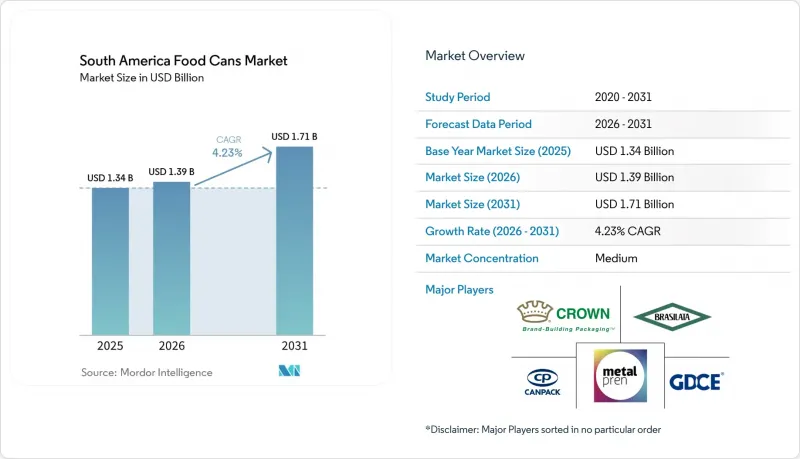
에 따르면 남미의 식품 캔 시장 규모는 2025년에 13억 4,000만 달러로 평가되며, 2026년 13억 9,000만 달러에서 확대하며, 2031년까지 17억 1,000만 달러에 달할 것으로 예측됩니다.
예측 기간(2026-2031년) 동안 연평균 성장률(CAGR)은 4.23%에 달할 것으로 전망됩니다.
남미 식품 캔 시장의 동향 및 인사이트
편리하고 상온 보관이 가능한 식품에 대한 수요
2022-2024년에 걸친 공급 차질로 인해 남미 가정의 식량 비축 행위가 증가했습니다. 이에 따라 채소 통조림, 토마토 제품, 단백질 계열 통조림의 수요 기반이 더욱 안정화되었습니다. 장기간 상온 보관이 필요한 식품의 경우, 금속 용기는 여전히 중요한 역할을 하고 있습니다. 브라질 ANVISA의 결의안 RDC 제854/2024호에 따라 중금속 오염 물질의 허용 한도치가 하향 조정되었으며, 금속 식품 포장재에 대한 위생 및 이온 이동 관리가 강화되었습니다. 이러한 규제로 인해 수입 캔에 대한 규정 준수 요건이 엄격해졌으며, 기존 소재 공급업체의 입지가 강화되고 있습니다. 또한 브라질과 아르헨티나의 사회 복지 프로그램 역시 단백질 계열 통조림 제품에 대한 정기적인 기관 구매를 지원하고 있습니다.
레디밀 및 가공 식품의 확대
통조림 레디밀은 기존의 콘비프나 스튜와 같은 제품에 그치지 않고 그 범위를 넓혀가고 있습니다. 각 제조사들은 도시 지역 가정을 대상으로, 양념이 되어 있고 1인분씩 소분된, 더욱 다양한 단백질 제품을 출시하고 있습니다. 가공식품은 수요의 상당 부분을 차지하고 있으며, 이는 토마토 통조림, 두류, 육류, 소스 등의 통조림 제품의 중요성을 반영합니다. 소비자들이 유통기한이 긴 편리한 제품을 선호함에 따라 레디밀 시장은 꾸준히 확대될 것으로 예상됩니다. 이러한 변화로 인해 1인분에 적합한 중소형 캔이 선호되는 추세입니다. 남미의 식품 캔 시장은 가공업체들이 디자인이 돋보이는 캔을 사용하여 현대적인 소매 채널에서 레디밀을 차별화함으로써 혜택을 보고 있습니다.
플렉서블 파우치 및 플라스틱 포장과의 경쟁
플렉서블 파우치와 무균 팩은 포장된 식사 분야에서 여전히 경쟁상의 제약 요인으로 작용하고 있습니다. 이러한 포장 방식의 매력은 1인분당 가격이 중요한 요소가 되는 비공식 소매 채널이나 온라인 채널에서 가장 두드러지게 나타납니다. 반면, 식품 캔은 식품 서비스용 조달, 레토르트 가공 및 장기간 상온 보관 분야에서 우위를 유지하고 있습니다. 브라질과 콜롬비아의 젊은 소비자들은 간편식에서 파우치 형태를 더 선호하는 경향이 보입니다. 이로 인해 식품 브랜드의 경우 충전 라인 선택이 더욱 어려워지고 있습니다. 반면, 반려동물 사료 및 수산물 분야에서는 파우치 사용이 비교적 제한적이기 때문에 남미의 식품 캔 시장은 계속해서 더 견고한 기반을 제공하고 있습니다.
부문 분석
2025년에는 강철 및 양철이 시장의 67.23%를 차지하며 남미 식품 캔 시장에서 1위 점유율을 기록했습니다. 3피스 양철 캔은 정어리, 참치, 고등어, 두류 및 엄격한 살균 공정이 필요한 기타 제품에 계속해서 널리 사용되고 있습니다. 칠레, 페루, 브라질의 수산물 가공업체들은 높은 레토르트 압력이나 장시간의 열처리를 견딜 수 있는 이러한 캔에 의존하고 있습니다. 기존의 충전 시스템과 공급망 또한 강철의 지속적인 사용을 지원하고 있습니다. 이러한 요인들로 인해 예측 기간 중 강철이 급속히 대체될 가능성은 낮을 것으로 보입니다.
알루미늄은 2031년까지 가장 빠르게 성장하는 소재 부문입니다. 그 입지가 가장 확고한 분야는 경량성과 인쇄·장식이 중시되는 프리미엄 반려동물 사료 및 즉석식사 분야입니다. 브라질의 ABNT NBR 17298:2026에 기반한 ‘셀로 베르데(Selo Verde)’ 프레임워크에 따라 라미네이트 알루미늄 공급 과정에서 탄소 회계 및 에너지 추적성이 더욱 중요시되고 있습니다. 볼 코퍼레이션(Ball Corporation)과 그루포 마리자(Grupo Mariza)는 2026년 3월, ASI의 ‘책임 있는 알루미늄 조달(Responsible Aluminum Sourcing)’ 라벨을 부착한 브라질 최초의 주스 캔을 출시했습니다. 소규모 가공업체의 경우, 2피스식 알루미늄 캔 제조 설비에 대한 설비 투자가 필요하므로 더욱 어려운 선택에 직면해 있습니다. 따라서 남미의 식품 캔 업계에서는 철강과 알루미늄의 공급망이 병행하여 유지될 가능성이 높다고 볼 수 있습니다.
2025년에는 호환 가능한 충전, 레토르트, 물류 시스템의 도입 실적을 바탕으로 3피스 캔이 시장의 50.66%를 차지했습니다. 정어리, 참치, 두류 가공업체들은 오랫동안 생산 라인에서 용접 실린더를 사용해 왔습니다. 이 설비를 교체하려면 막대한 설비 투자가 필요할 수 있습니다. 또한 이 형태는 주식이나 업무용 포장에서도 여전히 비용 대비 효율이 뛰어납니다. 이러한 상황으로 인해 남미 식품 캔 시장에서 3피스 캔은 계속해서 중요한 역할을 수행할 것입니다.
2피스 캔은 2031년까지 연평균 성장률(CAGR) 4.72%로 확대될 것으로 예측됩니다. 반려동물 사료 및 즉석식(레디밀) 분야에 대한 신규 투자에서는 재료 중량 감소와 내부 용접 제거가 가능하므로 인발·프레스 성형 라인이 점점 더 선호되고 있습니다. 트리비움 패키징(Trivium Packaging)은 2025년, 주요 반려동물 사료 고객사가 강철제 3피스 캔에서 알루미늄제 2피스 캔으로 전환하고 있다고 보고했습니다. 또한 2피스 구조는 인라인 인쇄 및 생산 처리량 향상에도 적합합니다. 브라질라타(Brasilata)사는 식품 캔 제조 분야에서 FSSC 22000 인증을 유지하고 있으며, 다양한 형태의 식품 캔 제조 능력을 제공하고 있습니다. 이러한 형태의 사용이 확대됨에 따라 인증된 알루미늄 코일 및 식품 접촉용 코팅 규격을 준수하는 코팅재에 대한 수요가 증가하고 있습니다.
기타 혜택:
- 엑셀 형식의 시장 예측(ME) 시트
- 3개월간의 애널리스트 지원
자주 묻는 질문
목차
제1장 서론
- 조사 전제조건과 시장 정의
- 조사 범위
제2장 조사 방법
제3장 개요
제4장 시장 구도
- 시장 개요
- 시장 성장 촉진요인
- 시장 성장 억제요인
- 업계 밸류체인 분석
- 규제 상황
- 거시경제 요인이 시장에 미치는 영향
- 기술 전망
- Porter's Five Forces 분석
제5장 시장 규모와 성장 예측
- 소재 유형별
- 캔 유형별
- 캔 사이즈별
- 식품 용도별
- 지역별
- 브라질
- 아르헨티나
- 콜롬비아
- 칠레
- 페루
- 기타 남미 국가
제6장 경쟁 구도
- 시장 집중도
- 전략적 동향
- 시장 점유율 분석
- 기업 개요
- Crown Holdings, Inc.
- CANPACK S.A.
- Ball Corporation
- Trivium Packaging B.V.
- Brasilata
- Metalpren
- Gomes da Costa Embalagens
- Conservas Oderich S.A.
- Industrias El Nihuil
- Companhia Metalgraphica Paulista
- Envases Universales, S.A.P.I. de C.V.
- Massilly
- Mauser Packaging Solutions Holding Company
- Sonoco Products Company
- Greif, Inc.
- Ardagh Metal Packaging S.A.
- Wells Can Company Ltd.
- Allstate Can Corporation
- Silgan Holdings Inc.
제7장 시장 기회와 향후 전망
KSA 26.10.28According to Mordor Intelligence, the South America food cans market size was valued at USD 1.34 billion in 2025 and estimated to expand from USD 1.39 billion in 2026 to reach USD 1.71 billion by 2031, at a CAGR of 4.23% during the forecast period (2026-2031).
South America Food Cans Market Trends and Insights
Demand for Convenient, Shelf-Stable Food
Supply disruptions between 2022 and 2024 increased pantry-stocking behavior among South American households. This created a steadier base for canned vegetables, tomato products, and canned proteins. Metal containers remain important for foods that require ambient storage over extended periods. Brazil's ANVISA Resolution RDC No. 854/2024 tightened limits for heavy-metal contaminants and strengthened hygiene and migration controls for metallic food packaging. These rules increase compliance requirements for imported cans and reinforce the position of established material suppliers. Social programs in Brazil and Argentina also support recurring institutional purchases of canned protein products.
Expansion of Ready Meals and Processed Foods
Canned ready meals are moving beyond traditional corned beef and stew products. Producers are introducing seasoned, portion-controlled, and more varied protein products for urban households. Processed food accounted for a significant share of demand, reflecting the importance of canned tomato products, beans, meat, and sauces. Ready meals are expected to expand steadily as consumers seek convenient products with longer shelf life. This shift favors medium and small formats suited to individual servings. The South America food cans market benefits when processors use decorated cans to distinguish ready meals in modern retail channels.
Competition From Flexible Pouches and Plastic Packaging
Flexible pouches and aseptic cartons remain a competitive constraint in packaged meals. Their appeal is strongest in informal retail and online channels where the price per serving is important. Food cans retain advantages in institutional procurement, retort processing, and longer pantry storage. Younger consumers in Brazil and Colombia have shown a stronger preference for pouch formats in convenience meals. This makes filling-line choices more difficult for food brands. Pet food and seafood continue to offer a more defensible base for the South America food cans market because pouch use is more limited in those applications.
Other drivers and restraints analyzed in the detailed report include:
- Growth in Pet Food Consumption
- Expansion of Seafood and Horticultural Processing
- Volatility in Metal, Energy, and Freight Costs
For complete list of drivers and restraints, kindly check the Table Of Contents.
Segment Analysis
Steel and tin held 67.23% of the market in 2025, giving the material the leading South America food cans market share. Three-piece tinplate cans remain widely used for sardines, tuna, mackerel, legumes, and other products requiring demanding sterilization cycles. Seafood processors in Chile, Peru, and Brazil depend on these cans because they withstand high retort pressure and prolonged heat treatment. Existing filling systems and supply relationships also support continued steel use. These factors make a rapid replacement of steel unlikely over the forecast period.
Aluminum is the fastest-growing material segment through 2031. Its position is strongest in premium pet food and ready-meal formats where lower weight and printed decoration are valued. Brazil's Selo Verde framework under ABNT NBR 17298:2026 has made carbon accounting and energy traceability more relevant for laminated aluminum supply. Ball Corporation and Grupo Mariza launched Brazil's first canned juice carrying the ASI Responsible Aluminum Sourcing label in March 2026. Smaller converters face a more difficult choice because two-piece aluminum equipment requires capital investment. The South America food cans industry is therefore likely to retain parallel steel and aluminum supply chains.
Three-piece cans held 50.66% of the market in 2025, supported by the installed base of compatible filling, retort, and logistics systems. Sardine, tuna, and legume processors have long used welded cylinders in their production lines. Replacing this equipment can require major capital spending. The format also remains cost-effective for staple foods and institutional packs. These conditions preserve a large role for three-piece cans in the South America food cans market.
Two-piece cans are projected to expand at a 4.72% CAGR through 2031. New pet food and ready-meal investments increasingly favor drawn-and-ironed lines because they reduce material weight and remove interior welds. Trivium Packaging reported in 2025 that a major pet food customer was shifting from steel three-piece cans to aluminum two-piece cans. Two-piece designs also suit inline printing and faster production throughput. Brasilata maintains FSSC 22000 certification for food can production and offers multi-format food can capability. Greater use of this format increases demand for verified aluminum coil and compliant food-contact coatings.
Complete Report Scope:
- By Material Type
- Steel/Tin
- Aluminum
- By Can Type
- 2-Piece Cans
- 3-Piece Cans
- By Can Size
- Small (Less Than or Equal to 200 g)
- Medium (201-500 g)
- Large (More Than 500 g)
- By Food Application
- Ready Meals
- Fish and Seafood
- Fruits and Vegetables
- Processed Food
- Pet Food
- Other Food Applications
- By Geography
- Brazil
- Argentina
- Colombia
- Chile
- Peru
- Rest of South America
List of Companies Covered in this Report:
- Crown Holdings, Inc.
- CANPACK S.A.
- Ball Corporation
- Trivium Packaging B.V.
- Brasilata
- Metalpren
- Gomes da Costa Embalagens
- Conservas Oderich S.A.
- Industrias El Nihuil
- Companhia Metalgraphica Paulista
- Envases Universales, S.A.P.I. de C.V.
- Massilly
- Mauser Packaging Solutions Holding Company
- Sonoco Products Company
- Greif, Inc.
- Ardagh Metal Packaging S.A.
- Wells Can Company Ltd.
- Allstate Can Corporation
- Silgan Holdings Inc.
Additional Benefits:
- The market estimate (ME) sheet in Excel format
- 3 months of analyst support
TABLE OF CONTENTS
1 INTRODUCTION
- 1.1 Study Assumptions and Market Definition
- 1.2 Scope of the Study
2 RESEARCH METHODOLOGY
3 EXECUTIVE SUMMARY
4 MARKET LANDSCAPE
- 4.1 Market Overview
- 4.2 Market Drivers
- 4.2.1 Demand for Convenient, Shelf-Stable Food
- 4.2.2 Expansion of Ready Meals and Processed Foods
- 4.2.3 Growth in Pet Food Consumption
- 4.2.4 Expansion of Seafood and Horticultural Processing
- 4.2.5 Regional Small-Batch Canning for Specialty Foods
- 4.2.6 Traceable Low-Carbon Aluminum Packaging Adoption
- 4.3 Market Restraints
- 4.3.1 Competition from Flexible Pouches and Plastic Packaging
- 4.3.2 Volatility in Metal, Energy, and Freight Costs
- 4.3.3 Fragmented Recovery of Food-Can Steel and Coated Scrap
- 4.3.4 Import Exposure for Specialty Sheet, Ends, and Coatings
- 4.4 Industry Value Chain Analysis
- 4.5 Regulatory Landscape
- 4.6 Impact of Macroeconomic Factors on the Market
- 4.7 Technological Outlook
- 4.8 Porter's Five Forces Analysis
- 4.8.1 Bargaining Power of Suppliers
- 4.8.2 Bargaining Power of Buyers
- 4.8.3 Threat of New Entrants
- 4.8.4 Threat of Substitutes
- 4.8.5 Competitive Rivalry
5 MARKET SIZE AND GROWTH FORECASTS (VALUE)
- 5.1 By Material Type
- 5.1.1 Steel/Tin
- 5.1.2 Aluminum
- 5.2 By Can Type
- 5.2.1 2-Piece Cans
- 5.2.2 3-Piece Cans
- 5.3 By Can Size
- 5.3.1 Small (Less Than or Equal to 200 g)
- 5.3.2 Medium (201-500 g)
- 5.3.3 Large (More Than 500 g)
- 5.4 By Food Application
- 5.4.1 Ready Meals
- 5.4.2 Fish and Seafood
- 5.4.3 Fruits and Vegetables
- 5.4.4 Processed Food
- 5.4.5 Pet Food
- 5.4.6 Other Food Applications
- 5.5 By Geography
- 5.5.1 Brazil
- 5.5.2 Argentina
- 5.5.3 Colombia
- 5.5.4 Chile
- 5.5.5 Peru
- 5.5.6 Rest of South America
6 COMPETITIVE LANDSCAPE
- 6.1 Market Concentration
- 6.2 Strategic Moves
- 6.3 Market Share Analysis
- 6.4 Company Profiles (includes Global Level Overview, Market Level Overview, Core Segments, Financials as available, Strategic Information, Market Rank/Share, Products and Services, Recent Developments)
- 6.4.1 Crown Holdings, Inc.
- 6.4.2 CANPACK S.A.
- 6.4.3 Ball Corporation
- 6.4.4 Trivium Packaging B.V.
- 6.4.5 Brasilata
- 6.4.6 Metalpren
- 6.4.7 Gomes da Costa Embalagens
- 6.4.8 Conservas Oderich S.A.
- 6.4.9 Industrias El Nihuil
- 6.4.10 Companhia Metalgraphica Paulista
- 6.4.11 Envases Universales, S.A.P.I. de C.V.
- 6.4.12 Massilly
- 6.4.13 Mauser Packaging Solutions Holding Company
- 6.4.14 Sonoco Products Company
- 6.4.15 Greif, Inc.
- 6.4.16 Ardagh Metal Packaging S.A.
- 6.4.17 Wells Can Company Ltd.
- 6.4.18 Allstate Can Corporation
- 6.4.19 Silgan Holdings Inc.
7 MARKET OPPORTUNITIES AND FUTURE OUTLOOK
- 7.1 White-Space and Unmet-Need Assessment


