
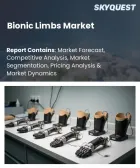
|
시장보고서
상품코드
2102093
바이오닉 의지 시장 규모, 점유율, 성장 분석 : 제품 유형별, 기술별, 용도별, 최종사용자별, 유통 채널별, 지역별 - 업계 예측(2026-2033년)Bionic Limbs Market Size, Share, and Growth Analysis, By Product Type (Bionic Arms, Bionic Hands), By Technology (Myoelectric, Neuro-Controlled), By Application, By End User, By Distribution Channel, By Region - Industry Forecast 2026-2033 |
||||||

세계의 바이오닉 의지 시장 규모는 2024년에 70억 3,000만 달러로 평가되었으며, 2025년 78억 달러에서 2033년까지 179억 9,000만 달러로 확대되어 예측 기간(2026-2033년) 동안 CAGR 11.0%로 성장할 것으로 전망됩니다.
세계 바이오닉 의지 시장에 대한 분석에 따르면, 보험사들이 장기적인 장애 관련 비용 절감 및 재활 성과 향상에 있어 첨단 의수·의족이 가져다주는 비용 절감 효과를 점점 더 인식함에 따라, 진화하는 보험 보상 제도가 큰 변화를 주도하고 있습니다. 이러한 변화로 인해 제조사들은 연구 개발 및 규모의 경제에 대한 투자를 촉진하게 되었고, 그 결과 단위당 비용이 감소하고 있습니다. 그 결과, 유럽 및 아시아 등 지역의 병원에서는 근전도식 팔꿈치·손목 유닛이 도입되어 의료 효율성이 제고되고 있습니다. 또한, 인공지능(AI)이 원시 센서 데이터를 사용자 친화적인 명령어로 변환함으로써 시장에 혁명을 일으키고 있습니다. 기계 학습을 통해 정밀한 동작과 실시간 적응 능력이 향상되어, 사용자는 장시간의 훈련 없이도 기기를 조작할 수 있게 됩니다. 이러한 통합으로 도입률이 향상되고, 임상에서의 피팅 및 제조 효율화가 도모되어, 궁극적으로는 신흥 시장의 증가하는 수요에 대응할 수 있게 됩니다.
세계 바이오닉 의지 시장의 성장요인
세계 바이오닉 의지 시장은 경량 복합재료 및 생체적합성 폴리머의 발전에 힘입어 성장하고 있으며, 이를 통해 기기의 무게가 대폭 경감되었습니다. 이러한 경량화로 인해 착용자의 편안함이 향상되고 피로가 최소화되어 보다 자연스러운 움직임이 가능해졌으며, 재활 단계에서의 조기 도입이 촉진되고 있습니다. 그 결과, 임상의들은 인체공학적으로 개선된 이러한 의족을 권장하게 되었으며, 이는 수요 증가와 시장 성장으로 이어지고 있습니다. 환자들 사이에서 이러한 폭넓은 수용에 더해, 다양한 활동 수준에서 바이오닉 의족의 적용 범위가 확대됨에 따라 지속적인 시장 성장이 뒷받침되고 있습니다. 또한, 경량화된 설계 덕분에 잔지부에 착용하기가 쉬워져 사용자의 자신감을 높이고 일상적인 사용을 촉진하고 있습니다.
세계 바이오닉 의지 시장의 제약요인
바이오닉 의지의 제조에는 고도의 정밀 공학, 첨단 센서 통합, 그리고 맞춤형 피팅이 필요한 복잡한 제조 기술이 수반되며, 이 모든 요소가 제조 비용의 급등을 초래하고 있습니다. 그 결과, 이러한 기기의 소매 가격은 높은 경향을 보이며, 충분한 보험 적용 범위나 자금을 확보하지 못한 환자들에게는 장벽이 되고 있습니다. 의료진은 더 저렴한 대안이 존재할 경우 이러한 고가의 솔루션을 권장하는 데 소극적인 경향이 있으며, 이는 시장 전반의 보급을 저해하고 있습니다. 이러한 경제적 과제는 특히 신흥 시장에 큰 영향을 미치며, 기술 발전에도 불구하고 성장을 저해하고 있습니다. 또한, 전문적인 사후 서비스로 인해 소유에 따른 장기적인 비용이 증가합니다.
세계 바이오닉 의지 시장의 동향
세계 바이오닉 의지 시장에서는 신경 통합 기술의 발전에 힘입어 큰 변화가 나타나고 있습니다. 고밀도 전극 어레이의 개량을 통해 의수와 말초신경계 간의 통신이 개선되어, 운동 의도를 미묘하게 파악하고 정확한 감각 피드백을 얻을 수 있게 되었습니다. 이러한 혁신으로 인해 외부 컨트롤러에 대한 의존도가 낮아짐에 따라 신체와의 일체감이 향상되고, 바이오닉 의지의 기능성도 높아지고 있습니다. 이러한 진화는 의수를 더욱 직관적으로 만들 뿐만 아니라, 보다 자연스러운 솔루션을 추구하는 환자들 사이에서 폭넓은 수용을 촉진하고 있으며, 그 결과 전 세계 임상 응용 분야에서 시장은 강력한 성장 궤도를 확립해 가고 있습니다.
자주 묻는 질문
목차
소개
조사 방법
주요 요약
시장 역학과 전망
주요 시장 인사이트
세계의 바이오닉 의지 시장 규모 : 제품 유형별
세계의 바이오닉 의지 시장 규모 : 기술별
세계의 바이오닉 의지 시장 규모 : 용도별
세계의 바이오닉 의지 시장 규모 : 최종사용자별
세계의 바이오닉 의지 시장 규모 : 유통 채널별
세계의 바이오닉 의지 시장 규모 : 지역별
경쟁 정보
주요 기업 개요
결론과 제안
KSM 26.08.03Global Bionic Limbs Market size was valued at USD 7.03 Billion in 2024 and is poised to grow from USD 7.8 Billion in 2025 to USD 17.99 Billion by 2033, growing at a CAGR of 11.0% during the forecast period (2026-2033).
Market insights for global bionic limbs reveal that evolving reimbursement frameworks are driving significant transformation, as insurers increasingly acknowledge the cost-saving benefits of advanced prosthetics in reducing long-term disability expenses and enhancing rehabilitation outcomes. This shift encourages manufacturers to invest in research and economies of scale, which lead to lower unit costs. Consequently, hospitals in regions such as Europe and Asia are adopting myoelectric elbow-wrist units, showcasing efficiency in care. Moreover, artificial intelligence is revolutionizing the market by converting raw sensor data into user-friendly commands. Machine learning enhances precise movements and real-time adaptation, facilitating user control without extensive training. This integration fosters increased adoption rates, allowing for streamlined clinical fitting and manufacturing, ultimately catering to the growing demand in emerging markets.
Top-down and bottom-up approaches were used to estimate and validate the size of the Global Bionic Limbs market and to estimate the size of various other dependent submarkets. The research methodology used to estimate the market size includes the following details: The key players in the market were identified through secondary research, and their market shares in the respective regions were determined through primary and secondary research. This entire procedure includes the study of the annual and financial reports of the top market players and extensive interviews for key insights from industry leaders such as CEOs, VPs, directors, and marketing executives. All percentage shares split, and breakdowns were determined using secondary sources and verified through Primary sources. All possible parameters that affect the markets covered in this research study have been accounted for, viewed in extensive detail, verified through primary research, and analyzed to get the final quantitative and qualitative data.
Global Bionic Limbs Market Segments Analysis
Global bionic limbs market is segmented by product type, technology, application, end user, distribution channel and region. Based on product type, the market is segmented into Bionic Arms, Bionic Hands, Bionic Legs, Bionic Feet and Others. Based on technology, the market is segmented into Myoelectric, Neuro-Controlled, Sensor-Based, AI-Enabled and Others. Based on application, the market is segmented into Upper Limb Prosthetics, Lower Limb Prosthetics, Rehabilitation, Military Rehabilitation and Others. Based on end user, the market is segmented into Hospitals, Prosthetic Clinics, Rehabilitation Centers, Defense Healthcare and Others. Based on distribution channel, the market is segmented into Direct Sales, Medical Device Distributors, Online Sales and Others. Based on region, the market is segmented into North America, Europe, Asia Pacific, Latin America and Middle East & Africa.
Driver of the Global Bionic Limbs Market
The global market for bionic limbs is being driven by advancements in lightweight composites and biocompatible polymers, which have greatly reduced the weight of these devices. This reduction enhances wearer comfort and minimizes fatigue, allowing for more natural movement and encouraging earlier adoption during rehabilitation. As a result, clinicians are recommending these ergonomically enhanced prosthetics, leading to increased demand and market growth. This broader acceptance among patients, combined with the broader applicability of bionic limbs across various activity levels, supports ongoing market expansion. Additionally, the lighter design facilitates easier attachment to residual limbs, thereby boosting user confidence and promoting everyday use.
Restraints in the Global Bionic Limbs Market
The production of bionic limbs involves complex fabrication techniques that demand high levels of precision engineering, advanced sensor integration, and personalized fitting, all of which contribute to significant manufacturing costs. As a result, the retail prices of these devices tend to be high, creating a barrier for patients without ample insurance coverage or adequate personal funds. Healthcare providers may be reluctant to recommend such expensive solutions when more affordable alternatives are available, which hinders overall market adoption. This economic challenge particularly impacts emerging markets and stifles growth, even in the face of technological progress. Additionally, specialized after-sales support increases the long-term costs associated with ownership.
Market Trends of the Global Bionic Limbs Market
The global bionic limbs market is witnessing a significant trend driven by advancements in neural integration technologies. Enhancements in high-density electrode arrays facilitate improved communication between prosthetic devices and the peripheral nervous system, allowing for nuanced capture of motor intent and precise sensory feedback. As these innovations reduce dependence on external controllers, they promote a greater sense of embodiment and enhance the functionality of bionic limbs. This evolution is not only making prosthetics more intuitive but also fostering wider acceptance among patients who seek more life-like solutions, thereby establishing a strong growth trajectory for the market in clinical applications globally.
Table of Contents
Introduction
- Objectives of the Study
- Market Definition & Scope
Research Methodology
- Research Process
- Secondary & Primary Data Methods
- Market Size Estimation Methods
Executive Summary
- Global Market Outlook
- Key Market Highlights
- Segmental Overview
- Competition Overview
Market Dynamics & Outlook
- Macro-Economic Indicators
- Drivers & Opportunities
- Restraints & Challenges
- Supply Side Trends
- Demand Side Trends
- Porters Analysis & Impact
- Competitive Rivalry
- Threat of Substitute
- Bargaining Power of Buyers
- Threat of New Entrants
- Bargaining Power of Suppliers
Key Market Insights
- Key Success Factors
- Market Impacting Factors
- Top Investment Pockets
- Ecosystem Mapping
- Market Attractiveness Index 2025
- PESTEL Analysis
- Regulatory Landscape
Global Bionic Limbs Market Size by Product Type & CAGR (2026-2033)
- Market Overview
- Bionic Arms
- Bionic Hands
- Bionic Legs
- Bionic Feet
- Others
Global Bionic Limbs Market Size by Technology & CAGR (2026-2033)
- Market Overview
- Myoelectric
- Neuro-Controlled
- Sensor-Based
- AI-Enabled
- Others
Global Bionic Limbs Market Size by Application & CAGR (2026-2033)
- Market Overview
- Upper Limb Prosthetics
- Lower Limb Prosthetics
- Rehabilitation
- Military Rehabilitation
- Others
Global Bionic Limbs Market Size by End User & CAGR (2026-2033)
- Market Overview
- Hospitals
- Prosthetic Clinics
- Rehabilitation Centers
- Defense Healthcare
- Others
Global Bionic Limbs Market Size by Distribution Channel & CAGR (2026-2033)
- Market Overview
- Direct Sales
- Medical Device Distributors
- Online Sales
- Others
Global Bionic Limbs Market Size & CAGR (2026-2033)
- North America (Product Type, Technology, Application, End User, Distribution Channel)
- US
- Canada
- Europe (Product Type, Technology, Application, End User, Distribution Channel)
- Germany
- Spain
- France
- UK
- Italy
- Rest of Europe
- Asia Pacific (Product Type, Technology, Application, End User, Distribution Channel)
- China
- India
- Japan
- South Korea
- Rest of Asia-Pacific
- Latin America (Product Type, Technology, Application, End User, Distribution Channel)
- Mexico
- Brazil
- Rest of Latin America
- Middle East & Africa (Product Type, Technology, Application, End User, Distribution Channel)
- GCC Countries
- South Africa
- Rest of Middle East & Africa
Competitive Intelligence
- Top 5 Player Comparison
- Market Positioning of Key Players, 2025
- Strategies Adopted by Key Market Players
- Recent Developments in the Market
- Company Market Share Analysis, 2025
- Company Profiles of All Key Players
- Company Details
- Product Portfolio Analysis
- Company's Segmental Share Analysis
- Revenue Y-O-Y Comparison (2023-2025)
Key Company Profiles
- Ossur hf.
- Company Overview
- Business Segment Overview
- Financial Updates
- Key Developments
- Ottobock SE & Co. KGaA
- Company Overview
- Business Segment Overview
- Financial Updates
- Key Developments
- Open Bionics Ltd.
- Company Overview
- Business Segment Overview
- Financial Updates
- Key Developments
- Mobius Bionics LLC
- Company Overview
- Business Segment Overview
- Financial Updates
- Key Developments
- Fillauer LLC
- Company Overview
- Business Segment Overview
- Financial Updates
- Key Developments
- Steeper Group
- Company Overview
- Business Segment Overview
- Financial Updates
- Key Developments
- Blatchford Group
- Company Overview
- Business Segment Overview
- Financial Updates
- Key Developments
- Coapt LLC
- Company Overview
- Business Segment Overview
- Financial Updates
- Key Developments
- Touch Bionics
- Company Overview
- Business Segment Overview
- Financial Updates
- Key Developments
- Esper Bionics Inc.
- Company Overview
- Business Segment Overview
- Financial Updates
- Key Developments
- BionIT Labs S.r.l.
- Company Overview
- Business Segment Overview
- Financial Updates
- Key Developments
- Atom Limbs
- Company Overview
- Business Segment Overview
- Financial Updates
- Key Developments
- Psyonic, Inc.
- Company Overview
- Business Segment Overview
- Financial Updates
- Key Developments
- Unlimited Tomorrow, Inc.
- Company Overview
- Business Segment Overview
- Financial Updates
- Key Developments
- Esper Hand
- Company Overview
- Business Segment Overview
- Financial Updates
- Key Developments
- Hanger, Inc.
- Company Overview
- Business Segment Overview
- Financial Updates
- Key Developments
- Endolite India Ltd.
- Company Overview
- Business Segment Overview
- Financial Updates
- Key Developments
- Protunix
- Company Overview
- Business Segment Overview
- Financial Updates
- Key Developments
- TASKA Prosthetics
- Company Overview
- Business Segment Overview
- Financial Updates
- Key Developments
- College Park Industries, Inc.
- Company Overview
- Business Segment Overview
- Financial Updates
- Key Developments


