|
시장보고서
상품코드
2128013
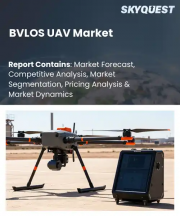
BVLOS 무인항공기(UAV) 시장 : 규모, 점유율, 성장, 산업 분석, 지역별 동향 및 예측(2026-2034년)BVLOS UAV Market Size, Share, Growth, Global Industry Analysis, Regional Insights and Forecast to 2026-2034 |
||||||

BVLOS 무인항공기(UAV) 시장의 성장 요인
세계 BVLOS 무인항공기(UAV) 시장은 2025년에 118억 4,000만 달러 규모에 달하고,2026년 130억 7,000만 달러에서 2034년에는 268억 2,000만 달러로 성장하여, 예측 기간 동안 연평균 성장률(CAGR) 9.4%를 나타낼 것으로 전망됩니다. 북미는 견조한 국방 지출, 드론 규제 정비, 민간 및 정부 부문에서의 도입 확대에 힘입어 2025년에는 34.29%의 점유율로 시장을 선도했습니다.
BVLOS UAV란 조종자의 직접 시야 범위 밖에서도 운용이 가능한 무인 항공기입니다. 이러한 시스템은 장거리 감시, 인프라 점검, 환경 모니터링, 물류, 긴급 대응, 국경 경비 및 군사 정보 수집 임무에서 점점 더 많이 활용되고 있습니다. 실시간 데이터 수집, 비행 지속 시간 연장, 자율 운용에 대한 수요 증가가 전 세계 시장 확대를 가속화하고 있습니다.
시장 개요
BVLOS UAV 업계는 제한적인 시범 프로젝트에서 대규모 상업 및 정부 기관의 도입으로 전환되고 있습니다. 자율 항행, 감지·회피 기술, 통신 시스템, 인공지능, 위성 통신의 발전으로 인해 더욱 안전하고 효율적인 장거리 운용이 가능해졌습니다.
또한 전 세계 규제 당국도 일상적인 BVLOS 운용을 지원하는 체계를 마련하고 있어, 이를 통해 사업자는 기존의 가시거리 내(VLOS) 제한을 넘어 드론의 활용 범위를 확대할 수 있게 되었습니다. 이러한 규제 측면의 진전으로 인해 물류, 유틸리티, 의료, 농업, 공공 안전, 국방 등의 분야에서 큰 비즈니스 기회가 창출되고 있습니다.
시장 동향
시장을 형성하는 가장 영향력 있는 동향 중 하나는 일상적인 BVLOS 운용의 정착입니다. 규제 당국은 실험적 승인 단계를 넘어, 상업 및 정부 기관의 드론 운용을 위한 영구적인 체계를 구축해 나가고 있습니다.
이러한 변화로 인해 제조업체, 운영사, 투자자 간의 신뢰가 높아지고 있을 뿐만 아니라, 광활한 지역에 걸친 드론의 대규모 전개가 가능해졌습니다. 업계에서는 운영 효율성을 높이기 위해 자율적인 임무 수행, 고도화된 공역 통합, 실시간 분석에 점점 더 집중하고 있습니다.
시장 성장 촉진요인
시장 성장의 주요 촉진요인은 장거리 감시 및 실시간 모니터링 기능에 대한 수요 증가입니다. 정부와 기업은 광범위한 지역을 커버하면서 지속적인 정보 및 운영 데이터를 제공할 수 있는 무인항공기(UAV)를 점점 더 필요로 하고 있습니다.
국경 감시, 중요 인프라 점검, 긴급 대응, 해상 감시, 환경 평가, 유틸리티 관리 등의 용도에서는 BVLOS 기능의 혜택을 크게 누리고 있습니다. 이러한 임무에는 기존의 시야 내 드론으로는 제공할 수 없는 장시간 비행 능력, 운용상의 유연성 및 효율적인 데이터 수집이 요구됩니다.
시장 제약 요인
높은 성장 잠재력이 있는 반면, 규제의 복잡성은 여전히 큰 과제로 남아 있습니다. 많은 국가에서 BVLOS 운용 허가를 받기 전에 광범위한 승인을 요구하고 있으며, 이는 상업적 확장을 제한하고 있습니다.
공역 통합, 교통 관리 시스템, 안전 인증 요건 및 운영 허가 절차가 광범위한 도입의 장벽이 되고 있습니다. 이러한 요인들로 인해 사업자의 비용이 증가하고, 도입까지의 기간이 길어지고 있습니다.
시장 기회
드론 배송 서비스, 공공시설 점검, 의료 물류, 긴급 대응 활동, 인프라 모니터링 분야에는 큰 기회가 존재합니다. 조직들은 기존 방식에 비해 운영상의 이점을 제공하는 재현성이 높고 확장성이 뛰어난 BVLOS 운영을 점점 더 요구하고 있습니다.
규제 환경이 더욱 지원적으로 변화함에 따라, 상업용 배송, 의료 물자 수송, 원격 자산 점검 및 공공 서비스 용도에서의 드론 대규모 도입이 가속화될 것으로 예측됩니다.
시장의 과제
신뢰성과 운항 안전성은 여전히 중요한 과제로 남아 있습니다. BVLOS 시스템은 안전한 통신 링크, 충돌 회피 기능 및 임무 연속성을 유지하면서 변화하는 환경 조건에서도 일관된 성능을 발휘해야 합니다.
운영 사업자와 규제 당국은 일상적인 BVLOS 운영 확대에 앞서 검증된 안전 실적을 요구하고 있으며, 장기적인 시장 성장을 위해서는 시스템의 시험, 검증 및 인증이 필수적입니다.
지역별 분석
북미
북미는 2025년에 40억 6,000만 달러 시장 규모를 기록하며 전 세계 BVLOS UAV 시장을 주도했습니다. 이 지역은 강력한 군사 조달 프로그램, 첨단 드론 기술 개발, 그리고 일상적인 BVLOS 운항을 지원하는 규제 측면의 발전이라는 혜택을 누리고 있습니다.
미국의 BVLOS UAV 시장은 2025년에 36억 6,000만 달러에 달하고, 2034년까지 연평균 성장률(CAGR) 8.3%로 성장할 것으로 전망됩니다.
유럽
유럽은 2025년에 세계 시장의 26.74%를 차지하며, 국방 현대화 프로그램, 드론 도입 확대, 규제 체계 정비가 진전된 것이 이를 뒷받침했습니다.
2025년, 프랑스 시장 매출은 약 4억 8,000만 달러, 러시아는 약 6억 8,000만 달러였습니다.
아시아태평양
아시아태평양은 예측 기간 동안 연평균 성장률(CAGR) 10.7%로 확대되어 가장 빠르게 성장하는 지역이 될 것으로 예측됩니다. 국방비 증가, 드론을 활용한 물류 네트워크 확대, 그리고 산업용도의 확대가 이러한 성장을 뒷받침하고 있습니다.
2025년, 중국 시장 매출은 약 9억 9,000만 달러에 달했으며, 일본은 4억 1,000만 달러를 기록했습니다.
기타 지역
라틴아메리카 및 중동 및 아프리카를 포함한 ‘기타 지역’은 2034년까지 연평균 성장률(CAGR) 8.9%로 성장할 것으로 전망됩니다.
중동 및 아프리카 시장은 2025년에 12억 2,000만 달러 규모에 이를 것으로 보이며, 국방력 현대화 및 국경 감시 수요에 힘입어 2034년까지 24억 9,000만 달러에 도달할 것으로 예측됩니다.
목차
제1장 서론
제2장 주요 요약
제3장 시장 역학
제4장 주요 인사이트
제5장 세계의 BVLOS 무인항공기(UAV) 시장 분석, 인사이트 및 예측(2021-2034년)
제6장 북미의 BVLOS 무인항공기(UAV) 시장 분석, 인사이트 및 예측(2021-2034년)
제7장 유럽의 BVLOS 무인항공기(UAV) 시장 분석, 인사이트 및 예측(2021-2034년)
제8장 아시아태평양의 BVLOS 무인항공기(UAV) 시장 분석, 인사이트 및 예측(2021-2034년)
제9장 기타 지역의 BVLOS 무인항공기(UAV) 시장 분석, 인사이트 및 예측(2021-2034년)
제10장 경쟁 분석
제11장 기업 개요
JHS 26.09.17Growth Factors of Beyond Visual Line of Sight (BVLOS) UAV Market
The global Beyond Visual Line of Sight (BVLOS) UAV market was valued at USD 11.84 billion in 2025 and is projected to grow from USD 13.07 billion in 2026 to USD 26.82 billion by 2034, registering a CAGR of 9.4% during the forecast period. North America dominated the market with a 34.29% share in 2025, supported by strong defense spending, evolving drone regulations, and increasing adoption across commercial and government sectors.
BVLOS UAVs are unmanned aerial vehicles capable of operating beyond the operator's direct visual range. These systems are increasingly used for long-distance surveillance, infrastructure inspection, environmental monitoring, logistics, emergency response, border security, and military intelligence missions. Growing demand for real-time data collection, longer flight endurance, and autonomous operations is accelerating market expansion globally.
Market Overview
The BVLOS UAV industry is transitioning from limited pilot projects toward large-scale commercial and governmental deployment. Advances in autonomous navigation, detect-and-avoid technologies, communication systems, artificial intelligence, and satellite connectivity are enabling safer and more efficient long-range operations.
Regulatory agencies worldwide are also creating frameworks to support routine BVLOS operations, allowing operators to expand drone usage beyond traditional visual line-of-sight restrictions. This regulatory progress is unlocking significant opportunities in sectors such as logistics, utilities, healthcare, agriculture, public safety, and defense.
Market Trends
One of the most influential trends shaping the market is the normalization of routine BVLOS operations. Regulatory authorities are moving beyond experimental approvals and creating permanent frameworks for commercial and governmental drone operations.
This shift is increasing confidence among manufacturers, operators, and investors while enabling scalable drone deployment across large geographic areas. The industry is increasingly focusing on autonomous mission execution, advanced airspace integration, and real-time analytics to improve operational efficiency.
Market Drivers
The primary driver of market growth is the rising demand for long-range surveillance and real-time monitoring capabilities. Governments and enterprises increasingly require UAVs capable of covering large areas while delivering continuous intelligence and operational data.
Applications such as border monitoring, critical infrastructure inspection, emergency response, maritime surveillance, environmental assessment, and utility management benefit significantly from BVLOS capabilities. These missions require endurance, operational flexibility, and efficient data collection that traditional line-of-sight drones cannot provide.
Market Restraints
Despite strong growth potential, regulatory complexity remains a major challenge. Many countries continue to require extensive approvals before permitting BVLOS operations, limiting commercial scalability.
Airspace integration, traffic management systems, safety certification requirements, and operational authorization processes create barriers for widespread deployment. These factors increase costs and extend implementation timelines for operators.
Market Opportunities
Significant opportunities exist in drone delivery services, utility inspections, healthcare logistics, emergency response operations, and infrastructure monitoring. Organizations are increasingly seeking repeatable and scalable BVLOS operations that provide operational advantages over conventional methods.
As regulations become more supportive, large-scale deployment of drones for commercial deliveries, medical supply transport, remote asset inspections, and public-service applications is expected to accelerate.
Market Challenges
Reliability and operational safety remain critical challenges. BVLOS systems must consistently perform under varying environmental conditions while maintaining secure communication links, collision avoidance capabilities, and mission continuity.
Operators and regulators require proven safety records before expanding routine BVLOS operations, making system testing, validation, and certification essential for long-term market growth.
Segment Analysis
By Platform Type
The fixed-wing segment dominated the market in 2025 due to superior endurance, long-range capability, and efficiency in surveillance missions. Fixed-wing UAVs are widely used in border security, maritime monitoring, and defense intelligence operations.
The hybrid VTOL UAV segment is expected to witness the fastest growth, recording a CAGR of 14.2% during the forecast period due to its ability to combine vertical takeoff capability with long-range flight performance.
By MTOW
The above 150 kg segment accounted for the largest market share in 2025, supported by demand for larger UAVs capable of carrying advanced sensors and payloads for extended missions.
The 25 kg to 150 kg segment is projected to grow at the highest CAGR of 11.5% through 2034.
By Component
The airframe & structures segment dominated the market in 2025 as structural design directly influences endurance, payload capacity, and mission reliability.
The navigation, surveillance & detect-and-avoid systems segment is expected to be the fastest-growing category with a CAGR of 12.5%.
By Application
Defense, ISR & tactical missions represented the largest application segment in 2025 due to increasing demand for intelligence, surveillance, reconnaissance, and border security operations.
The cargo, parcel & medical delivery segment is forecast to register the fastest growth, expanding at a CAGR of 15.4% during the forecast period.
By End User
The defense & military users segment dominated the market in 2025, driven by investments in long-range surveillance, battlefield intelligence, and maritime monitoring programs.
The commercial enterprises segment is expected to record the highest growth rate with a CAGR of 11.9% through 2034.
Regional Analysis
North America
North America led the global BVLOS UAV market with a valuation of USD 4.06 billion in 2025. The region benefits from strong military procurement programs, advanced drone technology development, and regulatory progress supporting routine BVLOS operations.
The U.S. BVLOS UAV market reached USD 3.66 billion in 2025 and is projected to grow at a CAGR of 8.3% through 2034.
Europe
Europe accounted for 26.74% of the global market in 2025, supported by defense modernization programs, increasing drone adoption, and evolving regulatory frameworks.
France generated approximately USD 0.48 billion in market revenue during 2025, while Russia accounted for around USD 0.68 billion.
Asia Pacific
Asia Pacific is expected to be the fastest-growing region, expanding at a CAGR of 10.7% during the forecast period. Rising defense spending, growing drone logistics networks, and expanding industrial applications are fueling growth.
China generated approximately USD 0.99 billion in revenue during 2025, while Japan recorded USD 0.41 billion.
Rest of the World
The Rest of the World, including Latin America and the Middle East & Africa, is projected to grow at a CAGR of 8.9% through 2034.
The Middle East & Africa market was valued at USD 1.22 billion in 2025 and is expected to reach USD 2.49 billion by 2034, driven by defense modernization and border surveillance requirements.
Competitive Landscape
The BVLOS UAV market is highly competitive and includes several established aerospace and defense companies. Key market participants include General Atomics Aeronautical Systems, Northrop Grumman, Airbus, Leonardo, Israel Aerospace Industries, Baykar Technologies, Elbit Systems, and Lockheed Martin.
These companies are focusing on autonomous flight systems, extended-endurance platforms, advanced payload integration, and expanded BVLOS certification programs to strengthen their market positions.
Conclusion
The BVLOS UAV market is poised for strong long-term growth as regulatory frameworks mature and demand for autonomous long-range operations increases. Growing adoption across defense, logistics, infrastructure inspection, healthcare delivery, and public safety applications will continue to drive investment in advanced UAV technologies. With the market expected to grow from USD 11.84 billion in 2025 to USD 26.82 billion by 2034, BVLOS UAVs are set to become a critical component of future surveillance, monitoring, and autonomous aviation ecosystems worldwide.
Growth Rate CAGR of 9.4% from 2026 to 2034
Segmentation By Platform Type
- Fixed-Wing
- Rotary-Wing
- Hybrid VTOL UAVs
By MTOW
- Less than 25 kg
- 25 kg to 150 kg
- Above 150 kg
By Component
- Airframe & Structures
- Propulsion & Power System
- Avionics & Flight Control System
- Communication, Command & Control (C2)
- Navigation, Surveillance & Detect-and-Avoid System
- Payloads & Mission Systems
- Others
By Application
- Infrastructure Inspection & Utilities
- Mapping & Surveying
- Precision Agriculture
- Cargo, Parcel & Medical Delivery
- Defense, ISR & Tactical Missions
- Others
By End User
- Commercial Enterprises
- Civil Government & Public Safety Agencies
- Defense & Military Users
By Region
- North America (By Platform Type, By MTOW, By Component, By Application, By End User, and By Country)
- U.S. (By Platform Type)
- Canada (By Platform Type)
- Europe (By Platform Type, By MTOW, By Component, By Application, By End User, and By Country)
- U.K. (By Platform Type)
- Germany (By Platform Type)
- France (By Platform Type)
- Italy (By Platform Type)
- Spain (By Platform Type)
- Russia (By Platform Type)
- Rest of Europe (By Platform Type)
- Asia Pacific (By Platform Type, By MTOW, By Component, By Application, By End User, and By Country)
- China (By Platform Type)
- India (By Platform Type)
- Japan (By Platform Type)
- South Korea (By Platform Type)
- Australia (By Platform Type)
- Rest of Asia Pacific (By Platform Type)
- Rest of the World (By Platform Type, By MTOW, By Component, By Application, By End User, and By Sub-Region)
- Latin America (By Platform Type)
- Middle East & Africa (By Platform Type)
Table of Content
1. Introduction
- 1.1. Research Scope
- 1.2. Market Segmentation
- 1.3. Research Methodology
- 1.4. Definitions and Assumptions
2. Executive Summary
3. Market Dynamics
- 3.1. Market Drivers
- 3.2. Market Restraints
- 3.3. Market Opportunities
- 3.4. Market Challenges
- 3.5. Market Trends
4. Key Insights
- 4.1. Key Industry Developments - Key Contracts & Agreements, Mergers, Acquisitions and Partnerships
- 4.2. Latest Technological Advancements
- 4.3. Porters Five Forces Analysis
- 4.4. Supply Chain Analysis
- 4.5. Qualitative Insights - Impact of Ongoing Conflicts on Global BVLOS UAV Market
5. Global BVLOS UAV Market Analysis, Insights and Forecast, 2021-2034
- 5.1. Key Findings / Definition
- 5.2. Market Analysis, Insights and Forecast - By Platform Type
- 5.2.1. Fixed-Wing
- 5.2.2. Rotary-Wing
- 5.2.3. Hybrid VTOL UAVs
- 5.3. Market Analysis, Insights and Forecast - By MTOW
- 5.3.1. Less than 25 kg
- 5.3.2. 25 kg to 150 kg
- 5.3.3. Above 150 kg
- 5.4. Market Analysis, Insights and Forecast - By Component
- 5.4.1. Airframe & Structures
- 5.4.2. Propulsion & Power System
- 5.4.3. Avionics & Flight Control System
- 5.4.4. Communication, Command & Control (C2)
- 5.4.5. Navigation, Surveillance & Detect-and-Avoid System
- 5.4.6. Payloads & Mission Systems
- 5.4.7. Others
- 5.5. Market Analysis, Insights and Forecast - By Application
- 5.5.1. Infrastructure Inspection & Utilities
- 5.5.2. Mapping & Surveying
- 5.5.3. Precision Agriculture
- 5.5.4. Cargo, Parcel & Medical Delivery
- 5.5.5. Defense, ISR & Tactical Missions
- 5.5.6. Others
- 5.6. Market Analysis, Insights and Forecast - By End User
- 5.6.1. Commercial Enterprises
- 5.6.2. Civil Government & Public Safety Agencies
- 5.6.3. Defense & Military Users
- 5.7. Market Analysis, Insights and Forecast - By Region
- 5.7.1. North America
- 5.7.2. Europe
- 5.7.3. Asia Pacific
- 5.7.4. Rest of the World
6. North America BVLOS UAV Market Analysis, Insights and Forecast, 2021-2034
- 6.1. Market Analysis, Insights and Forecast - By Platform Type
- 6.1.1. Fixed-Wing
- 6.1.2. Rotary-Wing
- 6.1.3. Hybrid VTOL UAVs
- 6.2. Market Analysis, Insights and Forecast - By MTOW
- 6.2.1. Less than 25 kg
- 6.2.2. 25 kg to 150 kg
- 6.2.3. Above 150 kg
- 6.3. Market Analysis, Insights and Forecast - By Component
- 6.3.1. Airframe & Structures
- 6.3.2. Propulsion & Power System
- 6.3.3. Avionics & Flight Control System
- 6.3.4. Communication, Command & Control (C2)
- 6.3.5. Navigation, Surveillance & Detect-and-Avoid System
- 6.3.6. Payloads & Mission Systems
- 6.3.7. Others
- 6.4. Market Analysis, Insights and Forecast - By Application
- 6.4.1. Infrastructure Inspection & Utilities
- 6.4.2. Mapping & Surveying
- 6.4.3. Precision Agriculture
- 6.4.4. Cargo, Parcel & Medical Delivery
- 6.4.5. Defense, ISR & Tactical Missions
- 6.4.6. Others
- 6.5. Market Analysis, Insights and Forecast - By End User
- 6.5.1. Commercial Enterprises
- 6.5.2. Civil Government & Public Safety Agencies
- 6.5.3. Defense & Military Users
- 6.6. Market Analysis, Insights and Forecast - By Country
- 6.6.1. U.S.
- 6.6.1.1. Market Analysis, Insights and Forecast - By Platform Type
- 6.6.1.1.1. Fixed-Wing
- 6.6.1.1.2. Rotary-Wing
- 6.6.1.1.3. Hybrid VTOL UAVs
- 6.6.1.1. Market Analysis, Insights and Forecast - By Platform Type
- 6.6.2. Canada
- 6.6.2.1. Market Analysis, Insights and Forecast - By Platform Type
- 6.6.2.1.1. Fixed-Wing
- 6.6.2.1.2. Rotary-Wing
- 6.6.2.1.3. Hybrid VTOL UAVs
- 6.6.2.1. Market Analysis, Insights and Forecast - By Platform Type
- 6.6.1. U.S.
7. Europe BVLOS UAV Market Analysis, Insights and Forecast, 2021-2034
- 7.1. Market Analysis, Insights and Forecast - By Platform Type
- 7.1.1. Fixed-Wing
- 7.1.2. Rotary-Wing
- 7.1.3. Hybrid VTOL UAVs
- 7.2. Market Analysis, Insights and Forecast - By MTOW
- 7.2.1. Less than 25 kg
- 7.2.2. 25 kg to 150 kg
- 7.2.3. Above 150 kg
- 7.3. Market Analysis, Insights and Forecast - By Component
- 7.3.1. Airframe & Structures
- 7.3.2. Propulsion & Power System
- 7.3.3. Avionics & Flight Control System
- 7.3.4. Communication, Command & Control (C2)
- 7.3.5. Navigation, Surveillance & Detect-and-Avoid System
- 7.3.6. Payloads & Mission Systems
- 7.3.7. Others
- 7.4. Market Analysis, Insights and Forecast - By Application
- 7.4.1. Infrastructure Inspection & Utilities
- 7.4.2. Mapping & Surveying
- 7.4.3. Precision Agriculture
- 7.4.4. Cargo, Parcel & Medical Delivery
- 7.4.5. Defense, ISR & Tactical Missions
- 7.4.6. Others
- 7.5. Market Analysis, Insights and Forecast - By End User
- 7.5.1. Commercial Enterprises
- 7.5.2. Civil Government & Public Safety Agencies
- 7.5.3. Defense & Military Users
- 7.6. Market Analysis, Insights and Forecast - By Country
- 7.6.1. U.K.
- 7.6.1.1. Market Analysis, Insights and Forecast - By Platform Type
- 7.6.1.1.1. Fixed-Wing
- 7.6.1.1.2. Rotary-Wing
- 7.6.1.1.3. Hybrid VTOL UAVs
- 7.6.1.1. Market Analysis, Insights and Forecast - By Platform Type
- 7.6.2. Germany
- 7.6.2.1. Market Analysis, Insights and Forecast - By Platform Type
- 7.6.2.1.1. Fixed-Wing
- 7.6.2.1.2. Rotary-Wing
- 7.6.2.1.3. Hybrid VTOL UAVs
- 7.6.2.1. Market Analysis, Insights and Forecast - By Platform Type
- 7.6.3. France
- 7.6.3.1. Market Analysis, Insights and Forecast - By Platform Type
- 7.6.3.1.1. Fixed-Wing
- 7.6.3.1.2. Rotary-Wing
- 7.6.3.1.3. Hybrid VTOL UAVs
- 7.6.3.1. Market Analysis, Insights and Forecast - By Platform Type
- 7.6.4. Italy
- 7.6.4.1. Market Analysis, Insights and Forecast - By Platform Type
- 7.6.4.1.1. Fixed-Wing
- 7.6.4.1.2. Rotary-Wing
- 7.6.4.1.3. Hybrid VTOL UAVs
- 7.6.4.1. Market Analysis, Insights and Forecast - By Platform Type
- 7.6.5. Spain
- 7.6.5.1. Market Analysis, Insights and Forecast - By Platform Type
- 7.6.5.1.1. Fixed-Wing
- 7.6.5.1.2. Rotary-Wing
- 7.6.5.1.3. Hybrid VTOL UAVs
- 7.6.5.1. Market Analysis, Insights and Forecast - By Platform Type
- 7.6.6. Russia
- 7.6.6.1. Market Analysis, Insights and Forecast - By Platform Type
- 7.6.6.1.1. Fixed-Wing
- 7.6.6.1.2. Rotary-Wing
- 7.6.6.1.3. Hybrid VTOL UAVs
- 7.6.6.1. Market Analysis, Insights and Forecast - By Platform Type
- 7.6.7. Rest of Europe
- 7.6.7.1. Market Analysis, Insights and Forecast - By Platform Type
- 7.6.7.1.1. Fixed-Wing
- 7.6.7.1.2. Rotary-Wing
- 7.6.7.1.3. Hybrid VTOL UAVs
- 7.6.7.1. Market Analysis, Insights and Forecast - By Platform Type
- 7.6.1. U.K.
8. Asia Pacific BVLOS UAV Market Analysis, Insights and Forecast, 2021-2034
- 8.1. Market Analysis, Insights and Forecast - By Platform Type
- 8.1.1. Fixed-Wing
- 8.1.2. Rotary-Wing
- 8.1.3. Hybrid VTOL UAVs
- 8.2. Market Analysis, Insights and Forecast - By MTOW
- 8.2.1. Less than 25 kg
- 8.2.2. 25 kg to 150 kg
- 8.2.3. Above 150 kg
- 8.3. Market Analysis, Insights and Forecast - By Component
- 8.3.1. Airframe & Structures
- 8.3.2. Propulsion & Power System
- 8.3.3. Avionics & Flight Control System
- 8.3.4. Communication, Command & Control (C2)
- 8.3.5. Navigation, Surveillance & Detect-and-Avoid System
- 8.3.6. Payloads & Mission Systems
- 8.3.7. Others
- 8.4. Market Analysis, Insights and Forecast - By Application
- 8.4.1. Infrastructure Inspection & Utilities
- 8.4.2. Mapping & Surveying
- 8.4.3. Precision Agriculture
- 8.4.4. Cargo, Parcel & Medical Delivery
- 8.4.5. Defense, ISR & Tactical Missions
- 8.4.6. Others
- 8.5. Market Analysis, Insights and Forecast - By End User
- 8.5.1. Commercial Enterprises
- 8.5.2. Civil Government & Public Safety Agencies
- 8.5.3. Defense & Military Users
- 8.6. Market Analysis, Insights and Forecast - By Country
- 8.6.1. China
- 8.6.1.1. Market Analysis, Insights and Forecast - By Platform Type
- 8.6.1.1.1. Fixed-Wing
- 8.6.1.1.2. Rotary-Wing
- 8.6.1.1.3. Hybrid VTOL UAVs
- 8.6.1.1. Market Analysis, Insights and Forecast - By Platform Type
- 8.6.2. Japan
- 8.6.2.1. Market Analysis, Insights and Forecast - By Platform Type
- 8.6.2.1.1. Fixed-Wing
- 8.6.2.1.2. Rotary-Wing
- 8.6.2.1.3. Hybrid VTOL UAVs
- 8.6.2.1. Market Analysis, Insights and Forecast - By Platform Type
- 8.6.3. India
- 8.6.3.1. Market Analysis, Insights and Forecast - By Platform Type
- 8.6.3.1.1. Fixed-Wing
- 8.6.3.1.2. Rotary-Wing
- 8.6.3.1.3. Hybrid VTOL UAVs
- 8.6.3.1. Market Analysis, Insights and Forecast - By Platform Type
- 8.6.4. South Korea
- 8.6.4.1. Market Analysis, Insights and Forecast - By Platform Type
- 8.6.4.1.1. Fixed-Wing
- 8.6.4.1.2. Rotary-Wing
- 8.6.4.1.3. Hybrid VTOL UAVs
- 8.6.4.1. Market Analysis, Insights and Forecast - By Platform Type
- 8.6.5. Australia
- 8.6.5.1. Market Analysis, Insights and Forecast - By Platform Type
- 8.6.5.1.1. Fixed-Wing
- 8.6.5.1.2. Rotary-Wing
- 8.6.5.1.3. Hybrid VTOL UAVs
- 8.6.5.1. Market Analysis, Insights and Forecast - By Platform Type
- 8.6.6. Rest of Asia Pacific
- 8.6.6.1. Market Analysis, Insights and Forecast - By Platform Type
- 8.6.6.1.1. Fixed-Wing
- 8.6.6.1.2. Rotary-Wing
- 8.6.6.1.3. Hybrid VTOL UAVs
- 8.6.6.1. Market Analysis, Insights and Forecast - By Platform Type
- 8.6.1. China
9. Rest of the World BVLOS UAV Market Analysis, Insights and Forecast, 2021-2034
- 9.1. Market Analysis, Insights and Forecast - By Platform Type
- 9.1.1. Fixed-Wing
- 9.1.2. Rotary-Wing
- 9.1.3. Hybrid VTOL UAVs
- 9.2. Market Analysis, Insights and Forecast - By MTOW
- 9.2.1. Less than 25 kg
- 9.2.2. 25 kg to 150 kg
- 9.2.3. Above 150 kg
- 9.3. Market Analysis, Insights and Forecast - By Component
- 9.3.1. Airframe & Structures
- 9.3.2. Propulsion & Power System
- 9.3.3. Avionics & Flight Control System
- 9.3.4. Communication, Command & Control (C2)
- 9.3.5. Navigation, Surveillance & Detect-and-Avoid System
- 9.3.6. Payloads & Mission Systems
- 9.3.7. Others
- 9.4. Market Analysis, Insights and Forecast - By Application
- 9.4.1. Infrastructure Inspection & Utilities
- 9.4.2. Mapping & Surveying
- 9.4.3. Precision Agriculture
- 9.4.4. Cargo, Parcel & Medical Delivery
- 9.4.5. Defense, ISR & Tactical Missions
- 9.4.6. Others
- 9.5. Market Analysis, Insights and Forecast - By End User
- 9.5.1. Commercial Enterprises
- 9.5.2. Civil Government & Public Safety Agencies
- 9.5.3. Defense & Military Users
- 9.6. Market Analysis, Insights and Forecast - By Country
- 9.6.1. Middle East & Africa
- 9.6.1.1. Market Analysis, Insights and Forecast - By Platform Type
- 9.6.1.1.1. Fixed-Wing
- 9.6.1.1.2. Rotary-Wing
- 9.6.1.1.3. Hybrid VTOL UAVs
- 9.6.1.1. Market Analysis, Insights and Forecast - By Platform Type
- 9.6.2. Latin America
- 9.6.2.1. Market Analysis, Insights and Forecast - By Platform Type
- 9.6.2.1.1. Fixed-Wing
- 9.6.2.1.2. Rotary-Wing
- 9.6.2.1.3. Hybrid VTOL UAVs
- 9.6.2.1. Market Analysis, Insights and Forecast - By Platform Type
- 9.6.1. Middle East & Africa
10. Competitive Analysis
- 10.1. Global Market Rank Analysis (2025)
- 10.2. Competitive Dashboard
11. Company Profiles
- 11.1. General Atomics Aeronautical Systems, Inc. (U.S.)
- 11.2. Northrop Grumman Corporation (U.S.)
- 11.3. Baykar Technologies (Turkiye)
- 11.4. Israel Aerospace Industries Ltd. (Israel)
- 11.5. Elbit Systems Ltd. (Israel)
- 11.6. Airbus SE (Netherlands)
- 11.7. Leonardo S.p.A. (Italy)
- 11.8. Turkish Aerospace Industries, Inc. (Turkiye)
- 11.9. Boeing Company / Insitu Inc. (U.S.)
- 11.10. AeroVironment, Inc. (U.S.)
- 11.11. Safran Electronics & Defense (France)
- 11.12. Lockheed Martin Corporation (U.S.)
- 11.13. Parrot Drones SAS (France)
- 11.14. Quantum-Systems GmbH (Germany)
- 11.15. Delair SAS (France)