

|
시장보고서
상품코드
2113289
독일의 당뇨병 관리 기기 : 시장 점유율 분석, 업계 동향과 통계, 성장 예측(2026-2031년)Germany Diabetes Devices - Market Share Analysis, Industry Trends & Statistics, Growth Forecasts (2026 - 2031) |
||||||
 Mordor Intelligence
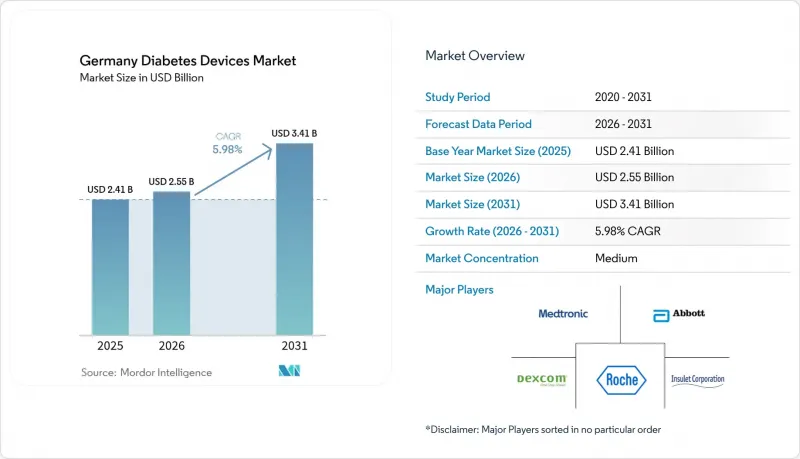
독일의 당뇨병 관리 기기 시장 규모는 2025년 24억 1,000만 달러에서 2026년에는 25억 5,000만 달러로 확대하며, 2026-2031년에 CAGR 5.98%로 추이하며, 2031년에는 34억 1,000만 달러에 달할 것으로 예측됩니다.
이 보고서는 기기별(모니터링 기기[자가혈당측정 및 연속 혈당 모니터링] 및 관리 기기[인슐린 펌프, 일회용 인슐린 펜, 인슐린 주사기, 재사용 가능한 펜용 카트리지, 제트 주사기]) 및 최종사용자별(재택 의료, 병원·진료소)로 분류되어 있습니다. 이 보고서에서는 상기 각 부문 시장 규모(달러)를 제시하고 있습니다.
독일 당뇨병 관리 기기 시장의 동향 및 인사이트
국가 당뇨병 전략에 기반한 플래시 CGM의 SHI(법정 건강보험) 적용
보험 적용 범위 확대로 인해 현재는 하루 3회 이상의 인슐린 주사가 필요한 제2형 당뇨병 환자, 인슐린 치료를 받고 있는 임신성 당뇨병 환자, 그리고 18세 미만의 모든 미성년자가 대상이 되고 있습니다. 제1형 당뇨병 성인 환자의 이용률은 2017년 31.1%에서 2021/2022년에는 75.4%로 급증했습니다. 이 정책은 가격 인하보다 접근성 향상을 중시하고 있으며, 기업은 연구개발(R&D)을 지속하면서 대상 범위를 확대할 수 있게 되었습니다. 보급률 상승은 센서, 송신기, 데이터 플랫폼에 대한 수요를 높여, 독일 당뇨병 관리 기기 시장에서 기술 주도형 성장을 지원하고 있습니다.
하이브리드형 폐쇄 루프 펌프의 보험 적용이 보급을 가속화
자동 인슐린 투여 기기에 대한 공적 보험 적용으로 인해 하루에 여러 번 주사해야 하는 방식에서 명확한 업그레이드 경로가 마련되었습니다. 입소메드(Ipsomed)사의 ‘mylife Loop’는 2024/25 회계연도에 독일 시장에서 80.8%의 매출 성장을 이끌었습니다. 임상 시험 결과, 저혈당 인식 장애가 있는 사용자의 경우 중증 저혈당이 76% 감소한 것으로 확인되었습니다. 기존 기업과 신규 진입 기업이 알고리즘 개선, 센서 착용 시간 연장, 도입 절차 간소화를 놓고 경쟁하는 가운데 시장 경쟁은 격화되고 있으며, 이는 독일 당뇨병 관리 기기 시장에 더욱 깊이를 더하고 있습니다.
MDR 재인증 지연으로 신제품 출시가 늦어지고 있다
기존 의료기기 중 새로운 EU 규제로의 전환을 완료한 곳은 10% 미만에 불과하며, 83%의 기업이 신제품 인증을 연기하고 있습니다. 감사에 시간이 소요됨에 따라 파이프라인 흐름이 제한되고, 인증 기관의 처리 능력이 확대될 때까지는 독일 당뇨병 관리 기기 시장의 혁신 모멘텀이 둔화될 것입니다.
부문 분석
모니터링 기기는 2025년에 기기 매출의 55.72%를 차지하며 연평균 성장률(CAGR) 7.41%로 확대되고 있으며, 이는 독일 당뇨병 관리 기기 시장 전체의 성장률을 상회하는 수치입니다. 플래시 시스템 및 소아용 기기에 대한 보험 적용 범위 확대가 판매량 증가를 지원하는 한편, 애보트(Abbott)사가 조만간 출시할 예정인 연속 케톤 센서 등의 플랫폼은 새로운 수입원의 가능성을 시사하고 있습니다(lovemylibre.com). 자가혈당측정은 새로 진단받은 환자에게 여전히 첫걸음이지만, SHI(법정 건강 보험)의 입찰로 인해 가격 압박이 지속되고 있습니다. 독일 당뇨병 관리 기기 시장에서 관리용 기기의 점유율은 44.28%를 차지하고 있으며, 하이브리드형 폐쇄 루프 펌프가 두 자릿수 대의 판매량 성장을 기록하며 이 비율을 끌어올리고 있습니다.
예측 분석이 치료에 점점 더 많이 활용되고 있습니다. ‘목표 범위내 체류 시간’ 지표는 망막병증 및 심혈관 질환의 위험 감소와 상관관계가 있습니다. ‘mylife YpsoPump’의 매출은 모니터와 펌프가 융합되어 거의 자율적인 루프 시스템으로 진화하고 있음을 보여줍니다. 센서의 정확도, 알고리즘의 고도화, 스마트폰 연동이 진전됨에 따라 독일의 당뇨병 관리 기기 시장은 간헐적인 검사에서 지속적인 클로즈드 루프 제어로 전환되고 있습니다.
기타 혜택:
- 엑셀 형식의 시장 예측(ME) 시트
- 3개월간의 애널리스트 지원
자주 묻는 질문
목차
제1장 서론
제2장 조사 방법
제3장 개요
제4장 시장 구도
제5장 시장 규모와 성장 예측
제6장 시장 지표
제7장 경쟁 구도
제8장 시장 기회와 향후 전망
KSA 26.08.25According to Mordor Intelligence, the Germany diabetes devices market size is expected to grow from USD 2.41 billion in 2025 to USD 2.55 billion in 2026 and is forecast to reach USD 3.41 billion by 2031 at 5.98% CAGR over 2026-2031.
This report is Segmented by Device (Monitoring Devices [Self-Monitoring Blood Glucose and Continuous Glucose Monitoring] and Management Devices [Insulin Pumps, Insulin Disposable Pens, Insulin Syringes, Cartridges in Reusable Pens, and Jet Injectors]), End User (Homecare and Hospital and Clinics). The Market Provides the Value (in USD) for the Above Segments.
Germany Diabetes Devices Market Trends and Insights
National Diabetes Strategy-driven SHI Reimbursement for Flash-CGM
Expanded reimbursement now covers type 2 patients needing >= 3 insulin injections daily, insulin-treated gestational diabetes, and all minors under 18. Usage among adults with type 1 diabetes jumped from 31.1% in 2017 to 75.4% in 2021/2022 . The policy emphasises access rather than price reduction, enabling firms to sustain R&D while broadening reach. Higher penetration lifts demand for sensors, transmitters and data platforms, reinforcing the Germany diabetes devices market's technology-led expansion.
Hybrid Closed-Loop Pump Reimbursement Accelerating Adoption
Statutory coverage for automated insulin delivery creates a clear upgrade path from multiple daily injections. Ypsomed's mylife Loop drove 80.8% sales growth in 2024/25 in Germany . Clinical studies record a 76% drop in severe hypoglycaemia for users with impaired awareness . Competition is intensifying as incumbents and newcomers race to refine algorithms, extend sensor wear time and simplify onboarding, adding depth to the Germany diabetes devices market.
MDR Recertification Backlog Slowing New Device Launches
Fewer than 10% of legacy devices have transitioned to the new EU regulation, and 83% of companies have postponed certification for new products. Lengthy audits restrict pipeline flow, dulling innovation momentum in the Germany diabetes devices market until notified-body capacity expands.
Other drivers and restraints analyzed in the detailed report include:
- Ageing, High-Insulin-Utilisation Population Base
- Digital-Health-App (DiGA) Law Boosting Connected Home Monitoring
- SHI Tendering Driving Test-Strip Price Compression
For complete list of drivers and restraints, kindly check the Table Of Contents.
Segment Analysis
Monitoring Devices captured 55.72% of device revenues in 2025 and is rising at a 7.41% CAGR, faster than the Germany diabetes devices market size overall. Expanded reimbursement for flash systems and paediatric coverage sustains volume gains, while platforms such as Abbott's forthcoming continuous ketone sensor hint at adjacent profit pools (lovemylibre.com). Self-monitoring blood glucose remains an entry point for newly diagnosed patients but endures compressing prices under SHI tenders. The Germany diabetes devices market share for management devices sits at 44.28%; hybrid closed-loop pumps are lifting this portion through double-digit unit growth.
Predictive insights increasingly inform therapy: time-in-range metrics correlate with lower retinopathy and cardiovascular risks. Sales of the mylife YpsoPump exemplify convergence of monitors and pumps into near-autonomous loops. As sensor accuracy, algorithm sophistication and smartphone integration improve, the Germany diabetes devices market is migrating from episodic testing toward continuous, closed-loop control.
Complete Report Scope:
- By Device
- Monitoring Devices
- Self-Monitoring Blood Glucose
- Glucometers
- Blood-Glucose Test Strips
- Lancets
- Continuous Glucose Monitoring
- Sensors
- Durables/Transmitters
- By CGM Type
- Self-Monitoring Blood Glucose
- Management Devices
- Insulin Pumps
- Tethered Pumps
- Patch Pumps
- Insulin Pens
- Disposable Pens
- Re-usable Pens & Cartridges
- Insulin Syringes
- Jet Injectors
- Insulin Pumps
- Monitoring Devices
- By End User
- Hospitals & Clinics
- Personal / Homecare
List of Companies Covered in this Report:
- Abbott Laboratories
- Roche
- Medtronic
- Dexcom
- Ascensia
- Lifescan
- Novo Nordisk
- Eli Lilly and Company
- Sanofi
- Insulet
- Tandem Diabetes Care
- Ypsomed
- AgaMatrix
- B. Braun
- Terumo
- Senseonics Holdings
- Owen Mumford
- DarioHealth Corp.
Additional Benefits:
- The market estimate (ME) sheet in Excel format
- 3 months of analyst support
TABLE OF CONTENTS
1 Introduction
- 1.1 Study Assumptions & Market Definition
- 1.2 Scope of the Study
2 Research Methodology
3 Executive Summary
4 Market Landscape
- 4.1 Market Overview
- 4.2 Market Drivers
- 4.2.1 National Diabetes Strategy-driven SHI Reimbursement for Flash-CGM
- 4.2.2 Hybrid Closed-Loop Pump Reimbursement Accelerating Adoption
- 4.2.3 Ageing, High-Insulin-Utilisation Population Base in Germany
- 4.2.4 Digital-Health-App (DiGA) Law Boosting Connected Home Monitoring
- 4.2.5 Baden-Wurttemberg Med-Tech Cluster Securing Local Supply
- 4.2.6 Bund-funded AI Projects for Automated Insulin Titration
- 4.3 Market Restraints
- 4.3.1 MDR Recertification Backlog Slowing New Device Launches
- 4.3.2 SHI Tendering Driving Test-Strip Price Compression
- 4.3.3 GDPR-linked Cloud-Data Privacy Concerns
- 4.3.4 Shortage of Diabetes Educators for Advanced Pump Training
- 4.4 Value / Supply-Chain Analysis
- 4.5 Regulatory Outlook (BfArM, G-BA, MDR)
- 4.6 Porter's Five Forces Analysis
- 4.6.1 Bargaining Power of Suppliers
- 4.6.2 Bargaining Power of Consumers
- 4.6.3 Threat of New Entrants
- 4.6.4 Threat of Substitutes
- 4.6.5 Intensity of Competitive Rivalry
5 Market Size & Growth Forecasts (Value)
- 5.1 By Device
- 5.1.1 Monitoring Devices
- 5.1.1.1 Self-Monitoring Blood Glucose
- 5.1.1.1.1 Glucometers
- 5.1.1.1.2 Blood-Glucose Test Strips
- 5.1.1.1.3 Lancets
- 5.1.1.2 Continuous Glucose Monitoring
- 5.1.1.2.1 Sensors
- 5.1.1.2.2 Durables/Transmitters
- 5.1.1.2.3 By CGM Type
- 5.1.1.1 Self-Monitoring Blood Glucose
- 5.1.2 Management Devices
- 5.1.2.1 Insulin Pumps
- 5.1.2.1.1 Tethered Pumps
- 5.1.2.1.2 Patch Pumps
- 5.1.2.2 Insulin Pens
- 5.1.2.2.1 Disposable Pens
- 5.1.2.2.2 Re-usable Pens & Cartridges
- 5.1.2.3 Insulin Syringes
- 5.1.2.4 Jet Injectors
- 5.1.2.1 Insulin Pumps
- 5.1.1 Monitoring Devices
- 5.2 By End User
- 5.2.1 Hospitals & Clinics
- 5.2.2 Personal / Homecare
6 Market Indicators
- 6.1 Type-1 Diabetes Population
- 6.2 Type-2 Diabetes Population
7 Competitive Landscape
- 7.1 Market Concentration
- 7.2 Market Share Analysis
- 7.3 Company Profiles (includes Global level Overview, Market level overview, Core Segments, Financials as available, Strategic Information, Market Rank/Share for key companies, Products & Services, and Recent Developments)
- 7.3.1 Abbott Diabetes Care
- 7.3.2 Roche Diagnostics
- 7.3.3 Medtronic PLC
- 7.3.4 Dexcom Inc.
- 7.3.5 Ascensia Diabetes Care
- 7.3.6 LifeScan
- 7.3.7 Novo Nordisk A/S
- 7.3.8 Eli Lilly and Company
- 7.3.9 Sanofi
- 7.3.10 Insulet Corporation
- 7.3.11 Tandem Diabetes Care
- 7.3.12 Ypsomed AG
- 7.3.13 AgaMatrix Inc.
- 7.3.14 B. Braun Melsungen AG
- 7.3.15 Terumo Corporation
- 7.3.16 Senseonics Holdings
- 7.3.17 Owen Mumford Ltd.
- 7.3.18 DarioHealth Corp.
8 Market Opportunities & Future Outlook
- 8.1 White-space & Unmet-Need Assessment


