

|
시장보고서
상품코드
2116694
인도네시아의 당뇨병 관리 기기 시장 : 점유율 분석, 업계 동향과 통계, 성장 예측(2026-2031년)Indonesia Diabetes Care Devices - Market Share Analysis, Industry Trends & Statistics, Growth Forecasts (2026 - 2031) |
||||||
 Mordor Intelligence
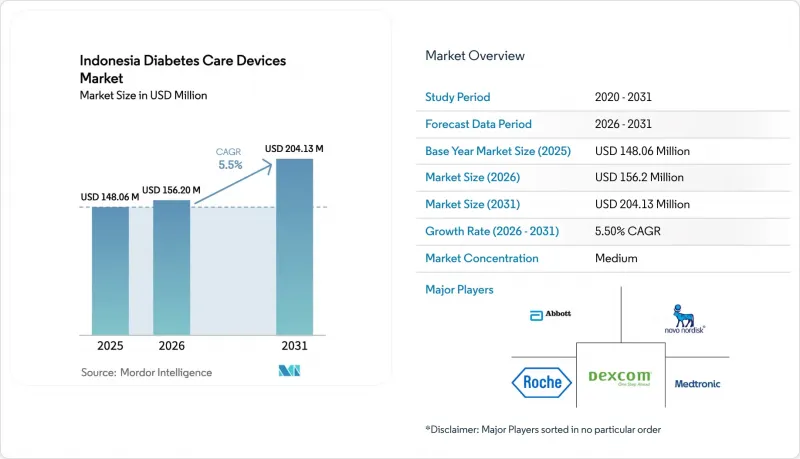
Mordor Intelligence에 의하면, 인도네시아의 당뇨병 관리 기기 시장 규모는 2025년에 1억 4,806만 달러로 평가되었고 2026년 1억 5,620만 달러에서 2031년까지 2억 413만 달러에 이를 것으로 예측되며, 예측 기간(2026-2031년) CAGR은 5.50%를 나타낼 전망입니다.
본 보고서는 관리 기기(인슐린 펌프, 인슐린 주사기, 기타), 모니터링 기기(자가 혈당 측정 및 연속 혈당 모니터링), 환자 유형별(1형 당뇨병, 2형 당뇨병, 기타), 최종 사용자별(병원 및 클리닉, 재택 간호, 기타)로 분류되어 있습니다. 시장 전망은 금액(달러) 기준으로 제시되어 있습니다.
인도네시아 당뇨병 관리 기기 시장 동향 및 인사이트
당뇨병 유병률 증가와 조기 진단
인도네시아는 당뇨병 환자 수에서 세계 5위를 차지하고 있습니다. 국제당뇨병연맹(IDF)의 데이터에 따르면, 2024년 현재 1,950만 명의 인도네시아인이 당뇨병을 앓고 있지만, 최근 선별 검진 정책이 시행되기 전까지는 환자의 70% 이상이 미진단 상태였습니다. 자바섬의 인구 밀집 지역에서 시행된 조기 발견 프로그램으로 인해, 보급형 혈당 측정기와 차세대 지속 혈당 모니터에 대한 수요가 증가하고 있습니다. 인구 고령화가 가속화되고 생활 방식이 도시 지역의 좌식 생활 패턴으로 전환됨에 따라, 인도네시아 당뇨병 관리 기기 시장에서는 기기 판매량 측면에서 지속적인 기준선 성장이 예상됩니다.
BPJS 국민건강보험의 적용 범위 확대
BPJS Kesehatan(국민건강보험)은 현재 국민 98%를 가입 대상으로 하고 있으며, 144개의 급여 대상 질환에 제1형 및 2형 당뇨병을 모두 포함하고 있습니다. 2025년에 입원 환자의 등급 구분이 폐지됨에 따라, 혈당 검사 용품의 본인 부담금은 더욱 낮아질 것입니다. 확실한 보험 급여 덕분에 개인의 구매력이 여전히 제한적인 지방의 클리닉에서도 검사 스트립의 보급이 촉진되고 있습니다.
수입 CGM 및 인슐린 펌프의 높은 비용
당뇨병 관련 1인당 평균 의료비는 2021년 323.8달러에서 2045년까지 431.7달러로 33% 증가할 것으로 예측됩니다. 수입된 폐쇄 루프형 인슐린 펌프 시스템의 소매 가격은 가구의 연간 의료비 예산 중앙값을 크게 상회하고 있어, 그 보급은 도시 지역의 부유층으로 제한되어 있습니다. BPJS는 필수 의료기기를 보장하고 있지만, 환급 상한액이 국제 정가에 미치지 못해 보급 규모가 제한되고 있습니다.
부문 분석
인도네시아 당뇨병 관리 기기 시장은 여전히 자가 혈당 측정 시스템이 주를 이루고 있지만, 소프트웨어를 활용한 인슐린 투여 플랫폼이 현재 가장 빠르게 성장하고 있는 부문입니다. 검사 스트립, 채혈 바늘, 기본적인 혈당 측정기가 판매량의 대부분을 차지하고 있으며, 혈당 관리를 위해 정기적인 손가락 채혈에 의존하는 BPJS 대상 수백만 명의 환자들이 이를 사용하고 있습니다. 국내 조립 제조업체들의 가격 인하와 헬스케어 앱과의 연동이 젊은 사용자들을 끌어들이고 있어, 연속 혈당 모니터링(CGM)의 보급이 진행되고 있습니다.
인슐린 펜, 펌프, 제트 주사기 등의 관리 기기는 예측 기간 동안 꾸준한 성장이 예상됩니다. 현지 충전 및 마무리 생산 능력 덕분에 아날로그 인슐린 카트리지의 입고 비용이 낮아지고 있는 한편, 애보트와 메드트로닉과 같은 제휴를 통해 자동화된 기저 및 보충 투여 알고리즘이 시장에 도입되고 있습니다. 보상 제도가 정기적으로 재검토됨에 따라, 보다 첨단 기기가 민간 전문 클리닉에서 공립 3차 의료 기관으로 이전될 것으로 예상되며, 이는 인도네시아 당뇨병 관리 기기 시장 전체의 수익 구성을 강화할 것입니다.
기타 혜택
- 엑셀 형식 시장 예측(ME) 시트
- 3개월간의 애널리스트 지원
자주 묻는 질문
목차
제1장 서론
제2장 조사 방법
제3장 개요
제4장 시장 역학
제5장 시장 세분화
제6장 시장 지표
제7장 경쟁 구도
제8장 시장 기회와 향후의 동향
JHS 26.09.01According to Mordor Intelligence, the Indonesia diabetes care devices market size was valued at USD 148.06 million in 2025 and estimated to grow from USD 156.2 million in 2026 to reach USD 204.13 million by 2031, at a CAGR of 5.50% during the forecast period (2026-2031).
This report is Segmented Into Management Devices (Insulin Pumps, Insulin Syringes, and More), Monitoring Devices (Self-Monitoring Blood Glucose and Continuous Glucose Monitoring), by Patient Type (Type-1 Diabetes, Type-2 Diabetes and More), by End User (Hospitals & Clinics, Home-Care Settings and More). The Market Forecasts are Provided in Terms of Value (USD).
Indonesia Diabetes Care Devices Market Trends and Insights
Rising Diabetes Prevalence & Earlier Diagnosis
Indonesia ranks fifth globally for diabetes cases. IDF data show 19.5 million Indonesians living with diabetes in 2024, yet over 70% of cases were undiagnosed until recent screening initiatives. Earlier detection programs in Java's densely populated provinces are elevating demand for entry-level glucometers as well as next-generation continuous glucose monitors. As demographic ageing accelerates and lifestyles shift toward urban sedentary patterns, the Indonesia diabetes care devices market is likely to see sustained baseline growth in device volumes.
Expansion of BPJS National Health Insurance Coverage
BPJS Kesehatan now enrolls 98% of citizens and lists both Type-1 and Type-2 diabetes among its 144 reimbursable conditions. The abolition of inpatient class distinctions in 2025 further lowers out-of-pocket costs for glucose testing supplies. Reliable reimbursement is fostering broader distribution of test strips into rural clinics where private purchasing power remains limited.
High Cost of Imported CGM & Insulin Pumps
Average per-capita diabetes spending is forecast to rise 33% from USD 323.8 in 2021 to USD 431.7 by 2045. Imported closed-loop pump systems retail well above annual median household healthcare budgets, constraining uptake to affluent urban cohorts. Although BPJS covers essential devices, reimbursement ceilings lag behind international list prices, limiting scale.
Other drivers and restraints analyzed in the detailed report include:
- Growing Adoption of SMBG Devices via Awareness Campaigns
- Shift to Insulin-Analog Pens Improving Adherence
- Fragmented Distribution & Counterfeit Strips
For complete list of drivers and restraints, kindly check the Table Of Contents.
Segment Analysis
The Indonesia diabetes care devices market continues to be anchored by self-monitoring blood glucose systems, yet software-enabled insulin delivery platforms are now the fastest-growing line. Test strips, lancets, and basic meters dominate unit volumes, serving millions of BPJS-covered patients who rely on routine finger-stick testing for glycemic control. Continuous glucose monitoring (CGM) adoption is advancing as domestic assemblers push prices down and health-app integration attracts younger users.
Management devices-including insulin pens, pumps, and jet injectors-are set for robust expansion throughout the forecast window. Local fill-finish capacity is lowering landed costs for analog insulin cartridges, while partnerships like Abbott-Medtronic bring automated basal-bolus algorithms to market. As reimbursement schedules are periodically revised, more sophisticated devices are expected to migrate from private specialty clinics into public tertiary hospitals, reinforcing the overall revenue mix of the Indonesia diabetes care devices market.
Complete Report Scope:
- Monitoring Devices
- Self-monitoring Blood Glucose Devices
- Glucometer Devices
- Test Strips
- Lancets
- Continuous Blood Glucose Monitoring
- Sensors
- Durables
- Self-monitoring Blood Glucose Devices
- Management Devices
- Insulin Pump
- Insulin Pump Device
- Insulin Pump Reservoir
- Infusion Set
- Insulin Syringes
- Insulin Cartridges
- Disposable Pens
- Insulin Pump
List of Companies Covered in this Report:
- Beckton Dickinson
- Medtronic
- Insulet
- Tandem Diabetes Care
- Ypsomed
- Novo Nordisk
- Sanofi
- Eli Lilly and Company
- Abbott Laboratories
- Roche
- Johnson & Johnson
- Dexcom
Additional Benefits:
- The market estimate (ME) sheet in Excel format
- 3 months of analyst support
TABLE OF CONTENTS
1 INTRODUCTION
- 1.1 Study Assumptions and Market Definition
- 1.2 Scope of the Study
2 RESEARCH METHODOLOGY
3 EXECUTIVE SUMMARY
4 MARKET DYNAMICS
- 4.1 Market Overview
- 4.2 Market Drivers
- 4.3 Market Restraints
- 4.4 Industry Attractiveness - Porter's Five Forces Analysis
- 4.4.1 Threat of New Entrants
- 4.4.2 Bargaining Power of Buyers/Consumers
- 4.4.3 Bargaining Power of Suppliers
- 4.4.4 Threat of Substitute Products
- 4.4.5 Intensity of Competitive Rivalry
5 MARKET SEGMENTATION
- 5.1 Monitoring Devices
- 5.1.1 Self-monitoring Blood Glucose Devices
- 5.1.1.1 Glucometer Devices
- 5.1.1.2 Test Strips
- 5.1.1.3 Lancets
- 5.1.2 Continuous Blood Glucose Monitoring
- 5.1.2.1 Sensors
- 5.1.2.2 Durables
- 5.1.1 Self-monitoring Blood Glucose Devices
- 5.2 Management Devices
- 5.2.1 Insulin Pump
- 5.2.1.1 Insulin Pump Device
- 5.2.1.2 Insulin Pump Reservoir
- 5.2.1.3 Infusion Set
- 5.2.2 Insulin Syringes
- 5.2.3 Insulin Cartridges
- 5.2.4 Disposable Pens
- 5.2.1 Insulin Pump
6 MARKET INDICATORS
- 6.1 Type-1 Diabetes population
- 6.2 Type-2 Diabetes population
7 COMPETITIVE LANDSCAPE
- 7.1 Company Profiles
- 7.1.1 Becton and Dickenson
- 7.1.2 Medtronic
- 7.1.3 Insulet
- 7.1.4 Tandem
- 7.1.5 Ypsomed
- 7.1.6 Novo Nordisk
- 7.1.7 Sanofi
- 7.1.8 Eli Lilly
- 7.1.9 Abbottt
- 7.1.10 Roche
- 7.1.11 Lifescan (Johnson &Johnson)
- 7.1.12 Dexcom
- 7.2 Company Share Analysis


