|
시장보고서
상품코드
2125537
독일의 통신 MNO 시장 : 점유율 분석, 업계 동향과 통계, 성장 예측(2026-2031년)Germany Telecom MNO - Market Share Analysis, Industry Trends & Statistics, Growth Forecasts (2026 - 2031) |
||||||
 Mordor Intelligence
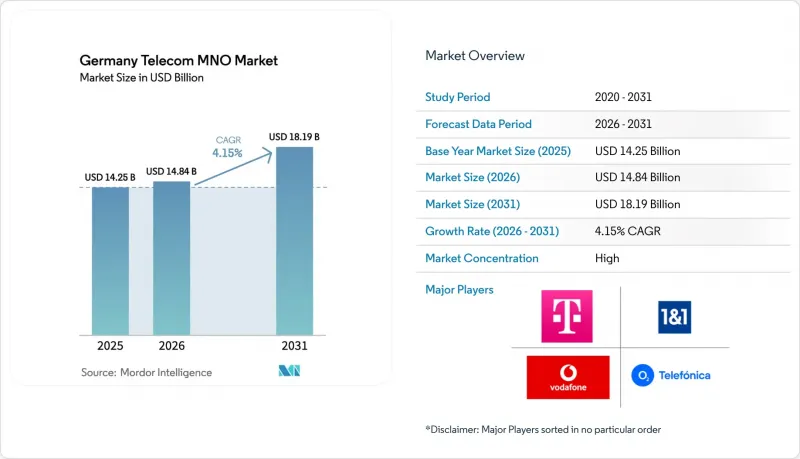
Mordor Intelligence에 의하면, 독일 통신 MNO 시장 규모는 2025년에 142억 5,000만 달러로 평가되었고 2026년 148억 4,000만 달러에서 2031년까지 181억 9,000만 달러에 이를 것으로 예측되며, 예측 기간(2026-2031년) CAGR은 4.15%를 나타낼 전망입니다.
본 보고서는 서비스 유형(음성 서비스, 데이터·인터넷 서비스, 메시징 서비스, IoT·M2M 서비스, OTT·유료 TV 서비스 등) 및 최종 사용자(기업, 일반 소비자)별로 분류되어 있습니다. 시장 예측은 금액(달러) 및 규모(가입자 수)의 관점에서 제시되어 있습니다.
독일 통신 MNO 시장 동향 및 인사이트
급증하는 FTTH 구축과 정부의 기가비트 목표
독일의 기가비트 전략은 2025년까지 전체 가구의 50%를 광섬유로 연결하고, 2030년까지 거의 전 지역을 커버하는 것을 목표로 하고 있으며, 이에 따라 적극적인 투자 프로그램이 추진되고 있습니다. 연방 정부의 ‘Gigabitforderung 2.0’ 보조금 30억 유로가 서비스가 미흡한 지역의 인프라 구축을 가속화하고 있습니다. 한편, 도이치 텔레콤은 2030년까지 광섬유 회선을 1,000만 회선 추가하는 것을 목표로 하고 있으며, 보다폰은 유니티미디어의 자산을 활용하여 2,500만 가구에 대한 연결을 목표로 하고 있습니다. 광섬유 커버리지가 넓은 통신 사업자는 멀티플레이 번들 및 프리미엄 기업용 회선을 통해 더 높은 ARPU를 확보하고 있습니다. 조기 구축으로 인해 광섬유 인프라가 잘 갖춰진 지역에 유리한 일시적인 시장 분할 현상이 발생하고 있지만, 장기적인 경쟁력을 유지하기 위해서는 전국적인 확장이 여전히 필수적입니다. 이 전략이 성공하면 데이터 통신량이 많은 서비스의 용량이 확대되어 독일 통신 MNO 시장의 수익 성장 궤도가 직접적으로 상승할 것입니다.
eMBB 수요를 견인하는 5G SA의 급속한 구축
3대 전국 통신 사업자는 모두 2024년까지 당초 99%라는 커버리지 목표를 달성할 예정이며, 도이치 텔레콤은 2025년까지 인구의 99%를 커버할 계획입니다. 스탠드얼론(SA) 아키텍처는 BMW, 메르세데스-벤츠, 폭스바겐의 각 거점에 위치한 제조 및 자동차 산업용 캠퍼스에 필수적인 저지연 네트워크 슬라이싱을 실현합니다. 또한 각 통신 사업자의 모바일 데이터 사용량이 전년 대비 30-34% 증가했고, 데이터 용량 확대 및 무제한 요금제를 통한 수익화가 진행됨에 따라 소비자들도 수익 증대에 기여하고 있습니다. 통신 사업자들은 레거시 코어 네트워크의 폐지와 주파수 대역 통합을 통해 효율성을 높이고, 기가바이트당 비용을 절감하는 동시에 사용자 경험을 향상시키고 있습니다. 따라서 5G SA를 조기에 도입한 사업자들은 지속적인 경쟁 우위를 확보하며 독일 통신 MNO 시장의 추가 성장을 가속하고 있습니다.
MDU 케이블 TV 법이 고정 수입을 급감시킨다.
2024년 7월 ‘Nebenkostenprivileg(부대비용 특례)’의 폐지로 인해 임대료 명세서에 케이블 TV 요금이 자동으로 포함되던 제도가 철폐되면서, 보다폰의 MDU 가입자 기반은 직접적인 경쟁에 노출되었고,가입자 수는 850만 건에서 400만 건으로 급감했습니다. 업계 전체에서 연간 약 8억 유로의 수익이 위기에 처해 있으며, 텔레 콜럼버스는 불과 몇 달 만에 TV 가입자의 40%를 잃었습니다. 넷플릭스, 아마존 프라임, 와이푸, 자투 등 스트리밍 플랫폼들은 네트워크 비용을 부담하지 않고도 동일한 가구를 놓고 경쟁하고 있어 가격 경쟁이 격화되고 있습니다. 사업자들은 시장 점유율을 지키기 위해 통합형 번들 내에서 TV의 위치를 재검토해야 하지만, 단기적으로는 해지율의 급증과 EBITDA의 감소가 지속될 가능성이 높습니다.
부문별 분석
데이터 및 인터넷 서비스는 2025년에 61억 5,000만 달러의 매출을 기록하며 독일 통신 MNO 시장 점유율의 43.12%를 차지했습니다. 동영상 스트리밍 및 기업용 클라우드 연결의 호조에 힘입어, 2031년까지의 연평균 성장률(CAGR)은 4.33%로 예측됩니다. 각 통신 사업자들은 모바일 데이터의 급증세를 보고하고 있습니다. 보다폰은 34% 증가한 18억 GB, 도이체 텔레콤은 30% 증가한 24억 GB, O2는 30억 GB를 넘어섰습니다. 한편, 유선 회선 이용량은 1,210억 GB를 넘어섰으며, 가구당 월평균 이용량은 275GB에 달했습니다. 5G 독립형(SA) 및 광섬유 업그레이드는 네트워크 슬라이스를 보장받기를 원하는 산업용 사용자들로부터 프리미엄 가격을 이끌어내는 차별화된 서비스 계층을 뒷받침하고 있습니다. 그 결과, 독일 통신 MNO 시장의 부문별 규모 확대는 기존 카테고리를 계속해서 상회할 전망입니다.
음성 서비스는 2025년에도 여전히 39억 1,000만 달러(점유율 27.45%)를 창출하고 있지만, OTT로의 전환과 2028년까지 예정된 2G 서비스 중단으로 인해 점차 축소될 것으로 예측됩니다. 텔레포니카 독일은 이미 통화의 80%를 VoLTE를 통해 라우팅하고 있으며, 도이치 텔레콤과 보다폰 양사도 주파수 대역을 5G로 재할당하고 있습니다. 2025년에 13억 6,000만 달러 규모에 달할 것으로 예상되는 IoT 및 M2M 서비스는 4.45%라는 가장 높은 연평균 성장률(CAGR)을 보이고 있으며, 이는 커넥티드 팩토리 및 자동차 텔레매틱스 분야에서 독일이 차지하는 선도적 위치를 반영합니다. 유료 TV 및 기타 부가가치 서비스는 스트리밍 서비스와의 직접적인 경쟁에 직면해 있지만, 로밍 및 도매 트래픽은 국제 여행의 회복에 따라 회복세를 보이고 있습니다. 데이터 중심 제품이 음성 통신을 앞지르면서, 전체 포트폴리오의 구성은 성장률이 높고 수익성 향상으로 이어지는 카테고리로 전환되고 있습니다.
기타 혜택:
- 엑셀 형식 시장 예측(ME) 시트
- 3개월간의 애널리스트 지원
자주 묻는 질문
목차
제1장 서론
제2장 조사 방법
제3장 주요 요약
제4장 시장 구도
제5장 시장 규모와 성장 예측
제6장 경쟁 구도
제7장 시장 기회와 향후 전망
JHS 26.09.11According to Mordor Intelligence, the Germany telecom MNO market size was valued at USD 14.25 billion in 2025 and estimated to grow from USD 14.84 billion in 2026 to reach USD 18.19 billion by 2031, at a CAGR of 4.15% during the forecast period (2026-2031).
This report is Segmented by Service Type (Voice Services, Data and Internet Services, Messaging Services, Iot and M2M Services, OTT and PayTV Services, and More), and End User (Enterprises, and Consumer). The Market Forecasts are Provided in Terms of Value (USD) and Volume (Subscribers).
Germany Telecom MNO Market Trends and Insights
Surging FTTH Build-out and Government Gigabit Targets
Germany's Gigabit Strategy requires 50% of premises to be fiber-connected by 2025 and near-universal coverage by 2030, spurring aggressive capital programs. EUR 3 billion in federal Gigabitforderung 2.0 subsidies accelerates builds in underserved districts, while Deutsche Telekom aims for 10 million additional fiber lines by 2030 and Vodafone leverages Unitymedia assets to pass 25 million homes. Operators with deeper fiber footprints command higher ARPU through multi-play bundles and premium enterprise links. Early deployments create temporary market fragmentation favoring fiber-rich localities, yet nationwide roll-out remains a prerequisite for long-term competitiveness. Successful execution directly lifts German telecom market revenue trajectories by expanding capacity for data-heavy services.
Rapid 5G SA Roll-outs Powering eMBB Demand
All three national carriers met initial 99% coverage targets by 2024, and Deutsche Telekom plans 99% population reach in 2025. Standalone architecture unlocks low-latency network slicing crucial for manufacturing and automotive campuses at BMW, Mercedes-Benz, and Volkswagen sites. Consumers are also driving revenue uplift as mobile data usage rose 30-34% year-over-year across operators, monetized via larger allowances and unlimited plans. Operators gain efficiency from retiring legacy cores and converging frequency layers, which lowers per-gigabyte costs while improving user experience. Early 5G SA adopters therefore secure durable competitive advantages and stimulate incremental German telecom market growth.
MDU Cable-TV Law Slashing Fixed Revenue
The July 2024 repeal of the Nebenkostenprivileg removed automatic inclusion of cable TV in rental bills, exposing Vodafone's MDU subscriber base to direct competition and slashing the cohort from 8.5 million to 4 million accounts. An estimated EUR 800 million in annual revenue is at risk sector-wide, with Tele Columbus losing 40% of TV customers in mere months. Streaming platforms such as Netflix, Amazon Prime, Waipu, and Zattoo now vie for the same households without bearing network costs, intensifying price pressure. Operators must reposition TV within convergent bundles to defend share, yet short-term churn spikes and EBITDA compression remain likely.
Other drivers and restraints analyzed in the detailed report include:
- Enterprise Digitalization and Campus-Network Uptake
- Fixed-Mobile Convergence Bundles Boosting ARPU
- Stringent Energy-Efficiency Rules Raising Capex
For complete list of drivers and restraints, kindly check the Table Of Contents.
Segment Analysis
Data and Internet Services delivered USD 6.15 billion in 2025, 43.12% of the German telecom market share, and are CAGR-forecast at 4.33% through 2031 on buoyant video streaming and enterprise cloud connectivity. Operators documented mobile data surges-Vodafone 34% to 1.8 billion GB, Deutsche Telekom 30% to 2.4 billion GB, and O2 beyond 3 billion GB-while fixed consumption surpassed 121 billion GB with average household loads of 275 GB monthly. 5G standalone and fiber upgrades underpin differentiated service tiers that fetch premium pricing from industrial users seeking network-slice guarantees. Consequently, German telecom market size gains at the segment level will continue to eclipse legacy categories.
Voice Services still produced USD 3.91 billion (27.45% share) in 2025, but OTT migration and planned 2G shutdowns by 2028 portend gradual contraction. Telefonica Deutschland already routes 80% of calls via VoLTE, and both Deutsche Telekom and Vodafone are reallocating spectrum to 5G. IoT and M2M Services, worth USD 1.36 billion in 2025, exhibit the fastest 4.45% CAGR, reflecting Germany's leadership in connected-factory and automotive telematics. Pay-TV and other value-added services face direct streaming competition, yet roaming and wholesale traffic are recovering alongside international travel. As data-centric products outpace voice, overall portfolio mix shifts toward higher-growth, margin-accretive categories.
Complete Report Scope:
- Overall Telecom Revenue and ARPU
- Service Type
- Voice Services
- Data and Internet Services
- Messaging Services
- IoT and M2M Services
- OTT and PayTV Services
- Other Service Types (VAS, Roaming And International Services, Enterprise And Wholesale Services, etc.)
- End-user
- Enterprises
- Consumer
List of Companies Covered in this Report:
- Deutsche Telekom
- Vodafone Germany
- O2 Telefonica Deutschland
- 1&1 AG
Additional Benefits:
- The market estimate (ME) sheet in Excel format
- 3 months of analyst support
TABLE OF CONTENTS
1 INTRODUCTION
- 1.1 Study Assumptions and Market Definition
- 1.2 Scope of the Study
2 RESEARCH METHODOLOGY
3 EXECUTIVE SUMMARY
4 Market Landscape
- 4.1 Market Overview
- 4.2 Regulatory And Policy Framework
- 4.3 Spectrum Landscape And Competitive Holdings
- 4.4 Telecom Industry Ecosystem
- 4.5 Macroeconomic And External Drivers
- 4.6 Porter's Five Forces Analysis
- 4.6.1 Competitive Rivalry
- 4.6.2 Threat of New Entrants
- 4.6.3 Bargaining Power of Suppliers
- 4.6.4 Bargaining Power of Buyers
- 4.6.5 Threat of Substitutes
- 4.7 Key MNO KPIs (2020-2025)
- 4.7.1 Unique Mobile Subscribers And Penetration Rate
- 4.7.2 Mobile Internet Users And Penetration Rate
- 4.7.3 SIM Connections by Access Technology And Penetration
- 4.7.4 Cellular IoT / M2M Connections
- 4.7.5 Broadband Connections (Mobile And Fixed)
- 4.7.6 ARPU (Average Revenue Per User)
- 4.7.7 Average Data Usage per Subscription (GB/month)
- 4.8 Market Drivers
- 4.8.1 Surging FTTH Build-out and Government Gigabit Targets
- 4.8.2 Rapid 5G SA Roll-outs Powering eMBB Demand
- 4.8.3 Enterprise Digitalization And Campus-Network Uptake
- 4.8.4 Fixed-Mobile Convergence Bundles Boosting ARPU
- 4.8.5 AI-based Network Automation Cutting OPEX (Under-the-radar)
- 4.8.6 Rising Spectrum-Sharing And Neutral-Host Models (Under-the-radar)
- 4.9 Market Restraints
- 4.9.1 MDU Cable-TV Law Slashing Fixed Revenue
- 4.9.2 Stringent Energy-Efficiency Rules Raising Capex
- 4.9.3 High Fibre And 5G Capex Burden on Challengers (Under-the-radar)
- 4.9.4 OTT Voice Migration Eroding Legacy Revenues (Under-the-radar)
- 4.10 Technological Outlook
- 4.11 Analysis of key business models in Telecom
- 4.12 Analysis of Pricing Models and Pricing
5 MARKET SIZE AND GROWTH FORECASTS (VALUE)
- 5.1 Overall Telecom Revenue and ARPU
- 5.2 Service Type
- 5.2.1 Voice Services
- 5.2.2 Data and Internet Services
- 5.2.3 Messaging Services
- 5.2.4 IoT and M2M Services
- 5.2.5 OTT and PayTV Services
- 5.2.6 Other Service Types (VAS, Roaming And International Services, Enterprise And Wholesale Services, etc.)
- 5.3 End-user
- 5.3.1 Enterprises
- 5.3.2 Consumer
6 COMPETITIVE LANDSCAPE
- 6.1 Market Concentration
- 6.2 Strategic Moves and Investments by key vendors, 2023-2025
- 6.3 Market share analysis for MNOs, 2024
- 6.4 MNO snapshot (subscribers, churn rate, ARPU, etc.)
- 6.5 Company Profiles* of MNOs (Includes Business Overview | Service Portfolio | Financials | Business Strategy and Recent Developments | SWOT Analysis)
- 6.5.1 Deutsche Telekom
- 6.5.2 Vodafone Germany
- 6.5.3 O2 Telefonica Deutschland
- 6.5.4 1&1 AG
7 MARKET OPPORTUNITIES AND FUTURE OUTLOOK
- 7.1 White-space And Unmet-Need Assessment