
|
시장보고서
상품코드
2125541
베트남의 통신 MNO : 시장 점유율 분석, 업계 동향 및 통계, 성장 예측(2026-2031년)Vietnam Telecom MNO - Market Share Analysis, Industry Trends & Statistics, Growth Forecasts (2026 - 2031) |
||||||
 Mordor Intelligence
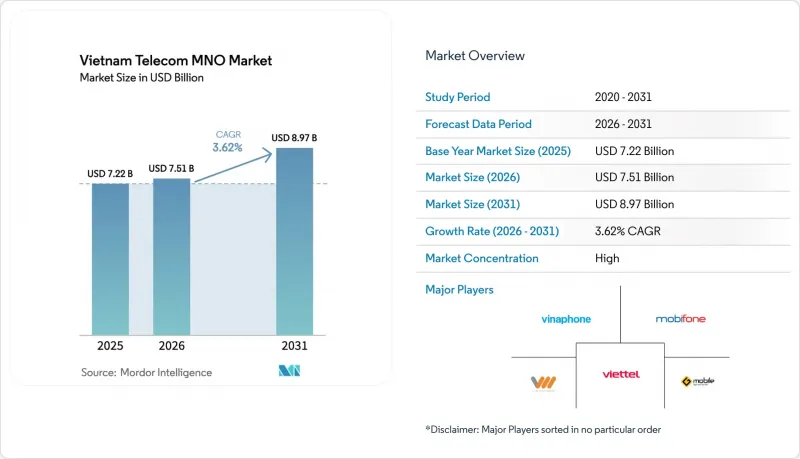
Mordor Intelligence에 의하면, 베트남의 통신 MNO 시장 규모는 2025년에 72억 2,000만 달러로 평가되었습니다. 2026년 75억 1,000만 달러에서 2031년까지 89억 7,000만 달러에 이를 것으로 예상되며, 예측 기간(2026-2031년) CAGR은 3.62%를 나타낼 전망입니다.
본 보고서는 서비스 유형(음성 서비스, 데이터·인터넷 서비스, 메시징 서비스, IoT·M2M 서비스, OTT·유료 TV 서비스 등), 최종 사용자(기업, 일반 소비자), 지역별로 분류되어 있습니다. 시장 예측은 금액(달러) 기준으로 제시되어 있습니다.
베트남의 통신 MNO 시장 동향 및 인사이트
4G·5G의 급속한 확산이 모바일 데이터의 급증 견인
통신 사업자들은 2025년 중반까지 약 11,000곳의 5G 기지국을 증설하여 인구 커버리지를 26%로 끌어올렸으며, 다운로드 속도의 중앙값을 전년 대비 4배로 높였습니다. Viettel사만 해도 2025년 초까지 550만 명 이상의 5G 사용자를 확보했으며, 12월까지 1,000만 명을 달성한다는 목표가 실현되어, 이 회사의 가입자 기준 5G 보급률은 10%에 근접했습니다. 그러나 5달러 미만의 무제한 데이터 요금제가 도입되어 있어, 이에 비례한 수익 증가는 기대하기 어렵고, 수익성은 데이터 사용량이 많은 고객을 품질 보증(QoS)이 적용된 단계별 요금제로 전환시키는 데 달려 있습니다. 결의안 제193호에 따르면, 통신 사업자가 2만 곳 이상의 기지국을 구축할 경우 설비비의 15%가 보조금으로 지급되도록 되어 있어, 이로 인해 업계는 실질적으로 용량 경쟁에 얽매이게 되고 감가상각비가 증가하게 됩니다. 수익 창출에서 가장 큰 성장 여지는 기업용 네트워크 슬라이스 분야에 있습니다. 이 분야에서는 지연 시간을 보장함으로써 일반 소비자 대상의 대중 시장에서는 실현 불가능한 프리미엄 가격으로 판매할 수 있게 됩니다. 따라서 베트남의 통신 MNO 시장은 여전히 규모 주도형이며, 경쟁 우위를 결정짓는 것은 신규 가입자 확보가 아니라 자본 효율성입니다.
광대역 보급을 가속화하는 국가 디지털 전환 프로그램
정책 입안자들은 2025년 말까지 모든 가구에 광섬유를 보급하는 것을 목표로 했지만, 주로 산간 지역에 위치한 약 540만 가구에서는 여전히 유선 접속을 이용할 수 없습니다. 회선당 개통 비용이 300달러를 초과하는 지역에서는 2025년까지 전체 트래픽의 절반을 IPv6로 처리하라는 정부의 지침에 힘입어 모바일 광대역이 실용적인 대안으로 기능하고 있습니다. 통신 사업자들은 이 요건을 준수하기 위해 코어 네트워크를 업그레이드했으며, 그 결과 IoT 엔드포인트 도입에 드는 추가 비용도 절감되었습니다. 그 결과, 베트남의 통신 MNO 시장에는 제2의 성장 동력이 생겨나고 있습니다. 이는 광섬유 지원이 가능한 신축 건물에는 신뢰성 높은 모바일 백업도 필요할 뿐만 아니라, 중소기업이 광회선에 투자하기 전에 4G나 5G 고정 무선 회선을 도입하는 경우가 많기 때문입니다. 기업용 광대역 보급률 향상은 클라우드 ERP 및 공급망 관리 도구에 대한 수요로 이어지며, 소비자 대상 가격 경쟁의 영향을 받지 않는 지속적인 트래픽을 창출하고 있습니다.
치열해지는 가격 경쟁이 ARPU를 압박
2024년에는 5달러 미만의 4G 무제한 요금제가 업계 표준이 되었으며, 2025년 중반까지 후불 요금제 가입자 5명 중 2명 이상이 이러한 요금제로 전환했습니다. Viettel의 경우, 매출이 확대되었음에도 불구하고 네트워크 밀도 향상에 따른 운영 비용 증가가 매출 증가를 상회하여 EBITDA 마진이 하락했습니다. 경쟁사들은 가입자의 해지를 초래할 것을 우려하여 요금 인상에 나서지 못하고 있습니다. 해지율은 여전히 매월 한 자릿수 초반에 머물고 있지만, 어느 사업자가 암묵적인 가격 상한선을 깨뜨리면 급증할 우려가 있습니다. 통신 속도를 보장하는 프리미엄 요금제의 시범 도입은 이용률이 5% 미만에 그쳐 여전히 틈새 시장 수준에 머물고 있습니다. 이는 차별화된 서비스 품질 전략이 정착되기까지 시간이 걸린다는 점을 시사합니다. 따라서 통신 사업자가 확실한 통신 경험에 대해 고객이 상당한 추가 요금을 지불할 것임을 입증하기 전까지는 베트남의 통신 MNO 시장은 1기가바이트당 수익 압박에 계속 노출될 것입니다.
부문별 분석
2025년 수익 중 데이터·인터넷 서비스가 48.62%를 차지하여, 베트남의 통신 MNO 시장에서 모바일 브로드밴드가 음성 통신을 대신해 주요 수익원이 되었음이 부각되었습니다. 같은 해 통화 시간은 약 8% 감소하여, 소비자들이 OTT 통화 도구로 전환하고 있는 실태를 반영하고 있습니다. 메시징 수익은 전체의 3% 미만을 기록한 반면, OTT 동영상 및 유료 TV 플랫폼은 컨텐츠 저작권료가 가입비의 최대 절반을 차지하기 때문에 실질적인 수익원이라기보다는 차별화의 수단으로 작용하고 있습니다. 전용 인터넷 접속에서 SD-WAN에 이르는 기업용 접속 서비스는 다국적 기업들이 베트남에 지역 공급망 거점을 마련함에 따라 현재 한 자릿수 중반의 성장률을 보이고 있습니다. 이러한 상황에서 산업용 IoT 연결은 여전히 시장 점유율이 작지만, 2031년까지 연평균 성장률(CAGR) 4.12%로 확대되고 있어 베트남의 통신 MNO 시장 전체의 성장 궤적을 크게 상회하고 있습니다.
롱테일 기회는 네트워크 용량을 플랫폼 비즈니스로 전환하는 데 있습니다. 통신 사업자들은 2025년까지 전국 규모의 NB-IoT 커버리지를 구축했으며, 이미 200만 대의 스마트 계량기를 연결해 놓았는데, 이는 유틸리티 및 물류 업계에 있어 모범 사례가 되고 있습니다. 로밍 수익은 해외 여행 회복의 혜택을 받아, 팬데믹으로 인한 장벽이 해소된 2024년에는 두 자릿수 성장을 기록했습니다. 향후 성장의 핵심은 엣지 컴퓨팅과 통신 연결을 결합하는 데 있습니다. 이를 통해 단순한 데이터 통신량 판매에서 매니지드 서비스로의 전환이 가능해집니다. 소비자 대상 음성 통화 및 SMS 이용이 더욱 감소하는 가운데, 베트남의 통신 MNO 시장이 지속적인 매출 건전성을 유지하기 위해서는 데이터와 IoT를 기반으로 한 다양한 서비스군이 필수적입니다.
기타 혜택 :
- 엑셀 형식 시장 예측(ME) 시트
- 3개월간의 애널리스트 지원
자주 묻는 질문
목차
제1장 서론
제2장 조사 방법
제3장 주요 요약
제4장 시장 구도
제5장 시장 규모 및 성장 예측
제6장 경쟁 구도
제7장 시장 기회 및 향후 전망
KTH 26.09.16According to Mordor Intelligence, the Vietnam telecom MNO market size was valued at USD 7.22 billion in 2025 and was estimated to grow from USD 7.51 billion in 2026 to reach USD 8.97 billion by 2031, at a CAGR of 3.62% during the forecast period (2026-2031).
This report is Segmented by Service Type (Voice Services, Data and Internet Services, Messaging Services, Iot and M2M Services, OTT and PayTV Services, and More), End-User (Enterprises, and Consumer), and Geography. The Market Forecasts are Provided in Terms of Value (USD).
Vietnam Telecom MNO Market Trends and Insights
Rapid 4G and 5G Rollout Driving Mobile-Data Surge
Operators added about 11,000 5G sites by mid-2025, lifting population coverage to 26% and quadrupling median download speeds compared with the prior year. Viettel alone enrolled more than 5.5 million 5G users by early 2025, and its target of 10 million by December would push 5G penetration of its base toward 10%. Unlimited data plans priced below USD 5, however, prevent proportional revenue gains, so profitability depends on shifting heavy-usage customers onto tiered quality-of-service bundles. Resolution 193 subsidizes 15% of the equipment bill once a carrier deploys at least 20,000 sites, effectively locking the industry into a capacity race that elevates depreciation charges. The highest monetization upside sits in enterprise network slices, where guaranteed latency sells at a premium that is not feasible in the consumer mass market. The Vietnam telecom MNO market therefore remains scale-driven, with capital efficiency, rather than new subscriber acquisition, defining competitive advantage.
National Digital Transformation Program Accelerating Broadband Uptake
Policymakers aim for universal household fiber by end-2025, yet roughly 5.4 million homes, mainly in mountainous areas, still lack wired access. Where trenching costs exceed USD 300 per line, mobile broadband stands in as the practical substitute, supported by the government mandate that half of all traffic run over IPv6 by 2025. Operators upgraded core networks to comply, incidentally lowering incremental costs of onboarding IoT endpoints. The Vietnam telecom MNO market consequently gains a second growth engine because every new fiber-ready premise also requires reliable mobile back-up, and small businesses often adopt 4G or 5G fixed-wireless links before investing in optical connections. Higher enterprise broadband penetration translates into demand for cloud ERP and supply-chain tools, creating recurring traffic that is immune to consumer price wars.
Intensifying Price Wars Compressing ARPU
Unlimited 4G plans below USD 5 became the industry norm in 2024, and by mid-2025 more than two in five postpaid accounts had switched to these tariffs. Viettel's EBITDA margin slipped even as revenue expanded because operating costs for a denser network outpaced top-line gains. Competitors hesitate to raise prices for fear of triggering subscriber churn, which still sits in the low single digits each month but would jump if any operator broke the informal pricing ceiling. Experiments with speed-guaranteed premium tiers remain niche at under 5% take-up, suggesting that a differentiated quality-of-service strategy will take time to gain traction. The Vietnam telecom MNO market therefore remains exposed to a revenue-per-gigabyte squeeze until carriers prove customers will pay meaningfully more for assured experience.
Other drivers and restraints analyzed in the detailed report include:
- Rising Smartphone Affordability Boosting Data Consumption
- Government-Backed Industrial IoT Initiatives in Manufacturing Parks
- High Spectrum Fees and Delayed Refarming Cycles
For complete list of drivers and restraints, kindly check the Table Of Contents.
Segment Analysis
Data and internet services captured 48.62% of 2025 revenue, underscoring how mobile broadband displaced voice as the primary cash engine inside the Vietnam telecom MNO market. Minutes of use fell by roughly 8% that same year, mirroring consumer migration to over-the-top calling tools. Messaging revenue dropped below 3% of the pie, while OTT video and pay-TV platforms became differentiation levers rather than material profit centers because content rights absorb up to half of subscription fees. Enterprise connectivity formats, from dedicated internet access to SD-WAN, now grow at mid-single-digit rates due to multinational firms anchoring regional supply chains in Vietnam. In this context, industrial IoT connections, though still a small share, expand at 4.12% CAGR through 2031, well ahead of the overall Vietnam telecom MNO market trajectory.
The long-tail opportunity lies in turning network capacity into platform plays. Operators built nationwide NB-IoT coverage by 2025 and already link two million smart meters, demonstrating a template for utilities and logistics. Roaming revenue benefited from the rebound in outbound tourism, increasing double digits in 2024 once pandemic barriers vanished. Future upside centers on bundling edge compute with connectivity, which transforms simple megabyte sales into managed services. As consumer voice and SMS decline further, sustained top-line health for the Vietnam telecom MNO market will rely on a diverse service stack anchored in data and IoT.
Complete Report Scope:
- Overall Telecom Revenue and ARPU
- Service Type
- Voice Services
- Data and Internet Services
- Messaging Services
- IoT and M2M Services
- OTT and PayTV Services
- Other Services (VAS, Roaming and International Services, Enterprise and Wholesale Services, etc.)
- End-User
- Enterprises
- Consumer
List of Companies Covered in this Report:
- Viettel Group
- Vinaphone
- Mobifone Corporation
- Vietnamobile
- Gmobile
Additional Benefits:
- The market estimate (ME) sheet in Excel format
- 3 months of analyst support
TABLE OF CONTENTS
1 INTRODUCTION
- 1.1 Study Assumptions and Market Definition
- 1.2 Scope of the Study
2 RESEARCH METHODOLOGY
3 EXECUTIVE SUMMARY
4 MARKET LANDSCAPE
- 4.1 Market Overview
- 4.2 Regulatory and Policy Framework
- 4.3 Spectrum Landscape and Competitive Holdings
- 4.4 Telecom Industry Ecosystem
- 4.5 Macroeconomic and External Drivers
- 4.6 Porter's Five Forces Analysis
- 4.6.1 Competitive Rivalry
- 4.6.2 Threat of New Entrants
- 4.6.3 Bargaining Power of Suppliers
- 4.6.4 Bargaining Power of Buyers
- 4.6.5 Threat of Substitutes
- 4.7 Key MNO KPIs (2020-2025)
- 4.7.1 Unique Mobile Subscribers and Penetration Rate
- 4.7.2 Mobile Internet Users and Penetration Rate
- 4.7.3 SIM Connections by Access Technology and Penetration
- 4.7.4 Cellular IoT and M2M Connections
- 4.7.5 Broadband Connections (Mobile and Fixed)
- 4.7.6 ARPU (Average Revenue Per User)
- 4.7.7 Average Data Usage per Subscription (GB/month)
- 4.8 Market Drivers
- 4.8.1 Rapid 4G and 5G Rollout Driving Mobile-Data Surge
- 4.8.2 National Digital Transformation Program Accelerating Broadband Uptake
- 4.8.3 Rising Smartphone Affordability Boosting Data Consumption
- 4.8.4 Government-Backed Industrial IoT Initiatives in Manufacturing Parks
- 4.8.5 Cross-Border E-Commerce Traffic Spurring Data Demand Along Logistics Corridors
- 4.8.6 Open RAN Trials Reducing Rural Coverage Cost Structures
- 4.9 Market Restraints
- 4.9.1 Intensifying Price Wars Compressing ARPU
- 4.9.2 High Spectrum Fees and Delayed Refarming Cycles
- 4.9.3 Slow Fiber Backhaul Deployment in Mountainous Provinces
- 4.9.4 Draft Data-Localization Rules Elevating Edge Infrastructure CAPEX
- 4.10 Technological Outlook
- 4.11 Analysis of Key Business Models in Telecom
- 4.12 Analysis of Pricing Models and Pricing
5 MARKET SIZE AND GROWTH FORECASTS (VALUE)
- 5.1 Overall Telecom Revenue and ARPU
- 5.2 Service Type
- 5.2.1 Voice Services
- 5.2.2 Data and Internet Services
- 5.2.3 Messaging Services
- 5.2.4 IoT and M2M Services
- 5.2.5 OTT and PayTV Services
- 5.2.6 Other Services (VAS, Roaming and International Services, Enterprise and Wholesale Services, etc.)
- 5.3 End-User
- 5.3.1 Enterprises
- 5.3.2 Consumer
6 COMPETITIVE LANDSCAPE
- 6.1 Market Concentration
- 6.2 Strategic Moves and Investments by Key Vendors, 2023-2025
- 6.3 Market Share Analysis for MNOs, 2025
- 6.4 Product Benchmarking Analysis for Mobile Network Services
- 6.5 MNO Snapshot (Subscribers, Churn Rate, ARPU, etc.)
- 6.6 Company Profiles of MNOs (Includes Business Overview, Service Portfolio, Financials, Business Strategy and Recent Development, SWOT Analysis)
- 6.6.1 Viettel Group
- 6.6.2 Vinaphone
- 6.6.3 Mobifone Corporation
- 6.6.4 Vietnamobile
- 6.6.5 Gmobile
7 MARKET OPPORTUNITIES AND FUTURE OUTLOOK
- 7.1 White-Space and Unmet-Need Assessment