

|
시장보고서
상품코드
2064458
ASEAN의 기계, 전기, 배관(MEP) 서비스 시장 : 시장 점유율 분석, 업계 동향 및 통계, 성장 예측(2026-2031년)ASEAN Mechanical, Electrical, And Plumbing (MEP) Services - Market Share Analysis, Industry Trends & Statistics, Growth Forecasts (2026 - 2031) |
||||||
 Mordor Intelligence
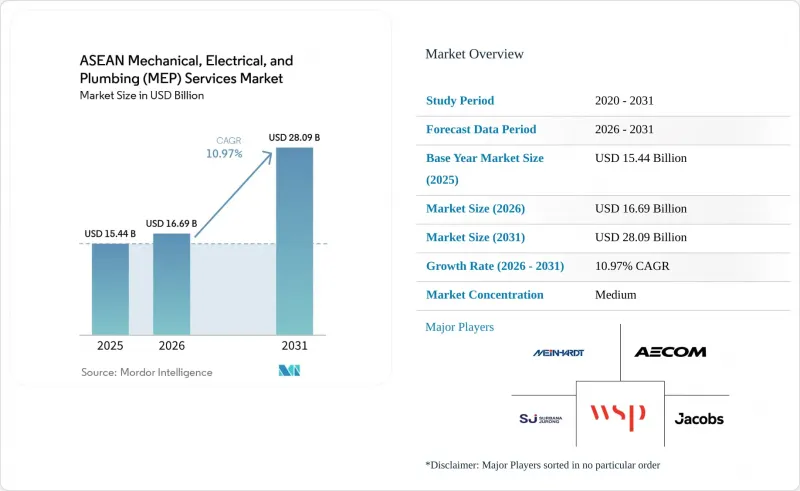
Mordor Intelligence에 의하면, ASEAN의 기계, 전기, 배관(MEP) 서비스 시장 규모는 2025년 154억 4,000만 달러로 평가되었고, 2026년에는 166억 9,000만 달러로 추정되고, 2026-2031년 CAGR 10.97%로 성장을 지속할 전망이며, 2031년에는 280억 9,000만 달러에 이를 것으로 예측됩니다.
본 보고서는 유형별(기계, 전기, 배관, 통합 MEP), 서비스 유형별(설계 엔지니어링, 설치·시운전, 유지보수·수리, 기타 서비스), 최종 사용자 산업별(주택, 상업, 인프라), 지역별(인도네시아, 말레이시아, 태국, 베트남, 싱가포르, 기타 아세안)로 분류되어 있습니다. 시장 전망은 금액 기준(10억 달러)으로 제시되어 있습니다.
ASEAN의 기계, 전기, 배관(MEP) 서비스 시장 동향 및 인사이트
말레이시아, 인도네시아, 싱가포르의 데이터센터용량 확대
데이터센터의 확장은 단기적으로 볼 때 아세안(ASEAN)의 MEP 서비스 시장에서 수요가 가장 집중되는 주요 촉진요인 중 하나입니다. 이는 이러한 시설들이 기존 사무실이나 호텔에 비해 훨씬 더 고밀도의 냉각, 전원 이중화, 소방 시스템, 물 관리가 필요하기 때문입니다. 이러한 경향은 조호르 주와 말레이시아 전역에서 나타나고 있으며, 기존의 상업용 건물보다 더 신속하게, 기계 및 전기 설비의 연계가 더욱 정교하게 통합된 모듈식 및 대형 디지털 시설이 건설되고 있습니다. 이는 조호르 주에서 Aurecon이 수주한 수상 경력에 빛나는 60MW 조립식 데이터센터 프로젝트에서 잘 드러나고 있습니다. 또한 태국의 ‘ARAYA Eastern Gateway’에서도 유사한 경향이 나타나고 있으며, 이 프로젝트는 고전압 전력, 가스 공급, 5G 연결을 통합하는 한편, 주요 입주자로 데이터센터 사업자를 대상으로 하고 있습니다. AI 대응 시설에는 고밀도 배전, 정밀한 열 제어, 엄격한 물 관리, 그리고 더욱 엄격한 시운전 기준이 요구됩니다. 이는 연면적만으로는 예상되는 것보다 MEP(기계·전기·배관) 부문의 수익성이 훨씬 더 빠르게 높아질 것임을 의미합니다. 따라서 개발업체들은 단일 책임 체계 하에서 기계, 전기, 배관, 검사, 시운전 각 분야를 조율할 수 있는 통합형 납품 구조를 선호하고 있으며, 이는 아세안(ASEAN)의 MEP 서비스 시장에 직접적인 이익을 가져다주고 있습니다.
도시 주택 및 교통 인프라의 확충
아세안(ASEAN)의 MEP 서비스 시장은 도시화에 힘입어 계속해서 성장하고 있습니다. 도시의 성장은 주택, 교통역, 터널, 공공시설, 공공서비스 시설에 대한 연쇄적인 수요를 창출하기 때문입니다. 2026년까지 해당 지역 인구의 3분의 2에 가까운 인구가 도시 지역에 거주하게 될 것이며, 2018-2030년 아세안 5개국 전체에서 9,000만 명이 추가로 도시화될 것으로 예측됩니다. 이를 통해 여러 국가에서 동시에 건설 프로젝트 파이프라인이 광범위하고 지속 가능한 형태로 구축될 것입니다. 이러한 수요는 주택 공급에만 국한되지 않습니다. 도시가 외곽으로 확장됨에 따라 지하철, 도로, 유틸리티 프로젝트에서 환기 시스템, 전력 배전, 급배수 설비, 방화 설비에 대한 수요도 증가하고 있기 때문입니다. 하노이, 호치민시, 자카르타 수도권은 모두 교통 인프라를 확충하고 있으며, 이러한 사업에는 일반 토목 건설업체가 단독으로는 대응할 수 없는 전문적인 전기·기계 설비 공사의 범위가 요구되고 있습니다. 베트남의 건설 부문은 2025년에 9% 이상 성장하여 GDP의 약 17%를 차지하고 있으며, 이는 교통 및 주택 투자가 아세안(ASEAN)의 MEP 서비스 시장 내 기술 업무량에 미치는 큰 영향을 여실히 보여주고 있습니다.
숙련 노동자 부족과 자격 격차
숙련된 노동력 부족은 아세안(ASEAN)의 MEP 서비스 시장에 있어 명백한 운영상의 제약 요인으로 작용하고 있습니다. 이는 프로젝트 파이프라인이 엔지니어, BIM 코디네이터, 시운전 전문가, 인증을 받은 현장 팀공급량을 웃도는 속도로 증가하고 있기 때문입니다. 이 문제는 오류에 대한 허용 범위가 좁고 문서 작성 부담이 큰 디지털 인프라, 교통, 첨단 산업 프로젝트에서 더욱 두드러지고 있습니다. 또한, 싱가포르식 디지털 제출 방식이나 건축 설비 규정 준수 기준으로 전환되고 있는 시장에서도 이와 유사한 경향이 나타나고 있습니다. 이러한 체계는 디지털 조정 및 공인 엔지니어의 승인 기준을 높이기 위한 것입니다. 그 결과, 전 세계의 기업이나 자금력이 풍부한 일부 지역의 도급업체만이 양질의 프로젝트에 접근할 수 있는 반면, 많은 중견 지역 기업들은 복잡성이 낮은 프로젝트에 집중할 수밖에 없는 양극화된 수주 환경이 조성되고 있습니다. 교육 및 인증 제도의 확충이 가속화되지 않는 한, 인력 부족은 수주한 업무를 예정대로 프로젝트 완료로 이어가는 데 있어 아세안 MEP 서비스 시장의 효율성을 계속해서 저해할 것으로 보입니다.
부문별 분석
2025년 현재, 기계 설비 서비스는 시장의 48.34%를 차지했으며, 이는 아세안 대부분의 지역에서 냉방, 환기, 실내 환경 제어가 여전히 가장 비용이 많이 드는 건축 시스템 요건이라는 사실을 반영하고 있습니다. 열대 기후로 인해 상업용 건물, 호텔 및 레저 시설, 복합 용도 타워, 교통 인프라에서는 HVAC가 계속해서 핵심적인 역할을 수행하고 있는 반면, 첨단 산업 시설에서는 더욱 엄격한 환경 사양이 요구되고 있습니다. 데이터센터, 반도체 시설, 대규모 교통 인프라 자산 역시 열적 안정성과 공기질이 운영과 규정 준수 모두에 영향을 미치기 때문에 고성능 기계 시스템에 의존하고 있습니다. 자카르타의 브란즈 메가 쿠니간이나 수라바야의 마냐르 제련소 등, 신료 인도네시아의 프로젝트 포트폴리오는 고급 부동산에서 중공업 시설에 이르기까지 기계 부문의 사업 범위가 얼마나 광범위한지를 보여주고 있습니다.
통합 MEP 서비스는 가장 빠르게 성장하고 있는 하위 부문으로, 2026-2031년 연평균 성장률(CAGR) 8.1%로 성장을 지속할 전망입니다. 또한, 고객들이 복잡한 시설에 대해 단일 창구를 통한 책임 체계를 요구하게 됨에 따라, 통합 솔루션을 위한 아세안 MEP 서비스 시장도 확대되고 있습니다. 이러한 변화는 기계, 전기, 배관, 제어, 시운전 각 팀이 하나로 뭉쳐 협력해야 하는 디지털 인프라 및 첨단 제조 프로젝트에서 특히 두드러지게 나타납니다. 전기 서비스는 산업단지, 교통 시스템, 유틸리티 관련 건물에서 지속적으로 확대되고 있는 반면, 배관 서비스는 도시 및 인프라 프로젝트에서 점점 더 복잡해지는 배수, 폐수, 소방, 물 재이용 요건의 혜택을 받고 있습니다. 또한, ‘그린 마크’와 같은 규정 준수 기준은 모든 유형의 프로젝트 전반에 걸쳐 기술 기준의 최저 수준을 높여주고 있으며, 이는 다양한 부문에 걸친 제공 역량에 대한 수요 증가를 뒷받침하고 있습니다.
기타 혜택
- 엑셀 형식 시장 예측(ME) 시트
- 3개월간의 애널리스트 지원
자주 묻는 질문
목차
제1장 서론
제2장 조사 방법
제3장 주요 요약
제4장 시장 구도
제5장 시장 규모 및 성장 예측
제6장 경쟁 구도
제7장 시장 기회 및 향후 전망
AJY 26.06.26According to Mordor Intelligence, the aSEAN mechanical, electrical, and plumbing services market size is expected to grow from USD 15.44 billion in 2025 to USD 16.69 billion in 2026 and is forecast to reach USD 28.09 billion by 2031 at 10.97% CAGR over 2026-2031.
This report is Segmented by Type (Mechanical, Electrical, Plumbing, Integrated MEP), Service Type (Design & Engineering, Installation & Commissioning, Maintenance & Repair, Other Services), and End-User Industry (Residential, Commercial, Infrastructure), and Geography (Indonesia, Malaysia, Thailand, Vietnam, Singapore, Rest of ASEAN). The Market Forecasts are Provided in Terms of Value (USD Billion).
ASEAN Mechanical, Electrical, And Plumbing (MEP) Services Market Trends and Insights
Data-Center Capacity Growth Across Malaysia, Indonesia, and Singapore
Data-center expansion is one of the most concentrated demand drivers for the ASEAN MEP services market in the near term, as these assets require far denser cooling, power redundancy, fire systems, and water management than conventional offices or hotels. The pattern is visible in Johor and wider Malaysia, where modular and large-format digital facilities are being delivered faster and with more integrated mechanical and electrical coordination than earlier commercial buildings, as shown by Aurecon's award-winning 60 MW prefab data center project in Johor. It is also evident in Thailand's ARAYA Eastern Gateway, which is integrating high-voltage power, gas utilities, and 5G connectivity while targeting data center operators among its anchor tenants. AI-ready facilities require high-density electrical distribution, precision thermal control, disciplined water management, and tighter commissioning standards, which means MEP revenue intensity rises much faster than floor area alone would suggest. Developers are therefore favoring integrated delivery structures that can coordinate mechanical, electrical, plumbing, testing, and commissioning packages under a single accountability framework, which directly benefits the ASEAN MEP services market.
Urban Housing and Transport Infrastructure Expansion
The ASEAN MEP services market continues to draw strength from urbanization because city growth creates linked demand for housing, transit stations, tunnels, utilities, and public-service buildings. By 2026, nearly two-thirds of the region's population will live in cities, and 90 million more people are expected to urbanize across the ASEAN-5 between 2018 and 2030, which keeps the construction pipeline broad and durable across several countries at the same time. This demand is not confined to residential supply, as outward urban expansion also increases the need for ventilation systems, power distribution, water handling, and fire protection on metro, road, and utility projects. Hanoi, Ho Chi Minh City, and Greater Jakarta are all expanding their transport infrastructure, and these programs require specialist electromechanical scopes that general civil contractors cannot take on themselves. Vietnam's construction sector grew by more than 9% in 2025 and contributed nearly 17% to GDP, underscoring the significant impact of transport and housing investment on the technical workload available to the ASEAN MEP services market.
Skilled-Labor Shortages and Certification Gaps
Skilled labor shortages are a clear operating restraint for the ASEAN MEP services market because project pipelines are rising faster than the supply of engineers, BIM coordinators, commissioning specialists, and certified site teams. The problem is becoming more visible in digital infrastructure, transport, and advanced industrial projects, where tolerance for errors is low, and documentation burdens are high. It is also becoming more visible in markets moving toward Singapore-style digital submission and building-services compliance standards, as those frameworks raise the baseline for digital coordination and certified engineering sign-off. The result is a two-tier delivery environment where global firms and a limited group of better-capitalized regional contractors can access premium scopes, while many mid-tier local firms remain concentrated in less complex packages. Unless training and accreditation expand faster, labor scarcity will continue to limit the ASEAN MEP services market's efficiency in converting awarded work into on-time project completion.
Other drivers and restraints analyzed in the detailed report include:
- EV, Electronics, and Semiconductor Manufacturing Clusters
- Smart-City and Industrial-Park Development Pipeline
- Permitting Complexity and Regulatory Fragmentation
For complete list of drivers and restraints, kindly check the Table Of Contents.
Segment Analysis
Mechanical services held 48.34% of the market in 2025, reflecting the fact that cooling, ventilation, and indoor environmental control remain the costliest building-system requirements across much of ASEAN countries. Tropical climate conditions keep HVAC central in commercial buildings, hospitality projects, mixed-use towers, and transport infrastructure, while advanced industrial sites add even tighter environmental specifications. Data centers, semiconductor facilities, and large transit assets also depend on high-performance mechanical systems because thermal stability and air quality affect both operations and compliance. Shinryo Indonesia's project portfolio, spanning Branz Mega Kuningan in Jakarta and the Manyar Smelter in Surabaya, demonstrates the breadth of the mechanical scope across premium real estate and heavy industrial settings.
Integrated MEP services is the fastest-growing sub-segment, with an 8.1% CAGR from 2026 to 2031, and the ASEAN MEP services market for integrated solutions is growing as clients move toward single-point accountability for complex facilities. That shift is especially visible in digital infrastructure and advanced manufacturing projects where mechanical, electrical, plumbing, controls, and commissioning teams must work as one coordinated package. Electrical services continue to expand with industrial estates, transport systems, and utility-heavy buildings, while plumbing services are benefiting from more complex drainage, wastewater, fire-fighting, and water-reuse requirements in urban and infrastructure projects. Green Mark-style compliance structures are also raising the baseline technical standard across the full type landscape, which supports stronger demand for multidisciplinary delivery capability.
List of Companies Covered in this Report:
- Meinhardt Group
- Surbana Jurong
- WSP Global
- AECOM
- Jacobs
- Arup
- Aurecon
- Mott MacDonald
- Beca Group
- Shinryo Corporation
- Obayashi Corporation
- CSF Group
- LSK Engineering
- Powerware Systems
- DSCO Group
- First Balfour
- Gamuda Berhad
- Sunway Construction Group
- Nippon Koei
- Oriental Consultants Global
- Kienta Engineering Construction
- PM Group
Additional Benefits:
- The market estimate (ME) sheet in Excel format
- 3 months of analyst support
TABLE OF CONTENTS
1 Introduction
- 1.1 Study Assumptions & Market Definition
- 1.2 Scope of the Study
2 Research Methodology
3 Executive Summary
4 Market Landscape
- 4.1 Market Overview
- 4.2 Market Drivers
- 4.2.1 Data-Center Capacity Growth Across Malaysia, Indonesia, and Singapore
- 4.2.2 Urban Housing and Transport Infrastructure Expansion
- 4.2.3 EV, Electronics, and Semiconductor Manufacturing Clusters
- 4.2.4 Smart-City and Industrial-Park Development Pipeline
- 4.2.5 Green-Building Codes and BIM E-Submission Mandates
- 4.2.6 Flood-Resilient Water, Drainage, and Cooling System Design
- 4.3 Market Restraints
- 4.3.1 Skilled-Labor Shortages and Certification Gaps
- 4.3.2 Permitting Complexity and Regulatory Fragmentation
- 4.3.3 Lowest-Bid Procurement Compressing Value-Added Scopes
- 4.3.4 Power-Quality and Utility-Reliability Constraints Outside Core Hubs
- 4.4 Value / Supply-Chain Analysis
- 4.5 Regulatory Landscape
- 4.6 Technological Outlook
- 4.7 Industry Attractiveness - Porter's Five Forces Analysis
- 4.7.1 Threat of New Entrants
- 4.7.2 Bargaining Power of Buyers
- 4.7.3 Bargaining Power of Suppliers
- 4.7.4 Threat of Substitute Products
- 4.7.5 Intensity of Competitive Rivalry
- 4.8 Cost Structure Analysis
5 Market Size & Growth Forecasts (Value, In USD Billion)
- 5.1 By Type
- 5.1.1 Mechanical Services
- 5.1.2 Electrical Services
- 5.1.3 Plumbing Services
- 5.1.4 Integrated MEP Services
- 5.2 By Service Type
- 5.2.1 Design & Engineering
- 5.2.2 Installation, Testing, and Commissioning
- 5.2.3 Maintenance & Repair
- 5.2.4 Other Services
- 5.3 By End-User Industry
- 5.3.1 Residential
- 5.3.2 Commercial
- 5.3.3 Infrastructure
- 5.4 By Geography
- 5.4.1 Indonesia
- 5.4.2 Malaysia
- 5.4.3 Thailand
- 5.4.4 Vietnam
- 5.4.5 Singapore
- 5.4.6 Rest of ASEAN
- 5.4.7 Mainland ASEAN
6 Competitive Landscape
- 6.1 Market Concentration
- 6.2 Strategic Moves
- 6.3 Market Share Analysis
- 6.4 Company Profiles {(includes Global level Overview, Market level overview, Core Segments, Financials as available, Strategic Information, Market Rank/Share for key companies, Products & Services, and Recent Developments)}
- 6.4.1 Meinhardt Group
- 6.4.2 Surbana Jurong
- 6.4.3 WSP Global
- 6.4.4 AECOM
- 6.4.5 Jacobs
- 6.4.6 Arup
- 6.4.7 Aurecon
- 6.4.8 Mott MacDonald
- 6.4.9 Beca Group
- 6.4.10 Shinryo Corporation
- 6.4.11 Obayashi Corporation
- 6.4.12 CSF Group
- 6.4.13 LSK Engineering
- 6.4.14 Powerware Systems
- 6.4.15 DSCO Group
- 6.4.16 First Balfour
- 6.4.17 Gamuda Berhad
- 6.4.18 Sunway Construction Group
- 6.4.19 Nippon Koei
- 6.4.20 Oriental Consultants Global
- 6.4.21 Kienta Engineering Construction
- 6.4.22 PM Group
7 Market Opportunities & Future Outlook
- 7.1 White-space & Unmet-Need Assessment


