

|
시장보고서
상품코드
2097480
제조업 IT 지속가능성 및 에너지 관리 소프트웨어 시장 : 시장 점유율 분석, 업계 동향 및 통계, 성장 예측(2026-2031년)Manufacturing IT Sustainability and Energy Management Software - Market Share Analysis, Industry Trends & Statistics, Growth Forecasts (2026 - 2031) |
||||||
 Mordor Intelligence
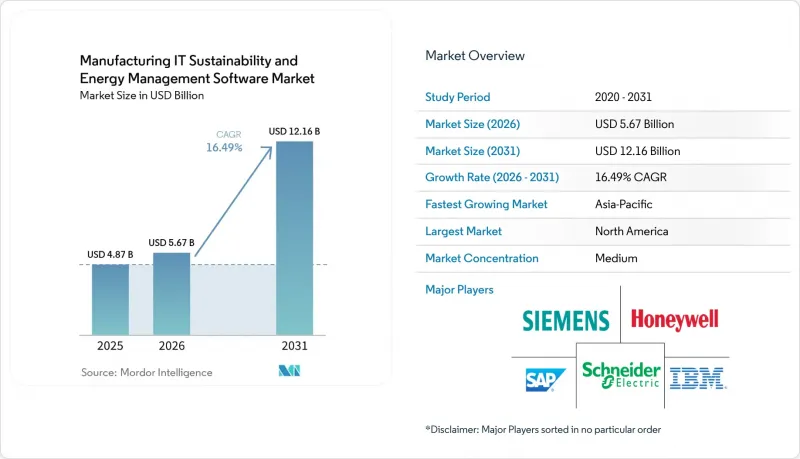
Mordor Intelligence에 의하면, 제조업 IT 지속가능성 및 에너지 관리 소프트웨어 시장 규모는 2025년 48억 7,000만 달러로 평가되었고, 2026년 56억 7,000만 달러에서 2031년까지 121억 6,000만 달러로 확대될 것으로 전망되며, 2026-2031년 CAGR 16.49%를 나타낼 것으로 예측됩니다.
본 보고서는 배포 방식별(클라우드 기반, 온프레미스형, 하이브리드형), 모듈별(산업용 에너지 및 유틸리티 관리, 탄소 및 지속가능성 관리, 산업용 자산 관리 등), 최종 사용자 산업별(자동차, 식품 및 음료 등) 및 지역별로 분류되어 있습니다. 시장 전망은 금액(달러) 기준으로 제시되어 있습니다.
세계의 제조업 IT 지속가능성 및 에너지 관리 소프트웨어 시장 동향 및 인사이트
산업용 자산 전반에 걸친 AI 기반 에너지 최적화
AI 기반 에너지 최적화는 공장 운영에서 점점 더 실용화되고 있습니다. 이는 제조업체들이 단순히 전날의 사용량을 보고하는 데 그치지 않고, 실시간 생산 상황에 대응할 수 있는 소프트웨어를 요구하게 되었기 때문입니다.제조업 IT 지속가능성 및 에너지 관리 소프트웨어 시장에서 이는 생산 일정, 유틸리티 신호, 그리고 공장 자산을 동시에 관리해야 할 때 가장 중요해집니다. 히타치 플랜트 서비스는 2026년 4월부터 공장 및 연구시설용 FEMS 플랫폼의 에너지 관리 기능을 강화했다고 발표했습니다. 이는 수동적인 모니터링이 아닌, 보다 능동적인 플랜트 수준의 제어로 나아가는 광범위한 움직임을 뒷받침하는 것입니다. 또한, 허니웰도 2026년 3월에 AI가 탑재된 제어실 어시스턴트를 상용화했으며, 이는 산업 환경에서 운영자가 더 신속하게 조치를 취할 수 있도록 지원하는 소프트웨어 도구가 제공되고 있음을 보여줍니다. 에너지 성능은 소프트웨어가 생산, 유틸리티, 플랜트의 반응을 얼마나 효과적으로 연계할 수 있는지에 달려 있게 되었기 때문에 상업적 가치는 일상 업무에 통합된 시스템으로 이동하고 있습니다. 따라서 제조업 IT 지속가능성 및 에너지 관리 소프트웨어 시장에서는 AI를 운영 스택에서 분리하지 않고 플랜트의 워크플로우에 통합할 수 있는 벤더에 대한 평가가 높아지고 있습니다.
규정 준수를 주도하는 지속가능성 보고의 자동화
의무화된 지속가능성 보고는 제조업 IT 지속가능성 및 에너지 관리 소프트웨어 시장에서 가장 명확한 단기 구매 요인 중 하나입니다. 제조업체들은 다수의 시설에 걸친 플랜트 데이터 수집, 감사 추적 기록 유지, 그리고 보고 주기의 엄격화로 인해 증가하는 수작업을 줄여야 하는 압박을 받고 있습니다. SAP는 2026년 5월, 자사의 새로운 지속가능성 AI 에이전트를 통해 베타 버전 이용 사례에서 시나리오 시뮬레이션 시간을 1일에서 20분으로 단축하고, 포장 관련 규정 준수 심사 시간을 50% 이상 줄였습니다고 발표했습니다. 이는 소프트웨어 수요가 수작업에 의한 파일 처리에서 자동화로 전환되고 있음을 보여줍니다. 보고 시스템이 더 이상 연간 공시를 위해서만 도입되는 것이 아니라, 실시간 모니터링 및 운영상의 의사 결정에도 동일한 데이터 구조가 요구되고 있기 때문에 이는 중요한 점입니다. 실제로 제조업체가 규정 준수를 위해 검증된 현장 수준의 데이터 흐름을 구축하면, 생산 네트워크 전체에 걸친 에너지 가시성을 높이는 기반도 동시에 마련되는 셈입니다. 따라서 제조업 IT 지속가능성 및 에너지 관리 소프트웨어 시장은 규정 준수 관련 지출과 보다 장기적인 운영 소프트웨어 투자 간의 연동으로 인해 혜택을 보고 있습니다.
레거시 OT 및 제어 시스템과의 고도화된 통합 과제
통합은 제조업 IT 지속가능성 및 에너지 관리 소프트웨어 시장에서 여전히 가장 어려운 장벽 중 하나입니다. 많은 산업 현장에서는 현대적인 클라우드 소프트웨어와 원활하게 연동되지 않는 제어 시스템, 데이터 히스토리안, 서브미터링 설정이 혼재되어 운영되고 있습니다. 그 결과, 프로젝트 팀은 공장장에게 가치를 입증하기 전에 미들웨어, 맞춤형 매핑, 데이터 정제에 많은 시간을 할애할 수밖에 없습니다. 게다가 기존 센서 데이터가 너무 거칠어 생산 라인 수준에서 더 정밀한 예측, 수요 대응, 또는 탄소 배출량 추적에 불충분하다는 사실이 밝혀지면 그 부담은 더욱 커집니다. 따라서, 특히 에너지 및 지속가능성 소프트웨어가 구형 플랜트 환경에 적응해야 하는 브라운필드 시설의 경우, 초기 도입이 지연되고 비용도 높아집니다. 그 결과, 제조업 IT 지속가능성 및 에너지 관리 소프트웨어 시장에서는 관심 부족이 아니라, 소프트웨어를 현장에 연결하는 데 필요한 실무적인 노력으로 인해 도입이 지연되는 상황이 지속되고 있습니다.
부문 분석
2025년에는 클라우드 기반 도입이 시장 점유율의 69.41%를 차지했으며, 클라우드는 제조업 IT 지속가능성 및 에너지 관리 소프트웨어 시장에서 프리미엄 선택지라기보다는 기본 아키텍처가 되었습니다. 그 주된 이유는 실용적인 측면에 있습니다. 제조업체는 각 거점에서 시스템 스택을 재구축하지 않고도 공장, 계측기, 전력 회사에서 제공하는 데이터, 기업 시스템 및 현장 사용자의 데이터를 통합할 수 있는 단일 환경을 필요로 하기 때문입니다.제조업 IT 지속가능성 및 에너지 관리 소프트웨어 업계에서 클라우드는 다중 사이트 운영 모델에도 더 적합합니다. 이는 에너지 및 지속가능성 담당 팀이 시설 간 성과를 실시간으로 비교해야 하기 때문입니다. 보고, 탄소 데이터 수집, 운영 분석이 모두 동일한 정보 흐름에 의존할 경우, 이 모델의 매력은 더욱 높아집니다. 또한, 클라우드 기반 도입은 2031년까지 연평균 성장률(CAGR) 19.67%로 확대될 것으로 예측되며, 제조업 IT 지속가능성 및 에너지 관리 소프트웨어 시장 전체가 급속히 성장하는 가운데에서도 이 아키텍처가 점유율을 확대하고 있음을 알 수 있습니다.
또한, 재무 시스템, 자산 관리 시스템, 플랜트 대시보드, 지속가능성 보고 도구 간의 연계를 강화하고자 하는 구매자의 요구에 따라 클라우드 플랫폼이 지지를 받고 있습니다. 기업 소프트웨어 벤더와 산업용 소프트웨어 제공업체 모두가 자사 제품을 고립된 용도가 아닌 상호 연결된 서비스 계층으로 포지셔닝할 경우, 클라우드 도입의 근거는 더욱 확고해집니다. 히타치 플랜트 서비스가 공장 및 연구시설용 FEMS 플랫폼의 에너지 관리 기능을 강화하기 위해 2025년에 실시한 업데이트는 사이트 네트워크 전체에 걸쳐 연계성이 더 높고 확장 가능한 도입 모델로의 이러한 전환을 뒷받침하고 있습니다. 하네웰이 발표한 소프트웨어 연동형 제어 및 운영 솔루션 또한 각 벤더들이 디지털 레이어를 일회성 현장용 도구가 아닌 지속적인 운영 체제로 제시하고 있음을 보여줍니다. 그렇지만 제조업의 IT 지속가능성 및 에너지 관리 소프트웨어 시장에서는 국방 관련 업무, 중요 시설, 그리고 운영 데이터에 대한 엄격한 관리가 요구되는 분야에서 하이브리드형이나 온프레미스형 옵션이 여전히 남아 있습니다. 이러한 모델은 여전히 유효하지만, 클라우드가 신규 투자의 기준이 됨에 따라 점차 예외적인 존재가 되어가고 있습니다.
지역별 분석
2025년, 북미는 시장 점유율의 34.14%를 차지했으며, 제조업 IT 지속가능성 및 에너지 관리 소프트웨어 시장에서 이 지역이 1위를 차지했습니다. 이 지역은 자동차 생산, 고적층 제조, 대규모 디지털 인프라가 광범위하게 공존하고 있다는 점에서 혜택을 받고 있으며, 여러 최종 사용자 그룹에 걸친 수요를 창출하고 있습니다. 또한, 북미의 많은 산업 환경에서는 기업 소프트웨어 도입이 더욱 성숙해져 있어, 이는 전체 거점 포트폴리오에 걸친 클라우드 전환 및 소프트웨어 통합을 뒷받침하고 있습니다. 이로 인해 제조업 IT 지속가능성 및 에너지 관리 소프트웨어 시장 규모는 각 시설의 수동 시스템을 처음부터 다시 구축하는 것이 아니라, 기존의 IT 및 운영 데이터 기반 위에 구축되게 되었습니다. 미국은 여전히 이러한 수요 패턴의 중심이며, 캐나다와 멕시코는 국경을 초월한 제조 협력 및 공통된 공급망 요건을 통해 이러한 수요를 뒷받침하고 있습니다.
유럽은 제조업 IT 지속가능성 및 에너지 관리 소프트웨어 시장에서 여전히 가장 정책 주도적인 지역 중 하나입니다. 이는 해당 지역의 제조 기업들이 검증된 지속가능성 데이터와 공장 에너지 사용량을 통합적으로 관리해야 한다는 더 큰 압박에 직면해 있기 때문입니다. 독일은 대규모 제조 거점과 산업 운영 전반에 걸친 보다 체계적인 에너지 관리의 필요성으로 인해 유럽 내에서도 특히 두드러집니다. 이 지역의 자동차 업계가 추진하는 탈탄소화 노력 또한 소프트웨어 수요를 뒷받침하고 있습니다. 스텔란티스(Stellantis)가 전체 제조 공장에서 탈탄소 전력의 조달 및 저장을 확대하고 있는 것이 그 한 예입니다. 따라서 유럽은 규정 준수 압박, 산업 규모, 그리고 공장 운영과 환경 보고 간의 연계 강화와 같은 요소들이 결합되어 제조 IT의 지속가능성 및 에너지 관리 소프트웨어 시장을 지속적으로 형성하고 있습니다.
아시아태평양은 2031년까지 연평균 성장률(CAGR) 18.12%로 확대될 것으로 예측되며, 제조업 IT 지속가능성 및 에너지 관리 소프트웨어 시장에서 가장 빠르게 성장하는 지역 블록이 될 전망입니다. 일본에서는 히타치 플랜트 서비스가 2026년 4월부터 공장 및 연구시설을 대상으로 FEMS 플랫폼의 에너지 관리 기능을 강화하는 등, 적극적인 도입이 진행되고 있는 가장 두드러진 사례 중 하나를 볼 수 있습니다. 또한, 이 지역은 제조 능력 확대, 새로운 디지털 인프라 구축, 그리고 산업 거점 전반에 걸친 에너지 관리 수요 증가의 혜택도 받고 있습니다. 중국과 인도는 시장 규모를 확대하고 있으며, 한국은 이미 체계적인 에너지 추적에 의존하고 있는 전자 및 반도체 사업을 통해 수요를 뒷받침하고 있습니다. 남미는 계속해서 브라질의 산업 기반이 주도하고 있으며, 중동 및 아프리카에서는 각국의 탈탄소화 프로그램이나 새로운 산업 프로젝트와 연계된 수요가 나타나고 있습니다. 이에 따라 제조 IT 분야의 지속가능성 및 에너지 관리 소프트웨어 시장은 지리적으로 광범위한 범위를 아우르고 있으나, 지역별 성숙도에는 여전히 큰 편차가 존재합니다.
기타 혜택 :
- 엑셀 형식 시장 예측(ME) 시트
- 3개월간의 애널리스트 지원
자주 묻는 질문
목차
제1장 서론
제2장 조사 방법
제3장 주요 요약
제4장 시장 구도
제5장 시장 규모 및 성장 예측
제6장 경쟁 구도
제7장 시장 기회 및 향후 전망
AJY 26.08.07According to Mordor Intelligence, the manufacturing IT sustainability and energy management software market size is projected to expand from USD 4.87 billion in 2025 and USD 5.67 billion in 2026 to USD 12.16 billion by 2031, registering a CAGR of 16.49% over 2026-2031.
This report is Segmented by Deployment Type (Cloud-Based, On-Premise, and Hybrid), Module (Industrial Energy and Utility Management, Carbon and Sustainability Management, Industrial Asset Management, and More), End-User Industry (Automotive, Food and Beverage, and More), and Geography. The Market Forecasts are Provided in Terms of Value (USD).
Global Manufacturing IT Sustainability and Energy Management Software Market Trends and Insights
AI-Based Energy Optimization Across Industrial Assets
AI-based energy optimization is becoming more practical inside plant operations, because manufacturers now want software that can respond to live production conditions instead of only reporting yesterday's usage. In the manufacturing IT sustainability and energy management software market, this matters most when production schedules, utility signals, and plant assets need to be managed at the same time. Hitachi Plant Services stated that it strengthened the energy management functions of its FEMS platform from April 2026 for factories and research facilities, which supports the wider move toward more active plant-level control rather than passive monitoring. Honeywell also commercially launched its AI-powered control room assistant in March 2026, showing that operators are being given software tools that can surface actions faster inside industrial environments. The commercial value is shifting toward systems that sit inside day-to-day operations, because energy performance now depends on how well software can connect production, utilities, and plant response. That is why the manufacturing IT sustainability and energy management software market is increasingly rewarding vendors that can embed AI into plant workflows instead of keeping it separate from the operating stack.
Compliance-Driven Sustainability Reporting Automation
Mandatory sustainability reporting is one of the clearest near-term buying triggers in the manufacturing IT sustainability and energy management software market. Manufacturers are under pressure to collect plant data across many facilities, maintain audit trails, and reduce manual work that breaks down as reporting cycles become more demanding. SAP said in May 2026 that its new sustainability AI agents reduced scenario simulation time from 1 day to 20 minutes in beta use cases and cut packaging compliance review hours by more than 50%, demonstrating how software demand is moving toward automation rather than manual file handling. This matters because reporting systems are no longer purchased solely for annual disclosures, as the same data structure is also needed for live monitoring and operational decisions. In practice, once manufacturers build verified, site-level data flows for compliance, they also lay the foundation for stronger energy visibility across production networks. The manufacturing IT sustainability and energy management software market is therefore benefiting from a link between compliance spending and longer-term operating software investment.
High Integration Effort With Legacy OT and Control Systems
Integration remains one of the hardest obstacles in the manufacturing IT sustainability and energy management software market. Many industrial sites still run a mix of control systems, data historians, and sub-metering setups that do not connect cleanly to modern cloud software. This forces project teams to spend more time on middleware, custom mapping, and data cleaning before any value can be shown to plant managers. The burden grows further when a facility discovers that existing sensor data is too coarse for tighter forecasting, demand response, or carbon tracking at the production-line level. That makes first deployments slower and more expensive, especially in brownfield facilities where energy and sustainability software must adapt to older plant conditions. As a result, the manufacturing IT sustainability and energy management software market still sees adoption delayed, not by lack of interest, but by the practical effort needed to connect software to the plant floor.
Other drivers and restraints analyzed in the detailed report include:
- Carbon Accounting Integration With Erp and Mes Stacks
- Rising Energy Costs and Plant Utility Volatility
- Cybersecurity and Data Residency Constraints in Industrial Clouds
For complete list of drivers and restraints, kindly check the Table Of Contents.
Segment Analysis
Cloud-based deployment held 69.41% share of the market in 2025, which made cloud the default architecture for the manufacturing IT sustainability and energy management software market rather than a premium option. The main reason is practical, because manufacturers need one environment that can ingest data from plants, meters, utility feeds, enterprise systems, and site users without rebuilding the stack at every location. In the manufacturing IT sustainability and energy management software industry, cloud also fits multi-site operating models better, since energy and sustainability teams are expected to compare performance across facilities in real time. That model becomes more attractive when reporting, carbon data collection, and operating analysis all depend on the same flow of information. Cloud-based deployment is also projected to expand at a 19.67% CAGR through 2031, which shows that this architecture is gaining share even as the overall manufacturing IT sustainability and energy management software market grows quickly.
Cloud platforms are also being favored because buyers want fewer breaks between finance systems, asset systems, plant dashboards, and sustainability reporting tools. The case for cloud is stronger when enterprise software vendors and industrial software providers both position their offerings as connected service layers instead of isolated applications. Hitachi Plant Services' 2025 update to strengthen the energy management functions of its FEMS platform for factories and research facilities supports this shift toward more connected and scalable deployment models across site networks. Honeywell's software-linked control and operations launches also show that vendors are presenting digital layers as ongoing operating systems rather than one-time site tools. Even so, the manufacturing IT sustainability and energy management software market still leaves room for hybrid and on-premises choices in defense-linked operations, critical facilities, and locations with strict controls on operational data. Those models remain relevant, but they are gradually becoming exceptions as cloud defines the baseline for new investment.
Complete Report Scope:
- By Deployment Type
- Cloud-Based
- On-Premise
- Hybrid
- By Module
- Industrial Energy and Utility Management
- Carbon and Sustainability Management
- Industrial Asset and Facility Sustainability Management
- Compliance and Regulatory Management
- By End Use Industry
- Automotive
- Food and Beverage
- Chemicals and Materials
- Pharmaceuticals
- Heavy Industrial Manufacturing
- Oil and Gas
- Energy and Utilities
- Commercial Facilities and Buildings
- Data Centers and IT Infrastructure
- By Geography
- North America
- United States
- Canada
- Mexico
- South America
- Brazil
- Argentina
- Rest of South America
- Europe
- Germany
- United Kingdom
- France
- Italy
- Russia
- Rest of Europe
- Asia-Pacific
- China
- India
- Japan
- South Korea
- Australia
- Rest of Asia-Pacific
- Middle East and Africa
- Middle East
- Saudi Arabia
- United Arab Emirates
- Turkey
- Rest of Middle East
- Africa
- South Africa
- Nigeria
- Rest of Africa
- North America
Geography Analysis
North America held 34.14% share of the market in 2025, which gave the region the lead in the manufacturing IT sustainability and energy management software market. The region benefits from a broad mix of automotive production, high-value manufacturing, and large-scale digital infrastructure that creates demand across more than one end-user group. Enterprise software adoption is also more mature in many North American industrial settings, which supports cloud migration and software integration across site portfolios. This has helped the manufacturing IT sustainability and energy management software market size build on existing IT and operational data foundations instead of starting from manual systems in every facility. The United States remains the center of this demand pattern, while Canada and Mexico add support through cross-border manufacturing linkages and shared supply-chain requirements.
Europe remains one of the most policy-driven regions in the manufacturing IT sustainability and energy management software market, because industrial companies there face stronger pressure to manage verified sustainability data and plant energy use together. Germany stands out in Europe due to its large manufacturing base and its need for more structured energy management across industrial operations. Automotive decarbonization efforts in the region also reinforce software demand, as shown by Stellantis' expansion of decarbonized electricity sourcing and storage across manufacturing plants. Europe therefore continues to shape the manufacturing IT sustainability and energy management software market through a mix of compliance pressure, industrial scale, and stronger links between plant operations and environmental reporting.
Asia-Pacific is projected to expand at an 18.12% CAGR through 2031, making it the fastest-growing regional block in the manufacturing IT sustainability and energy management software market. Japan is showing one of the clearest examples of active deployment, with Hitachi Plant Services strengthening the energy management functions of its FEMS platform from April 2026 for factories and research facilities. The region also benefits from expanding manufacturing capacity, new digital infrastructure, and rising energy management needs across industrial sites. China and India add scale, while South Korea supports demand through electronics and semiconductor operations that already depend on structured energy tracking. South America remains led by Brazil's industrial base, and the Middle East and Africa are seeing demand tied to national decarbonization programs and newer industrial projects. This keeps the manufacturing IT sustainability and energy management software market geographically broad, even though maturity levels still vary sharply by region.
- Schneider Electric SE
- Siemens AG
- IBM Corporation
- SAP SE
- Honeywell International Inc.
- Johnson Controls International plc
- ABB Ltd.
- Emerson Electric Co.
- Eaton Corporation plc
- Rockwell Automation, Inc.
- Oracle Corporation
- GE Vernova Inc.
- Mitsubishi Electric Corporation
- Enel X S.r.l.
- Verdigris Technologies, Inc.
- Cisco Systems, Inc.
- C3.ai, Inc.
- UL Solutions Inc.
- Sphera Solutions, Inc.
- Enablon North America Corporation
- EnergyCAP, LLC
Additional Benefits:
- The market estimate (ME) sheet in Excel format
- 3 months of analyst support
TABLE OF CONTENTS
1 INTRODUCTION
- 1.1 Study Assumptions and Market Definition
- 1.2 Scope of the Study
2 RESEARCH METHODOLOGY
3 EXECUTIVE SUMMARY
4 MARKET LANDSCAPE
- 4.1 Market Overview
- 4.2 Market Drivers
- 4.2.1 Rising Energy Costs and Plant Utility Volatility
- 4.2.2 Compliance-Driven Sustainability Reporting Automation
- 4.2.3 AI-Based Energy Optimization Across Industrial Assets
- 4.2.4 Electrification of Manufacturing Operations and Process Heat
- 4.2.5 Carbon Accounting Integration With ERP and MES Stacks
- 4.2.6 Edge-To-Cloud Industrial Energy Visibility for Multi-Site Plants
- 4.3 Market Restraints
- 4.3.1 High Integration Effort With Legacy OT and Control Systems
- 4.3.2 Cybersecurity and Data Residency Constraints in Industrial Clouds
- 4.3.3 Limited Standardization of Industrial Energy Data Models
- 4.3.4 Change-Management Friction in Plant-Level Adoption
- 4.4 Industry Value-Chain Analysis
- 4.5 Regulatory Landscape
- 4.6 Technological Outlook
- 4.7 Impact of Macroeconomic Factors on the Market
- 4.8 Porter's Five Forces Analysis
- 4.8.1 Threat of New Entrants
- 4.8.2 Bargaining Power of Suppliers
- 4.8.3 Bargaining Power of Buyers
- 4.8.4 Threat of Substitutes
- 4.8.5 Competitive Rivalry
5 MARKET SIZE AND GROWTH FORECASTS (VALUE)
- 5.1 By Deployment Type
- 5.1.1 Cloud-Based
- 5.1.2 On-Premise
- 5.1.3 Hybrid
- 5.2 By Module
- 5.2.1 Industrial Energy and Utility Management
- 5.2.2 Carbon and Sustainability Management
- 5.2.3 Industrial Asset and Facility Sustainability Management
- 5.2.4 Compliance and Regulatory Management
- 5.3 By End Use Industry
- 5.3.1 Automotive
- 5.3.2 Food and Beverage
- 5.3.3 Chemicals and Materials
- 5.3.4 Pharmaceuticals
- 5.3.5 Heavy Industrial Manufacturing
- 5.3.6 Oil and Gas
- 5.3.7 Energy and Utilities
- 5.3.8 Commercial Facilities and Buildings
- 5.3.9 Data Centers and IT Infrastructure
- 5.4 By Geography
- 5.4.1 North America
- 5.4.1.1 United States
- 5.4.1.2 Canada
- 5.4.1.3 Mexico
- 5.4.2 South America
- 5.4.2.1 Brazil
- 5.4.2.2 Argentina
- 5.4.2.3 Rest of South America
- 5.4.3 Europe
- 5.4.3.1 Germany
- 5.4.3.2 United Kingdom
- 5.4.3.3 France
- 5.4.3.4 Italy
- 5.4.3.5 Russia
- 5.4.3.6 Rest of Europe
- 5.4.4 Asia-Pacific
- 5.4.4.1 China
- 5.4.4.2 India
- 5.4.4.3 Japan
- 5.4.4.4 South Korea
- 5.4.4.5 Australia
- 5.4.4.6 Rest of Asia-Pacific
- 5.4.5 Middle East and Africa
- 5.4.5.1 Middle East
- 5.4.5.2 Saudi Arabia
- 5.4.5.3 United Arab Emirates
- 5.4.5.4 Turkey
- 5.4.5.5 Rest of Middle East
- 5.4.6 Africa
- 5.4.6.1 South Africa
- 5.4.6.2 Nigeria
- 5.4.6.3 Rest of Africa
- 5.4.1 North America
6 COMPETITIVE LANDSCAPE
- 6.1 Market Concentration
- 6.2 Strategic Moves
- 6.3 Market Share Analysis
- 6.4 Company Profiles (includes Global Level Overview, Market Level Overview, Core Segments, Financials as available, Strategic Information, Market Rank/Share, Products and Services, Recent Developments)
- 6.4.1 Schneider Electric SE
- 6.4.2 Siemens AG
- 6.4.3 IBM Corporation
- 6.4.4 SAP SE
- 6.4.5 Honeywell International Inc.
- 6.4.6 Johnson Controls International plc
- 6.4.7 ABB Ltd.
- 6.4.8 Emerson Electric Co.
- 6.4.9 Eaton Corporation plc
- 6.4.10 Rockwell Automation, Inc.
- 6.4.11 Oracle Corporation
- 6.4.12 GE Vernova Inc.
- 6.4.13 Mitsubishi Electric Corporation
- 6.4.14 Enel X S.r.l.
- 6.4.15 Verdigris Technologies, Inc.
- 6.4.16 Cisco Systems, Inc.
- 6.4.17 C3.ai, Inc.
- 6.4.18 UL Solutions Inc.
- 6.4.19 Sphera Solutions, Inc.
- 6.4.20 Enablon North America Corporation
- 6.4.21 EnergyCAP, LLC
7 MARKET OPPORTUNITIES AND FUTURE OUTLOOK
- 7.1 White-Space and Unmet-Need Assessment


