
|
시장보고서
상품코드
2099346
영국의 현장 근로자 기술 : 시장 점유율 분석, 업계 동향 및 통계, 성장 예측(2026-2031년)UK Frontline Worker Technology - Market Share Analysis, Industry Trends & Statistics, Growth Forecasts (2026 - 2031) |
||||||
 Mordor Intelligence
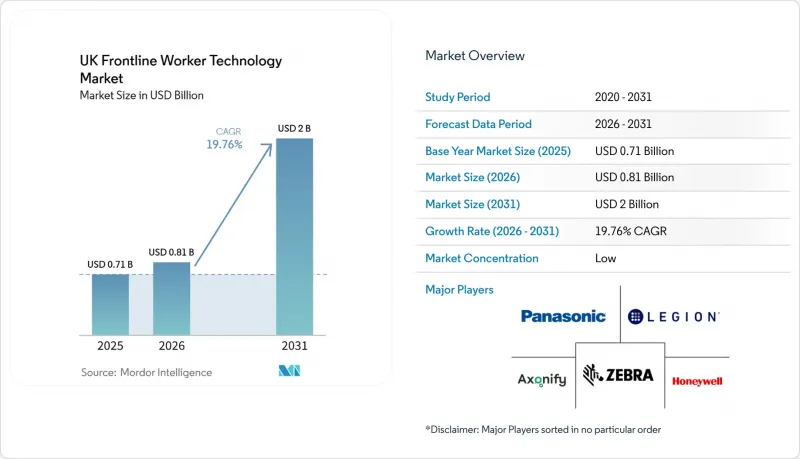
Mordor Intelligence에 의하면, 영국의 현장 근로자 기술 시장 규모는 2025년에 7억 1,000만 달러로 평가되었습니다. 2026년 8억 1,000만 달러에서 2031년까지 20억 달러에 이를 것으로 예상되며, 예측 기간(2026-2031년) CAGR은 19.76%를 나타낼 전망입니다.
본 보고서는 구성 요소(소프트웨어 및 서비스), 배포 방식(클라우드 기반, 하이브리드형 등), 조직 규모(대기업 및 중소기업), 용도(직원 간 커뮤니케이션 및 참여도 향상 등), 최종 사용자 산업(소매 및 전자상거래, 산업 제조 등)별로 분류되어 있습니다. 시장 전망은 금액(달러)으로 표시됩니다.
영국의 현장 근로자 기술 시장 동향 및 인사이트
교대 근무에서 실시간 업무 조정 수요 증가
영국 현장 근로자 기술 시장의 교대 근무 분야에서는 전자상거래 주문 처리, 의료 분야의 인력 부족, 그리고 분산된 매장 및 거점 네트워크로 인해 수동적인 업무 흐름의 여지가 줄어들고 있어, 보다 신속한 조정이 요구되고 있습니다. 고용주들은 스케줄링, 커뮤니케이션, 학습을 위한 개별 앱에서 여러 거점에 걸친 활동을 관리할 수 있는 단일 현장용 시스템으로 전환하는 경향이 강해지고 있습니다. 2025년 3월 WorkJam이 Rotageek과 체결한 제휴는 수요 주도형 일정 관리 및 업무 관리, 커뮤니케이션, 일정 셀프 서비스, 교육을 단일 워크플로우 스택으로 통합함으로써 이러한 방향성을 명확히 보여주었습니다. Deputy와 Geografia가 2026년에 실시한 영국의 현장 근로자 대상 설문조사에 따르면, 근로자의 88%가 AI 덕분에 업무가 더 쉬워졌다고 응답한 반면, 교대 근무와 관련된 스트레스가 줄었다고 답한 비율은 42%에 그쳤습니다. 이는 업무 효율성 향상만으로는 업무상 부담이 자동으로 해소되는 것은 아니라는 점을 보여줍니다. 이 격차가 중요한 이유는 고용주들이 이제 단순히 업무를 배정하는 플랫폼이 아니라, 관리자가 병목 현상을 조기에 파악하고 실시간으로 인력 배치를 조정할 수 있는 시스템을 원하고 있기 때문입니다. 따라서 영국의 현장 근로자 기술 시장에서는 현장 팀에 새로운 도구를 추가하지 않고도 업무 수준 활동을 실용적인 관리 지침으로 전환할 수 있는 공급업체가 지지를 받고 있습니다.
필수 현장 부문에서 심화되는 인력 부족과 인재 유지 압박
만성적인 인력 부족은 여전히 영국의 현장 근로자 기술 시장에서 가장 강력한 수요 요인 중 하나이며, 이는 고용주가 이용 가능한 노동력이 감소하는 상황에서도 생산량을 유지해야 하기 때문입니다. 영국 정부의 2025년 직업 수요 분석에 따르면, 수요가 극히 높은 직종에는 510만 명(전체 고용자의 15.4%)이 종사하고 있으며, 수요가 더욱 증가하고 있는 직종에는 1,090만 명의 근로자가 종사하고 있는 것으로 밝혀졌습니다. 성인 대상 사회복지 분야만 해도 2024-25 회계연도에 11만 1,000건의 인력 공백이 발생했으며, 고령화에 따른 수요 증가에 대응하기 위해 2040년까지 해당 분야에서 추가로 47만 명의 근로자가 필요할 것으로 예측됩니다. 이러한 인력 부족으로 인해 AI를 활용한 근무표 작성, 디지털 온보딩, 스킬 매칭 도구의 매력이 높아지고 있습니다. 이 모든 것은 수작업으로 조정하는 데 소요되는 시간을 줄일 수 있기 때문입니다. 또한 고용주들은 현장용 시스템을 활용해 기존 팀의 생산성을 향상시키고 있으며, 이로 인해 도입 근거가 단순한 디지털화에서 노동력의 회복력으로 변화하고 있습니다. 이러한 상황 속에서 영국의 현장 근로자 기술 시장에서는 의료, 물류, 호스피탈리티 각 분야에서 관리 부담을 줄이고 직원 유지 지원을 강화할 수 있는 벤더들이 우위를 점하고 있습니다.
분산된 레거시 시스템이 통합 비용과 도입의 복잡성을 가중시킨다.
많은 고용주가 여전히 On-Premise ERP 시스템, 개별 HR 도구, 급여 계산 플랫폼, 구식 일정 관리 소프트웨어를 혼용하여 운영하고 있기 때문에 통합은 영국의 현장 근로자 기술 시장의 주요 제약 요인 중 하나로 남아 있습니다. 이러한 파편화된 시스템 구성은 특히 사내 IT 팀이 여러 거점에 걸친 복잡한 인터페이스 작업을 동시에 지원할 수 없는 경우, 도입 비용을 상승시키고 배포 기간을 장기화시킵니다. 영국 과학·혁신·기술부는 2026년 6월에 발표한 ‘기술 도입 검토 보고서’에서 API 상호 운용성과 통합의 복잡성이 기업의 디지털 기술 도입에 있어 주요 장벽 중 하나이며, 이 문제는 런던 이외 지역에서 더욱 두드러진다고 밝혔습니다. 스케줄링, 커뮤니케이션, 분석을 통해 얻는 가치는 직원 데이터 및 급여 데이터와의 정확한 연동에 의존하기 때문에 이러한 상황은 투자 회수를 지연시킵니다. 따라서 SAP SuccessFactors, Workday, ADP, Sage 등 널리 사용되는 시스템과의 연동 기능을 미리 갖춘 벤더는 도입 기간을 단축하고 구매자의 망설임을 줄이는 데 유리한 입장에 있습니다. 영국의 현장 근로자 기술 시장에서는 여전히 수요가 강하지만, 통합에 따른 마찰로 인해 인력 부족이 이미 명백한 경우에도 구매 결정이 지연될 가능성이 있습니다.
부문 분석
2025년에는 소프트웨어가 82.28%의 점유율을 차지하며, 영국의 현장 근로자 기술 시장 전체에서 수익의 주요 기반이 되었습니다. 이러한 우위는 하드웨어 중심의 단일 기능 도구에서 단일 관리 계층을 통해 커뮤니케이션, 일정 관리, 업무, 학습, 분석을 조정할 수 있는 클라우드 기반 플랫폼으로 광범위하게 전환되고 있음을 반영합니다. 각 워크플로가 서로 다른 용도에 분산되어 있으면 여러 거점에서의 업무 관리가 어려워지므로, 고용주들은 단일 관리 환경을 점점 더 선호하고 있습니다. 2025년 3월 WorkJam이 Rotageek과 제휴한 것은 이러한 추세를 뒷받침합니다. 이 제휴를 통해 수요 기반의 일정 관리와 커뮤니케이션, 교육, 업무 수행이 단일 스택 내에서 통합되었기 때문입니다. 따라서 영국의 현장 근로자 기술 시장에서는 현장 수준의 활용을 복잡하게 만들지 않으면서 기능 범위를 넓힐 수 있는 벤더가 높이 평가받고 있습니다.
서비스 부문은 가장 빠르게 성장하는 분야로, 2031년까지 연평균 성장률(CAGR)이 22.31%를 나타낼 것으로 전망됩니다. 이는 복잡한 도입 과정에 여전히 통합, 교육, 설정 및 도입 후 지원이 필요하기 때문입니다. 플랫폼에 분석 기능이나 AI 기능이 추가됨에 따라, 각 롤아웃에 수반되는 거버넌스 및 변경 관리 부담도 커집니다. 이로 인해 SaaS 모델을 통해 소프트웨어 구매가 용이해졌다고 하더라도 서비스의 중요성은 사라지지 않습니다. 인증 파트너 네트워크나 업계별 템플릿에 투자하는 벤더는 도입 부담을 줄이면서도 최적화 및 지원을 통한 서비스 수익을 유지할 수 있습니다. 이러한 균형이 중요한 이유는 영국의 현장 근로자 기술 업계에는 여전히 구식 시스템을 사용하는 대기업이 다수 존재하며, 이러한 기업들은 전체 거점으로 도입을 확대하기 전에 탄탄한 서비스 체계를 필요로 하기 때문입니다.
2025년 기준, 영국의 현장 근로자 기술 시장 규모의 80.41%를 클라우드 기반 도입이 차지했으며, 2031년까지 연평균 성장률(CAGR)이 20.38%에 달하고, 가장 빠르게 성장하는 도입 모델이기도 합니다. 이러한 상황은 통합 관리, 신속한 업데이트, 각 거점의 로컬 인프라에 대한 의존도 감소를 추구하는 소매, 물류, 의료 분야 사업자의 요구를 반영하고 있습니다. 분산된 현장 팀은 교대 근무 시 다운타임을 허용할 수 없기 때문에 신뢰성과 원격 지원은 클라우드가 선택되는 주요 이유로 계속되고 있습니다. 또한, 영국의 현장 근로자 기술 시장은 견고한 엔터프라이즈 클라우드 인프라의 혜택을 받고 있으며, 이로 인해 이미 다른 호스팅형 비즈니스 시스템을 이용하고 있는 구매자에게 진입 장벽이 낮아졌습니다. 따라서 고용주가 여러 거점에 신속하게 시스템을 배포하고자 할 경우, 클라우드 플랫폼이 기본 선택지로 자리 잡고 있습니다.
하이브리드형 도입은 클라우드의 사용 편의성을 추구하면서도 특정 직원 기록에 대해서는 보다 엄격한 관리를 유지하고자 하는 고용주들 사이에서 여전히 일정한 위치를 차지하고 있습니다. 이는 데이터 취급에 대한 판단이 여전히 기밀성이 높은 NHS 트러스트, 공공 기관, 대규모 금융 서비스 조직 등의 환경에서 특히 해당됩니다. 또한, 전환 비용이 변경으로 인한 단기적 이익을 상회하는 대규모 산업 시설에서는 On-Premise 모델도 여전히 자리 잡고 있습니다. DSIT의 조사 보고서에 따르면, 클라우드 기술에 대한 전문 지식이 영국 각 지역 간에 고르게 분포되어 있지 않다는 점이 지적되었으며, 주요 디지털 허브 이외의 지역에서는 하이브리드 및 On-Premise에 대한 수요가 당분간 사라지지 않을 것임을 시사하고 있습니다.
기타 혜택 :
- 엑셀 형식 시장 예측(ME) 시트
- 3개월간의 애널리스트 지원
자주 묻는 질문
목차
제1장 서론
제2장 조사 방법
제3장 주요 요약
제4장 시장 구도
제5장 시장 규모 및 성장 예측
제6장 경쟁 구도
제7장 시장 기회 및 향후 전망
KTH 26.08.10According to Mordor Intelligence, the UK frontline worker technology market size was valued at USD 0.71 billion in 2025 and estimated to grow from USD 0.81 billion in 2026 to reach USD 2.00 billion by 2031, at a CAGR of 19.76% during the forecast period (2026-2031).
This report is Segmented by Component (Software, and Services), Deployment Mode (Cloud-Based, Hybrid, and More), Organization Size (Large Enterprises, and Small and Medium Enterprises), Application (Employee Communication and Engagement, and More), and End-User Industry (Retail and E-Commerce, Industrial Manufacturing, and More). The Market Forecasts are Provided in Terms of Value (USD).
UK Frontline Worker Technology Market Trends and Insights
Rising Need for Real-Time Task Orchestration Across Shift-Based Operations
Shift-based operations in the United Kingdom frontline worker technology market now require faster coordination because e-commerce fulfillment, healthcare staffing pressure, and distributed store and site networks leave less room for manual task flow. Employers are increasingly moving away from separate apps for scheduling, communication, and learning, and toward a single frontline system that can manage activity across many locations. WorkJam's March 2025 partnership with Rotageek showed this direction clearly by linking demand-driven scheduling with task management, communication, schedule self-service, and training in one workflow stack. Deputy and Geografia's 2026 UK frontline study found that 88% of workers said AI made their jobs easier, yet only 42% said it reduced shift-related stress, which shows that speed gains do not automatically remove operational strain. That gap matters because employers now want platforms that do more than push tasks; they want systems that help supervisors see bottlenecks early and adjust labor in real time. The United Kingdom frontline worker technology market, therefore, favors vendors that can turn task-level activity into usable managerial guidance without adding another tool for site teams.
Escalating Labor Shortages and Retention Pressure in Essential Frontline Sectors
Persistent labor shortages remain one of the strongest demand drivers in the United Kingdom frontline worker technology market because employers need to protect output with fewer available workers. The UK government's 2025 occupational demand analysis identified 5.1 million workers, or 15.4% of total employment, in critical-demand occupations, while another 10.9 million workers were in elevated-demand roles. Adult social care alone had 111,000 vacant posts in 2024-25, and the sector is projected to need 470,000 additional workers by 2040 to meet rising demand from an aging population. These shortages increase the appeal of AI-assisted rostering, digital onboarding, and skills-matching tools because each of them reduces time spent on manual coordination. Employers are also using frontline systems to make existing teams more productive, which changes the buying case from basic digitization to workforce resilience. In this setting, the United Kingdom frontline worker technology market gives an edge to vendors that can show lower administrative burden and stronger retention support in healthcare, logistics, and hospitality.
Fragmented Legacy Systems Increase Integration Cost and Deployment Complexity
Integration remains one of the main restraints on the United Kingdom frontline worker technology market because many employers still run a mix of on-premises ERP systems, separate HR tools, payroll platforms, and older scheduling software. This fragmented stack raises implementation cost and extends rollout timelines, especially when internal IT teams cannot support complex interface work across several sites at once. The UK Department for Science, Innovation and Technology stated in its Technology Adoption Review, published in June 2026, that API interoperability and integration complexity were among the leading barriers to enterprise digital technology adoption, with the problem more pronounced outside London. These conditions slow down return on investment because value from scheduling, communication, and analytics depends on clean links to workforce and payroll data. Vendors with pre-built connectors into widely used systems such as SAP SuccessFactors, Workday, ADP, and Sage are therefore better positioned to shorten deployment time and reduce buyer hesitation. The United Kingdom frontline worker technology market still has strong demand, but integration friction can delay purchase decisions even where the labor need is already clear.
Other drivers and restraints analyzed in the detailed report include:
- Broader Adoption of Mobile-First Workforce Applications and Wearable Devices
- Compliance Pressure for Safety, Auditability, and Training Traceability
- Data Privacy, Worker Monitoring, and Employee Trust Concerns
For complete list of drivers and restraints, kindly check the Table Of Contents.
Segment Analysis
Software captured 82.28% share in 2025, which made it the dominant revenue base across the United Kingdom frontline worker technology market. That lead reflects a broad shift away from hardware-led point tools and toward cloud-based platforms that can coordinate communication, scheduling, tasks, learning, and analytics from a single control layer. Employers increasingly prefer one administrative environment because multi-site operations are harder to manage when each workflow sits in a different application. WorkJam's March 2025 partnership with Rotageek supports this pattern because it joined demand-based scheduling with communication, training, and task execution inside one stack. The United Kingdom frontline worker technology market is, therefore, rewarding software vendors that can widen their functional reach without making site-level use more complex.
Services is the fastest-growing component, with a 22.31% CAGR through 2031, because complex deployments still need integration, training, configuration, and post-launch support. As platforms add more analytics and AI functions, the amount of governance and change management around each rollout also increases. This keeps services relevant even when software becomes easier to buy through SaaS models. Vendors that invest in certified partner networks and industry-specific templates can reduce implementation strain while preserving service revenue from optimization and support. That balance matters because the United Kingdom frontline worker technology industry still includes many large employers with older systems, and those employers need service depth before they can scale adoption across sites.
Cloud-based deployment accounted for 80.41% of the United Kingdom frontline worker technology market size in 2025 and is also the fastest-growing deployment model with a 20.38% CAGR through 2031. This position reflects the needs of retail, logistics, and healthcare operators that want centralized administration, faster updates, and less dependence on local infrastructure at each location. Distributed frontline teams cannot absorb downtime during shift changes, so reliability and remote support remain core reasons for cloud preference. The United Kingdom frontline worker technology market also benefits from a strong enterprise cloud base, which lowers the barrier for buyers who already use other hosted business systems. Cloud platforms are therefore becoming the default option when employers want quick expansion across multiple sites.
Hybrid deployment still keeps a place where employers want cloud usability, but retain tighter control over selected workforce records. This is especially relevant in environments such as NHS trusts, public bodies, and large financial services organizations where data handling choices remain sensitive. On-premises models also persist in large industrial sites where migration cost is still higher than the short-term gain from change. The DSIT review noted that cloud-technology expertise is less evenly distributed across UK regions, which suggests hybrid and on-premises demand will not disappear quickly outside the main digital hubs.
Complete Report Scope:
- By Component
- Software
- Services
- By Deployment
- Cloud-Based
- Hybrid
- On-Premises
- By Organization Size
- Large Enterprises
- Small and Medium Enterprises
- By Application
- Employee Communication and Engagement
- Workforce Execution and Task Management
- Workforce Scheduling and Coordination
- Learning and Knowledge Enablement
- Workforce Analytics and Performance Management
- Safety and Compliance Management
- Other Applications
- By End-User Industry
- Retail and E-Commerce
- Industrial Manufacturing
- Healthcare and Life Sciences
- Transportation and Logistics
- Hospitality
- Construction
- Government and Public Administration
- Other Industries
List of Companies Covered in this Report:
- Zebra Technologies Corporation
- Honeywell International Inc.
- Axonify Inc.
- Legion Technologies Inc.
- Panasonic Holdings Corporation
- Toshiba Tec Corporation
- Staffbase GmbH
- Rotageek Ltd.
- Beekeeper AG
- WorkJam, Inc.
- YOOBIC SAS
- Microsoft Corporation
- SAP SE
- ServiceNow, Inc.
- Oracle Corporation
- Salesforce, Inc.
- Infor Holdings LLC
- UKG Inc.
- Zaptic Limited
- Quinyx AB
Additional Benefits:
- The market estimate (ME) sheet in Excel format
- 3 months of analyst support
TABLE OF CONTENTS
1 INTRODUCTION
- 1.1 Study Assumptions and Market Definition
- 1.2 Scope of the Study
2 RESEARCH METHODOLOGY
3 EXECUTIVE SUMMARY
4 MARKET LANDSCAPE
- 4.1 Market Overview
- 4.2 Market Drivers
- 4.2.1 Rising Need for Real-Time Task Orchestration Across Shift-Based Operations
- 4.2.2 Escalating Labor Shortages and Retention Pressure in Essential Frontline Sectors
- 4.2.3 Broader Adoption of Mobile-First Workforce Applications and Wearable Devices
- 4.2.4 Compliance Pressure for Safety, Auditability, and Training Traceability
- 4.2.5 Integration of Digital Work Instructions Into Legacy Operational Workflows
- 4.2.6 Unstructured Change Fatigue Among Supervisors and Frontline Teams
- 4.3 Market Restraints
- 4.3.1 Fragmented Legacy Systems Increase Integration Cost and Deployment Complexity
- 4.3.2 Data Privacy, Worker Monitoring, and Employee Trust Concerns
- 4.3.3 Uneven Connectivity and Device Standardization Across Multi-Site Operations
- 4.3.4 Budget Sensitivity Among Small and Mid-Sized End Users
- 4.4 Industry Value Chain Analysis
- 4.5 Impact of Macroeconomic Factors on the Market
- 4.6 Regulatory Landscape
- 4.7 Technological Outlook
- 4.8 Porter's Five Forces Analysis
- 4.8.1 Bargaining Power of Buyers
- 4.8.2 Bargaining Power of Suppliers
- 4.8.3 Threat of New Entrants
- 4.8.4 Threat of Substitutes
- 4.8.5 Intensity of Competitive Rivalry
5 MARKET SIZE AND GROWTH FORECASTS (VALUE)
- 5.1 By Component
- 5.1.1 Software
- 5.1.2 Services
- 5.2 By Deployment
- 5.2.1 Cloud-Based
- 5.2.2 Hybrid
- 5.2.3 On-Premises
- 5.3 By Organization Size
- 5.3.1 Large Enterprises
- 5.3.2 Small and Medium Enterprises
- 5.4 By Application
- 5.4.1 Employee Communication and Engagement
- 5.4.2 Workforce Execution and Task Management
- 5.4.3 Workforce Scheduling and Coordination
- 5.4.4 Learning and Knowledge Enablement
- 5.4.5 Workforce Analytics and Performance Management
- 5.4.6 Safety and Compliance Management
- 5.4.7 Other Applications
- 5.5 By End-User Industry
- 5.5.1 Retail and E-Commerce
- 5.5.2 Industrial Manufacturing
- 5.5.3 Healthcare and Life Sciences
- 5.5.4 Transportation and Logistics
- 5.5.5 Hospitality
- 5.5.6 Construction
- 5.5.7 Government and Public Administration
- 5.5.8 Other Industries
6 COMPETITIVE LANDSCAPE
- 6.1 Market Concentration
- 6.2 Strategic Moves
- 6.3 Market Share Analysis
- 6.4 Company Profiles (includes Global Level Overview, Market Level Overview, Core Segments, Financials as available, Strategic Information, Market Rank/Share, Products and Services, Recent Developments)
- 6.4.1 Zebra Technologies Corporation
- 6.4.2 Honeywell International Inc.
- 6.4.3 Axonify Inc.
- 6.4.4 Legion Technologies Inc.
- 6.4.5 Panasonic Holdings Corporation
- 6.4.6 Toshiba Tec Corporation
- 6.4.7 Staffbase GmbH
- 6.4.8 Rotageek Ltd.
- 6.4.9 Beekeeper AG
- 6.4.10 WorkJam, Inc.
- 6.4.11 YOOBIC SAS
- 6.4.12 Microsoft Corporation
- 6.4.13 SAP SE
- 6.4.14 ServiceNow, Inc.
- 6.4.15 Oracle Corporation
- 6.4.16 Salesforce, Inc.
- 6.4.17 Infor Holdings LLC
- 6.4.18 UKG Inc.
- 6.4.19 Zaptic Limited
- 6.4.20 Quinyx AB
7 MARKET OPPORTUNITIES AND FUTURE OUTLOOK
- 7.1 White Space and Unmet Need Assessment