
|
시장보고서
상품코드
2062024
미국의 식품 물류 : 시장 점유율 분석, 산업 동향 및 통계 데이터, 성장 예측(2026-2031년)United States Food Logistics - Market Share Analysis, Industry Trends & Statistics, Growth Forecasts (2026 - 2031) |
||||||
 Mordor Intelligence
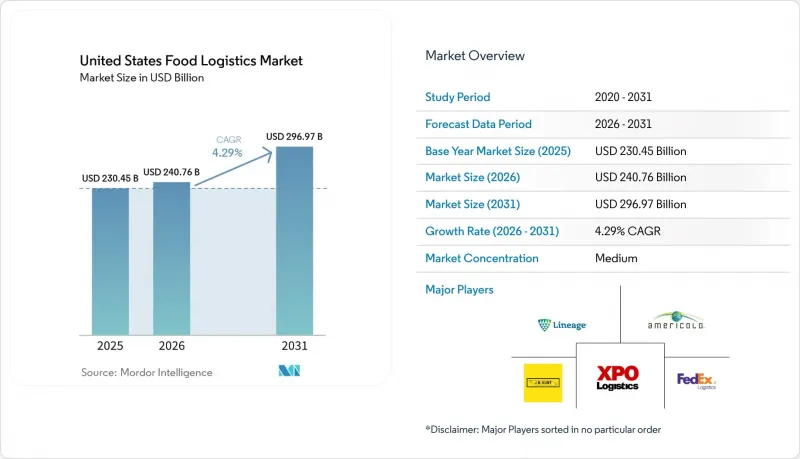
Mordor Intelligence에 의하면, 미국의 식품 물류 시장 규모는 2025년에 2,304억 5,000만 달러로 평가되었습니다. 2026년 2,407억 6,000만 달러에서 2031년까지 2,969억 7,000만 달러에 이를 것으로 예상되며, 예측 기간(2026-2031년) CAGR은 4.29%를 나타낼 전망입니다.
본 보고서는 서비스별(운송, 창고 보관, 부가가치 서비스, 기타), 온도 관리 유형별(콜드체인, 콜드체인 이외), 최종 제품 카테고리별(육류·수산물, 유제품·냉동 디저트, 과일 및 채소, 식품 및 음료, 기타)로 분류되어 있습니다. 시장 전망은 달러 기준으로 제시되어 있습니다.
미국의 식품 물류 시장 동향 및 인사이트
전자상거래 및 온라인 식료품 판매의 성장
미국의 소매 전자상거래 매출액은 2025년 4분기에 3,161억 달러에 달하고, 전년 동기 대비 5.3% 증가했습니다. 또한, 2025년 한 해 동안의 온라인 소매 매출액은 1조 2,300억 달러를 기록했으며, 시장 침투율은 16.4%를 기록했습니다. 이로 인해 미국의 식품 물류 시장 전반에서 온도 관리 배송이 증가하면서 라스트 마일 물류 관리가 더욱 복잡해지고 있습니다. 2026년 1월 식료품 및 외식업의 매출액은 775억 달러를 기록하여 전년 대비 1.9% 증가했습니다. 이는 수요가 집중되는 지역에서 신뢰할 수 있는 서비스 제공을 실현하기 위해 마이크로 풀필먼트 및 다크 스토어 모델이 계속해서 중요함을 보여줍니다. 물류 네트워크는 허브 앤 스포크 방식에서 스포크 앤 스포크 방식으로 전환되면서, 주문 빈도는 높지만 배송량은 적은 형태가 중요시되고 있습니다. 이에 따라 미국의 식품 물류 시장에서는 슬롯 배정의 정확성과 실시간 가시성이 매우 중요하게 여겨지고 있습니다. 신선 식품 물류에서는 대체품으로의 변경이나 지연에 대한 허용 범위가 극히 좁기 때문에 사업자들은 서비스 수준을 유지하고 폐기물을 줄이기 위해 온도 텔레매틱스, 동적 경로 설정, 예측적 인력 계획을 도입하고 있습니다. 2026년에는 전자상거래 보급률이 더욱 상승할 것으로 예상되며, 소매업체들이 자사 소유 차량이나 클릭 앤 콜렉트(Click & Collect) 옵션을 확대함에 따라 미국의 식품 물류 시장에서 식품 및 음료 부문의 성장세가 지속될 것으로 전망됩니다. 이를 통해 상품 인도 효율을 높이고 이익률을 재조정할 수 있습니다.
콜드체인 인프라 확충
미국 농무부(USDA)의 ‘탄력적인 식품 시스템 인프라(Resilient Food System Infrastructure)’ 프로그램은 집하, 가공 및 냉장 보관 시설에 자금을 지원함으로써, 미국의 식품 물류 시장에서 안정적인 온도 관리에 의존하는 신선 식품 부문의 중간 공급망 내 병목 현상을 해소하고자 합니다. 2024년에 독립계 육류·가금류 가공업체에 추가로 지급된 보조금은 도축 능력의 다양화를 촉진하고, 지역 간 물류 흐름을 왜곡하는 고도로 집중된 가공 클러스터에 대한 의존도를 낮추는 데 도움이 됩니다. USDA가 특수 작물에 20억 달러를 투자하는 것은 신선 농산물의 높은 물류 비용을 인식한 조치이며, 베리류, 잎채소 및 기타 취급이 까다로운 품목의 운송 중 손실을 줄일 수 있는 온도 관리 운송 인프라를 지원하기 위한 것입니다. 민간 자본도 이러한 변화에 발맞추고 있으며, DHL이 2026년 2월에 RLCold와 체결한 양해각서에서는 FSMA(식품안전현대화법)에 대응하는 제어 시스템과 기밀 설계를 갖춘 500만 제곱피트가 넘는 차세대 다온도대 보관 시설 구축을 목표로 하고 있으며, 이를 통해 미국의 식품 물류 시장의 노후화된 시설이 대체될 것입니다. 착공부터 본격 가동까지 24-36개월이 소요된다는 일정은 과제가 되겠지만, 사전 임대 계약 및 주요 임차인 확보를 통해 임차인과 가격을 확정할 수 있습니다. 이를 통해 미국의 식품 물류 시장에서 콜드체인의 신뢰성에 의존하는 화주들에게 계획의 가시성이 향상됩니다.
운전기사 부족과 노동력 관련 과제
2025년 8월 운송 부문의 실업률은 5.9%에 달하고, 전국 평균인 4.5%를 상회했습니다. 한편, 트럭 운송 부문의 고용은 전년 대비 0.4% 증가했으나, 운송 능력은 여전히 부족하여 미국의 식품 물류 시장의 운전기사 공급 불균형이 드러났습니다. 노동통계국은 주로 퇴직 및 업계 이탈을 원인으로 하여, 2034년까지 대형 트럭 및 트랙터 트레일러 운전자의 연간 평균 구인 건수가 23만 7,600건에 달할 것으로 예측하고 있으며, 견조한 수요가 있음에도 불구하고 채용 압박은 지속될 것으로 전망됩니다. 운전 시간 규정에 따라, 14시간 범위 내에서 하루 운전 시간은 11시간으로 제한되며, 주 단위로 재설정해야 합니다. 이로 인해 자산 가동률이 제한을 받게 되어, 특정 노선망에서는 운송 회사가 더 많은 트랙터와 운전 기사를 확보할 수밖에 없는 상황입니다. 적재 및 하역과 같은 노동 집약적 업무에서의 임금 상승은 특히 성수기에 엄격한 기준을 유지해야 하는 온도 관리 시설에서 하역 현장의 비용 증가로 이어지고 있습니다. 업계 선도 기업들은 미국의 식품 물류 시장에서 처리 능력을 안정화하고, 주문당 인건비를 절감하며, 높은 서비스 수준을 유지하기 위해 자동화 및 로봇을 활용한 피킹에 투자하고 있습니다.
부문별 분석
2025년, 운송 서비스는 미국의 식품 물류 시장 점유율의 53.78%를 차지했으며, 국내 및 국경 간 물류 분야에서 신선 식품을 서비스 기한 내에 배송하기 위해 도로, 철도, 수운, 항공 네트워크가 수행하는 핵심적인 역할이 입증되었습니다. 도로 운송은 라스트 마일의 정확성과 문 앞까지의 온도 관리를 뒷받침하고 있지만, 냉동 단백질이나 곡물 등 운송에 며칠이 걸리더라도 시간적 제약이 허용되는 분야에서는 철도를 이용한 복합 일괄 운송과 냉장 컨테이너의 점유율이 확대되고 있습니다. 해상 수입의 경우, 사바나, 롱비치, 뉴어크를 경유하여 농산물과 수산물이 운송되고 있으며, 항공 운송은 여전히 고부가가치 수산물을 운송하는 데 있어 주요한 선택지로 남아 있습니다. 각 물류 운영사들이 미국의 식품 물류 시장에서 완제품의 위험을 줄이고 실제 수요 신호에 신속하게 대응하기 위해 공동 포장, 키트화, 라벨링 및 포스트포네먼트 전략을 도입함에 따라, 부가가치 서비스 시장은 연평균 5.8%의 성장률을 기록하고 있습니다. 이러한 기능 덕분에 수익의 원천은 단순한 적재량에서 규제 대상 범주 및 급속한 채널 전환을 뒷받침하는 복잡성 관리와 추적성 대응의 실행으로 전환되고 있습니다.
창고 보관 업무는 생산과 출하 과정 사이에서 크로스도킹, 주문 통합, 온도 안정화를 뒷받침하는 핵심 역할을 하며, 체류 기간은 해당 카테고리의 이벤트 수준 검증을 위해 필요한 추가적인 추적성 절차를 반영하고 있습니다. 주요 물류 네트워크들은 미국의 식품 물류 시장에서 자동 피킹 및 창고 관리 소프트웨어를 도입하여, 피킹부터 출하까지의 주기를 단축하고, 제품의 무결성을 보호하며, 팔레트당 에너지 소비를 줄이고 있습니다. 자동화나 에너지 효율 개선 공사가 이루어지지 않은 기존 시설은 인건비와 공과금 급등으로 인한 압박에 직면해 있는 반면, 기술적으로 선진화된 거점은 포장 업무의 통합 및 감사 대응이 가능한 가시성을 제공함으로써 프리미엄 가격을 책정하고 있습니다. 미국의 식품 물류 시장에서는 운송, 창고, 부가가치 업무를 단일 컨트롤 타워 아래 통합하여 처리 횟수와 예외 발생률을 줄이는 업체들이 높은 평가를 받고 있습니다. 미국의 식품 물류 시장의 부가가치 서비스 시장 규모는 추적성, 배송 연기, 규정 준수 지원에 대한 지속적인 수요를 반영하여, 2026년부터 2031년까지 연평균 성장률(CAGR) 5.8%로 확대될 것으로 전망됩니다. 미국의 식품 물류 업계에서 거점 간 자동화, 소프트웨어, 재생에너지 도입을 표준화하는 사업자는 이익률을 높이고, 인건비 및 에너지 가격 변동에 대한 저항력을 강화할 수 있습니다.
기타 혜택 :
- 엑셀 형식 시장 예측(ME) 시트
- 3개월간의 애널리스트 지원
자주 묻는 질문
목차
제1장 서론
제2장 분석 방법
제3장 주요 요약
제4장 시장 구도
제5장 시장 규모 및 성장률 예측
제6장 경쟁 구도
제7장 시장 기회 및 향후 전망
KTH 26.06.24According to Mordor Intelligence, the united states food logistics market size was valued at USD 230.45 billion in 2025 and is estimated to grow from USD 240.76 billion in 2026 to reach USD 296.97 billion by 2031, at a CAGR of 4.29% during the forecast period (2026-2031).
This report is Segmented by Services (Transportation, Warehousing, Value-Added Services and Others), by Temperature-Control Type (Cold Chain and Non-Cold Chain), by End-Product Category (Meat & Seafood, Dairy & Frozen Desserts, Fruits & Vegetables, Food and Beverages, and Others). The Market Forecasts are Provided in Terms of Value USD.
United States Food Logistics Market Trends and Insights
E-commerce and Online Grocery Growth
United States retail e-commerce sales reached USD 316.1 billion in Q4 2025, up 5.3% year over year, and full-year 2025 online retail hit USD 1.23 trillion with a 16.4% penetration rate, which increases temperature-controlled deliveries and raises last-mile orchestration complexity across the United States food logistics market. Grocery and food and beverage stores report USD 77.5 billion in January 2026 sales, up 1.9% year over year, underscoring the continued importance of micro-fulfillment and dark-store models for reliable service windows near high-density demand. Networks shift from hub-spoke to spoke-spoke layouts and emphasize smaller drop sizes with higher order frequency, which puts a premium on slotting accuracy and real-time visibility in the United States food logistics market. Perishable fulfillment leaves little tolerance for substitutions or delays, so operators deploy temperature telematics, dynamic routing, and predictive labor planning to protect service levels and reduce spoilage. E-commerce penetration is expected to edge higher in 2026, with food and beverage maintaining momentum as retailers expand owned fleets and click-and-collect options that streamline handoffs and rebalance margin capture in the United States food logistics market.
Cold Chain Infrastructure Expansion
USDA's Resilient Food Systems Infrastructure program is channeling funding to aggregation, processing, and cold storage capacity to ease mid-supply chain bottlenecks in perishable categories that rely on dependable temperature control in the United States food logistics market. Additional 2024 awards to independent meat and poultry processors help diversify slaughter capacity and reduce exposure to highly concentrated processing clusters that distort regional flows. USDA's USD 2 billion for specialty crops recognizes the higher logistics costs for fresh produce and supports climate-controlled transport assets that can lower in-transit loss in berries, leafy greens, and other sensitive SKUs. Private capital aligns with this shift, as DHL Supply Chain's February 2026 MOU with RLCold targets more than five million square feet of next-generation multi-temperature capacity with FSMA-ready controls and airtight designs that replace aging stock in the United States food logistics market. Groundbreaking-to-ramp timelines of 24 to 36 months stage the relief, but pre-leasing and anchor commitments lock in tenants and pricing, which improves planning horizons for shippers that depend on cold-chain reliability in the United States food logistics market.
Driver Shortage and Labor Challenges
Transportation sector unemployment reached 5.9% in August 2025, above the national 4.5% rate, while truck transportation employment grew 0.4% year over year, which kept capacity tight and exposed mismatches in driver supply for the United States food logistics market. The Bureau of Labor Statistics projects 237,600 average annual openings for heavy and tractor-trailer drivers through 2034, driven largely by retirements and career exits, which sustains recruiting pressure despite solid demand. Hours-of-service limits cap daily driving at 11 hours within a 14-hour window and require weekly resets, which constrain asset utilization and force fleets to carry more tractors and drivers for a given route network. Wage inflation in labor-intensive functions such as loading and receiving adds cost at docks, especially in temperature-controlled facilities that must maintain strict standards during peak windows. Leaders invest in automation and robotic retrieval to stabilize throughput, reduce per-order labor, and keep service levels high in the United States food logistics market.
Other drivers and restraints analyzed in the detailed report include:
- Consumer Demand for Fresh and Perishable Foods
- Restaurant and Foodservice Industry Recovery
- Infrastructure Constraints and Congestion
For complete list of drivers and restraints, kindly check the Table Of Contents.
Segment Analysis
Transportation services captured 53.78% of the United States food logistics market share in 2025, confirming the central role of road, rail, water, and air networks to align perishables with service windows across national and cross-border flows. Road transport supports last-mile precision and door-to-door control over temperature, while rail intermodal and refrigerated containers gain share where time sensitivity allows multi-day transits for frozen proteins and grains. Waterborne imports move produce and seafood through Savannah, Long Beach, and Newark, and air remains a targeted option for high-value seafood. Value-added services expand at 5.8% annually as operators embed co-packing, kitting, labeling, and postponement tactics that reduce finished-goods risk and respond faster to real demand signals in the United States food logistics market. These capabilities move the profit pool from cubic footage toward complexity management and traceability-ready execution that supports regulated categories and rapid channel shifts.
Warehousing anchors cross-docking, order consolidation, and temperature stabilization between production and outbound flows, and dwell lengths reflect the added traceability steps required for event-level verification in covered categories. Leading networks deploy automated retrieval and warehouse execution software to compress pick-to-ship cycles, protect product integrity, and reduce energy per pallet in the United States food logistics market. Legacy facilities without automation or energy retrofits face pressure from rising labor and utility costs, while technology-forward nodes price at a premium for bundled co-packing and audit-ready visibility. The United States food logistics market rewards providers that integrate transportation, warehousing, and value-added operations under one control tower to reduce touches and exception rates. The United States food logistics market size for value-added services is projected to expand at a 5.8% CAGR between 2026 and 2031, reflecting durable demand for traceability, postponement, and compliance support. Operators in the United States food logistics industry that standardize automation, software, and renewable energy adoption across sites improve margins and resilience against labor and energy volatility.
List of Companies Covered in this Report:
- Lineage Logistics
- Americold Logistics
- XPO Logistics
- J.B. Hunt Transport Services
- FedEx Logistics
- United Parcel Service, Inc.
- C.H. Robinson Worldwide
- DHL Group
- Kuehne + Nagel
- CTW Logistics
- Buske Logistics
- Kenco Logistics
- Covenant Logistics Group
- Transervice Logistics
- RLS Logistics
- Expeditors
- GEODIS
- Penske Logistics
- Matson Logistics
- Averitt Express
Additional Benefits:
- The market estimate (ME) sheet in Excel format
- 3 months of analyst support
TABLE OF CONTENTS
1 Introduction
- 1.1 Study Assumptions & Market Definition
- 1.2 Scope of the Study
2 Research Methodology
3 Executive Summary
4 Market Landscape
- 4.1 Market Overview
- 4.2 Market Drivers
- 4.2.1 E-commerce and Online Grocery Growth
- 4.2.2 Cold Chain Infrastructure Expansion
- 4.2.3 Food Safety Regulations and Traceability
- 4.2.4 Consumer Demand for Fresh and Perishable Foods
- 4.2.5 Restaurant and Foodservice Industry Recovery
- 4.2.6 Sustainability and Waste Reduction Initiatives
- 4.3 Market Restraints
- 4.3.1 Driver Shortage and Labor Challenges
- 4.3.2 High Cold Chain Infrastructure Costs
- 4.3.3 Food Waste and Spoilage Risks
- 4.3.4 Infrastructure Constraints and Congestion
- 4.4 Value / Supply-Chain Analysis
- 4.5 Regulatory Landscape
- 4.6 Technological Outlook
- 4.7 Porter's Five Forces
- 4.7.1 Threat of New Entrants
- 4.7.2 Bargaining Power of Suppliers
- 4.7.3 Bargaining Power of Buyers
- 4.7.4 Threat of Substitutes
- 4.7.5 Competitive Rivalry
- 4.8 Hyperlocal Fulfillment Networks Emerging
- 4.9 Third-Party Logistics Specialization Accelerating
5 Market Size & Growth Forecasts (Value)
- 5.1 By Services
- 5.1.1 Transportation
- 5.1.1.1 Road
- 5.1.1.2 Rail
- 5.1.1.3 Water
- 5.1.1.4 Air
- 5.1.2 Warehousing
- 5.1.3 Value-Added Services and Others
- 5.1.1 Transportation
- 5.2 By Temperature-Control Type
- 5.2.1 Cold Chain
- 5.2.1.1 Ambient 15-25 °C
- 5.2.1.2 Chilled 2-8 °C
- 5.2.1.3 Frozen Less than 0 °C
- 5.2.2 Non-Cold Chain
- 5.2.1 Cold Chain
- 5.3 By End-Product Category
- 5.3.1 Meat & Seafood
- 5.3.2 Dairy & Frozen Desserts
- 5.3.3 Fruits & Vegetables
- 5.3.4 Food and Beverages
- 5.3.5 Others
6 Competitive Landscape
- 6.1 Market Concentration
- 6.2 Strategic Moves
- 6.3 Market Share Analysis
- 6.4 Company Profiles (includes Global level Overview, Market level overview, Core Segments, Financials as available, Strategic Information, Market Rank/Share for key companies, Products & Services, and Recent Developments)
- 6.4.1 Lineage Logistics
- 6.4.2 Americold Logistics
- 6.4.3 XPO Logistics
- 6.4.4 J.B. Hunt Transport Services
- 6.4.5 FedEx Logistics
- 6.4.6 United Parcel Service, Inc.
- 6.4.7 C.H. Robinson Worldwide
- 6.4.8 DHL Group
- 6.4.9 Kuehne + Nagel
- 6.4.10 CTW Logistics
- 6.4.11 Buske Logistics
- 6.4.12 Kenco Logistics
- 6.4.13 Covenant Logistics Group
- 6.4.14 Transervice Logistics
- 6.4.15 RLS Logistics
- 6.4.16 Expeditors
- 6.4.17 GEODIS
- 6.4.18 Penske Logistics
- 6.4.19 Matson Logistics
- 6.4.20 Averitt Express