
|
시장보고서
상품코드
2073215
말레이시아의 그린 IT 소프트웨어 시장 : 점유율 분석, 업계 동향과 통계, 성장 예측(2026-2031년)Malaysia Green IT Software - Market Share Analysis, Industry Trends & Statistics, Growth Forecasts (2026 - 2031) |
||||||
 Mordor Intelligence
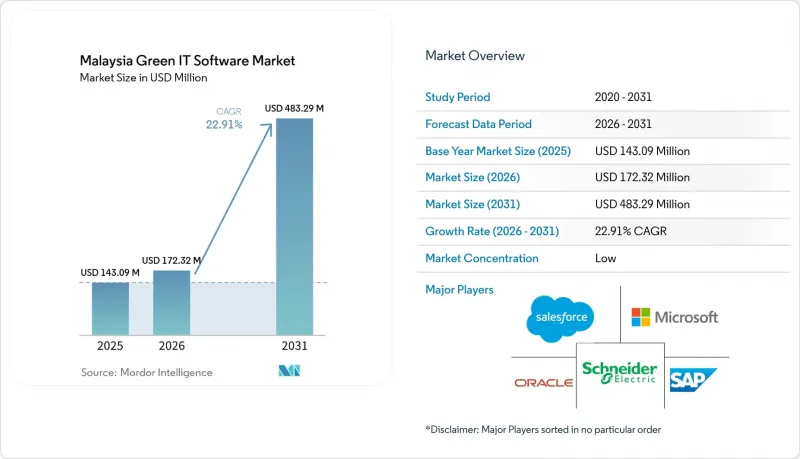
Mordor Intelligence에 의하면, 말레이시아 그린 IT 소프트웨어 시장 규모는 2025년 1억 4,309만 달러, 2026년 1억 7,232만 달러에서 2031년까지 4억 8,329만 달러로 확대한다고 예측되고 있어 2026년부터 2031년까지 연평균 복합 성장률(CAGR)은 22.91%를 나타낼 전망입니다.
본 보고서는 제공 형태(소프트웨어 및 서비스), 도입 형태(클라우드 기반, On-Premise형, 하이브리드형), 기업 규모(대기업 및 중소기업), 솔루션 유형(탄소 관리·산정 소프트웨어 등), 최종 사용자(정보기술·통신, 제조, 정부 기관 등)별로 분류되어 있습니다. 시장 전망은 금액(달러) 기준으로 제시되어 있습니다.
말레이시아 그린 IT 소프트웨어 시장 동향과 인사이트
말레이시아 증권거래소(Bursa Malaysia)의 지속가능성 공시 요건 강화
말레이시아 증권거래소(Bursa Malaysia)가 지속가능성 정보 공시 일정을 강화한 것은 말레이시아의 그린 IT 소프트웨어 시장에서 가장 강력한 직접적인 수요 요인으로 작용하고 있습니다. 단계적인 도입을 통해 주요 상장 기업들 간에 연속적인 구매 기회가 생겨났고, 의사결정 기간이 단축되며 도입 지연의 여지가 줄어들었습니다. 과거에는 정성적 보고에 의존하던 기업들이, 현재는 재현 가능한 형식으로 감사 가능한 정량적 기후 변화 및 배출량 공시를 작성할 수 있는 시스템을 필요로 하고 있습니다. 이로 인해 재무 및 감사 팀이 지속가능성 소프트웨어를 단순한 디지털 프로젝트가 아닌 규정 준수 요건으로 취급하게 되면서, 승인 방식에 변화가 생겼습니다. 또한, 말레이시아의 지속가능성 보고 프레임워크에 기반한 통일된 지침을 통해 해석의 여지가 줄어들었고, 기업 전체 차원의 조달 결정이 신속히 이루어지도록 촉진되었습니다.
기업 전체의 ESG 데이터 양 증가
ESG 데이터 양이 증가함에 따라, 말레이시아의 그린 IT 소프트웨어 시장 전반에서 수작업에 의존하는 워크플로는 더 이상 현실적이지 않게 되고 있습니다. 현재 상장 기업들은 각 거점, 사업 부문 및 공급업체로부터 데이터를 더 빈번하게 수집해야 하며, 이로 인해 단일 중앙 팀만으로는 감당하기 어려울 정도의 보고 부담이 증가하고 있습니다. 가치사슬 보고의 대상이 기존 보고 주기에 포함되지 않았던 중소규모 공급업체까지 확대되면, 그 압박감은 더욱 커집니다. 말레이시아 자본 시장청(Capital Markets Malaysia)은 2025년 7월, SEDG 버전 2 도입과 중소기업용 온실가스(GHG) 배출량 계산 도구 출시를 통해 데이터 구조를 확충하고, 보다 광범위한 사용자층을 대상으로 한 업스트림 단계의 데이터 수집 체계를 구축했습니다. 기업이 사업 네트워크 전반에 걸쳐 공개 프로그램을 확대할 때, 연결 기능, 안내식 데이터 수집 및 간소화된 검증 절차를 갖춘 공급업체가 유리한 입장에 있습니다.
기존 ERP 및 계측 시스템과의 통합 비용이 높음
높은 통합 비용은 여전히 말레이시아 그린 IT 소프트웨어 시장의 단기적인 주요 제약 요인으로 작용하고 있습니다. 많은 산업 분야의 구매 담당자들은 배출량 보고나 지속가능성 업무 흐름을 고려하여 설계되지 않은 구식 ERP 환경이나 현장 시스템에 계속 의존하고 있습니다. 청구서, 계량기, 조달 기록, 플랜트 데이터를 연동하려면 대부분의 경우 맞춤형 미들웨어, 수동 매핑, 그리고 반복적인 검증이 필요합니다. 이로 인해 프로젝트의 초기 비용이 연간 소프트웨어 라이선스 비용을 초과할 가능성이 있어, 제조, 에너지, 유틸리티 분야에서의 도입이 지연될 우려가 있습니다. 더 가벼운 커넥터나 재사용 가능한 어댑터를 제공할 수 있는 공급업체는 도입 시 발생하는 마찰을 줄이고 가치 실현까지 걸리는 시간을 단축하는 데 유리한 입장에 있습니다.
부문별 분석
2025년에는 소프트웨어가 매출의 66.19%를 차지하며, 말레이시아 그린 IT 소프트웨어 시장에서 구매자들의 지출을 주도하는 주축으로 자리매김했습니다. 이러한 점유율은 대부분의 기업이 우선적으로 공시 기한 및 기후 데이터 워크플로우 관리에 필요한 핵심 보고 플랫폼을 우선시했다는 사실을 반영하고 있습니다. 규정 준수 일정에 따라, 특히 이사회 차원에서 지속가능성에 대한 설명 책임을 지는 조직의 경우, 이러한 구매를 미룰 여지가 줄어들었습니다. 이로 인해 도입 초기 단계에서 소프트웨어 부문이 주요 지출 항목이 되었습니다. 서비스 부문은 2031년까지 연평균 성장률(CAGR) 24.71%를 나타낼 것으로 예측되며, 이는 라이선스 수요 증가에 따라 도입 지원, 검증 및 관리형 보고 서비스에 대한 수요가 높아지고 있음을 보여줍니다.
서비스 분야는 연평균 성장률(CAGR) 24.71%를 나타낼 것으로 예측되며, 기업들이 감사 지원, 통제 설계 및 관리형 공시 워크플로우를 요구함에 따라 이 분야의 말레이시아 그린 IT 소프트웨어 시장은 확대되고 있습니다. 구매자들은 데이터 흐름 구성, 출력 검증, 검토용 증빙 자료 준비를 모두 수행할 수 있는 단일 파트너를 점점 더 많이 찾고 있습니다. 이에 따라 기본적인 기술적 설정뿐만 아니라, 보증 대응 준비 지원 및 워크플로우 관리에 대한 수요가 증가하고 있습니다. 말레이시아 회계사 협회는 IBM Envizi와 Workiva를 플랫폼 및 통제 요건을 모두 충족하는 광범위한 기능 세트를 필요로 하는 요구 사항에 부응하는 종합적인 지속가능성 보고 도구로 꼽고 있습니다. 이러한 구조는 정기 보고에 사용되는 것과 유사한 사용자 워크플로우를 통해 보증 지향적 기능을 유지할 수 있는 공급자에게 유리하게 작용합니다. 서비스 부문은 지속가능성 보고에 대한 요구가 점점 더 복잡해지는 가운데, 이에 대응하는 데 있어 매우 중요한 역할을 수행할 준비가 되어 있습니다.
2025년 말레이시아 그린 IT 소프트웨어 시장에서 클라우드 기반 도입은 57.11%를 차지하며, 신속한 확장을 위한 선호되는 모델로 자리매김했습니다. 구독형 서비스를 통해 팀은 사내 인프라 구축 주기를 기다릴 필요 없이 사용자 추가, 템플릿 업데이트 및 보고를 일원화할 수 있습니다. 또한, 도입 초기 단계에서 사내 IT 팀의 부담을 줄일 수도 있습니다. 은행 및 유틸리티 분야에서는 기존의 거버넌스 관행이 기술 선정에 영향을 미치고 있기 때문에 On-Premise 환경의 중요성은 여전히 높습니다. 기업들이 속도와 기밀성이 높은 운영 데이터에 대한 엄격한 관리의 균형을 모색하는 가운데, 하이브리드 환경은 2031년까지 연평균 성장률(CAGR) 23.97%로 성장할 것으로 전망됩니다.
하이브리드형에 대한 수요가 증가하고 있는 배경에는 많은 기업이 소스 데이터의 로컬 처리와 전사적인 가시성을 실현하는 클라우드 보고서를 동시에 구현하고자 한다는 점이 있습니다. 또한, 2025년에 국경 간 데이터 전송에 관한 지침이 발표됨에 따라, 인수 기업은 호스팅 관련 규정을 더욱 신중하게 검토하고 있습니다. 이를 통해 기업은 소스 시스템의 관리와 기업 정보 공개에 대한 접근 권한을 분리할 수 있게 됩니다. 또한, 도입 아키텍처는 단순한 기술적 선택이 아니라 거버넌스상의 선택이 됩니다. 데이터 거점 관리 및 단계적인 클라우드 도입을 지원하는 벤더는 복잡한 프로젝트에서 유리한 입지를 확보할 수 있을 것입니다.
기타 혜택:
- 엑셀 형식 시장 예측(ME) 시트
- 3개월간의 애널리스트 지원
자주 묻는 질문
목차
제1장 서론
제2장 조사 방법
제3장 주요 요약
제4장 시장 구도
제5장 시장 규모와 성장 예측
제6장 경쟁 구도
제7장 시장 기회와 향후 전망
JHS 26.07.03According to Mordor Intelligence, the malaysia green IT software market size is projected to expand from USD 143.09 million in 2025 and USD 172.32 million in 2026 to USD 483.29 million by 2031, registering a CAGR of 22.91% between 2026 to 2031.
This report is Segmented by Offering (Software, and Services), Deployment (Cloud-Based, On-Premise, and Hybrid), Enterprise Size (Large Enterprises, and Small and Medium Enterprises), Solution Type (Carbon Management and Accounting Software, and More), and End User (Information Technology and Telecom, Manufacturing, Government, and More). The Market Forecasts are Provided in Terms of Value (USD).
Malaysia Green IT Software Market Trends and Insights
Rising Bursa Malaysia Sustainability Disclosure Requirements
Bursa Malaysia's tighter sustainability disclosure schedule is the strongest direct demand trigger in the Malaysia Green IT Software Market. The phased rollout created consecutive buying windows across major listed issuers, compressing decision timelines and reducing the scope for delayed adoption. Enterprises that once relied on qualitative reporting now need systems that can produce auditable, quantitative climate and emissions disclosures in a repeatable format. This changed approval behavior because finance and audit teams began treating sustainability software as a compliance requirement rather than a discretionary digital project. The unified direction under Malaysia's sustainability reporting framework also reduced room for interpretation and supported faster procurement decisions across the corporate base.
Expansion of ESG Data Volumes Across Enterprises
Rising ESG data volumes are making manual workflows less practical across the Malaysia Green IT Software Market. Listed companies now need more frequent data collection from sites, business units, and suppliers, which increases the reporting burden beyond a single central team. The pressure is even higher when value chain reporting reaches smaller suppliers that were not part of earlier reporting cycles. Capital Markets Malaysia expanded the data structure in July 2025 with SEDG Version 2 and the launch of a GHG emissions calculator for SMEs, thereby structuring upstream data collection for a larger user base. Vendors with ready connectors, guided data capture, and simpler validation routines are better placed when enterprises scale disclosure programs across wider operating networks.
High Integration Cost With Legacy ERP and Metering Systems
High integration cost is still the main near-term brake on the Malaysia Green IT Software Market. Many industrial buyers continue to rely on older ERP environments and site systems that were not designed for emissions reporting or sustainability workflows. Connecting bills, meters, procurement records, and plant data often requires custom middleware, manual mapping, and repeated validation. That can push early project costs above the annual software license and slow rollout in manufacturing, energy, and utilities. Vendors that can offer lighter connectors and reusable adapters are better positioned to reduce deployment friction and shorten time-to-value.
Other drivers and restraints analyzed in the detailed report include:
- Cloud Migration for Scalable Sustainability Reporting
- AI-Enabled Emissions Factor Mapping and Audit Trails
- Limited ESG Software Skills Among SME Buyers
For complete list of drivers and restraints, kindly check the Table Of Contents.
Segment Analysis
Software accounted for 66.19% of revenue in 2025 and remained the anchor of buyer spending in the Malaysia Green IT Software Market. This share reflects the fact that most enterprises first prioritized the core reporting platform needed to manage disclosure deadlines and climate data workflows. The compliance calendar reduced room to defer these purchases, especially for organizations with board-level sustainability accountability. This made the software layer the main spending item during the first stage of adoption. Services are projected to grow at a 24.71% CAGR through 2031, indicating that implementation support, validation, and managed reporting are rising alongside license demand.
Services are projected to grow at a 24.71% CAGR, and the Malaysia Green IT Software Market for this offering is expanding as enterprises seek audit support, control design, and managed disclosure workflows. Buyers increasingly want a single partner who can configure data flows, validate outputs, and prepare evidence for review. This is lifting demand for assurance-readiness support and workflow administration, not only basic technical setup. The Malaysian Institute of Accountants listed IBM Envizi and Workiva as comprehensive sustainability reporting tools that support the need for broad feature sets that meet both platform and control requirements. That structure favors providers that can keep assurance-oriented capabilities close to the same user workflow used for recurring reporting. The services segment is poised to play a pivotal role in addressing the growing complexity of sustainability reporting needs.
Cloud-based deployment accounted for 57.11% of the Malaysia Green IT Software Market in 2025 and remained the preferred model for rapid rollout. Subscription delivery helps teams add users, update templates, and centralize reporting without waiting for longer internal infrastructure cycles. It also reduces the burden on internal IT teams during the first phase of deployment. On-premise setups still matter in banking and utilities, where older governance practices shaped technology preferences. Hybrid is projected to grow at a 23.97% CAGR through 2031 as enterprises balance speed with tighter control over sensitive operating data.
Hybrid demand is rising because many firms want local processing for source data and cloud reporting for enterprise-wide visibility. Buyers are also weighing hosting rules more closely after the 2025 publication of cross-border transfer guidance. This helps enterprises separate source-system control from enterprise disclosure access. It also makes deployment architecture a governance choice, not only a technology choice. Vendors that support residency controls and phased cloud adoption should be better placed in complex accounts.
Complete Report Scope:
- By Offering
- Software
- Services
- By Deployment
- Cloud-Based
- On-Premise
- Hybrid
- By Enterprise Size
- Large Enterprises
- Small and Medium Enterprises
- By Solution Type
- Carbon Management and Accounting Software
- ESG Reporting and Compliance Software
- Sustainability Data Management Platforms
- Decarbonization Planning Software
- Energy and Resource Optimization Software
- By End User
- Information Technology and Telecom
- Banking, Financial Services, and Insurance
- Manufacturing
- Energy and Utilities
- Retail and E-Commerce
- Government
- Healthcare and Life Sciences
- Construction and Infrastructure
- Other End-User Industries
List of Companies Covered in this Report:
- Workiva Inc.
- Wolters Kluwer N.V.
- International Business Machines Corporation
- Schneider Electric SE
- SAP SE
- Oracle Corporation
- Microsoft Corporation
- Salesforce, Inc.
- ServiceNow, Inc.
- Enablon SAS
- Cority Software Inc.
- Sphera Solutions, Inc.
- Intelex Technologies ULC
- Nasdaq, Inc.
- OneTrust, LLC
- Diligent Corporation
- IBM Malaysia Sdn. Bhd.
- PANTAS Software Sdn. Bhd.
- RAA Capital Partners Sdn. Bhd.
- ASPL (Malaysia) Sdn. Bhd.
Additional Benefits:
- The market estimate (ME) sheet in Excel format
- 3 months of analyst support
TABLE OF CONTENTS
1 INTRODUCTION
- 1.1 Study Assumptions and Market Definition
- 1.2 Scope of the Study
2 RESEARCH METHODOLOGY
3 EXECUTIVE SUMMARY
4 MARKET LANDSCAPE
- 4.1 Market Overview
- 4.2 Market Drivers
- 4.2.1 Rising Bursa Malaysia Sustainability Disclosure Requirements
- 4.2.2 Expansion of ESG Data Volumes Across Enterprises
- 4.2.3 Cloud Migration for Scalable Sustainability Reporting
- 4.2.4 AI-Enabled Emissions Factor Mapping and Audit Trails
- 4.2.5 Data Sovereignty Preference for Local Hosting
- 4.2.6 Carbon-Linked Procurement and Supplier Reporting Pressure
- 4.3 Market Restraints
- 4.3.1 High Integration Cost With Legacy ERP and Metering Systems
- 4.3.2 Limited ESG Software Skills Among SME Buyers
- 4.3.3 Fragmented Emissions Data Across Multi-Site Operations
- 4.3.4 Unclear Internal ROI Versus Compliance-Only Adoption
- 4.4 Impact of Macroeconomic Factors on the Market
- 4.5 Industry Value Chain Analysis
- 4.6 Regulatory Landscape
- 4.7 Technological Outlook
- 4.8 Porter's Five Forces Analysis
- 4.8.1 Threat of New Entrants
- 4.8.2 Bargaining Power of Buyers
- 4.8.3 Bargaining Power of Suppliers
- 4.8.4 Threat of Substitutes
- 4.8.5 Industry Rivalry
5 MARKET SIZE AND GROWTH FORECASTS (VALUE)
- 5.1 By Offering
- 5.1.1 Software
- 5.1.2 Services
- 5.2 By Deployment
- 5.2.1 Cloud-Based
- 5.2.2 On-Premise
- 5.2.3 Hybrid
- 5.3 By Enterprise Size
- 5.3.1 Large Enterprises
- 5.3.2 Small and Medium Enterprises
- 5.4 By Solution Type
- 5.4.1 Carbon Management and Accounting Software
- 5.4.2 ESG Reporting and Compliance Software
- 5.4.3 Sustainability Data Management Platforms
- 5.4.4 Decarbonization Planning Software
- 5.4.5 Energy and Resource Optimization Software
- 5.5 By End User
- 5.5.1 Information Technology and Telecom
- 5.5.2 Banking, Financial Services, and Insurance
- 5.5.3 Manufacturing
- 5.5.4 Energy and Utilities
- 5.5.5 Retail and E-Commerce
- 5.5.6 Government
- 5.5.7 Healthcare and Life Sciences
- 5.5.8 Construction and Infrastructure
- 5.5.9 Other End-User Industries
6 COMPETITIVE LANDSCAPE
- 6.1 Market Concentration
- 6.2 Strategic Moves
- 6.3 Market Share Analysis
- 6.4 Company Profiles (includes Global Level Overview, Market Level Overview, Core Segments, Financials as available, Strategic Information, Market Rank/Share, Products and Services, Recent Developments)
- 6.4.1 Workiva Inc.
- 6.4.2 Wolters Kluwer N.V.
- 6.4.3 International Business Machines Corporation
- 6.4.4 Schneider Electric SE
- 6.4.5 SAP SE
- 6.4.6 Oracle Corporation
- 6.4.7 Microsoft Corporation
- 6.4.8 Salesforce, Inc.
- 6.4.9 ServiceNow, Inc.
- 6.4.10 Enablon SAS
- 6.4.11 Cority Software Inc.
- 6.4.12 Sphera Solutions, Inc.
- 6.4.13 Intelex Technologies ULC
- 6.4.14 Nasdaq, Inc.
- 6.4.15 OneTrust, LLC
- 6.4.16 Diligent Corporation
- 6.4.17 IBM Malaysia Sdn. Bhd.
- 6.4.18 PANTAS Software Sdn. Bhd.
- 6.4.19 RAA Capital Partners Sdn. Bhd.
- 6.4.20 ASPL (Malaysia) Sdn. Bhd.
7 MARKET OPPORTUNITIES AND FUTURE OUTLOOK
- 7.1 White-Space and Unmet-Need Assessment