
|
시장보고서
상품코드
2098489
유럽의 그린 IT 소프트웨어 : 시장 점유율 분석, 업계 동향과 통계, 성장 예측(2026-2031년)Europe Green IT Software - Market Share Analysis, Industry Trends & Statistics, Growth Forecasts (2026 - 2031) |
||||||
 Mordor Intelligence
Mordor Intelligence에 의하면, 유럽의 그린 IT 소프트웨어 시장 규모는 2025년에 61억 1,000만 달러, 2026년에 69억 4,000만 달러에서 2031년까지 144억 5,000만 달러에 이를 것으로 예측되며, 2026-2031년 CAGR 15.80%를 기록할 전망입니다.
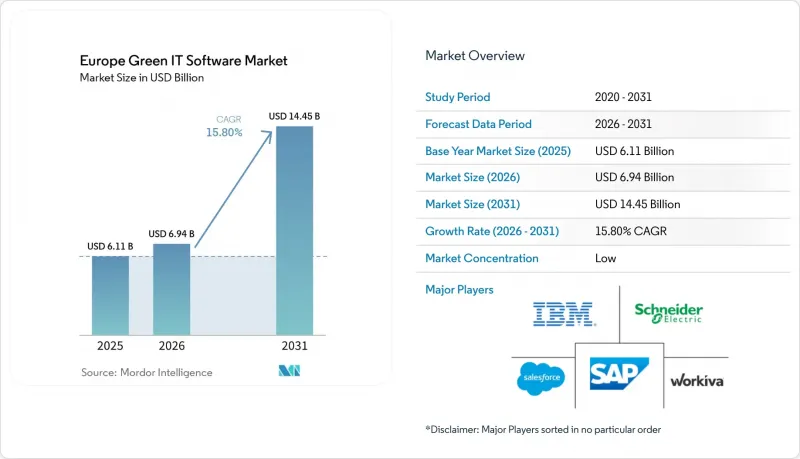
본 보고서는 제공 형태(소프트웨어 및 서비스), 도입 형태(클라우드, On-Premise, 하이브리드), 조직 규모(대기업 및 중소기업), 최종 사용자 산업(IT 및 통신, 은행, 금융서비스 및 보험(BFSI), 제조, 에너지·유틸리티 등), 솔루션 유형(탄소 관리·산정 소프트웨어 등), 그리고 지역별로 분류되어 있습니다. 시장 전망은 금액(달러) 기준으로 제시되어 있습니다.
유럽 그린 IT 소프트웨어 시장 동향 및 인사이트
EU 기업 지속가능성 보고 지침(CSRD)에 따른 규정 준수 압력
CSRD(기업 지속가능성 보고 지침)는 유럽 그린 IT 소프트웨어 시장에 있어 여전히 가장 큰 구조적 촉진요인으로 작용하고 있습니다. 이는 해당 지침이 유럽 전역의 대규모 조직에 대해 지속가능성 보고를 공식적이고 검증 가능한 기업 의무로 규정하기 때문입니다. ESMA(유럽증권시장감독청)의 보고서에 따르면, 2025년에는 CSRD 및 NFRD(비재무보고 지침)에 기반한 지속가능성 보고서 심사가 367건 진행되었으며, 그 결과 109개 발행사에 대해 시정 조치가 취해졌습니다. 이는 규제 당국이 긴 유예 기간을 두지 않고, 첫 번째 보고 주기에서 이미 조치를 취했음을 보여줍니다. 이러한 집행 태도는 소프트웨어 수요에 있어 중요한 의미를 지닙니다. 왜냐하면 이를 통해 구매자는 더 강력한 통제, 더 우수한 감사 추적 기록, 그리고 기업 수준의 공시 및 기초가 되는 소스 데이터에 대한 더 명확한 거버넌스를 갖춘 시스템을 요구하게 될 것이기 때문입니다. 2026년 적용 기준 재검토로 인해 직접 적용 대상이 되는 기업의 수는 감소했으나, 다국적 조직 구조나 광범위한 공급업체 기반을 가진 대기업에 대한 의무적 지출이 집중되었습니다. 이러한 기업에서는 일반적으로 더 심층적인 도입과 광범위한 구현 작업이 필요하기 때문입니다. 또한 ESRS 보고에는 자회사 간, 공시 항목 및 보증 프로세스 전반에 걸친 일관성이 요구됨에 따라, 스프레드시트로는 관리가 어려운 수준의 구조화된 정보가 필요하게 됩니다. 이로 인해 기준치가 변동하더라도 플랫폼에 대한 수요는 견조하게 유지될 것입니다. 실제로 이러한 요인으로 인해 유럽의 그린 IT 소프트웨어 시장에는 일반적인 재량적 소프트웨어 예산 주기보다 후퇴하기 어려운 규정 준수 최저선이 형성되어 있습니다.
감사 대응이 가능한 스코프 1, 2, 3 보고 워크플로우 증가
감사 대응형 배출량 워크플로우에 대한 수요가 증가하고 있습니다. 이는 대기업들이 원시 운영 데이터를 스코프 1, 스코프 2, 스코프 3에 걸친 공개 가능한 온실가스 보고서로 추적 가능한 형식으로 변환할 수 있는 소프트웨어를 필요로 하기 때문입니다. 스코프 3은 가장 어려운 부분으로 꼽힙니다. 기업의 구매 담당자들은 단순한 평균값이나 일회성 추정치가 아닌, 매우 방대한 공급업체 및 파트너 네트워크에서 나온 1차 데이터를 필요로 하는 경우가 많기 때문입니다. EcoVadis와 Watershed는 2026년 3월 제휴를 맺고, 공급업체 수준의 탄소 정보를 기업의 보고 워크플로우와 연동했습니다. 이는 벤더 전략이 고립된 탄소 산정 도구가 아닌 공유 데이터 인프라로 전환되고 있음을 보여줍니다. EcoVadis와 Workiva는 2026년 5월, 이 모델을 더욱 확장하여 Carbon Data Network의 출력을 보고 워크플로우와 연동함으로써, 고객이 보다 상세하고 감사에 대응 가능한 Scope 3 산정으로 전환할 수 있도록 했습니다. 이러한 움직임은 유럽의 그린 IT 소프트웨어 시장에 있어 중요합니다. 단순한 대시보드 기반 보고를 넘어 상호 운용성, 공급업체와의 연계, 그리고 증거의 질에 대한 구매자의 기대치가 높아지고 있기 때문입니다. 또한, 복잡한 사업 구조를 가진 제조업체, 소매업체, 금융 그룹은 공급업체 데이터의 수집, 검증 및 실용적인 보고 구조로의 매핑에 대해 여전히 지속적인 지원이 필요하기 때문에 이러한 움직임은 서비스 계층의 강화에도 기여하고 있습니다.
관할 구역 및 프레임워크별로 분절된 보고 기준
다국적 구매자들은 여전히 여러 가지 지속가능성 프레임워크, 공시 요건, 검증 관행을 동시에 운영하고 있기 때문에 이러한 분절화는 도입에 큰 걸림돌이 되고 있습니다. ESMA(유럽증권시장감독청)가 2026년 4월에 발표한 규정 준수 현황 목록에 따르면, EU 및 EEA(유럽경제지역)의 30개 국내 관할 당국 중 5곳이 시행 지침을 준수하지 않겠다고 선언한 반면, 독일과 스페인은 여전히 준수 예정으로 목록에 포함되어 있었습니다. 이는 유럽 전역에서 감독 기준이 완전히 통일되어 있지 않음을 의미합니다. 이러한 불균일한 태도로 인해, 특히 내부 그룹이 여러 법인이나 보고 관할 구역에 걸쳐 있는 경우, 국경을 넘어 사업을 전개하는 기업은 병행된 보고 체계와 거버넌스 점검을 유지할 수밖에 없게 됩니다. 지속가능성 공시 기준을 둘러싼 영국의 독자적인 행보는 동일한 기술 스택 내에서 EU 보고 요건과 비EU 요건을 조화시켜야 하는 기업들에게 추가적인 부담이 되고 있습니다. 이로 인해 벤더들의 제품 개발에 대한 압박이 커지고 있습니다. 기준이 진화함에 따라 프레임워크 간의 매핑, 용어의 일관성, 그리고 공시 논리를 끊임없이 변경해야 하기 때문입니다. 또한 IT 측면에서도 특정 보고 환경에서는 문제없이 작동하는 플랫폼이라 할지라도, 다른 환경에서는 추가 설정, 서비스 또는 수동 관리가 필요할 수 있으므로 구매자들은 더욱 신중해지고 있습니다.
부문 분석
2025년에는 소프트웨어가 매출의 77.52%를 차지할 것으로 예상되며, 이는 유럽의 그린 IT 소프트웨어 시장에서 정기적인 플랫폼 구독이 여전히 주요 비즈니스 모델임을 보여줍니다. 이러한 상황은 여러 사업체와 이용 사례를 아우르는 보고 워크플로우, 문서 관리, 데이터 계보 및 지속적인 업데이트를 관리할 수 있는 통합 시스템에 대한 수요를 반영합니다. 또한 소프트웨어 계층은 공급업체가 고객 유지율을 높일 수 있는 분야이기도 합니다. 고객은 설정, 통합, 템플릿, 대시보드, 감사 대응이 완료된 기록에 의존하고 있으며, 이는 보고 주기가 시작되면 이를 대체하기 어렵기 때문입니다. 실용적인 관점에서 볼 때, 가장 큰 점유율을 차지한 것은 일회성 공시 도구가 아니라 ESG 보고, 탄소 회계 및 지속가능성 데이터 관리를 위한 운영상의 ‘시스템 오브 레코드(System of Record)’로 기능할 수 있는 플랫폼이었습니다. 이로 인해 보고, 계획, 운영 모니터링과 같은 활용 범위가 확대되었음에도 불구하고, 수익 기반은 라이선싱 및 구독을 통해 계속해서 견고하게 뒷받침되었습니다.
서비스 분야는 2026년부터 2031년까지 연평균 성장률(CAGR) 18.24%로 확대될 것으로 예측되며, 이는 유럽의 그린 IT 소프트웨어 시장에서 지원 계층이 핵심 플랫폼 계층보다 빠른 속도로 성장하고 있음을 의미합니다. 구매자가 기본적인 보고 체계에서 공식적인 거버넌스 요건에 기반한 이중 중요성 평가, 엔티티 매핑, 공급업체 온보딩 및 통제 테스트로 전환함에 따라 도입 작업에 대한 수요가 높아집니다. 또한, 지속가능성 보고를 목적으로 구축되지 않은 사내 시스템 전반에 걸쳐 고객이 보증 준비, 프로세스 설계, 데이터 수집 지원을 필요로 하는 경우에도 서비스의 중요성은 높아집니다. 이것이 바로 소프트웨어 주도형 카테고리임에도 불구하고, 통합업체, 관리형 데이터 서비스, 자문 팀, 그리고 전문 구현 파트너에게 여전히 큰 기회가 남아 있는 이유입니다. 이러한 성장의 균형은 구매자가 더 이상 도구만을 구매하는 것이 아니라, 실제 보고 일정 및 운영 체계 내에서 해당 도구를 활용할 수 있도록 하는 실행 능력도 함께 구매하고 있음을 시사합니다.
2025년에는 클라우드 도입이 매출의 66.84%를 차지했으며, 도입 모델별로 보더라도 유럽 그린 IT 소프트웨어 시장에서 가장 큰 점유율을 기록했습니다. 이 점유율은 특히 구매자가 반복되는 보고 기한을 준수하고, 사업 부문이나 법인을 넘나드는 사용자 간의 조정을 수행해야 하는 상황에서 SaaS가 제공하는 속도와 확장성을 반영한 것입니다. 또한 클라우드 플랫폼은 벤더들이 현재보다 더 빈번하게 제품에 통합하고 있는 지속적인 업데이트, 프레임워크 변경, 공급업체와의 연동 기능, AI를 활용한 워크플로우 개선 등의 측면에서도 더 적합한 환경을 제공합니다. 많은 조직에게 이 모델은 초기 도입 기간을 단축하고, 여러 거점에 걸쳐 있는 개별 On-Premise 환경을 유지하는 부담을 경감시켰습니다. 이러한 요인들로 인해 클라우드는 이 지역의 도입 기반의 대부분에서 상업적 및 기술적 측면에서 여전히 기본 선택지로 자리매김했습니다.
하이브리드 배포는 2026년부터 2031년까지 연평균 성장률(CAGR) 19.18%를 나타낼 것으로 예측되며, 절대적인 점유율 면에서는 클라우드가 여전히 우위를 점하고 있지만 가장 빠르게 확대되고 있는 구성입니다. 이러한 성장을 뒷받침하는 것은 분석 및 워크플로우 오케스트레이션에는 클라우드의 유연성을 요구하면서도, 기밀성이 높은 운영 데이터나 보고서 데이터에 대해서는 여전히 로컬 또는 지역 수준의 관리를 선호하는 구매자들입니다. 따라서 정부, 국방, 금융 서비스 등 규제가 엄격한 환경에서는 내부 정책에 따라 ESG 관련 기록을 클라우드 기반으로 완전히 처리하는 것이 여전히 제한될 가능성이 있으므로, On-Premise 시스템은 여전히 중요한 역할을 수행하고 있습니다. ESG-X는 EU에 거점을 두고, 인증을 받은 독일의 데이터센터 인프라를 핵심으로 하는 아키텍처를 구축하고 있습니다. 이는 데이터의 소재지 및 거버넌스가 단순한 IT상의 배경적 요건이 아니라, 명확한 구매 기준으로 자리 잡고 있음을 보여줍니다. 이러한 변화로 인해 하이브리드 모델은 유럽의 그린 IT 소프트웨어 업계에서 더욱 중요한 역할을 맡게 될 것입니다. 향후 도입 단계에서는 벤더가 확장성, 개인정보 관리, 감사 대응성을 하나의 운영 모델에 얼마나 효과적으로 통합할 수 있는지가 도입의 성패를 좌우하는 경우가 많기 때문입니다.
기타 혜택:
- 엑셀 형식 시장 예측(ME) 시트
- 3개월간의 애널리스트 지원
자주 묻는 질문
목차
제1장 서론
제2장 조사 방법
제3장 주요 요약
제4장 시장 구도
제5장 시장 규모와 성장 예측
제6장 경쟁 구도
제7장 시장 기회와 향후 전망
KTH 26.08.06According to Mordor Intelligence, the Europe green IT software market size is projected to be USD 6.11 billion in 2025, USD 6.94 billion in 2026, and reach USD 14.45 billion by 2031, growing at a CAGR of 15.80% from 2026 to 2031.
This report is Segmented by Offering (Software, and Services), Deployment Mode (Cloud, On-Premises, and Hybrid), Organization Size (Large Enterprises, and SMEs), End-User Industry (IT and Telecom, BFSI, Manufacturing, Energy and Utilities, and More ), Solution Type (Carbon Management and Accounting Software, and More), and Geography. The Market Forecasts are Provided in Terms of Value (USD).
Europe Green IT Software Market Trends and Insights
EU Corporate Sustainability Reporting Directive Compliance Pressure
The CSRD remains the single largest structural catalyst for the Europe green IT software market because it turns sustainability reporting into a formal and reviewable enterprise obligation for large organizations across the region. ESMA reported 367 examinations of sustainability statements under CSRD and NFRD content review in 2025, and those reviews led to enforcement actions against 109 issuers, which showed that regulators were already acting during the first reporting cycle rather than allowing a long grace period.That enforcement posture matters for software demand because it pushes buyers toward systems with stronger controls, better audit trails, and clearer governance over entity-level disclosures and underlying source data. The 2026 threshold revision reduced the number of companies directly in scope, but it shifted mandatory spending toward larger enterprises whose multi-country structures and wider supplier bases usually require deeper deployments and broader implementation work. ESRS reporting also requires a level of structured information that is difficult to manage through spreadsheets once companies need consistency across subsidiaries, disclosure topics, and assurance processes, which keeps platform demand firm even when thresholds move. In practice, this driver gives the Europe green IT software market a compliance floor that is harder to reverse than a normal discretionary software budget cycle.
Rise In Audit-Ready Scope 1, 2, and 3 Reporting Workflows
Demand for audit-ready emissions workflows is rising because large companies need software that can move from raw operational inputs to disclosure-ready greenhouse gas reporting across Scope 1, Scope 2, and Scope 3 in a traceable format. Scope 3 has become the most difficult layer because enterprise buyers often need primary data from very large supplier and partner networks rather than simple averages or one-time estimates. EcoVadis and Watershed partnered in March 2026 to connect supplier-grade carbon information with enterprise reporting workflows, which showed how vendor strategy is moving toward shared data infrastructure rather than isolated carbon accounting tools. EcoVadis and Workiva extended that model in May 2026 by linking Carbon Data Network outputs into reporting workflows so customers could move toward more granular and audit-ready Scope 3 calculations.These moves matter for the Europe green IT software market because they raise buyer expectations around interoperability, supplier engagement, and evidence quality rather than simple dashboard reporting. They also support the services layer because complex manufacturers, retailers, and financial groups still need ongoing help to collect, validate, and map supplier data into usable reporting structures.
Fragmented Reporting Standards Across Jurisdictions and Frameworks
Fragmentation remains a real brake on adoption because multinational buyers still operate across multiple sustainability frameworks, disclosure expectations, and verification practices simultaneously. ESMA's April 2026 compliance table showed that 5 of 30 EU and EEA national competent authorities declared non-compliance with the enforcement guidelines, while Germany and Spain were still listed as intending to comply, which means the supervisory baseline is not fully uniform across Europe. That uneven posture forces cross-border companies to maintain parallel reporting configurations and governance checks, especially when internal groups span several legal entities and reporting jurisdictions. The UK's separate path around sustainability disclosure standards adds another layer for companies that must align EU reporting with non-EU requirements inside the same technology stack. This increases product development pressure for vendors because cross-framework mapping, terminology alignment, and disclosure logic must keep changing as standards evolve. IT also makes buyers more cautious because a platform that works well in one reporting environment may still require extra configuration, services, or manual controls in another.
Other drivers and restraints analyzed in the detailed report include:
- Expansion of Energy Optimization Use Cases in Data Centers and Digital Workplaces
- AI-Enabled Automation of ESG Data Collection and Reconciliation
- High Integration Burden with Legacy ERP, Cloud, and Data Stack Environments
For complete list of drivers and restraints, kindly check the Table Of Contents.
Segment Analysis
Software held 77.52% of revenue in 2025, which shows that recurring platform subscriptions remained the main commercial model in the Europe green IT software market. That position reflects the need for centralized systems that can manage reporting workflows, document controls, data lineage, and ongoing updates across several entities and use cases. The software layer is also where vendors build stickiness because customers depend on configuration, integrations, templates, dashboards, and audit-ready records that become harder to replace once reporting cycles are underway. In practical terms, the largest share stayed with platforms that could serve as the operational system of record for ESG reporting, carbon accounting, and sustainability data management rather than as one-time disclosure tools. This kept the revenue base anchored in licensing and subscriptions even as the scope of use widened across reporting, planning, and operational monitoring.
Services are projected to expand at an 18.24% CAGR between 2026 and 2031, which means the support layer is growing faster than the core platform layer inside the Europe green IT software market. Implementation work rises when buyers move from a basic reporting setup into double-materiality assessments, entity mapping, supplier onboarding, and control testing under formal governance requirements. Services also become more important when customers need support for assurance readiness, process design, and data collection across internal systems that were never built for sustainability reporting. This is why a software-led category still creates substantial room for integrators, managed data services, advisory teams, and specialist implementation partners. The balance of growth suggests that buyers are no longer only purchasing tools, but are also purchasing execution capacity that helps them make those tools usable inside real reporting calendars and operating structures.
Cloud deployment held 66.84% of revenue in 2025, which gave it the largest position in the Europe green IT software market size across deployment models. That share reflects the speed and scalability of SaaS delivery, especially when buyers must meet repeated reporting deadlines and coordinate users across business units and legal entities. Cloud platforms are also better placed for continuous updates, framework changes, supplier collaboration features, and AI-based workflow improvements that vendors now push into their products more frequently. For many organizations, this model shortened initial deployment time and reduced the burden of maintaining separate local installations across multiple sites. These factors kept Cloud as the default commercial and technical choice for much of the regional installed base.
Hybrid deployment is projected to grow at a 19.18% CAGR between 2026 and 2031, which makes it the fastest-moving setup even though cloud remained larger in absolute share. Growth is being supported by buyers who want cloud flexibility for analytics and workflow orchestration, but still prefer local or regional control over sensitive operational and reporting data. On-premises systems, therefore, remain relevant in regulated settings such as government, defense, and financial services, where internal policies can still restrict fully cloud-based handling of ESG-related records. ESG-X has positioned its architecture around EU-based and certified German data center infrastructure, which shows how data residency and governance are turning into visible buying criteria rather than background IT preferences. This shift gives hybrid models a stronger role in the Europe green IT software industry because the next phase of deployments will often depend on how well vendors can combine scale, privacy controls, and audit defensibility in one operating model.
Complete Report Scope:
- By Offering
- Software
- Services
- By Deployment Mode
- Cloud
- On-Premises
- Hybrid
- By Organization Size
- Large Enterprises
- SMEs
- By End-User Industry
- IT and Telecom
- BFSI
- Manufacturing
- Energy and Utilities
- Retail and E-Commerce
- Government
- Healthcare
- Construction and Infrastructure
- Other End-User Industries
- By Solution Type
- Carbon Management and Accounting Software
- ESG Reporting and Compliance Software
- Sustainability Data Management Platforms
- Decarbonization Planning Software
- Energy and Resource Optimization Software
- By Geography
- United Kingdom
- Germany
- France
- Italy
- Spain
- Russia
- Nordics
- Rest of Europe
List of Companies Covered in this Report:
- SAP SE
- IBM Corporation
- Schneider Electric SE
- Salesforce, Inc.
- Workiva Inc.
- Persefoni AI Inc.
- Watershed Technology, Inc.
- Sweep SAS
- Plan A Earth GmbH
- Emitwise Ltd
- Cority Software Inc.
- Diligent Corporation
- Enablon, a Wolters Kluwer business
- EcoVadis SAS
- Benchmark Digital Partners LLC
- Novata, Inc.
- Measurabl, Inc.
- Greenly SAS
- Normative AB
- Intelex Technologies ULC
- Sphera Solutions, Inc.
- VelocityEHS Holdings, Inc.
- Novisto Inc.
- Sinai Technologies, Inc.
Additional Benefits:
- The market estimate (ME) sheet in Excel format
- 3 months of analyst support
TABLE OF CONTENTS
1 INTRODUCTION
- 1.1 Study Assumptions and Market Definition
- 1.2 Scope of the Study
2 RESEARCH METHODOLOGY
3 EXECUTIVE SUMMARY
4 MARKET LANDSCAPE
- 4.1 Market Overview
- 4.2 Market Drivers
- 4.2.1 EU Corporate Sustainability Reporting Directive Compliance Pressure
- 4.2.2 Rise in Audit-Ready Scope 1, Scope 2, and Scope 3 Reporting Workflows
- 4.2.3 Expansion of Energy Optimization Use Cases in Data Centers and Digital Workplaces
- 4.2.4 AI-Enabled Automation of ESG Data Collection and Reconciliation
- 4.2.5 Procurement Demand for Measurable Software Carbon Savings
- 4.2.6 Cybersecurity and Data Residency Needs Favoring Enterprise-Grade Platforms
- 4.3 Market Restraints
- 4.3.1 Fragmented Reporting Standards Across Jurisdictions and Frameworks
- 4.3.2 High Integration Burden With Legacy ERP, Cloud, and Data Stack Environments
- 4.3.3 Limited Internal Sustainability Analytics Skills in Mid-Market Firms
- 4.3.4 Buyer Fatigue From Overlapping ESG, Carbon, and Energy Software Categories
- 4.4 Industry Value Chain Analysis
- 4.5 Impact of Macroeconomic Factors on the Market
- 4.6 Regulatory Landscape
- 4.7 Technological Outlook
- 4.8 Porter's Five Forces Analysis
- 4.8.1 Threat of New Entrants
- 4.8.2 Bargaining Power of Suppliers
- 4.8.3 Bargaining Power of Buyers
- 4.8.4 Threat of Substitutes
- 4.8.5 Intensity of Competitive Rivalry
5 MARKET SIZE AND GROWTH FORECASTS (VALUE)
- 5.1 By Offering
- 5.1.1 Software
- 5.1.2 Services
- 5.2 By Deployment Mode
- 5.2.1 Cloud
- 5.2.2 On-Premises
- 5.2.3 Hybrid
- 5.3 By Organization Size
- 5.3.1 Large Enterprises
- 5.3.2 SMEs
- 5.4 By End-User Industry
- 5.4.1 IT and Telecom
- 5.4.2 BFSI
- 5.4.3 Manufacturing
- 5.4.4 Energy and Utilities
- 5.4.5 Retail and E-Commerce
- 5.4.6 Government
- 5.4.7 Healthcare
- 5.4.8 Construction and Infrastructure
- 5.4.9 Other End-User Industries
- 5.5 By Solution Type
- 5.5.1 Carbon Management and Accounting Software
- 5.5.2 ESG Reporting and Compliance Software
- 5.5.3 Sustainability Data Management Platforms
- 5.5.4 Decarbonization Planning Software
- 5.5.5 Energy and Resource Optimization Software
- 5.6 By Geography
- 5.6.1 United Kingdom
- 5.6.2 Germany
- 5.6.3 France
- 5.6.4 Italy
- 5.6.5 Spain
- 5.6.6 Russia
- 5.6.7 Nordics
- 5.6.8 Rest of Europe
6 COMPETITIVE LANDSCAPE
- 6.1 Market Concentration
- 6.2 Strategic Moves
- 6.3 Market Share Analysis
- 6.4 Company Profiles (includes Global Level Overview, Market Level Overview, Core Segments, Financials as available, Strategic Information, Market Rank/Share, Products and Services, Recent Developments)
- 6.4.1 SAP SE
- 6.4.2 IBM Corporation
- 6.4.3 Schneider Electric SE
- 6.4.4 Salesforce, Inc.
- 6.4.5 Workiva Inc.
- 6.4.6 Persefoni AI Inc.
- 6.4.7 Watershed Technology, Inc.
- 6.4.8 Sweep SAS
- 6.4.9 Plan A Earth GmbH
- 6.4.10 Emitwise Ltd
- 6.4.11 Cority Software Inc.
- 6.4.12 Diligent Corporation
- 6.4.13 Enablon, a Wolters Kluwer business
- 6.4.14 EcoVadis SAS
- 6.4.15 Benchmark Digital Partners LLC
- 6.4.16 Novata, Inc.
- 6.4.17 Measurabl, Inc.
- 6.4.18 Greenly SAS
- 6.4.19 Normative AB
- 6.4.20 Intelex Technologies ULC
- 6.4.21 Sphera Solutions, Inc.
- 6.4.22 VelocityEHS Holdings, Inc.
- 6.4.23 Novisto Inc.
- 6.4.24 Sinai Technologies, Inc.
7 MARKET OPPORTUNITIES AND FUTURE OUTLOOK
- 7.1 White-Space and Unmet-Need Assessment