
|
시장보고서
상품코드
2098487
싱가포르의 그린 IT 소프트웨어 시장 : 점유율 분석, 업계 동향 및 통계, 성장 예측(2026-2031년)Singapore Green IT Software - Market Share Analysis, Industry Trends & Statistics, Growth Forecasts (2026 - 2031) |
||||||
 Mordor Intelligence
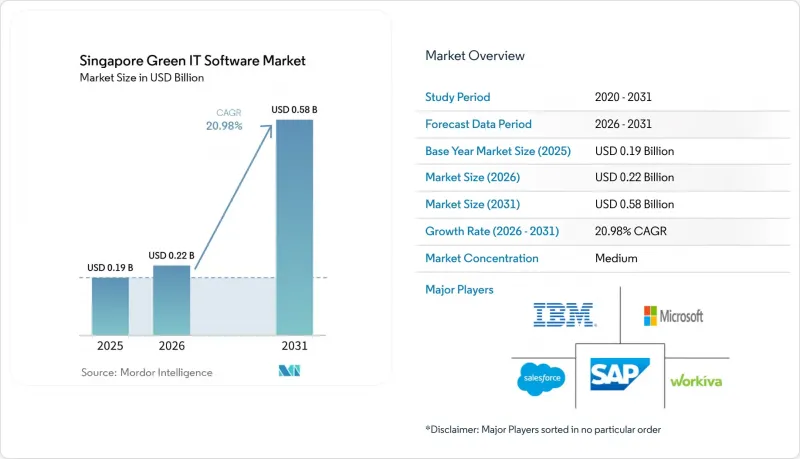
Mordor Intelligence에 의하면, 싱가포르 그린 IT 소프트웨어 시장 규모는 2025년에 1억 9,000만 달러로 평가되었고 2031년까지 5억 8,000만 달러에 이를 것으로 예측되며, 2026년부터 2031년까지 CAGR 20.98%로 성장할 전망입니다.
본 보고서는 제공 방식(소프트웨어 및 서비스), 배포 방식(클라우드, On-Premise 등), 조직 규모(대기업 및 중소기업), 최종 사용자 산업(IT 및 통신, 은행, 금융서비스 및 보험(BFSI), 제조, 에너지·유틸리티, 소매 및 전자상거래 등), 솔루션 유형(탄소 관리·회계 소프트웨어 등)별로 분류되어 있습니다. 시장 전망은 금액(달러) 기준으로 제시되어 있습니다.
싱가포르 그린 IT 소프트웨어 시장 동향 및 인사이트
강화되는 기업의 지속가능성 보고 요건
싱가포르 그린 IT 소프트웨어 시장은 많은 기업 구매자에게 더 이상 선택 사항이 아닌 보고 프레임워크에 힘입어 성장하고 있습니다. 2025 회계연도부터는 SGX 상장 기업 모두가 IFRS S2에 따라 스코프 1 및 스코프 2 배출량을 보고해야 하며, STI 구성 종목은 2026 회계연도부터 스코프 3 배출량을 보고해야 합니다. 이에 따라 소프트웨어 수요는 공급업체로부터의 데이터 수집 및 검증 워크플로로 확대되었습니다. 해당 로드맵에 따르면 2030 회계연도부터는 대규모 비상장 기업에 대해서도 ISSB 준수 의무가 확대될 예정이며, 이를 통해 일회성 구매 주기가 아닌 지속적인 규정 준수 대응 파이프라인이 형성될 것입니다. 이 구조가 중요한 이유는 그린 보고 도구의 역할이 단순한 정기 보고 지원 도구에서 지속적인 데이터 수집, 관리 및 감사 대응을 위한 핵심 시스템으로 전환되기 때문입니다. 또한 대기업이 공급업체에게 자사의 보고 시스템에 통합할 수 있는 형식으로 비교 가능한 탄소 정보를 제출하도록 요구하는 사례가 늘어나고 있어, IT 분야의 조달 대상은 직접 규제 대상이 되는 기업을 넘어 확대되고 있습니다. 그 결과, 싱가포르의 그린 IT 소프트웨어 시장은 상장 기업뿐만 아니라 이를 뒷받침하는 광범위한 상업 네트워크에서도 수요가 발생하며 성장을 거듭하고 있습니다.
탄소 배출에 대한 인식이 높은 IT 운영에 대한 민관 수요
싱가포르의 그린 IT 소프트웨어 시장은 공공 지침과 기업의 운영 요구 사이에서 나타나는 이례적인 일관성으로부터도 혜택을 받고 있습니다. IMDA는 싱가포르가 그린 소프트웨어 재단에 가입한 최초의 정부 기관이 되었으며, 해당 기관이 제정에 기여한 ‘소프트웨어 탄소 집약도’ 사양이 ISO 표준으로 공표되었다고 밝혔습니다. 이를 통해 구매자는 소프트웨어 관련 배출량에 대해 보다 중립적인 기준을 바탕으로 논의할 수 있게 되었습니다. 2024년 5월부터 13개사와 공동으로 실시된 IMDA의 그린 소프트웨어 실증 실험에서는 참가 기업들이 이산화탄소 배출량, 에너지 사용량 및 비용을 최소 20% 절감할 수 있었던 것으로 나타났으며, 이를 통해 기업들은 운영 소프트웨어 변경에 대한 보다 명확한 비즈니스 사례를 확보할 수 있게 되었습니다. 싱가포르 디지털 개발·정보부가 인용한 2025년 펄스(Pulse) 조사에 따르면, 중소기업을 제외한 기업의 81%가 적어도 하나의 디지털 지속가능성 솔루션을 도입한 것으로 나타났습니다. 이는 규제 대상 기업 기반에서 실제 수요가 이미 시범 이용 사례를 넘어섰음을 보여줍니다. 이러한 징후가 중요한 이유는 소프트웨어 도입이 단순한 정보 공개에 그치지 않고 에너지 절약, 비용 관리, 거버넌스와 연계되어 있기 때문입니다. 이러한 조합 덕분에 싱가포르의 그린 IT 소프트웨어 시장은 다른 많은 지속가능성 소프트웨어 카테고리보다 폭넓은 도입 근거를 갖추고 있습니다.
레거시 기업 시스템과의 통합 복잡성
싱가포르의 그린 IT 소프트웨어 시장은 여전히 구식 ERP, 데이터베이스 및 보고서 작성 아키텍처를 운영하고 있는 기업들에서 뿌리 깊은 실행상의 장벽에 직면해 있습니다. 초안에 인용된 2025년 IMDA 조사에 따르면, 도입하지 않은 기업의 38%가 지식 부족을 이유로 꼽았으며, 실무적인 도입 과정에서의 마찰 또한 프로젝트 비용 증가와 도입 일정 지연을 지속적으로 초래하고 있습니다. 이러한 과제는 원래 지속가능성 보고를 염두에 두고 설계되지 않은 재무, 운영, 조달, 시설 관리 시스템에서 배출 데이터를 추출해야 하는 경우에 특히 두드러집니다. IMDA의 『지속가능성을 위한 디지털 기술 플레이북』은 디지털 도구를 기업의 지속가능성 활용 사례에 대입함으로써 이러한 부담을 줄이려고 시도하고 있으며, 이를 통해 구매 담당자는 통합 절차를 보다 명확하게 수립할 수 있게 될 것입니다. 하지만 소프트웨어가 본래의 가치를 충분히 발휘하기 위해서는 가동 중인 운영 데이터, 프레임워크의 로직, 그리고 보증에 대한 기대치를 모두 연계해야 하므로, 구매 담당자는 여전히 큰 변경 관리 과제에 직면해 있습니다. 그 결과, 기업의 구매 의향이 이미 확고하더라도 도입 위험은 여전히 높은 상태입니다.
부문 분석
2025년 싱가포르 그린 IT 소프트웨어 시장에서 소프트웨어가 82.67%의 점유율을 차지했는데, 이는 구매자들이 지속적인 데이터 수집, 계산 및 공시 워크플로우를 지원할 수 있는 플랫폼을 강력히 선호했음을 보여줍니다. 싱가포르 그린 IT 소프트웨어 시장에서 소프트웨어 부문의 비중이 높았던 것은 파편화된 수동 도구에 의존하지 않고 IFRS S1, IFRS S2, SGX 관련 요건 및 공급업체와의 연계 프로세스에 걸쳐 데이터를 매핑할 수 있는 시스템에 대한 실질적인 수요를 반영한 것입니다. 이 부문의 위상은 규제 대상 기업의 구매 행동도 반영하고 있습니다. 이러한 기업에서는 버전 관리, 감사 추적, 재현 가능한 보고서 작성 로직이 일회성 자문 업무보다 더 중요하게 여겨집니다. 따라서 특히 상장 기업 전반에 걸쳐 공시 의무가 확대되기 시작한 이후, 소프트웨어에 대한 수요는 구조화된 출력, 운영 규율, 지속적인 보고 체계 구축과 같은 요구 사항과 밀접하게 연결되어 왔습니다. 이로 인해 많은 기업의 구매 주기에서 플랫폼 기능이 첫 번째 결정 요인이 되었으며, 서비스 지원은 소프트웨어를 대체하는 것이 아니라 이를 보완하는 형태로 추가되게 되었습니다.
서비스 시장은 2031년까지 연평균 성장률(CAGR) 24.86%를 나타낼 것으로 예측되며, 이는 기업의 보고 업무가 스코프 3(Scope 3)이나 내부통제와 같은 더 복잡한 영역으로 이동함에 따라 도입 업무가 확대되고 있음을 보여줍니다. 싱가포르의 그린 IT 소프트웨어 업계에서 서비스가 성장하고 있는 배경에는 플랫폼이 의도한 대로 작동하기까지 많은 구매자가 여전히 설정 지원, 교육, 규제 해석, 워크플로우 재설계를 필요로 하고 있다는 점이 있습니다. 세일즈포스는 2026년 5월, 액센츄어, PwC 싱가포르, 휴론과 공동으로 싱가포르에 ‘데이터 및 AI 센터 오브 엑설런스’를 설립한다고 발표했습니다. 이는 엔터프라이즈 플랫폼을 중심으로 점점 더 보편화되고 있는 번들형 제공 모델을 반영한 것입니다. 실제로 프레임워크 변경, 데이터 확대, 감사 준비 등으로 인해 서비스 수요가 다시 활성화되고 있으며, 이는 초기 도입 후에도 서비스 계층에 지속적인 가치가 있음을 의미합니다. 이러한 추세에 따라 제공 서비스의 구성은 소프트웨어 수익을 중심으로 하면서도, 주요 고객 대상 도입 시 수반되는 서비스 업무의 역할이 꾸준히 확대될 것으로 예측됩니다.
2025년에는 클라우드가 시장의 72.94%를 차지하며, 이러한 상황은 통합된 클라우드 환경이 여러 사업체에 걸친 보고, 확장 가능한 데이터 수집, 그리고 지속적인 소프트웨어 업데이트를 얼마나 손쉽게 지원할 수 있는지를 반영한 것입니다. 싱가포르의 그린 IT 소프트웨어 시장에서 클라우드 연계형 도입 시장 규모가 가장 견조했던 이유는 IMDA의 탄소 계산 도구와 지역에 최적화된 배출 계수를 통해 조달 팀이 싱가포르 고유의 전제조건을 활용하여 클라우드 아키텍처와 On-Premise 환경을 명확하게 비교할 수 있게 되었기 때문입니다. 싱가포르 데이터센터 생태계의 강점 또한 클라우드 도입을 뒷받침했습니다. 이는 소프트웨어 구매자가 운영상의 유연성과 에너지 조달 및 장비 효율성과 관련된 보다 성숙한 지속가능성 인프라를 양립시킬 수 있었기 때문입니다. 이러한 상황으로 인해, 공통 기술 기반을 통해 자회사, 사업 부문, 지역 거점에 걸쳐 지속가능성 보고 도구를 운영하고자 하는 기업들에게 도입 장벽이 낮아졌습니다. 그 결과, 클라우드는 많은 구매자에게 기본 도입 옵션이 되었을 뿐만 아니라, 벤더에게도 표준화와 확장이 가장 용이한 형태가 되었습니다.
하이브리드 환경은 2031년까지 연평균 성장률(CAGR) 26.18%로 확대될 것으로 예측됩니다. 이는 확장성과 기밀 데이터에 대한 보다 엄격한 내부 통제의 균형을 맞출 필요성을 반영한 것입니다. 싱가포르의 그린 IT 소프트웨어 시장에서는 규제 대상 고객들 사이에서 하이브리드에 대한 수요가 증가하고 있습니다. 이는 일부 기업들이 특정 데이터 세트나 거버넌스 계층을 관리된 환경 내에 유지하면서, 클라우드 상에서 분석 및 협업을 수행하고자 하기 때문입니다. 이러한 경향은 싱가포르의 광범위한 규정 준수 태도와 일치합니다. 이 나라에서는 데이터 아키텍처 결정 시 비용뿐만 아니라 운영 측면과 리스크 관리 측면의 우려 사항을 모두 충족시켜야 하는 경우가 많습니다. 따라서 On-Premise 시스템은 정부 기관이나 엄격하게 관리되는 조직에서 여전히 중요하지만, 완전히 독립된 환경으로 기능하기보다는 보완적인 역할로 활용되는 사례가 늘고 있습니다. 하이브리드 배포가 보급되고 있는 이유는 보고 업무를 단번에 클라우드로 이전할 수 없는 조직에게 현실적인 전환 경로를 제공하기 때문입니다.
기타 혜택:
- 엑셀 형식 시장 예측(ME) 시트
- 3개월간의 애널리스트 지원
자주 묻는 질문
목차
제1장 서론
제2장 조사 방법
제3장 주요 요약
제4장 시장 구도
제5장 시장 규모와 성장 예측
제6장 경쟁 구도
제7장 시장 기회와 향후 전망
JHS 26.08.11According to Mordor Intelligence, the Singapore green IT software market size was valued at USD 0.19 billion in 2025 and is forecast to reach USD 0.58 billion by 2031, growing at a CAGR of 20.98% during 2026-2031.
This report is Segmented by Offering (Software, and Services), Deployment Mode (Cloud, On-Premises, and More), Organization Size (Large Enterprises, and SMEs), End-User Industry (IT and Telecom, BFSI, Manufacturing, Energy and Utilities, Retail and E-Commerce, and More ), Solution Type (Carbon Management and Accounting Software, and More). The Market Forecasts are Provided in Terms of Value (USD).
Singapore Green IT Software Market Trends and Insights
Rising Corporate Sustainability Reporting Requirements
The Singapore green IT software market is being pushed forward by a reporting framework that has removed optionality for many enterprise buyers. From FY2025, all SGX-listed companies had to report Scope 1 and Scope 2 emissions in line with IFRS S2, and STI constituents must report Scope 3 emissions from FY2026, which widened software demand into supplier data collection and verification workflows. The same roadmap extends ISSB-aligned obligations to large non-listed companies from FY2030, which creates a rolling compliance pipeline rather than a one-time buying cycle. This structure matters because it shifts green reporting tools from periodic reporting aids into core systems for continuous data capture, control, and audit readiness. IT also expands procurement beyond directly regulated entities, since larger companies increasingly need suppliers to submit comparable carbon information in formats that can feed enterprise reporting systems. The result is a demand pattern in which the Singapore green IT software market grows not only from listed issuers, but also from the wider commercial network that supports them.
Public-Private Demand for Carbon-Aware IT Operations
The Singapore green IT software market is also benefiting from an unusual alignment between public guidance and enterprise operating needs. IMDA stated that Singapore became the first government organization to join the Green Software Foundation, and that the Software Carbon Intensity specification it contributed to has been published as an ISO standard, which gives buyers a more neutral basis for discussing software-related emissions. IMDA's green software trials, run with 13 companies since May 2024, showed that participating enterprises achieved at least 20% reductions in carbon emissions, energy usage, and costs, which gave enterprises a clearer business case for operational software changes. A 2025 pulse survey cited by Singapore's Ministry of Digital Development and Information found that 81% of non-SMEs had adopted at least 1 digital sustainability solution, which indicates that realized demand has already moved beyond pilot use cases in the regulated enterprise base. These signals matter because they connect software adoption to energy savings, cost discipline, and governance rather than to disclosure alone. That combination gives the Singapore green IT software market a broader operating rationale than many other sustainability software categories.
High Integration Complexity with Legacy Enterprise Systems
The Singapore green IT software market faces a persistent execution barrier in enterprises that still operate older ERP, database, and reporting architectures. The draft's cited 2025 IMDA survey found that 38% of non-adopting enterprises pointed to limited knowledge, while practical implementation friction also continued to raise project cost and extend deployment schedules. This challenge is especially relevant where emissions data must be extracted from finance, operations, procurement, and facility systems that were not originally designed for sustainability reporting. IMDA's Digital Technologies for Sustainability Playbook tried to reduce this burden by mapping digital tools to enterprise sustainability use cases, which should help buyers frame integration steps more clearly. Even so, buyers still face a significant change-management task because live operating data, framework logic, and assurance expectations all have to be connected before the software can deliver full value. That keeps implementation risk high even when the enterprise's intent to buy is already established.
Other drivers and restraints analyzed in the detailed report include:
- Cloud Migration and Virtualization Efficiency Gains
- AI-Driven Energy Optimization for Software and Infrastructure
- Limited Standardization in Green Software Measurement Methodologies
For complete list of drivers and restraints, kindly check the Table Of Contents.
Segment Analysis
Software held 82.67% of the Singapore green IT software market share in 2025, indicating that buyers strongly preferred platforms that could support recurring data collection, calculation, and disclosure workflows. In the Singapore green IT software market, the weight at the software layer reflected the practical need for systems that can map data across IFRS S1, IFRS S2, SGX-related requirements, and supplier engagement processes without relying on disconnected manual tools. The segment's position also reflects buying behavior in regulated enterprises, where version control, audit trails, and repeatable reporting logic carry more weight than one-time advisory work. Software demand has therefore been tied closely to the need for structured outputs, operating discipline, and continuous reporting readiness, especially after mandatory disclosures began to move through the listed company base. This made platform capability the first decision point in many enterprise buying cycles, with service support added around the software rather than replacing it.
Services are projected to grow at a 24.86% CAGR through 2031, which shows that implementation work is expanding as enterprise reporting moves into more complex areas such as Scope 3 and internal controls. The Singapore green IT software industry is seeing services growth because many buyers still need configuration support, training, regulatory interpretation, and workflow redesign before platforms can function as intended. Salesforce stated in May 2026 that it was establishing Data and AI Centers of Excellence with Accenture, PwC Singapore, and Huron in Singapore, which reflects the bundled delivery model increasingly used around enterprise platforms. In practice, service demand is also renewed by framework changes, data expansion, and assurance preparation, which means the service layer has recurring value even after the first deployment. That dynamic should keep the offering mix centered on software revenue while steadily increasing the role of attached service work across large-account implementations.
Cloud accounted for 72.94% of the market in 2025, and that position reflected the ease with which centralized cloud environments can support multi-entity reporting, scalable data ingestion, and ongoing software updates. The Singapore green IT software market size for cloud-linked deployment remained strongest because IMDA's carbon calculator and localized emission factors gave procurement teams a clearer way to compare cloud architectures with on-premises setups using Singapore-specific assumptions. The strength of Singapore's data center ecosystem also supported cloud adoption, because software buyers could align operational flexibility with a more maturing sustainability infrastructure around energy sourcing and equipment efficiency. These conditions reduced friction for enterprises that wanted sustainability reporting tools to work across subsidiaries, business units, and regional operations from a shared technology base. As a result, cloud was not only the default deployment choice for many buyers, it also became the easiest format for vendors to standardize and scale.
Hybrid is projected to expand at a 26.18% CAGR through 2031, which reflects the need to balance scalability with tighter internal controls over sensitive data. The Singapore green IT software market is seeing stronger hybrid demand in regulated accounts because some enterprises want analytics and collaboration in the cloud while keeping selected datasets or governance layers within controlled environments. This pattern is consistent with Singapore's broader compliance posture, where data architecture decisions often need to satisfy both operational and risk management concerns rather than cost alone. On-premises systems, therefore, remain relevant in agencies and highly controlled institutions, but they are increasingly being supplemented instead of serving as complete standalone environments. Hybrid deployment has gained ground because it offers a practical transition path for organizations that cannot move reporting operations fully into the cloud in a single step.
Complete Report Scope:
- By Offering
- Software
- Services
- By Deployment Mode
- Cloud
- On-Premises
- Hybrid
- By Organization Size
- Large Enterprises
- SMEs
- By End-User Industry
- IT and Telecom
- BFSI
- Manufacturing
- Energy and Utilities
- Retail and E-Commerce
- Government
- Healthcare
- Construction and Infrastructure
- Other End-User Industries
- By Solution Type
- Carbon Management and Accounting Software
- ESG Reporting and Compliance Software
- Sustainability Data Management Platforms
- Decarbonization Planning Software
- Energy and Resource Optimization Software
List of Companies Covered in this Report:
- SAP SE
- Microsoft Corporation
- Salesforce, Inc.
- IBM Corporation
- Workiva Inc.
- Sphera Solutions, Inc.
- Wolters Kluwer N.V.
- Diligent Corporation
- Watershed Technology, Inc.
- Persefoni AI, Inc.
- Novisto Inc.
- Sweep SAS
- Greenly SAS
- EcoOnline Global AB
- Cority Software Inc.
- FigBytes Inc.
- Normative AB
- Position Green AB
- Benchmark Digital Partners LLC
- EnergyCAP, LLC
- SINAI Technologies, Inc.
- EcoVadis SAS
Additional Benefits:
- The market estimate (ME) sheet in Excel format
- 3 months of analyst support
TABLE OF CONTENTS
1 INTRODUCTION
- 1.1 Study Assumptions and Market Definition
- 1.2 Scope of the Study
2 RESEARCH METHODOLOGY
3 EXECUTIVE SUMMARY
4 MARKET LANDSCAPE
- 4.1 Market Overview
- 4.2 Market Drivers
- 4.2.1 Rising Corporate Sustainability Reporting Requirements
- 4.2.2 Public-Private Demand for Carbon-Aware IT Operations
- 4.2.3 Cloud Migration and Virtualization Efficiency Gains
- 4.2.4 AI-Driven Energy Optimization for Software and Infrastructure
- 4.2.5 Green Procurement Standards in Enterprise and Public Sector Buying
- 4.2.6 Singapore as a Regional Compliance Hub for Asia-Pacific Headquarters
- 4.3 Market Restraints
- 4.3.1 High Integration Complexity With Legacy Enterprise Systems
- 4.3.2 Limited Standardization in Green Software Measurement Methodologies
- 4.3.3 High Cost of Data Collection, Auditability, and Continuous Reporting
- 4.3.4 Shortage of Specialized Green Software and Sustainability Analytics Talent
- 4.4 Industry Value Chain Analysis
- 4.5 Regulatory Landscape
- 4.6 Technological Outlook
- 4.7 Impact of Macroeconomic Factors on the Market
- 4.8 Porter's Five Forces Analysis
- 4.8.1 Bargaining Power of Buyers
- 4.8.2 Bargaining Power of Suppliers
- 4.8.3 Threat of New Entrants
- 4.8.4 Threat of Substitutes
- 4.8.5 Intensity of Competitive Rivalry
5 MARKET SIZE AND GROWTH FORECASTS (VALUE)
- 5.1 By Offering
- 5.1.1 Software
- 5.1.2 Services
- 5.2 By Deployment Mode
- 5.2.1 Cloud
- 5.2.2 On-Premises
- 5.2.3 Hybrid
- 5.3 By Organization Size
- 5.3.1 Large Enterprises
- 5.3.2 SMEs
- 5.4 By End-User Industry
- 5.4.1 IT and Telecom
- 5.4.2 BFSI
- 5.4.3 Manufacturing
- 5.4.4 Energy and Utilities
- 5.4.5 Retail and E-Commerce
- 5.4.6 Government
- 5.4.7 Healthcare
- 5.4.8 Construction and Infrastructure
- 5.4.9 Other End-User Industries
- 5.5 By Solution Type
- 5.5.1 Carbon Management and Accounting Software
- 5.5.2 ESG Reporting and Compliance Software
- 5.5.3 Sustainability Data Management Platforms
- 5.5.4 Decarbonization Planning Software
- 5.5.5 Energy and Resource Optimization Software
6 COMPETITIVE LANDSCAPE
- 6.1 Market Concentration
- 6.2 Strategic Moves
- 6.3 Market Share Analysis
- 6.4 Company Profiles (includes Global Level Overview, Market Level Overview, Core Segments, Financials as available, Strategic Information, Market Rank/Share, Products and Services, Recent Developments)
- 6.4.1 SAP SE
- 6.4.2 Microsoft Corporation
- 6.4.3 Salesforce, Inc.
- 6.4.4 IBM Corporation
- 6.4.5 Workiva Inc.
- 6.4.6 Sphera Solutions, Inc.
- 6.4.7 Wolters Kluwer N.V.
- 6.4.8 Diligent Corporation
- 6.4.9 Watershed Technology, Inc.
- 6.4.10 Persefoni AI, Inc.
- 6.4.11 Novisto Inc.
- 6.4.12 Sweep SAS
- 6.4.13 Greenly SAS
- 6.4.14 EcoOnline Global AB
- 6.4.15 Cority Software Inc.
- 6.4.16 FigBytes Inc.
- 6.4.17 Normative AB
- 6.4.18 Position Green AB
- 6.4.19 Benchmark Digital Partners LLC
- 6.4.20 EnergyCAP, LLC
- 6.4.21 SINAI Technologies, Inc.
- 6.4.22 EcoVadis SAS
7 MARKET OPPORTUNITIES AND FUTURE OUTLOOK
- 7.1 White-Space and Unmet-Need Assessment