

|
시장보고서
상품코드
2119182
북미의 광고용 주문형 비디오(AVOD) 시장 : 시장 점유율 분석, 업계 동향 및 통계, 성장 예측(2026-2031년)North America Advertising Video-on-Demand (AVOD) - Market Share Analysis, Industry Trends & Statistics, Growth Forecasts (2026 - 2031) |
||||||
 Mordor Intelligence
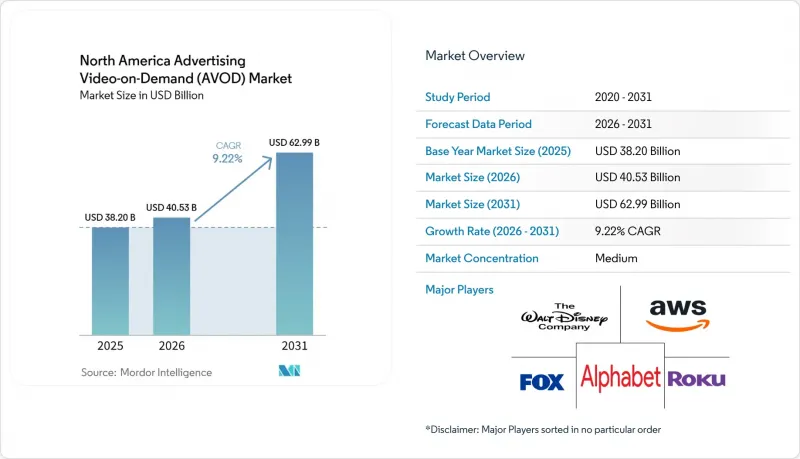
Mordor Intelligence에 의하면, 북미의 광고용 주문형 비디오(AVOD) 시장 규모는 2025년에 382억 달러로 평가되었고, 2026년 405억 3,000만 달러로 추정되고, 2031년까지 629억 9,000만 달러에 이를 것으로 예측되며, 예측 기간(2026-2031년) CAGR은 9.22%를 나타낼 전망입니다.
본 보고서는 컨텐츠 유형별(영화·영상 작품, TV 프로그램 및 에피소드 형식 컨텐츠, 기타), 기기 유형별(스마트폰 및 태블릿, 스마트 TV, 노트북 및 데스크톱 PC, 기타 기기), 최종 사용자별(미디어 및 엔터테인먼트, 소매 및 전자상거래, 기타), 광고 형태별(프리롤, 기타), 지역별로 분류되어 있습니다. 시장 예측은 금액(달러) 기준으로 제시되어 있습니다.
북미의 광고용 주문형 비디오(AVOD) 시장 동향 및 인사이트
지속되고 있는 ‘코드 커팅’과 ‘구독 피로감’
코드 커팅은 시청 시간을 기존 TV 패키지에서 스트리밍 서비스로 전환시키는 요인으로, 북미의 광고용 주문형 비디오(AVOD) 시장에 있어 구조적인 요인이 되고 있습니다. 기존 번들형 유료 TV 가입 가구 수는 2016년 8,350만 가구에서 2026년 4,320만 가구로 감소했습니다. 2025년에는 스트리밍 서비스 구독료가 19.5% 상승한 반면, 전체 인플레이션율은 2.7%에 그쳤기 때문에 무료 및 광고 포함 서비스의 매력이 높아졌습니다. 넷플릭스는 ‘Standard with Ads’ 요금제의 월 이용료를 6.99달러에서 8.99달러로 인상하여, 유료 요금제와 무료 시청 옵션 간의 가격 차이를 더욱 확대했습니다. 2026년에는 광고 포함 요금제가 프리미엄 정액제 비디오 온 디맨드(SVOD) 가입자 수의 46%를 차지할 것으로 예상되며, 이는 당초 구독 중심의 플랫폼으로 시작된 서비스 내에서도 광고 비중이 증가하고 있음을 보여줍니다.
선형 TV 광고 예산의 CTV 및 AVOD로의 전환
선형 TV에서 커넥티드 TV(CTV)로의 광고 예산 이동은 북미의 광고 지원 비디오 온 디맨드(AVOD) 시장을 견인하고 있습니다. 이는 스트리밍 광고 슬롯이 TV 광고 구매자들에게 직접적인 대안으로 자리 잡고 있기 때문입니다. 2025년, 커넥티드 TV에 대한 광고 지출은 16% 증가했으며, 연말 기준 미국 TV 및 동영상 광고 총지출의 60% 가까이를 디지털 동영상이 차지했습니다. 프리미온(Premion)이 의뢰한 2026년 조사에 따르면, 미국 광고주의 70%가 커넥티드 TV에 대한 투자를 평균 17% 늘릴 계획인 것으로 나타났습니다. 이 추가 투자는 선형 TV, 디지털 디스플레이, 유료 검색, 소셜 미디어의 각 예산에서 조달될 전망입니다. 정치 광고비를 제외한 전국 및 지역 선형 TV 광고비는 2026년에 2.4% 감소한 279억 달러에 달할 것으로 예측되는 반면, 디지털 TV 광고는 3% 증가한 210억 달러로 확대될 것으로 전망됩니다. 이러한 변화로 인해 AVOD 제공업체들은 단순히 새로운 광고비를 확보하는 데 그치지 않고, 대행사와의 관계나 TV 광고 예산을 둘러싸고 선형 TV 판매업체들과 직접 경쟁하게 될 것입니다.
컨텐츠 라이선싱 및 프리미엄 권리 비용의 급등
컨텐츠 확보 비용의 상승은 북미의 광고용 주문형 비디오(AVOD) 시장을 압박하고 있습니다. 시청자와 광고 수요를 확보하기 위해서는 더 방대한 라이브러리와 독점 프로그램이 필요하기 때문입니다. 2025-26 시즌부터 시작된 NBA 중계권 계약은 연간 75억 달러로 평가되었고, 아마존은 ‘목요일 밤 풋볼(Thursday Night Football)’에 대한 11년 계약을 130억 달러에 체결했습니다. 넷플릭스의 공개 정보에 따르면, 이 회사의 2026년 연간 컨텐츠 지출액은 190억 달러에 달할 전망입니다. 18-36개월이라는 표준 권리 회복 기간으로 인해 독점 접근 기간이 단축되므로, 고액의 라이선스 비용을 충당할 수 있게 되었습니다. 라이선싱, 윈도우 설정, 신디케이션, 로열티 요건은 광범위한 협상력을 가진 수직 통합형 플랫폼에 비해 소규모 사업자에게 더 큰 부담이 되고 있습니다.
부문 분석
2025년, TV 프로그램과 에피소드 형식의 컨텐츠는 컨텐츠 유형별 수익의 38.51%를 차지했습니다. 연속 드라마는 지속적인 시청자층, 예측 가능한 시청 시간, 확립된 TV 광고 구매 관행에 부합하는 익숙한 광고 슬롯을 제공합니다. 또한, 그 폭넓고 풍부한 카탈로그는 일반 엔터테인먼트 플랫폼이 하루 중 다양한 시간대에 걸쳐 시청자를 유지하는 데에도 도움이 됩니다. 영화 및 영상 작품은 라이선스를 부여받은 극장 개봉작이 광고 슬롯을 늘리고 더 긴 시청 시간을 뒷받침할 수 있기 때문에 여전히 중요한 2차 컨텐츠 카테고리로 자리 잡고 있습니다.
다큐멘터리는 2026-2031년 연평균 성장률(CAGR) 9.83%를 나타낼 것으로 예측됩니다. 이 형식은 주제가 관심 기반 타겟팅을 가능하게 하고, 장편 구조가 시청자가 끝까지 시청하도록 유도하기 때문에 광고주에게 매력적입니다. Ionic Studios는 2026년 6월 Documentary+에 전략적 투자를 단행하며, 해당 기업의 AVOD 및 FAST 채널 사업의 공식 퍼블리셔가 되었습니다. 이 거래는 광고 슬롯의 독자적인 공급원으로서 논픽션 프로그램에 대한 관심이 높아지고 있음을 반영한 것입니다. 또한, 숏폼이나 크리에이터 주도형 프로그램을 포함한 기타 컨텐츠 유형도, 기존 AVOD 형식에 대한 관심이 낮았던 젊은 층 시청자를 끌어모을 수 있는 크리에이터를 플랫폼이 영입함에 따라 그 중요성이 커지고 있습니다.
스마트 TV는 2026-2031년 연평균 성장률(CAGR) 9.58%로 확대될 것으로 예상되며, 가장 빠르게 성장하는 기기 카테고리가 될 것입니다. 이러한 성장은 컨텐츠 발견, 광고 전달, 시청자 데이터 수집에서 TV 운영 체제가 수행하는 역할과 밀접하게 관련되어 있습니다. 비디오 광고 협회(VAB) 보고서에 따르면, 커넥티드 TV의 95%는 전원을 켤 때 홈 화면에 광고를 표시합니다. 이로 인해 기기 플랫폼은 시청자가 스트리밍 앱을 실행하기 전의 광고 경험에서 중요한 위치를 차지하게 됩니다.
2025년, 북미의 광고용 주문형 비디오(AVOD) 시장에서 스마트폰 및 태블릿이 27.99%를 차지했습니다. 모바일 시청은 젊은 층과 가정용 고정 광대역보다 모바일 접속이 먼저 보급된 멕시코에서 여전히 중요한 위치를 차지하고 있습니다. 이러한 기기 기반 덕분에 집 밖에서 단시간 시청을 하는 소비자들이 북미 광고형 주문형 비디오(AVOD) 시장에 지속적으로 접근할 수 있게 되었습니다. 스트리밍 업계 고위 임원 63명을 대상으로 한 설문조사에 따르면, 응답자의 62%가 홈 화면 노출 측면에서 Roku를 전략적으로 가장 중요한 커넥티드 TV 플랫폼으로 간주하는 것으로 나타났습니다. 노트북과 데스크톱 PC는 직장이나 출퇴근 중, 원격 시청과 같은 이용 사례, 특히 뉴스나 비즈니스 프로그램에서 계속해서 활용되고 있습니다. 게임기와 셋톱박스는 프리미엄 방송의 동시 스트리밍이나 라이브 이벤트를 위해 안정적이고 보완적인 광고 공간을 제공합니다.
기타 혜택
- 엑셀 형식 시장 예측(ME) 시트
- 3개월간의 애널리스트 지원
자주 묻는 질문
목차
제1장 서론
제2장 조사 방법
제3장 주요 요약
제4장 시장 구도
제5장 시장 규모 및 성장 예측
제6장 경쟁 구도
제7장 시장 기회 및 향후 전망
AJY 26.09.03According to Mordor Intelligence, the North America advertising video-on-demand (AVOD) market size was valued at USD 38.20 billion in 2025 and is estimated to grow from USD 40.53 billion in 2026 to reach USD 62.99 billion by 2031, at a CAGR of 9.22% during the forecast period (2026-2031).
This report is Segmented by Content Type (Movies and Films, TV Shows and Episodic Content, and More), Device Type (Smartphones and Tablets, Smart TVs, Laptops and Desktops, and Other Device Types), End-User (Media and Entertainment, Retail and E-Commerce, and More), Ad Format (Pre-Roll, and More), and Geography. The Market Forecasts are Provided in Terms of Value (USD).
North America Advertising Video-on-Demand (AVOD) Market Trends and Insights
Ongoing Cord-Cutting and Subscription Fatigue
Cord-cutting has become a structural condition for the North America advertising video-on-demand (AVOD) market because it moves viewing time from traditional television packages to streaming services. Traditional bundled pay television fell to 43.2 million US households in 2026, down from 83.5 million households in 2016. Streaming subscription costs rose 19.5% in 2025, while the overall inflation rate was 2.7%, thereby increasing the appeal of free and ad-supported services. Netflix raised the monthly price of its Standard with Ads plan from USD 6.99 to USD 8.99, reinforcing the price difference between paid tiers and free viewing options. Ad-supported tiers accounted for 46% of premium subscription video-on-demand subscriptions in 2026, indicating that advertising inventory is also growing within services that began as subscription-led platforms.
Migration of Linear TV Budgets to CTV and AVOD
The shift of advertising budgets from linear television to connected television supports the North America advertising video-on-demand (AVOD) market, as streaming inventory provides a direct alternative for television buyers. Connected TV advertising spending increased 16% in 2025, and digital video represented nearly 60% of total US television and video advertising spending by year-end. A 2026 survey commissioned by Premion found that 70% of US advertisers planned to increase connected TV investment by an average of 17%. The additional investment is expected to come from linear television, digital display, paid search, and social media budgets. National and local linear television advertising, excluding political spending, is projected to decline 2.4% to USD 27.9 billion in 2026, while digital television formats are expected to grow 3% to USD 21 billion. The shift means AVOD providers compete directly with linear sellers for agency relationships and television budgets rather than only seeking new advertising spending.
Content Licensing and Premium Rights Cost Inflation
Rising content acquisition costs constrain the North America advertising video-on-demand (AVOD) market because larger libraries and exclusive programming are needed to compete for viewers and advertising demand. The NBA rights structure, which began with the 2025-26 season, was valued at USD 7.5 billion per year, and Amazon signed an 11-year Thursday Night Football agreement valued at USD 13 billion. Netflix's annual content spending stands at USD 19 billion in 2026, based on its public disclosures. Standard rights reversion windows of 18 to 36 months reduce the duration of exclusive access, which can support high licensing costs. Licensing, windowing, syndication, and royalty requirements impose a greater burden on smaller operators than on vertically integrated platforms with broader negotiating power.
Other drivers and restraints analyzed in the detailed report include:
- Demand for Addressable and Measurable Video Advertising
- Expansion of FAST and Ad-Supported Streaming Inventory
- Measurement Fragmentation Across Walled Gardens
For complete list of drivers and restraints, kindly check the Table Of Contents.
Segment Analysis
TV Shows and Episodic Content accounted for 38.51% of content-type revenue in 2025. Serial programming provides recurring audiences, predictable session lengths, and familiar advertising breaks that align with established television buying practices. Its broad catalog depth also helps general-entertainment platforms sustain viewing across different times of day. Movies and Films remained an important secondary content category because licensed theatrical titles add inventory and can support longer viewing sessions.
Documentaries are projected to grow at a 9.83% CAGR from 2026 to 2031. The format can appeal to advertisers because its subject matter supports interest-based targeting, and its long-form structure can support viewer completion. Ionic Studios took a strategic equity stake in Documentary+ in June 2026 and became the Publisher of Record for its AVOD and FAST channel business. The transaction reflected growing interest in nonfiction programming as a distinct source of advertising inventory. Other content types, including short-form and creator-led programming, are gaining relevance as platforms add creators who can attract younger audiences that previously engaged less with conventional AVOD formats.
Smart TVs are projected to expand at a 9.58% CAGR from 2026 to 2031, making them the fastest-growing device category. Their growth is tied to the television operating system's role in content discovery, advertising delivery, and audience data collection. The Video Advertising Bureau reported that 95% of connected televisions display advertising on the home screen when powered on. This gives device platforms a position in the advertising journey before a viewer enters a streaming application.
Smartphones and tablets accounted for 27.99% of the North America advertising video-on-demand (AVOD) market in 2025. Mobile viewing remains important among younger audiences and in Mexico, where mobile access can precede fixed household broadband. This device base supports continued access to the North America advertising video-on-demand (AVOD) market among consumers who watch short sessions outside the home. A survey of 63 senior streaming executives found that 62% regarded Roku as the most strategically important connected TV platform for home-screen visibility. Laptops and Desktops continued to serve workplace, commute, and remote-viewing use cases, especially for news and business programming. Game consoles and set-top boxes provided a stable, supporting inventory for premium broadcast simulcasts and live events.
Complete Report Scope:
- By Content Type
- Movies and Films
- TV Shows and Episodic Content
- Documentaries
- Other Content Types
- By Device Type
- Smartphones and Tablets
- Smart TVs
- Laptops and Desktops
- Other Device Types
- By End-User
- Media and Entertainment
- Retail and E-Commerce
- Banking, Financial Services, and Insurance
- Education
- Information Technology and Telecommunications
- Healthcare
- Other End-User Industries
- By Ad Format
- Pre-Roll
- Mid-Roll
- Post-Roll
- Interactive and Shoppable Video
- By Geography
- United States
- Canada
- Mexico
List of Companies Covered in this Report:
- Alphabet Inc.
- Amazon.com, Inc.
- The Walt Disney Company
- Fox Corporation
- Roku, Inc.
- Paramount Skydance Corporation
- Comcast Corporation
- Netflix, Inc.
- Warner Bros. Discovery, Inc.
- Samsung Electronics Co., Ltd.
- LG Electronics Inc.
- The Trade Desk, Inc.
- Magnite, Inc.
- PubMatic, Inc.
- Yahoo Inc.
- Vizio, Inc.
- Plex, Inc.
- Crackle Plus, LLC
- FuboTV Inc.
- Philo Inc.
Additional Benefits:
- The market estimate (ME) sheet in Excel format
- 3 months of analyst support
TABLE OF CONTENTS
1 INTRODUCTION
- 1.1 Study Assumptions and Market Definition
- 1.2 Scope of the Study
2 RESEARCH METHODOLOGY
3 EXECUTIVE SUMMARY
4 MARKET LANDSCAPE
- 4.1 Market Overview
- 4.2 Market Drivers
- 4.2.1 Ongoing Cord-Cutting and Subscription Fatigue
- 4.2.2 Migration of Linear TV Budgets to CTV and AVOD
- 4.2.3 Demand for Addressable and Measurable Video Advertising
- 4.2.4 Expansion of FAST and Ad-Supported Streaming Inventory
- 4.2.5 Streaming-Exclusive Live Sports and Premium Event Inventory
- 4.2.6 Retail Media and Shoppable Video Convergence
- 4.3 Market Restraints
- 4.3.1 Content Licensing and Premium Rights Cost Inflation
- 4.3.2 Measurement Fragmentation Across Walled Gardens
- 4.3.3 Repetitive Ad Loads and Viewer Churn
- 4.3.4 Platform Gatekeeping and Home-Screen Access Fees
- 4.4 Industry Value Chain Analysis
- 4.5 Impact of Macroeconomic Factors on the Market
- 4.6 Regulatory Landscape
- 4.7 Technological Outlook
- 4.8 Porter's Five Forces Analysis
- 4.8.1 Bargaining Power of Suppliers
- 4.8.2 Bargaining Power of Buyers
- 4.8.3 Threat of New Entrants
- 4.8.4 Threat of Substitutes
- 4.8.5 Intensity of Competitive Rivalry
5 MARKET SIZE AND GROWTH FORECASTS (VALUE)
- 5.1 By Content Type
- 5.1.1 Movies and Films
- 5.1.2 TV Shows and Episodic Content
- 5.1.3 Documentaries
- 5.1.4 Other Content Types
- 5.2 By Device Type
- 5.2.1 Smartphones and Tablets
- 5.2.2 Smart TVs
- 5.2.3 Laptops and Desktops
- 5.2.4 Other Device Types
- 5.3 By End-User
- 5.3.1 Media and Entertainment
- 5.3.2 Retail and E-Commerce
- 5.3.3 Banking, Financial Services, and Insurance
- 5.3.4 Education
- 5.3.5 Information Technology and Telecommunications
- 5.3.6 Healthcare
- 5.3.7 Other End-User Industries
- 5.4 By Ad Format
- 5.4.1 Pre-Roll
- 5.4.2 Mid-Roll
- 5.4.3 Post-Roll
- 5.4.4 Interactive and Shoppable Video
- 5.5 By Geography
- 5.5.1 United States
- 5.5.2 Canada
- 5.5.3 Mexico
6 COMPETITIVE LANDSCAPE
- 6.1 Market Concentration
- 6.2 Strategic Moves
- 6.3 Market Share Analysis
- 6.4 Company Profiles (includes Global Level Overview, Market Level Overview, Core Segments, Financials as available, Strategic Information, Market Rank/Share, Products and Services, Recent Developments)
- 6.4.1 Alphabet Inc.
- 6.4.2 Amazon.com, Inc.
- 6.4.3 The Walt Disney Company
- 6.4.4 Fox Corporation
- 6.4.5 Roku, Inc.
- 6.4.6 Paramount Skydance Corporation
- 6.4.7 Comcast Corporation
- 6.4.8 Netflix, Inc.
- 6.4.9 Warner Bros. Discovery, Inc.
- 6.4.10 Samsung Electronics Co., Ltd.
- 6.4.11 LG Electronics Inc.
- 6.4.12 The Trade Desk, Inc.
- 6.4.13 Magnite, Inc.
- 6.4.14 PubMatic, Inc.
- 6.4.15 Yahoo Inc.
- 6.4.16 Vizio, Inc.
- 6.4.17 Plex, Inc.
- 6.4.18 Crackle Plus, LLC
- 6.4.19 FuboTV Inc.
- 6.4.20 Philo Inc.
7 MARKET OPPORTUNITIES AND FUTURE OUTLOOK
- 7.1 White-Space and Unmet-Need Assessment


