
|
시장보고서
상품코드
2120816
말레이시아의 석유 및 가스 : 시장 점유율 분석, 업계 동향과 통계, 성장 예측(2026-2031년)Malaysia Oil And Gas - Market Share Analysis, Industry Trends & Statistics, Growth Forecasts (2026 - 2031) |
||||||
 Mordor Intelligence
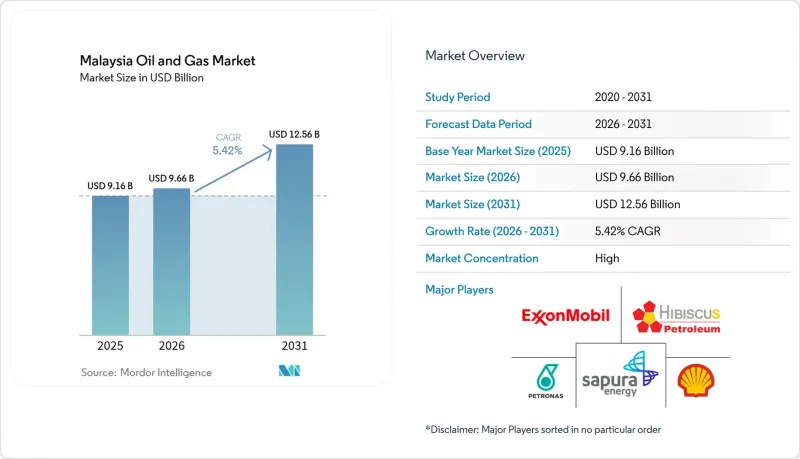
Mordor Intelligence에 의하면, 2026년 말레이시아의 석유 및 가스 시장 규모는 96억 6,000만 달러로 추정되며, 2025년 91억 6,000만 달러에서 2031년에는 125억 6,000만 달러에 달할 것으로 예측됩니다.
또한 2026-2031년 연평균 성장률(CAGR)은 5.42%를 기록할 전망입니다.
본 보고서는 부문(업스트림, 중류, 하류), 지역(육상 및 해상), 서비스(건설, 유지보수·턴어라운드, 해체)별로 분류되어 있습니다. 시장 규모 및 전망은 금액(달러) 기준으로 제시되어 있습니다.
말레이시아의 석유 및 가스 시장 동향 및 인사이트
정제 석유 제품에 대한 수요 급증
지역 내 연료 소비 회복과 새로운 모빌리티 트렌드가 동남아시아 전역의 정유시설 가동률을 끌어올리고 있습니다. 2024년 11월, 일일 30만 배럴의 처리 능력을 갖춘 펭겔란 통합 단지가 상업 가동을 시작했으며, 이는 인도네시아, 베트남,필리핀공급 부족 시장에 공급하기 위한 말레이시아 반도의 노력을 뒷받침하고 있습니다. 페트로나스 케미컬스는 2026년 가동을 예정하고 있는 연산 3만 3,000톤 규모의 화학 재활용 공장을 건설 중이며, 이를 통해 하류 부문에 순환 경제 실천이 통합되고 있습니다. 이러한 프로젝트들은 업스트림 생산자들의 원유 조달을 공고히 하며, 말레이시아를 단순한 원유 수출국이 아닌 가공 거점으로 자리매김하고 있습니다.
사라왁주 및 사바주의 미개발 심해 매장량
랑카스카 및 라얀 라얀 클러스터의 프론티어 광구에는 대규모 가스 및 콘덴세이트 매장량이 예상되며, 이를 위해서는 고성능 시추 장비, 해저 타이백 및 부유식 LNG 솔루션이 필요합니다. ‘말레이시아 입찰 라운드 2025’에서는 투자를 촉진하기 위해 5개의 탐사 블록과 3개의 개발·위험 분담 옵션 클러스터가 지정되었습니다. 코노코Philips와 쉘은 LNG 원료의 안정적인 공급을 확보하기 위해 포트폴리오 자금을 가스 중심의 개발 사업으로 전환하고 있습니다. 안정적인 생산분배계약(PSC) 체계와 자원 관리 기관으로서의 페트로나스의 역할 덕분에, 발견부터 첫 가스 생산까지의 리드타임이 단축되어 말레이시아의 석유 및 가스 시장의 장기적인 경쟁력이 강화되고 있습니다.
원유 가격의 급격한 변동
2024년부터 2025년에 걸쳐 브렌트 원유 가격이 배럴당 70-90달러 사이에서 변동함에 따라, 현금 흐름 계획이 차질을 빚고 일부 최종 투자 결정이 연기되었으며 차입 비용이 상승했습니다. 특히, 고비용의 가스 리프트나 화학약품 주입이 필요한 증산 기술이 사용되는 경우, 수익성이 낮은 유전의 경제성은 여전히 가격 하락의 영향을 받기 쉬운 상황에 있습니다. 말레이시아의 석유 및 가스·에너지 서비스 위원회의 재정 지원 요청은 시장 변동성에 대한 노출을 여실히 드러내고 있습니다. 헤지나 비용 최적화는 어느 정도 효과를 가져오지만, 변동이 장기화될 경우 심해 개발이나 설비 폐쇄 조치에 대한 추진 속도가 둔화될 가능성이 있습니다.
부문별 분석
2025년, 업스트림 부문은 활발한 생산분배계약(PSC) 활동과 페트로나스(Petronas)의 프로젝트 파이프라인에 힘입어 말레이시아의 석유 및 가스 시장 규모의 74.85%를 차지했습니다. 제룬(Jerun), 카사와리(Kasawari), 구무수트-카카프(Gumusut-Kakap) 재개발 프로젝트는 자연 감산율을 상쇄하면서 생산량의 최고 수준을 유지하고 있습니다. 말레이시아의 석유 및 가스 시장에서 업스트림 부문이 시장 점유율의 주도권을 쥐고 있는 배경에는 가스 콘덴세이트 매장량이 풍부한 지질 조건과 유전 수익화를 가속화하는 지원적인 세제가 있습니다.
국제 기업들이 심해 유정이나 한계 수익성 재개발 프로젝트에서 광구를 확보함에 따라, 업스트림 부문에 대한 투자 기세는 2031년까지 지속될 전망입니다. 동시에, 2027년에 사바·사라왁 가스 파이프라인이 폐지되면 미드스트림 사업자는 운송 경로 변경이라는 과제에 직면하게 되며, 동말레이시아산 가스를 수송하기 위한 대체 수단이 필요하게 됩니다. 다운스트림 사업자는 업스트림 부문의 병목 현상이 해소되어 증산된 콘덴세이트가 펭게랑의 개질 설비로 공급됨에 따라 새로운 원료의 혜택을 누리게 될 것입니다.
기타 혜택:
- 엑셀 형식 시장 예측(ME) 시트
- 3개월간의 애널리스트 지원
자주 묻는 질문
목차
제1장 서론
제2장 조사 방법
제3장 주요 요약
제4장 시장 구도
제5장 시장 규모와 성장 예측
제6장 경쟁 구도
제7장 시장 기회와 향후 전망
LSH 26.09.08According to Mordor Intelligence, Malaysia oil and gas market size in 2026 is estimated at USD 9.66 billion, growing from 2025 value of USD 9.16 billion with 2031 projections showing USD 12.56 billion, growing at 5.42% CAGR over 2026-2031.
This report is Segmented by Sector (Upstream, Midstream, and Downstream), Location (Onshore and Offshore), and Service (Construction, Maintenance and Turn-Around, and Decommissioning). The Market Sizes and Forecasts are Provided in Terms of Value (USD).
Malaysia Oil And Gas Market Trends and Insights
Surging Demand for Refined Petroleum Products
Regional fuel consumption recovery and new mobility trends stimulate refinery utilization rates across Southeast Asia. The Pengerang Integrated Complex entered commercial service in November 2024 with 300,000 barrels-per-day capacity, underpinning Peninsular Malaysia's aspiration to supply deficit markets in Indonesia, Vietnam, and the Philippines. Petronas Chemicals is constructing a 33,000-tonnes-per-annum chemical recycling plant due in 2026, embedding circular-economy practices into the downstream landscape. These projects lock in crude intake for upstream producers and frame Malaysia as a processing hub rather than a pure exporter of crude.
Untapped Deep-Water Reserves in Sarawak & Sabah
Frontier acreage in the Langkasuka and Layang-Layang clusters offers sizable gas and condensate potential that requires high-spec rigs, subsea tie-backs, and floating LNG solutions. The Malaysia Bid Round 2025 listed five exploration blocks and three Development and Risk-sharing Option clusters to catalyze investment. ConocoPhillips and Shell have shifted portfolio capital toward gas-weighted developments to maximize LNG feedstock security. The stable PSC framework and Petronas' role as resource custodian shorten lead times from discovery to first gas, enhancing the long-term competitiveness of the Malaysia oil and gas market.
High Crude-Price Volatility
Brent fluctuations between USD 70-90 per barrel in 2024-2025 disrupted cash-flow planning, deferred some final investment decisions, and raised borrowing costs. Marginal field economics remain sensitive to price dips, particularly where enhanced recovery requires costly gas lift or chemical injection. The Malaysian Oil, Gas and Energy Services Council's appeal for fiscal relief underscores exposure to market swings. While hedging and cost optimization help, sustained volatility may temper the pace of deep-water and decommissioning commitments.
Other drivers and restraints analyzed in the detailed report include:
- Rising Asian LNG Demand Lifting Malaysian Exports
- Downstream Petrochemical Integration Momentum
- Global Energy-Transition Investment Shift
For complete list of drivers and restraints, kindly check the Table Of Contents.
Segment Analysis
The upstream segment captured 74.85% of the Malaysia oil and gas market size in 2025, buoyed by robust PSC activity and Petronas' project pipeline. Jerun, Kasawari, and Gumusut-Kakap Redevelopment sustain plateau output while offsetting natural decline rates. The Malaysian oil and gas market share leadership in upstream activities reflects a geology rich in gas-condensate plays and a supportive fiscal regime that accelerates field monetization.
Upstream investment momentum will likely continue through 2031 as international operators secure acreage in deep-water wells and marginal redevelopments. Concurrently, midstream operators face rerouting challenges once the Sabah-Sarawak Gas Pipeline retires in 2027, requiring alternative evacuation for East Malaysian gas. Downstream players benefit from new feedstock when upstream debottlenecking releases incremental condensate volumes that feed into Pengerang's reformers.
Complete Report Scope:
- By Sector
- Upstream
- Midstream
- Downstream
- By Location
- Onshore
- Offshore
- By Service
- Construction
- Maintenance and Turn-around
- Decommissioning
List of Companies Covered in this Report:
- Petroliam Nasional Berhad (Petronas)
- Shell plc
- Exxon Mobil Corp.
- Chevron Corp.
- BP plc
- Hibiscus Petroleum Bhd
- Sapura Energy Bhd
- Dialog Group Bhd
- MISC Berhad
- Yinson Holdings Bhd
- PTTEP (Malaysia assets)
- Repsol Exploration (Malaysia) S.A.
- Lundin Energy Malaysia
- Murphy Oil Corporation (Malaysia)
- Serba Dinamik Holdings
- Velesto Energy Bhd
- Malaysia Marine & Heavy Engineering
- Altus Oil & Gas Malaysia Sdn Bhd
- Petro-Excel Sdn Bhd
- Petro Teguh (M) Sdn Bhd
Additional Benefits:
- The market estimate (ME) sheet in Excel format
- 3 months of analyst support
TABLE OF CONTENTS
1 Introduction
- 1.1 Study Assumptions & Market Definition
- 1.2 Scope of the Study
2 Research Methodology
3 Executive Summary
4 Market Landscape
- 4.1 Market Overview
- 4.2 Market Drivers
- 4.2.1 Surging demand for refined petroleum products
- 4.2.2 Untapped deep-water reserves (Sarawak & Sabah)
- 4.2.3 Incentive-driven PSC revisions & fiscal terms
- 4.2.4 Rising Asian LNG demand lifting Malaysian exports
- 4.2.5 CCUS & blue-hydrogen project pipeline
- 4.2.6 Downstream petrochemical integration momentum
- 4.3 Market Restraints
- 4.3.1 High crude-price volatility
- 4.3.2 Global energy-transition investment shift
- 4.3.3 ESG-driven capital access constraints
- 4.3.4 Aging offshore infrastructure & OPEX escalation
- 4.4 Supply-Chain Analysis
- 4.5 Regulatory Landscape
- 4.6 Technological Outlook
- 4.7 Crude-Oil Production & Consumption Outlook
- 4.8 Natural-Gas Production & Consumption Outlook
- 4.9 Installed Pipeline Capacity Analysis
- 4.10 Unconventional Resources CAPEX Outlook (tight oil, oil sands, deep-water)
- 4.11 Porter's Five Forces
- 4.11.1 Bargaining Power - Suppliers
- 4.11.2 Bargaining Power - Buyers
- 4.11.3 Threat of New Entrants
- 4.11.4 Threat of Substitutes
- 4.11.5 Competitive Rivalry
- 4.12 PESTLE Analysis
5 Market Size & Growth Forecasts
- 5.1 By Sector
- 5.1.1 Upstream
- 5.1.2 Midstream
- 5.1.3 Downstream
- 5.2 By Location
- 5.2.1 Onshore
- 5.2.2 Offshore
- 5.3 By Service
- 5.3.1 Construction
- 5.3.2 Maintenance and Turn-around
- 5.3.3 Decommissioning
6 Competitive Landscape
- 6.1 Market Concentration
- 6.2 Strategic Moves (M&A, Partnerships, PPAs)
- 6.3 Market Share Analysis (Market Rank/Share for key companies)
- 6.4 Company Profiles (includes Global level Overview, Market level overview, Core Segments, Financials as available, Strategic Information, Products & Services, and Recent Developments)
- 6.4.1 Petroliam Nasional Berhad (Petronas)
- 6.4.2 Shell plc
- 6.4.3 Exxon Mobil Corp.
- 6.4.4 Chevron Corp.
- 6.4.5 BP plc
- 6.4.6 Hibiscus Petroleum Bhd
- 6.4.7 Sapura Energy Bhd
- 6.4.8 Dialog Group Bhd
- 6.4.9 MISC Berhad
- 6.4.10 Yinson Holdings Bhd
- 6.4.11 PTTEP (Malaysia assets)
- 6.4.12 Repsol Exploration (Malaysia) S.A.
- 6.4.13 Lundin Energy Malaysia
- 6.4.14 Murphy Oil Corporation (Malaysia)
- 6.4.15 Serba Dinamik Holdings
- 6.4.16 Velesto Energy Bhd
- 6.4.17 Malaysia Marine & Heavy Engineering
- 6.4.18 Altus Oil & Gas Malaysia Sdn Bhd
- 6.4.19 Petro-Excel Sdn Bhd
- 6.4.20 Petro Teguh (M) Sdn Bhd
7 Market Opportunities & Future Outlook
- 7.1 White-space & Unmet-Need Assessment