

|
시장보고서
상품코드
2063974
인도의 HCM 소프트웨어 시장 : 점유율 분석, 업계 동향과 통계, 성장 예측(2026-2031년)India HCM Software - Market Share Analysis, Industry Trends & Statistics, Growth Forecasts (2026 - 2031) |
||||||
 Mordor Intelligence
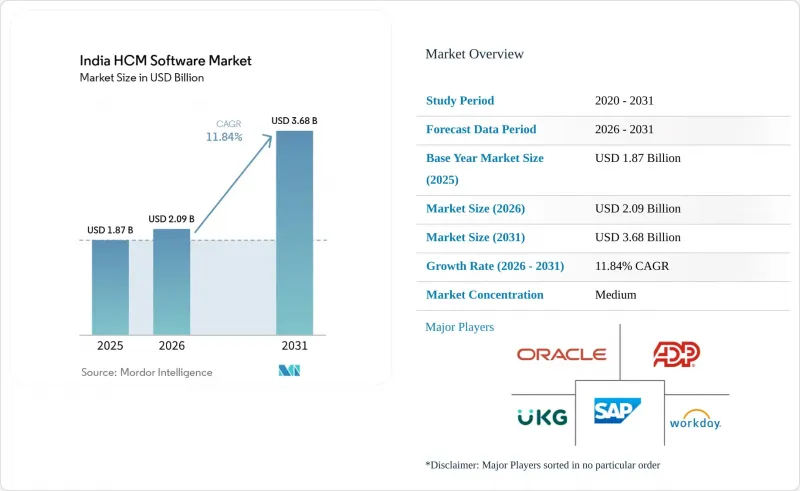
Mordor Intelligence에 의하면, 인도 HCM 소프트웨어 시장 규모는 2025년 18억 7,000만 달러에서 2026년에는 20억 9,000만 달러로 확대되어 2031년까지 36억 8,000만 달러에 이를 것으로 예측되며, 2026년부터 2031년까지 CAGR 11.84%로 성장할 전망입니다.
본 보고서는 구성 요소(소프트웨어 및 서비스), 도입 형태(클라우드, On-Premise, 하이브리드), 조직 규모(대기업 및 중소기업), 용도(핵심 HR, 인재 관리, 인력 관리, 급여 관리 등), 최종 사용자 산업(IT 및 통신, BFSI 등)별로 분류되어 있습니다. 시장 전망은 금액(달러) 기준으로 제시되어 있습니다.
인도 HCM 소프트웨어 시장 동향 및 인사이트
클라우드 기반 HCM 플랫폼의 급속한 확산
클라우드 도입은 이미 인도 HCM 소프트웨어 시장에서 62.91%의 점유율을 차지하고 있으며, 직원 1인당 과금 방식 덕분에 하드웨어 비용이 들지 않아 연평균 성장률(CAGR) 13.54%로 확대되고 있습니다. 워크데이(Workday)가 첸나이에 보유한 AWS 호스팅형 데이터센터는 단일 세계 인스턴스를 유지하면서 다국적 기업 고객에게 주권적인 데이터 스토리지를 제공합니다. Oracle HCM Now는 핵심 HR, 급여 계산, 근태 관리를 단일 클라우드 스택으로 통합하고 있으며, Wipro는 전환 후 급여 계산 주기를 60% 단축했습니다. 국내 선도 기업인 Keka는 현장 직원들에게 친숙한 지오펜싱 기능과 지역 언어 지원 화면을 갖추고 있으며, 매월 150만 건의 급여 계산을 처리하고 있습니다. On-Premise 환경에서의 맞춤화 예산이 감소함에 따라, EPFO나 ESIC 등의 포털과의 API 연동에 대한 지출이 증가하고 있으며, 이는 클라우드의 성장세를 더욱 가속화하고 있습니다.
자동화 및 AI 기반 인사 프로세스에 대한 수요 증가
인재 관리 스위트에는 이력서 분석, 면접 일정 관리, 이직 예측 기능이 탑재되어 있어 채용까지 걸리는 기간을 30% 단축하고 있습니다. SAP SuccessFactors는 2025년 12월, G-P의 Gia 에이전트를 통합하여 고객이 50개국의 급여 데이터를 하나의 화면에서 대조할 수 있도록 했습니다. ADP의 의료 업계 동향 보고서에 따르면, 의료 서비스 제공업체의 84%가 AI를 통해 사무 업무가 줄어들기를 기대하고 있는 반면, 65%는 역량 강화에 어려움을 겪고 있습니다. Hunar.AI는 WhatsApp 및 음성 봇을 통해 1,000만 명의 구직자와 소통하며, 은행 현장 업무에서 103%에 달하던 이직률을 해소하기 위해 노력했습니다. 현재 시장은 예측 분석을 도입하는 대기업과, 휴가 신청이나 근무 교대 신청을 자동화하는 챗봇을 선택하는 중소기업으로 나뉘어 있습니다.
데이터 개인정보 보호 및 사이버 보안에 대한 우려
'개인정보보호법'에서는 72시간 이내의 정보 유출 공개, 1년간의 감사 로그 보관, 그리고 막대한 벌금이 규정되어 있어, 이로 인해 법적 심사가 장기화되고 조달 주기가 길어지고 있습니다. Workday는 현지화 수요에 부응하기 위해 2025년 12월 인도에 데이터센터를 개설했으나, ISO 27001 및 SOC 2 인증을 취득하지 않은 공급업체는 현재 기업의 후보 목록에서 일상적으로 제외되고 있습니다. BFSI(은행 및 금융 및 보험) 및 의료 분야의 구매자들은 직원 파일에 재무 데이터나 의료 데이터가 포함되어 있기 때문에 보다 상세한 침투 테스트를 실시했습니다. 그 결과, 2단계 인증 절차를 생략하는 할인 플랫폼은 가격에 민감한 중소기업에게는 받아들여질 수 있겠지만, 규제가 엄격한 업계에 진출하는 경우는 거의 없을 것입니다.
부문별 분석
서비스 매출은 연평균 성장률(CAGR) 13.12%로 증가하고 있으며, 기업들이 법적 요건 매핑 및 API 통합을 외부에 위탁함에 따라 인도 HCM 소프트웨어 시장에서 점유율을 확대해 나갈 것으로 전망됩니다. 2025년 시점에서 라이선스 및 구독 수익에 힘입어 소프트웨어 부문이 70.84%의 점유율을 유지했으나, 서비스 수익의 점유율 확대는 벤더들이 단순히 사용자 수에 따른 가격 책정에 의존하기보다는 판매 후 가치 제공을 통해 수익화를 도모하고 있음을 보여줍니다. Oracle의 위프로(Wipro) 사례 연구에 따르면, 클라우드로 전환한 후 급여 계산 주기가 60% 단축되었으나, 이를 위해서는 전담 컨설턴트가 6개월간 진행한 도입 단계가 필요했습니다. 그 목적은 주별 전문적인 세무 규정을 파악하고, EPFO의 얼굴 인식 API를 통합하는 것이었습니다.
국내 업체들도 이 방식을 따라 하고 있습니다. greytHR의 사후 지원 팀은 노동법 개정에 대한 대응을 사후에 진행하고 있으며, Keka는 온보딩 지원을 구독 플랜에 포함시키고 있습니다. 전략적 측면에서 볼 때, 견고한 파트너 생태계와 공인 컨설턴트를 보유한 벤더가 중견 기업 및 엔터프라이즈 시장 거래에서 압도적인 점유율을 차지하는 반면, 소프트웨어 라이선스만 제공하는 벤더는 셀프 서비스형 중소기업 부문으로 한정되어 있다는 것입니다.
클라우드 도입은 2025년에 62.91%의 점유율을 차지해, 2031년까지 연평균 성장률(CAGR) 13.54%로 성장할 것으로 전망됩니다. 한편, 기밀성이 높은 급여 데이터는 On-Premise에 저장해야 하는 반면, 인사 관리 모듈은 클라우드에서 운영해야 하는 경우, 하이브리드 도입이 점차 자리를 잡아가고 있습니다. Workday의 로컬 데이터센터는 전 세계 인스턴스와 주권형 스토리지의 공존을 가능하게 합니다. 한편, Oracle HCM Now는 통합된 스택을 통해 On-Premise 환경에서의 맞춤 설정을 대폭 줄여줍니다. On-Premise 구축은 시장 점유율이 줄어들고 있지만, 조달 규정에 따라 운영비보다 자본 지출이 우선시되는 정부 및 공공 부문 기관, 그리고 레거시 ERP 시스템을 클라우드 환경으로 이전할 방안이 없는 기관에서는 여전히 지속되고 있습니다.
On-Premise 기반 핵심 HR 기능과 클라우드 기반의 인재 채용 및 인력 분석을 결합한 하이브리드 아키텍처는 여러 주에서 사업을 전개하며 통합된 규정 준수 관리 기능이 필요한 반면, 교대 근무 스케줄링 도구는 분산화가 필요한 중견 제조업체를 위한 타협안으로 부상하고 있습니다. 네트워크 연결이 불안정한 제조업체들은 출근 데이터를 나중에 동기화하는 엣지 디바이스를 활용하고 있으며, 이는 하이브리드 방식이 아키텍처에 대한 교조적인 접근이 아니라 현장의 실정과 규정 준수 요건을 조화시키는 데 그 목적이 있음을 보여줍니다.
기타 혜택:
- 엑셀 형식 시장 예측(ME) 시트
- 3개월간의 애널리스트 지원
자주 묻는 질문
목차
제1장 서론
제2장 조사 방법
제3장 주요 요약
제4장 시장 구도
제5장 시장 규모와 성장 예측
제6장 경쟁 구도
제7장 시장 기회와 향후 전망
JHS 26.06.23According to Mordor Intelligence, the india hCM software market size is expected to increase from USD 1.87 billion in 2025 to USD 2.09 billion in 2026 and reach USD 3.68 billion by 2031, growing at a CAGR of 11.84% over 2026-2031.
This report is Segmented by Component (Software, and Services), Deployment Mode (Cloud, On-Premises, and Hybrid), Organization Size (Large Enterprises, and Small and Medium Enterprises), Application (Core HR, Talent Management, Workforce Management, Payroll Management, and More), End-User Industry (IT and Telecommunications, BFSI, and More). The Market Forecasts are Provided in Terms of Value (USD).
India HCM Software Market Trends and Insights
Rapid Adoption of Cloud-Based HCM Platforms
Cloud deployment already holds a 62.91% foothold in the India HCM software market and is on a 13.54% CAGR path because pay-per-employee pricing eliminates hardware outlays. Workday's AWS-hosted data center in Chennai gives multinational clients sovereign data storage while keeping a single global instance. Oracle HCM Now bundles core HR, payroll, and time tracking on one cloud stack, and Wipro cut payroll-cycle time by 60% after migration. Domestic challenger Keka processes 1.5 million payrolls each month with geo-fencing and regional-language screens that resonate with field workers. Falling budgets for on-premises customization push spending toward API ties with portals such as EPFO and ESIC, reinforcing cloud momentum.
Growing Demand for Automation and AI-Driven HR Processes
Talent management suites are embedding resume parsing, interview scheduling, and attrition prediction that shorten time-to-hire by 30%. SAP SuccessFactors stitched in G-P's Gia agent in December 2025 so clients can reconcile payroll across 50 countries in one view. ADP's healthcare trends report shows 84% of providers expect AI to relieve paperwork, even as 65% struggle with upskilling. Hunar.AI engaged 10 million candidates through WhatsApp and voice bots to tackle 103% attrition in frontline banking roles. The market now splits between enterprises adopting predictive analytics and SMEs opting for chatbots that automate leave requests and roster swaps.
Data Privacy and Cybersecurity Concerns
The Personal Data Protection Act sets 72-hour breach disclosure, one-year audit logs, and hefty penalties, stretching legal reviews and lengthening procurement cycles. Workday opened an India data center in December 2025 to satisfy localization demands, but vendors lacking ISO 27001 or SOC 2 attestations are now routinely cut from enterprise shortlists. BFSI and healthcare buyers conduct more in-depth penetration tests because employee files contain financial and medical data. As a result, discount platforms that skip two-factor logins may win price-sensitive SMEs but rarely break into regulated verticals.
Other drivers and restraints analyzed in the detailed report include:
- Increasing Regulatory Compliance Complexity
- Expanding SME Digitization and SaaS Affordability
- High Total Cost of Ownership for Full-Suite HCM
For complete list of drivers and restraints, kindly check the Table Of Contents.
Segment Analysis
Services revenue is growing at a 13.12% CAGR and will account for a growing share of the India HCM software market as enterprises outsource statutory mapping and API integration. Software retained a 70.84% share in 2025, anchored by license and subscription revenue, yet the rising share of services revenue signals that vendors are monetizing post-sale value delivery rather than relying solely on per-seat pricing. Oracle's Wipro case study, where payroll cycle time fell by 60% after cloud migration, required a 6-month implementation phase with dedicated consultants to map state-specific professional tax rules and integrate EPFO facial-authentication APIs.
Domestic vendors copy this playbook. greytHR's post-sale team retrofits labor-code updates, and Keka bundles onboarding support into subscription tiers. The strategic implication is that vendors with robust partner ecosystems and certified consultants are capturing a disproportionate share of mid-market and enterprise deals, while those offering software-only licenses are confined to self-service SME segments.
Cloud deployments commanded a 62.91% share in 2025 and are forecast to grow at a 13.54% CAGR through 2031, while hybrid rollouts are gaining ground when sensitive payroll data must reside on-prem, while talent modules run in the cloud. Workday's local data center lets global instances coexist with sovereign storage, while Oracle HCM Now removes many on-prem customizations through an integrated stack. On-premises deployments, though declining in share, persist in government and public-sector organizations where procurement rules favor capital expenditure over operating expenditure and where legacy ERP systems lack cloud-migration pathways.
Hybrid architectures, which combine on-premises core HR with cloud-based talent acquisition and workforce analytics, are emerging as a compromise for mid-market manufacturers that operate in multiple states and need centralized compliance engines but decentralized shift-scheduling tools. Manufacturers with patchy connectivity use edge devices that sync attendance data later, proving that hybrid is less about architecture dogma and more about matching site realities with compliance rules.
List of Companies Covered in this Report:
- Oracle Corporation
- SAP SE
- Workday Inc.
- ADP, Inc.
- UKG Inc.
- Spine Technologies India Private Limited
- Cornerstone OnDemand Inc.
- Zoho Corporation Pvt. Ltd.
- Ramco Systems Limited
- Darwinbox Digital Solutions Private Limited
- ZingHR Techno India Private Limited
- Greytip Software Private Limited
- Keka Technologies Private Limited
- PeopleStrong Technologies Private Limited
- Freshworks Inc.
- Paycom Software, Inc.
- The Sage Group plc
- Rippling Technologies, Inc.
- HiBob Ltd.
- Eightfold AI, Inc.
- Spine Technologies India Private Limited
Additional Benefits:
- The market estimate (ME) sheet in Excel format
- 3 months of analyst support
TABLE OF CONTENTS
1 INTRODUCTION
- 1.1 Study Assumptions and Market Definition
- 1.2 Scope of the Study
2 RESEARCH METHODOLOGY
3 EXECUTIVE SUMMARY
4 MARKET LANDSCAPE
- 4.1 Market Overview
- 4.2 Market Drivers
- 4.2.1 Rapid Adoption of Cloud-Based HCM Platforms
- 4.2.2 Growing Demand for Automation and AI-Driven HR Processes
- 4.2.3 Increasing Regulatory Compliance Complexity
- 4.2.4 Expanding SME Digitization and SaaS Affordability
- 4.2.5 Integration of HCM with Government Digital Portals
- 4.2.6 Rise of Vernacular Mobile HR Apps for Gig Workforce
- 4.3 Market Restraints
- 4.3.1 Data Privacy and Cybersecurity Concerns
- 4.3.2 High Total Cost of Ownership for Full-Suite HCM
- 4.3.3 Fragmented State-Level Labour Regulations
- 4.3.4 Shortage of HR Analytics Talent
- 4.4 Industry Value Chain Analysis
- 4.5 Regulatory Landscape
- 4.6 Technological Outlook
- 4.7 Impact of Macroeconomic Factors on the Market
- 4.8 Porter's Five Forces Analysis
- 4.8.1 Threat of New Entrants
- 4.8.2 Bargaining Power of Buyers
- 4.8.3 Bargaining Power of Suppliers
- 4.8.4 Threat of Substitutes
- 4.8.5 Intensity of Competitive Rivalry
5 MARKET SIZE AND GROWTH FORECASTS (VALUE)
- 5.1 By Component
- 5.1.1 Software
- 5.1.2 Services
- 5.2 By Deployment Mode
- 5.2.1 Cloud
- 5.2.2 On-Premises
- 5.2.3 Hybrid
- 5.3 By Organization Size
- 5.3.1 Large Enterprises
- 5.3.2 Small and Medium Enterprises
- 5.4 By Application
- 5.4.1 Core HR
- 5.4.2 Talent Management
- 5.4.3 Workforce Management
- 5.4.4 Payroll Management
- 5.4.5 Learning and Development
- 5.5 By End-User Industry
- 5.5.1 IT and Telecommunications
- 5.5.2 BFSI
- 5.5.3 Industrial Manufacturing
- 5.5.4 Healthcare and Lifesciences
- 5.5.5 Retail and E-commerce
- 5.5.6 Government and Public Sector
- 5.5.7 Other End-User Industries
6 COMPETITIVE LANDSCAPE
- 6.1 Market Concentration
- 6.2 Strategic Moves
- 6.3 Market Share Analysis
- 6.4 Company Profiles (includes Global Level Overview, Market Level Overview, Core Segments, Financials as available, Strategic Information, Market Rank/Share, Products and Services, Recent Developments)
- 6.4.1 Oracle Corporation
- 6.4.2 SAP SE
- 6.4.3 Workday Inc.
- 6.4.4 ADP, Inc.
- 6.4.5 UKG Inc.
- 6.4.6 Spine Technologies India Private Limited
- 6.4.7 Cornerstone OnDemand Inc.
- 6.4.8 Zoho Corporation Pvt. Ltd.
- 6.4.9 Ramco Systems Limited
- 6.4.10 Darwinbox Digital Solutions Private Limited
- 6.4.11 ZingHR Techno India Private Limited
- 6.4.12 Greytip Software Private Limited
- 6.4.13 Keka Technologies Private Limited
- 6.4.14 PeopleStrong Technologies Private Limited
- 6.4.15 Freshworks Inc.
- 6.4.16 Paycom Software, Inc.
- 6.4.17 The Sage Group plc
- 6.4.18 Rippling Technologies, Inc.
- 6.4.19 HiBob Ltd.
- 6.4.20 Eightfold AI, Inc.
- 6.4.21 Spine Technologies India Private Limited
7 MARKET OPPORTUNITIES AND FUTURE OUTLOOK
- 7.1 White-Space and Unmet-Need Assessment


