
|
시장보고서
상품코드
2073106
그린 IT 컨설팅 소프트웨어 플랫폼 시장 : 점유율 분석, 업계 동향과 통계, 성장 예측(2026-2031년)Green IT Consulting Software Platform - Market Share Analysis, Industry Trends & Statistics, Growth Forecasts (2026 - 2031) |
||||||
 Mordor Intelligence
Mordor Intelligence에 의하면, 그린 IT 컨설팅 소프트웨어 플랫폼 시장 규모는 2025년 9억 4,000만 달러에서 2026년에는 10억 2,000만 달러로 확대되어 2031년까지 17억 4,000만 달러에 이를 것으로 예상되고 있어 2026-2031년까지 CAGR 9.51%로 성장할 전망입니다.
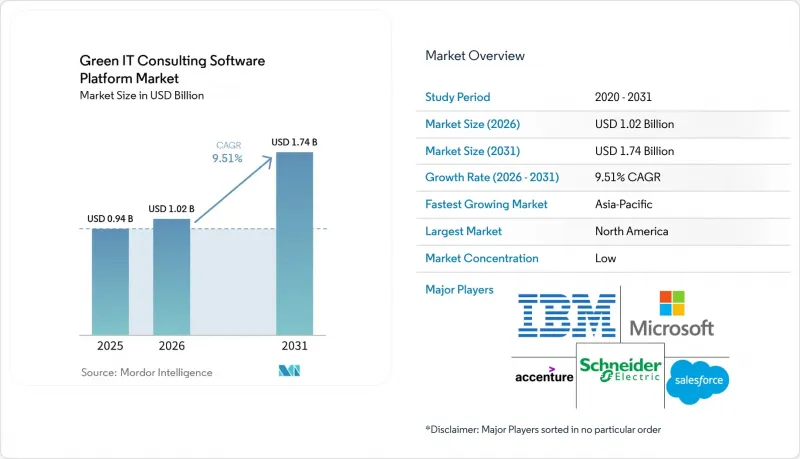
본 보고서는 제공 형태(소프트웨어 및 서비스), 도입 형태(클라우드 기반, On-Premise형, 하이브리드형), 기업 규모(대기업 및 중소기업), 용도(탄소 회계 및 배출량 관리, 기타), 최종 사용자(IT 및 통신, 은행, 금융서비스 및 보험(BFSI), 제조업, 기타), 지역별로 분류되어 있습니다. 시장 전망은 금액(달러) 기준으로 제시되어 있습니다.
전 세계 그린 IT 컨설팅 소프트웨어 플랫폼 시장 동향 및 인사이트
기업의 탄소중립 노력 확대에 따라, 측정 가능한 IT 배출량 감축이 요구되고 있습니다.
현재 기업의 탄소 중립 목표 달성을 위해서는 추적 가능한 IT 배출량 데이터가 필요하며, 이로 인해 구매자들이 그린 IT 컨설팅 소프트웨어 플랫폼 시장을 평가하는 방식이 변화하고 있습니다. 마이크로소프트의 2025년 지속가능성 보고서에 따르면, 하이퍼스케일 사업자조차도 생애주기 평가(LCA) 도구를 활용하여, 세부적인 인프라 수준에서 서버 및 냉각 방식의 선택이 배출량에 미치는 영향을 검증하고 있는 것으로 나타났습니다. 이 점은 중요합니다. 왜냐하면 기업의 구매 담당자들은 인프라, 조달, 이용 데이터를 내부 검토나 외부 보증에 견딜 수 있는 증거로 변환할 수 있는 소프트웨어를 점점 더 필요로 하고 있기 때문입니다. 이 작업을 보고 시즌까지 미루는 구매자는 대개 수작업으로 데이터를 재구성해야 하는 부담이 커지고, 비용이 증가하며, 최종 수치에 대한 신뢰도가 떨어지게 됩니다. 그 결과, 그린 IT 컨설팅 소프트웨어 플랫폼 시장에서 자동화된 기준선 설정, 지속적인 모니터링, 증거 추적은 선택적 기능에서 표준 요구 사항으로 전환되고 있습니다.
디지털 운영에 관한 지속가능성 공시 규정의 강화
그린 IT 컨설팅 소프트웨어 플랫폼 시장은 보다 상세하고 체계적인 지속가능성 보고를 의무화하는 강화된 공시 규정의 혜택도 누리고 있습니다. 유럽연합 집행위원회의 CSRD 관련 정책 업데이트에 따라, 보고 의무는 기업 계획에서 핵심적인 위치를 유지하게 되었으며, 디지털 보고 지원 인프라의 필요성이 더욱 커졌습니다. 이와 같은 정책 방향에 따라, 기업들은 매년 프로세스를 재구축할 필요 없이 하나의 기반 데이터 세트를 여러 보고 프레임워크에 매핑할 수 있는 플랫폼을 요구하고 있습니다. 이에 따라 재무, 지속가능성, 규정 준수 각 팀에서 동시에 활용할 수 있는 설정 가능한 표준 매핑, 감사 지원, 워크플로 관리의 가치가 높아지고 있습니다. 또한, 지역 간 법적 규제의 차이도 중요한 요소입니다. 여러 지역에서 사업을 전개하는 기업에게는 단일 규제 체계에만 대응하는 것이 아니라, 서로 다른 공시 방법이나 보증 요건에 적응할 수 있는 도구가 필요하기 때문입니다. 따라서 그린 IT 컨설팅 소프트웨어 플랫폼 시장에서는 끊임없이 변화하는 기준에 맞추어 수작업으로 인한 재작업을 최소화하면서 기업의 보고 업무를 지원할 수 있는 벤더가 우위를 점하고 있습니다.
IT, 재무, 시설 관리 시스템 전반에 걸친 데이터 품질의 격차
그린 IT 컨설팅 소프트웨어 플랫폼 시장은 여전히 근본적인 데이터 문제에 직면해 있습니다. 이는 배출량 보고가 공급업체의 기록, ERP 시스템, 시설 관리 도구, IT 자산 데이터베이스 등에 흩어져 있는 정보에 의존하고 있기 때문입니다. Sage는 2025년 12월, 조사 대상 중소기업 중 32%가 적극적인 지속가능성 전략을 수립하고 있음에도 불구하고, 공식적인 지속가능성 보고 절차를 도입한 곳은 고작 8%에 불과하다고 보고했습니다. SAGE 이 격차가 중요한 이유는 대기업이 1차 데이터의 상당 부분을 소규모 공급업체에 의존하는 경우가 많으며, 업스트림 보고 체계가 불충분할 경우 하류의 Scope 3 산출의 신뢰성이 떨어지기 때문입니다. 또한, 공급업체는 보고를 시작하기 전에 일관성 없는 분류 체계를 표준화하고, 누락된 기록을 보완하며, 데이터를 검증해야 하므로 도입에 소요되는 시간도 길어집니다. 기업들이 첫 번째 의무 공시 주기를 맞이함에 따라, 이러한 품질상의 격차가 조달을 지연시키고, 그린 IT 컨설팅 소프트웨어 플랫폼 시장에서 감사상의 우려를 야기하고 있습니다.
부문별 분석
2025년, 그린 IT 컨설팅 소프트웨어 플랫폼 시장에서 소프트웨어가 76.13%의 점유율을 차지했습니다. 이는 구매자들이 이미 정기적인 자문 주도형 제공 방식보다 구독형 플랫폼을 더 선호하고 있음을 보여줍니다. CSRD, ISSB S2, GRI 등 관련 보고 프레임워크의 변화 속도를 고려할 때, 대부분의 기업에게 있어 정기적으로 업데이트되는 소프트웨어가 정기적인 컨설팅 계약보다 더 실용적이었습니다. 또한, 소프트웨어 부문은 2031년까지 연평균 성장률(CAGR) 12.13%를 유지하며 가장 빠르게 성장하는 제공 범주로 자리매김하고 있으며, 이는 그린 IT 컨설팅 소프트웨어 플랫폼 시장이 1차 도입 이후 성장세가 둔화되지 않고 여전히 새로운 구매자층으로 계속 확대되고 있음을 보여줍니다. 서비스는 여전히 중요하며, 특히 도입 지원, 탄소 데이터 관리 업무, 도입 초기 단계에서의 전략적 지침 제공 측면에서 그 중요성이 큽니다.
소프트웨어 및 서비스의 균형은 본질적으로 사라지는 것이 아니라, 그 형태가 변화하고 있습니다. 각 벤더사는 플랫폼 내에 온보딩 도구, 교육 워크플로우, 관리형 데이터 오버레이를 직접 구축하고 있으며, 이를 통해 무제한 컨설팅에 대한 의존도를 낮추는 동시에 서비스 수익을 구독 모델과 연계하고 있습니다. 이 모델이 매력적인 이유는 구매자가 데이터 수집이 세분화된 상태로 유지되는 일회성 자문 서비스가 아니라, 매월 지속적으로 이용할 수 있는 시스템을 원하기 때문입니다. 또한, 이 플랫폼은 그린 IT 컨설팅 소프트웨어 산업 전반에서 보고서 작성, 증거 관리, 개선 현황 추적을 위한 운영 계층으로 기능함으로써 고객 유지율 향상에도 기여하고 있습니다.
2025년 기준으로 그린 IT 컨설팅 소프트웨어 플랫폼 시장 규모의 64.17%를 클라우드 기반 도입이 차지하고 있으며, 이는 자동 업데이트, 유연한 확장성, 인프라 오버헤드 절감에 대한 수요를 반영하고 있습니다. 하이브리드 방식은 가장 빠르게 성장하고 있는 모델이며, 하이브리드 구성의 그린 IT 컨설팅 소프트웨어 플랫폼 시장 규모는 2031년까지 연평균 성장률(CAGR) 13.23%로 확대될 것으로 전망됩니다. 규제 대상 산업이 특정 데이터를 로컬 또는 사내 환경에 보관하면서 클라우드 기반 분석 및 보고서 작성 도구를 필요로 함에 따라, 이러한 변화를 주도하고 있습니다. 레거시 시스템이 여전히 핵심적인 역할을 수행하고 있는 환경, 정책상의 제약으로 인해 완전한 클라우드 도입이 제한되는 환경에서는 On-Premise 모델이 여전히 중요한 역할을 하고 있습니다.
소프트웨어 및 서비스의 균형은 본질적으로 사라지는 것이 아니라, 그 형태가 변화하고 있습니다. 각 벤더사는 플랫폼 내에 온보딩 도구, 교육 워크플로우, 관리형 데이터 오버레이를 직접 구축하고 있으며, 이를 통해 무제한 컨설팅에 대한 의존도를 낮추는 동시에 서비스 수익을 구독 모델로 전환하고 있습니다. 이 모델이 매력적인 이유는 구매자가 데이터 수집이 세분화된 상태로 유지되는 일회성 자문 서비스가 아니라, 매월 지속적으로 이용할 수 있는 시스템을 원하기 때문입니다. 또한, 이 플랫폼은 그린 IT 컨설팅 소프트웨어 산업 전반에 걸쳐 보고서 작성, 증거 관리, 개선 현황 추적을 위한 운영 계층으로 기능함으로써 고객 유지율 향상에도 기여하고 있습니다.
지역별 분석
2025년, 북미는 그린 IT 컨설팅 소프트웨어 플랫폼 시장 점유율의 38.12%를 차지하며, 최대 지역 매출 기준으로서의 위상을 유지했습니다. 이 지역은 대기업의 풍부한 예산, 성숙한 보고 기능, 대규모 디지털 자산을 보유한 기술 집약형 기업들 수요가 집중되는 혜택을 누리고 있습니다. 상세한 지속가능성 보고서는 인프라 및 제품 수준의 평가가 단순한 정보 공개 활동에 그치지 않고, 일상적인 기업 경영의 일부로 자리 잡고 있음을 보여줍니다. 데이터센터의 전력 소비량이 증가하고 있다는 견해 역시 북미의 확고한 입지를 뒷받침하고 있습니다. 해당 지역은 디지털 인프라에 대한 지출 비중이 높기 때문에 효율화를 위한 강력한 압박에 직면해 있기 때문입니다. 이러한 상황으로 인해 북미의 그린 IT 컨설팅 소프트웨어 플랫폼 시장의 평균 계약 금액은 개발도상 지역보다 높은 수준입니다.
유럽은 여전히 2위 지역 시장을 유지하고 있습니다. 이는 보고 의무나 보증에 대한 기대감으로 인해 구매자들이 체계화되고, 감사에 대응할 수 있는 플랫폼을 요구하게 되었기 때문입니다. CSRD의 적용 범위 및 보고 요건과 관련된 정책 업데이트는 해당 지역의 대기업들의 구매 기준을 지속적으로 형성하고 있습니다. 독일, 영국, 프랑스는 산업 보고서의 심도, 제품의 탄소 발자국에 대한 요구, 국경을 넘는 규정 준수가 모두 더욱 중요시되고 있기 때문에 여전히 주요 수요 거점으로 남아 있습니다. 또한, 유럽의 구매자들은 추적 가능성, 조사 방법의 명확성, 증거의 질을 더욱 중요하게 여기고 있어, 데이터의 출처를 상세하게 문서화할 수 있는 공급업체에게 유리한 상황이 되고 있습니다.
아시아태평양은 2031년까지 연평균 성장률(CAGR) 13.63%로 확대될 것으로 예상되며, 그린 IT 컨설팅 소프트웨어 플랫폼 시장에서 가장 빠르게 성장하는 지역 부문이 될 전망입니다. 이러한 성장은 몇몇 주요 경제권에서 의무적 및 준의무적 지속가능성 공시 프레임워크가 보급된 데 기인하며, 이로 인해 기존 시스템을 대체하려는 수요가 아닌 새로운 수요가 창출되고 있습니다. 일본, 싱가포르, 호주, 한국, 인도, 중국의 구매자들의 움직임에는 속도 차이가 있지만, 공통된 요구 사항은 탄소 회계, 보고, 공급업체와의 협력에 대한 보다 강력한 디지털 지원입니다. 남미, 중동 및 아프리카는 여전히 초기 단계의 기회에 머물러 있지만, 새로운 공시 체계와 그린 파이낸스 활동의 확대에 힘입어 그린 IT 컨설팅 소프트웨어 플랫폼 시장 전반에 걸친 도입의 ‘롱테일”라는 인식이 점차 확산되고 있습니다.
기타 혜택
- 엑셀 형식 시장 예측(ME) 시트
- 3개월간의 애널리스트 지원
자주 묻는 질문
목차
제1장 서론
제2장 조사 방법
제3장 주요 요약
제4장 시장 구도
제5장 시장 규모와 성장 예측
제6장 경쟁 구도
제7장 시장 기회와 향후 전망
JHS 26.07.07According to Mordor Intelligence, the green IT consulting software platform market size is expected to increase from USD 0.94 billion in 2025 to USD 1.02 billion in 2026 and reach USD 1.74 billion by 2031, growing at a CAGR of 9.51% over 2026-2031.
This report is Segmented by Offering (Software, and Services), Deployment (Cloud-Based, On-Premise, and Hybrid), Enterprise Size (Large Enterprises, and Small and Medium Enterprises), Application (Carbon Accounting and Emissions Management, and More), End User (IT and Telecom, BFSI, Manufacturing, and More), and Geography. The Market Forecasts are Provided in Terms of Value (USD).
Global Green IT Consulting Software Platform Market Trends and Insights
Rising Corporate Net-Zero Commitments Require Measurable IT Emissions Reduction
Corporate net-zero targets now require traceable IT emissions data, which is changing how buyers assess the green IT consulting software platform market. Microsoft's 2025 sustainability report showed that even a hyperscale operator uses life-cycle assessment tools to review the emissions impacts of server and cooling choices at a detailed infrastructure level. That matters because enterprise buyers increasingly need software that can turn infrastructure, procurement, and usage data into evidence that withstands internal review and external assurance. Buyers who postpone this work until reporting season often face more manual data reconstruction, which increases costs and weakens confidence in the final numbers. The result is that automated baselining, continuous monitoring, and evidence trails are moving from optional features to standard expectations in the green IT consulting software platform market.
Tightening Sustainability Disclosure Rules for Digital Operations
The green IT consulting software platform market is also benefiting from stricter disclosure rules that require more detailed, structured sustainability reporting. The European Commission's CSRD-related policy updates kept reporting obligations central to enterprise planning and reinforced the need for digital reporting support infrastructure. The same policy direction is encouraging companies to look for platforms that can map one underlying data set across multiple reporting frameworks without rebuilding the process each year. That is raising the value of configurable standards mapping, audit support, and workflow controls that can serve finance, sustainability, and compliance teams together. Jurisdictional differences also matter, because companies operating across regions need tools that can adapt to different disclosure methods and assurance requirements rather than serving only one regime. The green IT consulting software platform market, therefore, favors vendors that can support enterprise reporting across evolving standards with less manual rework.
High Data Quality Gaps Across IT, Finance, and Facilities Systems
The green IT consulting software platform market still faces a basic data problem because emissions reporting depends on information scattered across supplier records, ERP systems, facilities tools, and IT asset databases. Sage reported in December 2025 that only 8% of surveyed small and medium enterprises had a formal sustainability reporting process, even though 32% had an active sustainability strategy. SAGE That gap matters because large companies often depend on smaller suppliers for primary data, and weak upstream reporting makes downstream Scope 3 calculations less reliable. It also increases implementation time because vendors must normalize inconsistent taxonomies, fill missing records, and validate data before reporting can begin. As companies approach their first mandatory disclosure cycle, these quality gaps slow procurement and raise audit concerns within the green IT consulting software platform market.
Other drivers and restraints analyzed in the detailed report include:
- Cloud and Data Center Optimization Pressure from Energy Cost Volatility
- AI-Assisted Emissions Analytics and Automated Evidence Capture
- Limited Internal Sustainability and Data Engineering Skills
For complete list of drivers and restraints, kindly check the Table Of Contents.
Segment Analysis
Software held 76.13% of the green IT consulting software platform market share in 2025, indicating that buyers were already favoring subscription platforms over recurring, advisory-led delivery. The pace of change across CSRD, ISSB S2, GRI, and related reporting frameworks made continuously updated software more practical than periodic consulting engagements for most enterprises. The software layer also remained the fastest-growing offering category, with a 12.13% CAGR through 2031, indicating that the green IT consulting software platform market is still broadening across new buyer groups rather than slowing after first-wave adoption. Services still matter, especially for implementation support, managed carbon data work, and strategy guidance during early rollout stages.
The balance between software and services is now changing in form rather than disappearing in substance. Vendors are building onboarding tools, training workflows, and managed data overlays directly within the platform, reducing dependence on open-ended consulting while keeping service revenue tied to subscriptions. This model is attractive because buyers want a system they can keep using every month, not a one-time advisory exercise that leaves data collection fragmented. It also supports higher retention because the platform serves as the operating layer for reporting, evidence management, and improvement tracking across the green IT consulting software industry.
Cloud-based deployment accounted for 64.17% share of the green IT consulting software platform market size in 2025, reflecting demand for automatic updates, elastic scaling, and lower infrastructure overhead. Hybrid deployment is the fastest-growing model, and the green IT consulting software platform market size for hybrid configurations is projected to expand at 13.23% CAGR through 2031. Regulated sectors are driving that shift because they want cloud-based analytics and reporting tools while keeping selected data within local or internal environments. The on-premises model still plays a role in environments where legacy systems remain central or where policy controls limit full cloud adoption.
The balance between software and services is now changing in form rather than disappearing in substance. Vendors are building onboarding tools, training workflows, and managed data overlays directly within the platform, reducing dependence on open-ended consulting while keeping service revenue tied to subscriptions. This model is attractive because buyers want a system they can keep using every month, not a one-time advisory exercise that leaves data collection fragmented. It also supports higher retention because the platform serves as the operating layer for reporting, evidence management, and improvement tracking across the green IT consulting software industry.
Complete Report Scope:
- By Offering
- Software
- Services
- By Deployment
- Cloud-Based
- On-Premise
- Hybrid
- By Enterprise Size
- Large Enterprises
- Small and Medium Enterprises
- By Application
- Carbon Accounting and Emissions Management
- Energy Management and Resource Optimization
- Sustainable IT Asset Lifecycle Management
- ESG Reporting and Compliance
- Sustainability Analytics and Decision Support
- By End User
- IT and Telecom
- BFSI
- Manufacturing
- Energy and Utilities
- Retail and E-Commerce
- Construction and Infrastructure
- Government and Public Sector
- Other End-User Industries
- By Geography
- North America
- United States
- Canada
- Mexico
- South America
- Brazil
- Argentina
- Rest of South America
- Europe
- Germany
- United Kingdom
- France
- Italy
- Spain
- Russia
- Rest of Europe
- Asia-Pacific
- China
- India
- Japan
- South Korea
- Australia
- Rest of Asia-Pacific
- Middle East and Africa
- Middle East
- Saudi Arabia
- United Arab Emirates
- Rest of Middle East
- Africa
- South Africa
- Nigeria
- Rest of Africa
- Middle East
- North America
Geography Analysis
North America held 38.12% of the green IT consulting software platform market share in 2025, maintaining its position as the largest regional revenue base. The region benefits from large enterprise budgets, mature reporting functions, and concentrated demand among technology-heavy companies with large digital estates. Detailed sustainability reporting shows how infrastructure and product-level evaluation are becoming part of routine enterprise management, not just a disclosure exercise. The view of rising data center electricity use also supports North America's strong position, as the region accounts for a large share of digital infrastructure spending and faces significant efficiency pressures. These conditions give the green IT consulting software platform market a larger average contract value in North America than in earlier-stage regions.
Europe remained the second-largest regional market because reporting obligations and assurance expectations pushed buyers toward structured, audit-ready platforms. Policy updates around CSRD scope and reporting support continued to shape buying criteria across large enterprises in the region. Germany, the United Kingdom, and France remain central demand centers because industrial reporting depth, product carbon footprint needs, and cross-border compliance all carry more weight there. European buyers also place more emphasis on traceability, methodology clarity, and evidence quality, which suits vendors that can document data lineage in detail.
Asia-Pacific is projected to expand at 13.63% CAGR through 2031, making it the fastest-growing regional segment in the green IT consulting software platform market. Growth comes from the spread of mandatory and semi-mandatory sustainability disclosure frameworks across several major economies, which is creating first-time demand rather than replacement demand. Buyers in Japan, Singapore, Australia, South Korea, India, and China are moving at different speeds, but the common need is stronger digital support for carbon accounting, reporting, and supplier engagement. South America, the Middle East, and Africa remain earlier-stage opportunities, though emerging disclosure frameworks and green finance activity are widening the long tail of adoption across the green IT consulting software platform market.
- Accenture plc
- SAP SE
- Microsoft Corporation
- IBM Corporation
- Schneider Electric SE
- ServiceNow, Inc.
- Salesforce, Inc.
- Oracle Corporation
- Workiva Inc.
- Cority Software Inc.
- Enablon SA
- FigBytes Inc.
- Sphera Solutions, Inc.
- ENGIE Impact
- Persefoni AI, Inc.
- Watershed Technology, Inc.
- Greenly SAS
- Sweep SAS
- Plan A Earth GmbH
- Emitwise Limited
- Normative AB
- Diligent Corporation
- IFS AB
- EcoVadis SAS
- Wolters Kluwer N.V.
- Intelex Technologies ULC
Additional Benefits:
- The market estimate (ME) sheet in Excel format
- 3 months of analyst support
TABLE OF CONTENTS
1 INTRODUCTION
- 1.1 Study Assumptions and Market Definition
- 1.2 Scope of the Study
2 RESEARCH METHODOLOGY
3 EXECUTIVE SUMMARY
4 MARKET LANDSCAPE
- 4.1 Market Overview
- 4.2 Market Drivers
- 4.2.1 Rising Corporate Net-Zero Commitments Requiring Measurable IT Emissions Reduction
- 4.2.2 Tightening Sustainability Disclosure Rules For Digital Operations
- 4.2.3 Cloud And Data Center Optimization Pressure From Energy Cost Volatility
- 4.2.4 AI-Assisted Emissions Analytics And Automated Evidence Capture
- 4.2.5 Procurement Preference For Verified Low-Carbon Software Suppliers
- 4.2.6 Growing Demand For Green IT Advisory In Mid-Market Enterprises
- 4.3 Market Restraints
- 4.3.1 High Data Quality Gaps Across IT, Finance, And Facilities Systems
- 4.3.2 Limited Internal Sustainability And Data Engineering Skills
- 4.3.3 Integration Complexity Across Legacy ERP, Cloud, And Device Telemetry Stacks
- 4.3.4 Short Payback Visibility For Smaller Buyers
- 4.4 Industry Value Chain Analysis
- 4.5 Regulatory Landscape
- 4.6 Technological Outlook
- 4.7 Porter's Five Forces Analysis
- 4.7.1 Threat of New Entrants
- 4.7.2 Bargaining Power of Buyers
- 4.7.3 Bargaining Power of Suppliers
- 4.7.4 Threat of Substitutes
- 4.7.5 Intensity of Competitive Rivalry
5 MARKET SIZE AND GROWTH FORECASTS (VALUE)
- 5.1 By Offering
- 5.1.1 Software
- 5.1.2 Services
- 5.2 By Deployment
- 5.2.1 Cloud-Based
- 5.2.2 On-Premise
- 5.2.3 Hybrid
- 5.3 By Enterprise Size
- 5.3.1 Large Enterprises
- 5.3.2 Small and Medium Enterprises
- 5.4 By Application
- 5.4.1 Carbon Accounting and Emissions Management
- 5.4.2 Energy Management and Resource Optimization
- 5.4.3 Sustainable IT Asset Lifecycle Management
- 5.4.4 ESG Reporting and Compliance
- 5.4.5 Sustainability Analytics and Decision Support
- 5.5 By End User
- 5.5.1 IT and Telecom
- 5.5.2 BFSI
- 5.5.3 Manufacturing
- 5.5.4 Energy and Utilities
- 5.5.5 Retail and E-Commerce
- 5.5.6 Construction and Infrastructure
- 5.5.7 Government and Public Sector
- 5.5.8 Other End-User Industries
- 5.6 By Geography
- 5.6.1 North America
- 5.6.1.1 United States
- 5.6.1.2 Canada
- 5.6.1.3 Mexico
- 5.6.2 South America
- 5.6.2.1 Brazil
- 5.6.2.2 Argentina
- 5.6.2.3 Rest of South America
- 5.6.3 Europe
- 5.6.3.1 Germany
- 5.6.3.2 United Kingdom
- 5.6.3.3 France
- 5.6.3.4 Italy
- 5.6.3.5 Spain
- 5.6.3.6 Russia
- 5.6.3.7 Rest of Europe
- 5.6.4 Asia-Pacific
- 5.6.4.1 China
- 5.6.4.2 India
- 5.6.4.3 Japan
- 5.6.4.4 South Korea
- 5.6.4.5 Australia
- 5.6.4.6 Rest of Asia-Pacific
- 5.6.5 Middle East and Africa
- 5.6.5.1 Middle East
- 5.6.5.1.1 Saudi Arabia
- 5.6.5.1.2 United Arab Emirates
- 5.6.5.1.3 Rest of Middle East
- 5.6.5.2 Africa
- 5.6.5.2.1 South Africa
- 5.6.5.2.2 Nigeria
- 5.6.5.2.3 Rest of Africa
- 5.6.5.1 Middle East
- 5.6.1 North America
6 COMPETITIVE LANDSCAPE
- 6.1 Market Concentration
- 6.2 Strategic Moves
- 6.3 Market Share Analysis
- 6.4 Company Profiles (includes Global Level Overview, Market Level Overview, Core Segments, Financials as available, Strategic Information, Market Rank/Share, Products and Services, Recent Developments)
- 6.4.1 Accenture plc
- 6.4.2 SAP SE
- 6.4.3 Microsoft Corporation
- 6.4.4 IBM Corporation
- 6.4.5 Schneider Electric SE
- 6.4.6 ServiceNow, Inc.
- 6.4.7 Salesforce, Inc.
- 6.4.8 Oracle Corporation
- 6.4.9 Workiva Inc.
- 6.4.10 Cority Software Inc.
- 6.4.11 Enablon SA
- 6.4.12 FigBytes Inc.
- 6.4.13 Sphera Solutions, Inc.
- 6.4.14 ENGIE Impact
- 6.4.15 Persefoni AI, Inc.
- 6.4.16 Watershed Technology, Inc.
- 6.4.17 Greenly SAS
- 6.4.18 Sweep SAS
- 6.4.19 Plan A Earth GmbH
- 6.4.20 Emitwise Limited
- 6.4.21 Normative AB
- 6.4.22 Diligent Corporation
- 6.4.23 IFS AB
- 6.4.24 EcoVadis SAS
- 6.4.25 Wolters Kluwer N.V.
- 6.4.26 Intelex Technologies ULC
7 MARKET OPPORTUNITIES AND FUTURE OUTLOOK
- 7.1 White-space and Unmet-Need Assessment