

|
시장보고서
상품코드
2098565
동아프리카 자동차용 엔진오일 : 시장 점유율 분석, 업계 동향과 통계, 성장 예측(2026-2031년)East Africa Automotive Engine Oil - Market Share Analysis, Industry Trends & Statistics, Growth Forecasts (2026 - 2031) |
||||||
 Mordor Intelligence
Mordor Intelligence에 의하면, 동아프리카 자동차용 엔진오일 시장 규모는 2025년에 1억 2,235만 리터, 2026년에는 1억 2,646만 리터, 2031년까지 1억 4,751만 리터에 이를 전망이며, 2026-2031년 CAGR 3.13%를 나타낼 것으로 예측되고 있습니다.
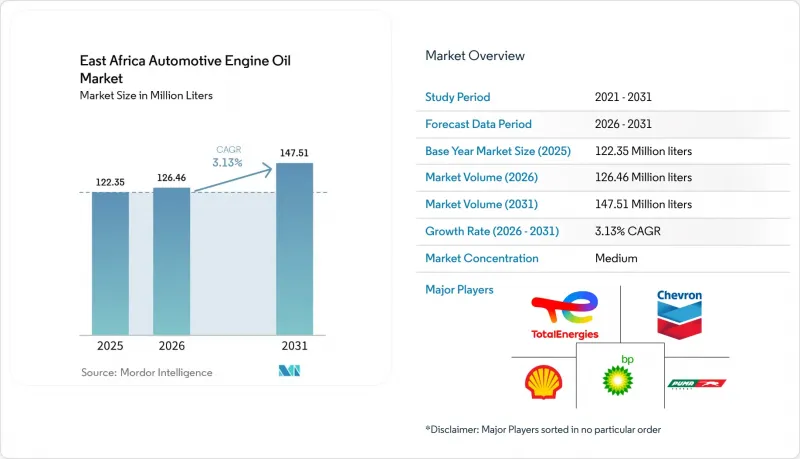
본 보고서는 유형(승용차용 엔진 오일(PCMO) 등), 기유 유형(광물유, 반합성유, 완전합성유, 바이오베이스), 등급(0W-XX, 5W-XX, 10W-XX, 15W-XX, 모노그레이드, 기타 등급), 지역(케냐, 탄자니아, 우간다, 에티오피아, 르완다, 부룬디, 콩고 민주 공화국)별로 분류되어 있습니다. 시장 전망은 판매량(리터) 기준으로 제시되어 있습니다.
동아프리카 자동차 엔진 오일 시장 동향 및 인사이트
차량의 평균 사용 연한 증가
2026년 1월부터 시행되는 케냐의 '8년 수입 제한'에 따라, 2018년 제조 차량의 수입이 허용됩니다. 이로 인해 운행 연수가 6년에서 15년에 이르는 차량군이 형성되었으며, 마모, 누유, 오일 번(oil burn) 증가에 따라 15W-40 및 20W-50 윤활유의 소비량이 증가하고 있습니다. 2024년 첫 8개월 동안 탄자니아는 4만 6,944대의 중고차를, 우간다는 1만 9,440대를 수입했으나, 이들 차량의 대부분은 주행거리계 표시가 100,000 km를 초과했습니다. 케냐의 DKS 1515: 2025 연례 점검 규정에는 현재 엔진 오일 양, 압력 및 누유 여부 확인이 포함되어 있어, 이로 인해 상용차의 오일 교환 주기가 더욱 빈번해지고 있습니다. 물류 사업자들은 오일 상태 모니터링을 시범적으로 도입하고 있지만, 도입률은 여전히 5% 미만에 그치고 있어 프리미엄 등급 윤활유 판매에 큰 잠재 수요가 남아 있습니다. 엔진이 노후화됨에 따라 소비자가 교환 주기를 늘리려고 노력하더라도 권장 오일 교환 주기는 짧아지는 경향이 있으며, 이는 전체 윤활유 소비량 증가에 기여하고 있습니다.
차량 보유 대수 증가와 중고차 수입
2025년 12월, 케냐에서는 3만 1,595대의 신차가 등록되어 국내 차량 보유 대수가 300만 대를 돌파했습니다. 여기에는 140만 대 이상의 오토바이가 포함되어 있어 윤활유 수요가 크게 증가하고 있습니다. 일본과 아랍에미리트연합(UAE)에서 유입된 차량으로 인해 터보차저가 장착된 가솔린 및 디젤 엔진이 도입되었습니다. 이러한 엔진에는 OEM(순정 부품 제조업체) 매뉴얼에 명시된 대로 저유황·저회분·저인(SAPS) 및 저점도 오일이 필요합니다. 그러나 지방에서는 이러한 오일을 구하기 어려워 정비사들은 광물유인 15W-40 오일에 의존할 수밖에 없는 상황입니다. 2025년에는 오토바이 등록 대수가 전년 대비 128.2% 증가한 16만 3,112대에 달했습니다. 오토바이의 오일 소비량은 승용차에 비해 1킬로미터당 소비량이 3-5배에 달할 전망입니다. 패키지 용량에 대한 선호도가 변화하고 있으며, 보다-보다 운전기사들이 더 소용량이고 가격도 저렴한 제품을 선택하게 되면서, 길가 판매에서는 1리터 및 500mL 용량의 병이 주류를 이루고 있습니다. 동아프리카의 자동차 엔진 오일 시장은 차량 보유 대수 증가와 다양한 차종에서의 오일 보충 빈도 증가라는 두 가지 요인 모두로부터 혜택을 받고 있습니다.
위조·위장 오일의 만연
케냐 위조품 단속 당국은 5년 동안 6,500만 케냐 실링(50만 달러) 상당의 불법 윤활유를 압수했으며, 한편 탄자니아 공정경쟁위원회는 2026년 2월, 카리아쿠에서 5,000갤런을 압수했습니다. 이러한 사례들은 브랜드 가치에 영향을 미치는 그레이 마켓이 여전히 존재하고 있음을 보여줍니다. 위조업자들은 브랜드 제품의 캔에 품질이 낮은 광물유나 재생유를 다시 채워, 국경 마을이나 도시 주변 지역의 비공식 키오스크를 통해 판매하고 있습니다. 처벌이 경미하고 감식 연구소의 수가 제한적이라는 점이 효과적인 기소를 방해하고 있으며, 그 결과 위반자들은 곧바로 영업을 재개할 수 있습니다. 판매업자들은 QR 코드나 단문 메시지 서비스(SMS)를 활용한 진위 확인 스티커 도입을 시범적으로 추진하고 있으나, 비공식 소매업체들은 규정 준수 비용을 이유로 이에 저항하고 있습니다. 보다 엄격한 법적 억제 조치가 취해지지 않는다면, 위조 제품은 계속해서 정규 시장의 거래량을 감소시켜 동아프리카 자동차 엔진 오일 업계에 악영향을 미치게 될 것입니다.
부문 분석
2025년에는 승용차용 엔진 오일이 동아프리카 자동차용 엔진 오일 시장 규모의 53.81%를 차지할 것으로 예측되며, 이는 도시 지역 차량에서 세단과 SUV가 주류를 이루고 있음을 반영합니다. 오토바이용 엔진 오일은 2025년 케냐의 신규 오토바이 등록 대수 16만 3,112대와 우간다의 이륜 택시 네트워크 확대를 배경으로, 2031년까지 연평균 성장률(CAGR)이 3.34%를 기록하며 가장 빠르게 성장하는 부문이 될 것으로 예측됩니다. 대형 차량용 엔진 오일 수요는 노던 코리도(Northern Corridor)를 따라 증가하는 화물 운송량과, 굴삭기 및 불도저의 지속적인 가동이 필요한 진행 중인 철도 프로젝트에 힘입어 뒷받침되고 있습니다.
라이더들이 더 작고 저렴한 용량을 선호하는 경향이 있어, 길가의 정비사들은 이륜차용으로 1리터 및 500mL 용기를 점점 더 많이 선택하고 있습니다. 이러한 포장 형태의 변화로 인해 리터당 이익률은 20-30% 향상되었습니다. DHL의 유로 5 규격 바이오디젤 차량 도입 등 트럭 운송 부문의 차량 현대화가 진행되면서, 고점도 및 고성능에 대한 수요가 증가함에 따라 동아프리카의 자동차 엔진 오일 시장은 합성 블렌드 제품으로 전환되고 있습니다. 한편, 승용차의 오일 교환 주기는 소유자들이 유지보수 비용을 절감함에 따라 길어지고 있으며, 이는 차량 대수 증가에 따른 성장을 부분적으로 상쇄하고 있습니다.
기타 혜택:
- 엑셀 형식 시장 예측(ME) 시트
- 3개월간의 애널리스트 지원
자주 묻는 질문
목차
제1장 서론
제2장 조사 방법
제3장 주요 요약
제4장 시장 구도
제5장 시장 규모와 성장 예측
제6장 경쟁 구도
제7장 시장 기회와 향후 전망
KTH 26.08.06According to Mordor Intelligence, the east Africa automotive engine oil market size is projected to be 122.35 million liters in 2025, 126.46 million liters in 2026, and reach 147.51 million liters by 2031, and is expected to grow at a CAGR of 3.13% from 2026 to 2031.
This report is Segmented by Type (Passenger Car Motor Oil (PCMO), and More), Base Stock Type (Mineral, Semi-Synthetic, Fully Synthetic, and Bio-Based), Grade (0W-XX, 5W-XX, 10W-XX, 15W-XX, Monogrades, and Other Grades), and Geography (Kenya, Tanzania, Uganda, Ethiopia, Rwanda, Burundi, and Democratic Republic of Congo). The Market Forecasts are Provided in Terms of Volume (Liters).
East Africa Automotive Engine Oil Market Trends and Insights
Rising Average Vehicle Age
Kenya's eight-year import cap, effective from January 2026, allows the import of vehicles manufactured in 2018. This results in fleets with service lives ranging from 6 to 15 years, which consume higher volumes of 15W-40 and 20W-50 lubricants due to increased wear, leaks, and oil burn. In the first eight months of 2024, Tanzania imported 46,944 used cars, while Uganda imported 19,440, with most vehicles showing odometer readings exceeding 100,000 km. Kenya's DKS 1515:2025 annual inspection regulations now include checks on engine oil levels, pressure, and leak integrity, prompting more frequent oil drain cycles for commercial fleets. Although logistics operators are experimenting with oil condition monitoring, adoption remains below 5%, leaving significant potential for premium-grade lubricant sales. As engines age, recommended drain intervals often shorten, despite consumer efforts to extend them, contributing to an overall increase in lubricant consumption.
Growing Vehicle Parc and Used-Car Imports
In December 2025, Kenya registered 31,595 new vehicles, while the national vehicle parc surpassed 3 million units, including over 1.4 million motorcycles, significantly increasing lubricant demand. The influx of vehicles from Japan and the United Arab Emirates has introduced turbocharged gasoline and diesel powertrains, which require low-sulfated ash, phosphorus, and sulfur (SAPS), low-viscosity oils as specified in original equipment manufacturer (OEM) manuals. However, these oils are rarely available in rural areas, leading mechanics to rely on mineral 15W-40 oils. Motorcycle registrations surged by 128.2% year-on-year to 163,112 units in 2025, with motorcycles consuming oil at three to five times the per-kilometer rate of passenger cars. Pack-size preferences are shifting, with 1-liter and 500-mL bottles dominating roadside sales as boda-boda riders opt for smaller, more affordable quantities. The East Africa automotive engine oil market benefits from both the growth in the vehicle parc and the higher frequency of oil top-ups across different vehicle categories.
Proliferation of Counterfeit or Adulterated Oils
Kenya's Anti-Counterfeit Authority seized KES 65 million (USD 0.50 million) worth of illicit lubricants over five years, while Tanzania's Fair Competition Commission confiscated 5,000 gallons in Kariakoo in February 2026. These incidents indicate a persistent gray market that affects branded equity. Counterfeiters refill branded cans with downgraded mineral or recycled oil and distribute them through informal kiosks in border towns and peri-urban areas. Low penalties and limited forensic laboratories hinder effective prosecution, allowing offenders to resume operations quickly. Marketers are testing QR-code or Short Message Service (SMS) validation seals, but informal retailers resist due to compliance costs. Without stricter legal deterrents, counterfeit products will continue to reduce legitimate market volumes and impact the East Africa automotive engine oil industry.
Other drivers and restraints analyzed in the detailed report include:
- Boom in Logistics, Mining, and Infrastructure Projects
- Rapid Shift Toward Synthetic and Semi-Synthetic Oils
- High Price Sensitivity and Import Reliance
For complete list of drivers and restraints, kindly check the Table Of Contents.
Segment Analysis
Passenger car motor oil is projected to account for 53.81% of the East Africa automotive engine oil market size in 2025, reflecting the prevalence of sedans and SUVs in urban fleets. Motorcycle engine oil is expected to be the fastest-growing segment, with a compound annual growth rate (CAGR) of 3.34% through 2031, driven by Kenya's 163,112 new motorcycle registrations in 2025 and the expansion of two-wheeler taxi networks in Uganda. Demand for heavy-duty motor oil is supported by freight growth along the Northern Corridor and ongoing railway projects that require continuous operation of excavators and bulldozers.
Roadside mechanics are increasingly opting for 1-liter and 500 mL packs for two-wheelers, as riders prefer smaller, more affordable packaging. This shift in packaging has improved per-liter margins by 20-30%. Fleet modernization in the trucking sector, such as DHL's adoption of Euro 5 biodiesel vehicles, is driving higher viscosity and performance requirements, steering the East Africa automotive engine oil market toward synthetic blends. Meanwhile, passenger car drain intervals are lengthening as owners reduce maintenance expenses, partially offsetting growth driven by the expansion of the vehicle population.
Complete Report Scope:
- By Product Type
- Passenger Car Motor Oil (PCMO)
- Heavy-Duty Motor Oil (HDMO)
- Motorcycle Engine Oil (MCO)
- By Base Stock Type
- Mineral
- Semi-Synthetic
- Fully Synthetic
- Bio-Based
- By Grade
- 0W-XX
- 5W-XX
- 10W-XX
- 15W-XX
- Monogrades
- Other Grades
- By Geography
- Kenya
- Tanzania
- Uganda
- Ethiopia
- Rwanda
- Burundi
- Democratic Republic of Congo
List of Companies Covered in this Report:
- AMSOIL Inc.
- BP p.l.c. (Castrol)
- Chevron Corporation
- China National Petroleum Corp. (CNPC)
- China Petroleum & Chemical Corp. (Sinopec)
- Engen Petroleum (PTY) LTD
- Exxon Mobil Corporation
- FUCHS
- Gazprom
- Hindustan Petroleum Corp.
- Idemitsu Kosan Co.
- Lake Group Ltd.
- LUKOIL
- Motul SA
- OLA Energy
- Oryx Energies
- Petrobras
- PETRONAS Lubricants International
- Phillips 66 Company
- PT Pertamina Lubricants
- Puma Energy
- Rubis Energy Kenya (KenolKobil)
- Saudi Arabian Oil Co.
- Shell plc
- SK Lubricants Co. Ltd.
- TotalEnergies
- Veedol Corporation Limited
Additional Benefits:
- The market estimate (ME) sheet in Excel format
- 3 months of analyst support
TABLE OF CONTENTS
1 Introduction
- 1.1 Study Assumptions & Market Definition
- 1.2 Scope of the Study
2 Research Methodology
3 Executive Summary
4 Market Landscape
- 4.1 Market Overview
- 4.2 Market Drivers
- 4.2.1 Rising average vehicle age
- 4.2.2 Growing vehicle parc & used-car imports
- 4.2.3 Boom in logistics, mining & infrastructure projects
- 4.2.4 Rapid shift toward synthetic & semi-synthetic oils
- 4.2.5 EAC duty-remission scheme catalyzing local blending
- 4.3 Market Restraints
- 4.3.1 Proliferation of counterfeit/adulterated oils
- 4.3.2 High price sensitivity & import reliance
- 4.3.3 Forex shortages causing lubricant stock-outs
- 4.4 Value Chain Analysis
- 4.5 Porter's Five Forces
- 4.5.1 Bargaining Power of Suppliers
- 4.5.2 Bargaining Power of Buyers
- 4.5.3 Threat of New Entrants
- 4.5.4 Threat of Substitutes
- 4.5.5 Degree of Competition
5 Market Size & Growth Forecasts (Volume)
- 5.1 By Product Type
- 5.1.1 Passenger Car Motor Oil (PCMO)
- 5.1.2 Heavy-Duty Motor Oil (HDMO)
- 5.1.3 Motorcycle Engine Oil (MCO)
- 5.2 By Base Stock Type
- 5.2.1 Mineral
- 5.2.2 Semi-Synthetic
- 5.2.3 Fully Synthetic
- 5.2.4 Bio-Based
- 5.3 By Grade
- 5.3.1 0W-XX
- 5.3.2 5W-XX
- 5.3.3 10W-XX
- 5.3.4 15W-XX
- 5.3.5 Monogrades
- 5.3.6 Other Grades
- 5.4 By Geography
- 5.4.1 Kenya
- 5.4.2 Tanzania
- 5.4.3 Uganda
- 5.4.4 Ethiopia
- 5.4.5 Rwanda
- 5.4.6 Burundi
- 5.4.7 Democratic Republic of Congo
6 Competitive Landscape
- 6.1 Market Concentration
- 6.2 Strategic Moves
- 6.3 Market Share(%)/Ranking Analysis
- 6.4 Company Profiles (includes Global level Overview, Market level overview, Core Segments, Financials as available, Strategic Information, Products & Services, and Recent Developments)
- 6.4.1 AMSOIL Inc.
- 6.4.2 BP p.l.c. (Castrol)
- 6.4.3 Chevron Corporation
- 6.4.4 China National Petroleum Corp. (CNPC)
- 6.4.5 China Petroleum & Chemical Corp. (Sinopec)
- 6.4.6 Engen Petroleum (PTY) LTD
- 6.4.7 Exxon Mobil Corporation
- 6.4.8 FUCHS
- 6.4.9 Gazprom
- 6.4.10 Hindustan Petroleum Corp.
- 6.4.11 Idemitsu Kosan Co.
- 6.4.12 Lake Group Ltd.
- 6.4.13 LUKOIL
- 6.4.14 Motul SA
- 6.4.15 OLA Energy
- 6.4.16 Oryx Energies
- 6.4.17 Petrobras
- 6.4.18 PETRONAS Lubricants International
- 6.4.19 Phillips 66 Company
- 6.4.20 PT Pertamina Lubricants
- 6.4.21 Puma Energy
- 6.4.22 Rubis Energy Kenya (KenolKobil)
- 6.4.23 Saudi Arabian Oil Co.
- 6.4.24 Shell plc
- 6.4.25 SK Lubricants Co. Ltd.
- 6.4.26 TotalEnergies
- 6.4.27 Veedol Corporation Limited
7 Market Opportunities & Future Outlook
- 7.1 White-space & Unmet-Need Assessment
- 7.2 Expansion of Aftermarket & Distribution Channels


